🎙️ ¡Lanzamos Entrevistas entrelazadas!
Un ciclo de RIPAISC que conecta a referentes de la ciencia y la tecnología.
Episodio 1: entrevista a José García Alonso.
▶️Video en YouTube: https://t.co/9zJvrJCaor
🎧Audio en Spotify: https://t.co/12usR7ckmj
🔗 https://t.co/AXlMjf2Mak
🙌Circuitos Cuánticos Variacionales: una introducción práctica
Actividad conjunta entre @LifiaUNLP@RedIPAISC y el grupo QML-CVC, llevada adelante por el Dr. @MatiasBilkis
Más info 👉https://t.co/QO4LWjqQiC
El jueves 7/8 a las 14 h recibimos al Dr. Salvador Venegas Andraca (Tec de Monterrey) en el LIFIA. Charla híbrida, introductoria, sobre computación cuántica (aula 5 de posgrado). ¡Actividad abierta! Mas info acá 👉 https://t.co/uXjTqFwJsb
@RedIPAISC@clei_la
Visitamos la fábrica de Pixart y conversamos con su CEO sobre computación cuántica, IA y soberanía tecnológica.
¡Se vienen colaboraciones con LIFIA, IFLP, y @RedIPAISC !
🔗 [https://t.co/vX6tuWlYD5
🙌@matiasurbieta presentó el artículo “Assessing the Migration from FaaS to IaaS: Cost, Performance, and Challenges in AWS” en el Industrial Track de la conferencia ICWE, en Delft, Países Bajos 🇳🇱
¡Felicitaciones!
@JulianCasaburi Sergio Firmenich
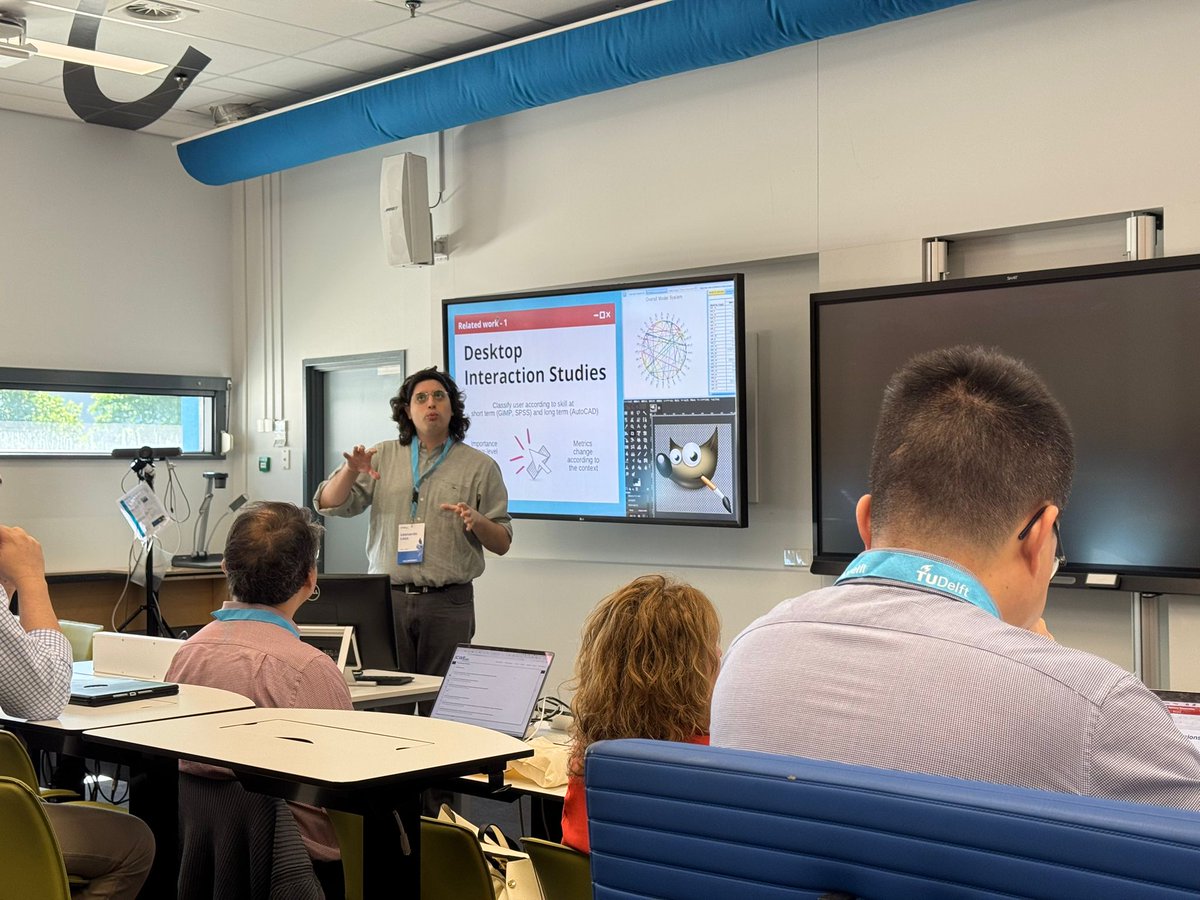
🙌Leonardo Loza Bonora presentó su trabajo "You are what you click" en el Simposio doctoral de ICWE, en Delft, Países Bajos 🇳🇱
¡Felicitaciones y que recibas mucho feedback!
Allí estaremos, porque es necesario reconocer que las brechas de género existen, atraviesan también la ciencia y la educación, y solo desde una mirada consciente y comprometida podemos empezar a transformarlas.
💡Les invitamos al Taller abierto de perspectiva de género en la investigación organizado por @ULL@RedIPAISC y @clei_la
🗓️16 y 18 de septiembre
⏰17:00 España (9 am México, 10 am Colombia, 12 pm Argentina)
Nota completa y formulario de inscripción 👉https://t.co/r587T0q3t2
Nuestro trabajo en computación cuántica, reflejado en el portal de ciencia de la @unlp . 🧑💻👨💻👩💻🎇⚛️
Hemos aprendido mucho y nos queda mucho mas por aprender, siempre acompañados de @RedIPAISC y el grupo de computación cuántica del @clei_la
📅 El 7 de mayo, 12:00 UTC, @RedIPAISC y el Grupo de Computación Cuántica del CLEI organizan un webinar junto a @SpinQ_Lab para hablar de sus tecnologías cuánticas y el presente y futuro de la #ComputaciónCuántica.
Registrarse para recibir el link: https://t.co/RB4Jt79pRo
El viernes pasado recibimos a QNow en el LIFIA con un computador cuántico SpinQ de 2 qubits. Más que su poder de cómputo, nos inspiró como disparador de ideas. ¡Pronto compartiremos un protocolo de evaluación y resultados!
https://t.co/lfFE1ZAa61
@RedIPAISC
Se encuentra abierta la convocatoria a presentación de trabajos para el 2° Taller Latinoamericano en Ingeniería y Software Cuántico (TLISC 2025) que tendrá lugar entre 28 y 29 de Octubre de 2025 en la Universidad de Valparaíso, en Valparaíso, Chile.
https://t.co/2lwJ5XKIsj
Some people today are discouraging others from learning programming on the grounds AI will automate it. This advice will be seen as some of the worst career advice ever given. I disagree with the Turing Award and Nobel prize winner who wrote, “It is far more likely that the programming occupation will become extinct [...] than that it will become all-powerful. More and more, computers will program themselves.” Statements discouraging people from learning to code are harmful!
In the 1960s, when programming moved from punchcards (where a programmer had to laboriously make holes in physical cards to write code character by character) to keyboards with terminals, programming became easier. And that made it a better time than before to begin programming. Yet it was in this era that Nobel laureate Herb Simon wrote the words quoted in the first paragraph. Today’s arguments not to learn to code continue to echo his comment.
As coding becomes easier, more people should code, not fewer!
Over the past few decades, as programming has moved from assembly language to higher-level languages like C, from desktop to cloud, from raw text editors to IDEs to AI assisted coding where sometimes one barely even looks at the generated code (which some coders recently started to call vibe coding), it is getting easier with each step.
I wrote previously that I see tech-savvy people coordinating AI tools to move toward being 10x professionals — individuals who have 10 times the impact of the average person in their field. I am increasingly convinced that the best way for many people to accomplish this is not to be just consumers of AI applications, but to learn enough coding to use AI-assisted coding tools effectively.
One question I’m asked most often is what someone should do who is worried about job displacement by AI. My answer is: Learn about AI and take control of it, because one of the most important skills in the future will be the ability to tell a computer exactly what you want, so it can do that for you. Coding (or getting AI to code for you) is a great way to do that.
When I was working on the course Generative AI for Everyone and needed to generate AI artwork for the background images, I worked with a collaborator who had studied art history and knew the language of art. He prompted Midjourney with terminology based on the historical style, palette, artist inspiration and so on — using the language of art — to get the result he wanted. I didn’t know this language, and my paltry attempts at prompting could not deliver as effective a result.
Similarly, scientists, analysts, marketers, recruiters, and people of a wide range of professions who understand the language of software through their knowledge of coding can tell an LLM or an AI-enabled IDE what they want much more precisely, and get much better results. As these tools are continuing to make coding easier, this is the best time yet to learn to code, to learn the language of software, and learn to make computers do exactly what you want them to do.
[Original text: https://t.co/HdI3Jb9HmF ]
X: Una investigación de la Univ. de Indiana, USA, concluyó q un grupo muy pequeño de usuarios es responsable de casi toda la desinformación en X. De 440.000 cuentas supervisadas, solo 1000 eran responsables del 70% de las fake news 👇
https://t.co/OBu7QCKfmB