CaseFilesHQ is a space for understanding crime without sensationalism.
Behind every case is a chain of decisions, evidence, and human consequences. We focus on the facts—what happened, how investigations unfolded, and why certain cases changed the way justice works.
At @CaseFilesHQ, we break down real crime cases with clarity and care. Timelines, motives, investigative methods, and legal outcomes are examined step by step, making complex cases easy to understand without glorifying violence or exploiting tragedy.
This account stands for accuracy over hype, education over shock value, and respect for the people affected by crime. Our goal is not to entertain at the expense of human lives, but to inform, explain, and deepen public understanding of how crime is investigated and resolved.
From landmark cases to lesser-known files, CaseFilesHQ documents the truth—carefully, responsibly, and factually.
No speculation. No sensationalism. Just the case files.
The incident in the video, which remains unverified as a specific reported case, highlights broader debates surrounding immigration policies in Europe. Under the European Union's asylum framework, including the Pact on Migration and Asylum (with key provisions rolling out fully in June 2026), member states must process asylum claims from arrivals, often providing temporary housing, medical care, legal aid, and social support during reviews that can last months or years. This places substantial financial and administrative strain on front-line countries and diverts public resources toward migrant support, which critics contend reduces funding available for citizens' services such as healthcare, housing, and welfare programs.
Human rights protections under the European Convention on Human Rights further restrict deportations by prohibiting returns to countries where individuals might face torture or persecution, even for those convicted of crimes in Europe. This has resulted in situations where foreign nationals who commit offenses remain in the country if their home nations are considered unsafe, leading to claims that these safeguards prioritize migrants' rights over citizens' security and contribute to perceptions of elevated crime risks in some communities, despite varying statistical evidence on offense rates.
In several EU states, integration measures grant migrants access to language courses, job training, and social benefits funded by taxpayers, sometimes without immediate work requirements, which fuels arguments that such provisions undermine incentives for citizens and strain economic resources amid ongoing pressures. Policies in countries like France and Germany permit appeals against deportation orders with judicial safeguards, allowing repeat offenders to challenge removals, which opponents view as enabling prolonged stays at the expense of public safety.
Additionally, while recent reforms aim to accelerate deportations through faster processing, safe-country designations, and offshore return hubs, critics maintain that earlier frameworks and ongoing obligations have long tilted protections and resources toward immigrants, exacerbating cultural tensions and public resentment in nations facing high immigration levels. These policy elements reflect persistent tensions between international commitments and demands to prioritize citizen interests more directly.
In the early morning hours of February 26, 2026, a Memphis police officer on patrol discovered the body of 58-year-old Noe Santillan Rincon lying in the roadway on Willowview. The medical examiner determined that Rincon had been shot approximately 14 times, including a fatal wound to the head.
Rincon had been staying with a woman who reported last seeing him shortly before 1 a.m., when he left to buy milk and rice for her children and grandchildren. Later, she began receiving calls from his phone made by her 18-year-old daughter, Alishon Torres.
Torres was arrested on Thursday, March 5 or 6, 2026. According to court records and police statements, she admitted to the shooting during questioning. She told investigators that three to four weeks earlier, a 5-year-old relative had disclosed that Rincon had touched her inappropriately. Torres stated that she confronted Rincon on Willowview, asked to borrow his phone, and then shot him roughly 10 times inside a van during the encounter.
After the shooting, Torres reportedly drove the van to an abandoned house to repaint parts of it in an effort to conceal evidence, before leaving the vehicle at an apartment complex with her boyfriend, who authorities say was not involved and unaware of the incident. During her arrest, a firearm fell from her purse; she acknowledged it as one of the weapons used and indicated that a second gun had been sold or given away afterward.
Torres faces charges of first-degree murder, employing a firearm during the commission of a felony, and tampering with evidence. No bond has been set, and she remains in custody as the investigation continues. The allegation of inappropriate touching has not been independently verified or charged in connection with Rincon prior to his death, and no formal court proceedings against him on that claim had been reported.
An 18-year-old woman, Alishon Torres, is accused of shooting a man 14 times, k*lling him, and leaving his body in the street after a 5-year-old child reported that the man had touched her inappropriately. 👀😳🤔
The video captures chaotic scenes outside a Gaza hospital entrance where emergency responders rush several severely injured Palestinians—many appearing barefoot and bloodied—on stretchers into the facility amid cries and urgent movement. The clip, which has garnered over 3 million views and tens of thousands of likes within hours, forms part of ongoing grassroots efforts under the hashtag #GazaIsTheFocus to keep international attention on civilian suffering in the enclave.
This footage emerges against the backdrop of intensified hardship in Gaza as of early March 2026. According to the Palestinian Ministry of Health's March 3 update, the past 24 hours alone saw 18 bodies recovered and brought to medical facilities, alongside additional injuries, while thousands remain trapped under rubble from prior strikes. The ministry's cumulative figures since October 2023 list over 72,000 killed and more than 171,000 injured, though independent verification remains severely limited due to restricted access and destroyed infrastructure. Since a fragile ceasefire that began in late 2025, authorities have recorded hundreds more deaths and injuries, reflecting continued low-level violence and humanitarian collapse.
Recent developments have further strained conditions. Israel closed Gaza's border crossings in early March amid its widening conflict with Iran, a move aid organizations warn risks accelerating famine by blocking food, fuel, and medical supplies. Hospitals, already operating at extreme capacity with minimal resources, continue receiving mass-casualty influxes from intermittent strikes and unexploded ordnance incidents. Firsthand accounts from medical volunteers describe relentless pressure from child amputees, shrapnel wounds, and untreated chronic conditions exacerbated by shortages of electricity, clean water, and basic drugs.
Social media replies to the original post include personal testimonies, such as one identifying a young man in the footage as Diya al-Batsh, previously known in activist circles for his photography and efforts to help others evacuate; he reportedly lost limbs and has since sought prosthetic care abroad while his family remains trapped. Widespread calls in the thread urge persistent sharing to counter perceived global silence, framing ongoing visibility as a moral imperative amid the protracted crisis.
The double homicide of sisters Sheridan Sofía Hernández Noriega, 14, and Keyla Nicolle Hernández Noriega, 17, remains one of the most disturbing cases to emerge from the Caribbean coast of Colombia during the 2026 Carnival season.
The girls vanished from the La Sierrita neighborhood in Malambo on February 17 after leaving home to join friends during the festivities. Their bodies were later found buried in a rural wooded area of the Maranatha sector in the same municipality. Decomposition was already advanced when community members alerted authorities to a foul odor coming from the lot.
Cellphone footage recovered from one of the suspects shows the final moments of Sheridan’s life. In the recording she is heard begging repeatedly, hands together in front of her face, before being shot several times at close range by her 17-year-old boyfriend, known locally as “El Mono” or “El Chirrete.” The pistol reportedly malfunctioned on the last attempted shot. The same individual is the primary suspect in Keyla’s killing as well.
Two people are currently in custody. The main suspect, the aforementioned 17-year-old, had already accumulated a criminal record that began when he was 14 and included documented ties to FARC dissident structures before shifting to the group known as “Los Costeños.” The second detainee, 19-year-old Juan David Taboada Olivera (“Tata”), is accused of assisting in removing the sisters from their residence.
The suspects were located and arrested near the Vía al Mar in Puerto Colombia after a police chase that ended in a motorcycle crash during an illegal race. Digital evidence—particularly the video, geolocation data, and intercepted communications—played a decisive role in linking them to the crime scene and timeline.
Possible motives under investigation include romantic disputes tied to the Carnival outing, extortion demands directed at the family, and potential punishment linked to perceived contacts with rival criminal factions. Some reports mention audio in which money (around five million pesos per victim) was demanded from relatives after the disappearances.
The mother formally identified her daughters’ remains at the Instituto Nacional de Medicina Legal in Barranquilla. The sisters were laid to rest on March 6, 2026, at the Calancala cemetery amid widespread community mourning and calls for thorough justice.
The investigation continues under the direction of the Policía Metropolitana de Barranquilla, the Fiscalía General, and the Gaula anti-extortion and kidnapping unit.
The Hillsborough County Sheriff's Office (HCSO) in Florida announced on March 3, 2026, the results of a multi-week undercover operation targeting individuals seeking to sexually exploit children and purchase sex. The effort, conducted by the agency's Human Trafficking Section and Internet Predator Unit from January 1 to February 6, 2026, led to the arrest of 89 suspects and the filing of more than 1,200 felony charges.
Authorities stated that all arrested individuals believed they were communicating with minors and arranged meetings expecting to pay for sex acts. Sheriff Chad Chronister emphasized the operation's focus on following digital trails: "If you are using a hotel room, a chat app, or a fake profile to pursue a child, we are there. Our detectives will follow the digital trail all the way to your door."
The investigation resulted in significant rescues, including a 2-year-old toddler and a missing 16-year-old girl (some reports reference a 17-year-old) who was being exploited for commercial sex. Additional screening by partnered social services organizations identified four potential human trafficking victims among those encountered.
Among the arrested is Stephen Brian Fabic, a 41-year-old math teacher at Hillsborough High School (also referred to as Riverview High School in some contexts), charged in connection with the sting for allegedly attempting to meet who he believed was a minor for sex.
This action highlights ongoing efforts in Florida to combat child exploitation and human trafficking through proactive undercover work, often involving online monitoring and coordinated multi-agency responses.
BREAKING: Hillsborough County, FL Sheriff’s office just arrested 89 people in a massive undercover child s*x trafficking operation targeting predators looking to exploit children
“If you are using a hotel room, a chat app, or a fake profile to pursue a child, we are there. Our detectives will follow the digital trail all the way to your door.” - Sheriff Chad Chronister
Thank you Sheriff! 👏
A tragic murder-suicide occurred on Sunday evening, March 1, 2026, at Baptist Health Brookwood Hospital's Women's Medical Center in Homewood, Alabama. Around 9:25 p.m., Homewood Police responded to reports of shots fired on the fifth floor, a postpartum recovery area.
Officers discovered 24-year-old Precious Elicia J'anae Johnson of Birmingham dead from multiple gunshot wounds. She had been a patient at the hospital and had just given birth to the couple's first child earlier that day. The newborn was not in the room during the incident and was unharmed, with no other individuals injured.
The shooter was identified as her husband, 19-year-old Kynath William Terry Jr. of Midfield, who was visiting as a family member. Authorities confirmed he died from a self-inflicted gunshot wound shortly after the attack on his wife, around 9:30 p.m. The Jefferson County Coroner’s Office classified both deaths as part of an apparent domestic murder-suicide and domestic assault.
The couple was married, and family members described the event as stemming from ongoing marital issues. Terry's mother expressed shock and devastation over the loss of both her son and daughter-in-law, noting the couple had been experiencing problems, including Johnson's reported preference that Terry's family not be present during the delivery.
The incident prompted immediate lockdown at the hospital out of caution, though officials quickly determined no ongoing threat existed. Baptist Health Brookwood cooperated fully with the investigation. The case has renewed discussions on hospital security protocols for visitors, especially in maternity units, with the Alabama Hospital Association president describing it as unprecedented in her 30 years of experience.
No additional motives or details, such as the weapon used or exact sequence beyond the coroner's findings, have been publicly released by police as the investigation continues. The newborn is now orphaned and under family care. This event highlights ongoing concerns about domestic violence, even in moments typically associated with joy.
A 19-year-old husband allegedly shot his 24-year-old wife to death and then himself inside an Alabama maternity ward just hours after she gave birth to their first child.
The newborn was unharmed, and police say it appears to be a tragic domestic murder-suicide with no ongoing threat to others. Detectives are investigating how the husband brought a firearm into the hospital and reviewing security protocols.
In the town of Chattogram (Chittagong), Bangladesh, around November 5, 2024, communal tensions erupted in the narrow commercial area known as Hazari Lane (also called Hazari Gali) after a local Muslim businessman posted on Facebook labeling ISKCON (International Society for Krishna Consciousness), a Hindu religious organization, as a "terrorist group." This provoked anger among local Hindus, many affiliated with ISKCON, who gathered to protest outside the businessman's shop in the Mia Shopping Center vicinity, demanding an apology and surrounding the premises.
Security forces, including army personnel, police, and BGB (Border Guard Bangladesh), were deployed to the scene to restore order and prevent further escalation. As forces moved through the crowded lane to disperse the crowd, baton charges and confrontations occurred, leading to clashes. Reports indicate injuries to at least 12 security personnel and several protesters, alongside instances of brick-pelting, vandalism, and panic among residents and shop workers in the area.
During this security operation, a young woman inside a pet shop in the lane became visibly distressed and was captured on video crying amid the shouting, chaos, and forceful intervention by authorities entering nearby premises. She was a local resident or employee present in the shop at the time, caught up in the surrounding unrest and fear from the crackdown—not involved in any theft or targeted assault by a shop owner.
No evidence connects the incident or the specific footage to Uttar Pradesh, India, or to any claim of a Hindu shopkeeper catching and assaulting a Muslim girl over alleged stealing. The video's origin lies squarely in the Bangladesh communal flare-up tied to the offensive social media post and subsequent law-enforcement response. This case reflects a broader pattern where footage from such events in Bangladesh is sometimes mislabeled and shared to depict unrelated narratives of religious violence elsewhere.
🚨 متداول في الهند 🇮🇳 بشكل واسع
في ولاية أوتار براديش أقدم صاحب بقالة هندوسي على الإمساك بفتاة مسلمة بعدما ضبطها بحسب ما تم تداوله — وهي تحاول السرقة من داخل متجره.
وخلال الواقعة اعتدى عليها بالضرب في مشهد أثار جدلًا وغضبًا واسعًا.
الفيديو أشعل مواقع التواصل حيث عبّر كثيرون عن استيائهم مؤكدين أن التعامل مع مثل هذه المواقف لا يكون بالعنف بل عبر اللجوء إلى الجهات المختصة والقانون.
ويبقى السؤال: هل يبرر الخطأ استخدام القوة بهذه الطريقة؟
A viral classroom video circulating widely on social media shows a male student in what appears to be a Philippine school pressuring a female classmate to sit on her boyfriend's lap so a photo could be taken. The short clip captures the girl being physically guided or pushed into position amid audible laughter and encouragement from surrounding peers, while she displays visible reluctance before eventually complying for the posed picture.
Shared initially by the account @MVRNoticias on February 26, 2026, the post quickly amassed over 3.4 million views, approximately 15,000 likes, more than 10,000 bookmarks, and hundreds of replies within hours. The Spanish-language caption describes the incident as a student pressuring his classmate to provide a photo sitting on her boyfriend's lap during class.
Online reactions have been sharply divided. Numerous commenters labeled the behavior coercive and a form of peer-pressured harassment, expressing concern over the normalization of non-consensual physical contact and public embarrassment in educational settings. Others defended or downplayed the actions, with some replies shifting blame toward the girl for ultimately participating, claiming she appeared aware of the situation or seeking attention. Additional responses included misogynistic remarks, victim-blaming statements, and cynical observations about relationship dynamics or "red flags."
No official statement from any Philippine school, the Department of Education, or law enforcement has been linked to this specific footage in major reports so far. Similar past incidents of filmed classroom bullying or coercion in the country have prompted investigations when identified, but this clip remains primarily discussed as user-shared viral content without confirmed follow-up disciplinary or legal action at this stage.
The episode has fueled broader conversations about consent, group pressure in adolescent environments, and the rapid spread of potentially harmful school videos online.
In the early morning hours of January 27, 2009, police responded to a home in the Wilmington neighborhood of Los Angeles after receiving a 911 call from Ervin Antonio Lupoe, a 40-year-old man who claimed he had just discovered his family murdered. Officers arrived at the two-story residence on the 1000 block of McFarland Avenue to find seven bodies inside, all victims of gunshot wounds to the head.
The deceased included Ervin Lupoe himself, his wife Ana Elizabeth Lupoe (age 38), their 8-year-old daughter Brittney, 5-year-old twin daughters Jazmin and Jassely, and 2-year-old twin sons Benjamin and Christian. Authorities quickly determined the incident was a murder-suicide carried out by Ervin Lupoe. He had shot his wife and five children—likely beginning late on January 26 after 4 p.m.—before fatally shooting himself with a revolver found near his body.
Prior to the killings, Lupoe faxed a two-page letter to local television station KABC (Channel 7) detailing his grievances. In the document, he described how both he and his wife had recently been fired from their positions as medical technicians at Kaiser Permanente's West Los Angeles Medical Center. The letter claimed an administrator had told them they should have "blown [their] brains out" rather than come to work that day, and it referenced an ongoing investigation into alleged misrepresentation of their employment to qualify for a childcare subsidy through an outside agency. Lupoe wrote that, after the ordeal, his wife felt it was better to end their lives than leave the children in someone else's care. He then called the station, calmly explained his actions, and contacted police.
Investigators later learned the family faced severe financial strain, including significant debt, mortgage arrears, and an outstanding $15,000 IRS obligation. Lupoe had reportedly been planning to relocate the family to Kansas but never followed through. The Los Angeles Police Department classified the case as a familicide driven by despair over job loss and mounting debts amid the broader economic downturn at the time. This tragedy remains one of the most devastating domestic murder-suicides in Southern California history.
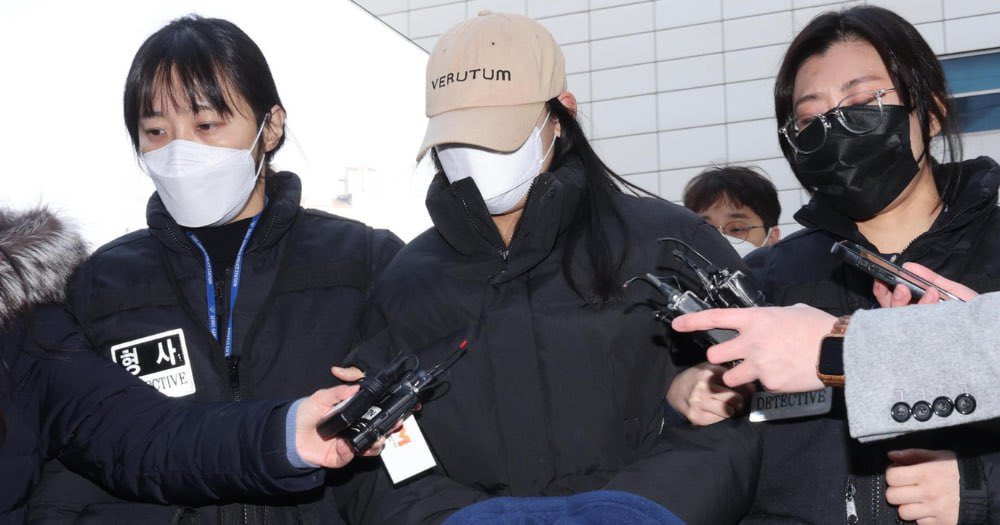
In Seoul's Gangbuk district, a 21-year-old woman surnamed Kim has been charged with murder after allegedly lacing drinks with benzodiazepines—sedatives prescribed to her for a mental health condition—and giving them to three men in their 20s during separate motel encounters between December 2025 and February 9, 2026. The first incident in mid-December left one man unconscious for two days before he recovered, while the subsequent attacks on January 28 and February 9 each resulted in the victim's death the following day after the suspect left the room alone.
Police initially arrested her on February 11 on the lesser charge of inflicting bodily injury resulting in death, but upgraded the accusations to murder following a forensic examination of her phone. Investigators discovered that she had repeatedly queried ChatGPT with questions such as "What happens if you take sleeping pills with alcohol?", "How many do you need to take for it to be dangerous?", and "Could it kill someone?"—queries made especially after the non-fatal December episode, which authorities interpret as evidence she escalated dosages with awareness of the lethal risk when the drugs were combined with alcohol.
Kim has admitted to mixing the benzodiazepines into the beverages but maintains she did not intend for the men to die, claiming the intent was merely to induce sleep amid disputes. She was transferred to prosecutors on February 19 facing additional charges of aggravated injury and violations of narcotics control laws. South Korean authorities have withheld her full identity and image from public release after an internal review, despite online doxxing, surging social media attention—including a sharp increase in followers on an Instagram account believed to be hers—and demands from victims' families for greater transparency. The case has intensified public discussion in South Korea about the evidentiary role of AI chat logs in proving criminal intent and the broader implications of generative AI in facilitating harmful acts.
South Korean police have arrested 21-year-old Kim in a case that has since gone viral online. She is accused of fatally drugging two men and leaving another in a coma after allegedly giving them benzodiazepine laced drinks in Seoul motels.
Investigators say she researched lethal dosages on ChatGPT beforehand and previously tested the method on her boyfriend in December 2025, who survived. She claims she targeted men she believed had wronged her.
A tragic road accident occurred on Monday evening, February 23, 2026, on the Purvanchal Expressway near Gosainganj in Lucknow, Uttar Pradesh.
A private double-decker sleeper bus, carrying approximately 80-85 passengers (mostly migrant workers), overturned after the driver lost control. The vehicle was traveling from Ludhiana in Punjab to Motihari (or Darbhanga, per some reports) in Bihar.
The incident took place around the toll plaza area, specifically near the 11.2-km mark or close to Jaukhadi/Jaukhandi village in the Gosainganj/Hasanapur vicinity. Initial accounts point to excessive speed, possible driver fatigue (dozing off), or other factors like intoxication, though official confirmation on the exact cause remains under investigation.
Casualties and Response
Reliable police and media updates confirm five people killed — including one man, one woman, and three children — with 41 to 45 injured. Some injured passengers were in critical condition and received treatment at trauma centers including SGPGIMS and KGMU in Lucknow.
Emergency services, local residents, and cranes responded quickly to rescue trapped individuals from the overturned bus. The driver (named Sompal in some reports) was detained, and a case has been registered.
Early social media and some initial news reports cited higher figures (up to 7 deaths and varying injury counts from 20+), but later verified accounts from authorities and major outlets stabilized at the lower, confirmed numbers.
This highlights ongoing road safety concerns on high-speed corridors like the Purvanchal Expressway, particularly for overcrowded long-distance buses carrying migrant passengers.
เมื่อเย็นวันจันทร์ เกิดอุบัติเหตุร้ายแรงบนทางด่วนปุรวันชัล ในเขตโกไซกันจ์ เมืองลัคเนา รถโดยสารสองชั้นเสียการควบคุมและพลิกคว่ำใกล้หมู่บ้านเชาขันดี อินเดีย
รายงานเบื้องต้นระบุว่ามีผู้เสียชีวิต 7 ราย และบาดเจ็บมากกว่า 20 ราย
On Monday evening, a serious accident occurred on the Purwanchal Expressway in the Gosayganj district of Lucknow. A double-decker bus lost control and overturned near Chaukhandi village. India
Initial reports indicate that seven people were killed and more than 20 injured.
Travel Influencer Tara Woodcox Sparks Outrage with Viral "Underwear in Hotel Coffee Maker" Hack
In mid-February 2026, U.S.-based fitness and travel content creator Tara Woodcox posted a video on Instagram and TikTok demonstrating what she called a "brilliant" travel hack. She advised viewers facing a shortage of clean underwear during trips to place dirty pairs in the filter basket of a hotel room coffee maker (where coffee grounds normally go), run a brew cycle with hot water to "clean" them, and then dry the items using a hairdryer.
The clip, which she attributed to advice originally received from a flight attendant friend, quickly spread across platforms including X (formerly Twitter), amassing millions of views and reposts. Many users expressed shock and revulsion, labeling the practice unhygienic and describing it as "disgusting," with widespread comments vowing never to use in-room coffee makers again. Common reactions included jokes about "booty water" coffee, health concerns over potential bacterial contamination, and calls for hotel chains to ban her or implement stricter cleaning protocols.
Social media posts soon escalated the story, with unverified claims circulating that a major hotel chain had filed a $1 million lawsuit against Woodcox. These rumors alleged the chain incurred massive costs — replacing coffee machines across multiple properties, issuing guest refunds, and suffering reputational damage — due to the viral exposure of the hack.
However, major outlets covering the incident (including IBTimes UK, New York Post, Delish, and others) have reported no confirmed evidence of any lawsuit. No public court filings, official statements from hotel brands, or documented financial impacts have surfaced. Sources describe the $1 million (or higher figures like $1 billion in some exaggerated posts) claim as unsubstantiated social media speculation and internet lore rather than verified fact.
In follow-up content posted shortly after the backlash peaked, Woodcox addressed the uproar, with some interpretations suggesting she framed the original video as exaggerated, satirical, or not meant to be taken literally. She has not issued a formal public apology or confirmation of legal action against her.
The incident has reinforced long-standing traveler warnings about hotel room appliances, with hygiene experts and many online commentators emphasizing that shared coffee makers should only be used for their intended purpose — brewing coffee — and never for washing clothing or other non-food items.
As of February 24, 2026, the story remains a viral moment of public disgust and meme fodder, but without confirmed legal or financial repercussions for Woodcox beyond the intense online criticism.
A 31-year-old high school secretary in Union City, Indiana, faces serious felony charges following allegations of sexual misconduct with students at Randolph Eastern Junior-Senior High School.
Alicia Hughes, who worked as an attendance secretary for the Randolph Eastern School Corporation, was arrested on February 15, 2026, after an investigation by the Union City Police Department. The case began when her husband reportedly discovered her with an 18-year-old student on Valentine's Day (February 14, 2026), leading to a confrontation that police initially responded to as an alleged battery incident—now handled separately by the Randolph County Sheriff's Department.
During questioning, Hughes admitted to multiple sexual encounters with the 18-year-old student, stating they began after he turned 18 and occurred at least three times. She also claimed she had been physically and mentally abused by her husband, though this has drawn significant public criticism as an attempt to deflect responsibility. Her husband has since filed for divorce.
Further investigation revealed Hughes had engaged in sexual intercourse on at least five separate occasions with a different student who was 17 years old at the time—acts that took place once at her home, twice in his vehicle, and twice at the school, according to reports. Indiana law classifies such conduct as child seduction when committed by someone in a position of supervision or trust over the student, even though the general age of consent in the state is 16; the relevant age rises to 18 in school-employee contexts.
Hughes was charged with five counts of child seduction, each a Level 5 felony carrying a potential penalty of up to six years in prison. She is currently held in the Randolph County Jail on a $25,000 cash-only bond. The school district has removed her from any duties involving students pending the outcome of the case.
The incident has sparked widespread online discussion, with many users highlighting perceived differences in public reaction and media coverage compared to cases involving male educators in similar situations. The investigation remains ongoing, and authorities have encouraged anyone with additional information to contact the Union City Police Department.
NEW: High school secretary Alicia Hughes caught by husband in bed with a student on Valentine's Day, admits to relationship in newly released footage.
The 31-year-old Indiana mom admitted to the relationship before admitting to another relationship with a different teen.
The husband of Hughes has already filed for divorce.
"This is the third time that I’ve been with him," Hughes said, claiming she did nothing with him before he was 18.
Following her arrest, another 17-year-old boy came forward and said he and the secretary had s*x five times.
Hughes claims she was "physically and mentally" abused by her husband.
She is facing up to six years in prison.
In September 1985, former Kentucky narcotics officer and lawyer Andrew Carter Thornton II piloted a Cessna 404 loaded with cocaine from Colombia, part of a smuggling operation tied to a group known as "The Company." Facing an overloaded aircraft near Blairsville, Georgia, Thornton and his accomplice dumped around 200–440 pounds of the drug—packaged in duffel bags and plastic containers—into the remote wilderness of the Chattahoochee National Forest before attempting to parachute out over Tennessee.
Thornton died instantly when his parachute malfunctioned, his body crashing into a driveway in Knoxville with $15 million worth of cocaine, weapons, cash, and gear still attached. The plane eventually crashed in North Carolina. Two months later, in December 1985, a hunter discovered a deceased 175-pound female American black bear in northern Georgia, surrounded by remnants of one of those discarded duffel bags.
A medical examiner determined the bear had ingested a massive quantity of cocaine—likely several dozen grams, with its stomach described as packed full—leading to acute cocaine intoxication and rapid death within roughly 30–45 minutes. No evidence emerged of any rampage, attacks on humans, or prolonged bizarre behavior; the animal simply overdosed quietly in the woods. Authorities recovered additional cocaine packages from the area in the following days.
The taxidermied bear, later nicknamed "Cocaine Bear" (or variations like Pablo Escobear), was eventually displayed at a novelty shop in Kentucky, where it became a quirky cultural artifact. This quiet, tragic wildlife incident in late 1985 inspired the 2023 horror-comedy film of the same name, though the movie greatly exaggerated events into a violent, rampaging storyline that never occurred in reality.
In 1985, a drug smuggler threw $15M of cocaine from his airplane into a national forest in Georgia. The cocaine was found by a black bear who ate all of it, went on a rampage, and then died of a massive overdose.
A Minnesota father appeared stunned in a widely circulated video interview after reviewing court documents detailing the federal indictment against his 22-year-old son, Trayvon. The young man faces 21 counts of second-degree murder, linked to a series of killings attributed to his alleged involvement in a violent street crew operating in the region.
In the brief clip, the father is seen scrolling through the charging documents on a phone or tablet. He expresses visible confusion and disbelief, stating that he had only been aware of seven of the homicides prior to seeing the full list of allegations. His reaction—marked by repeated expressions of being "lost" upon discovering the higher number—quickly spread across social media platforms, drawing tens of thousands of views within hours of posting.
The case itself stems from a broader federal investigation into gang-related violence in Minnesota, where prosecutors accuse Trayvon of participating in multiple targeted shootings over an extended period. Authorities describe the incidents as part of coordinated activity by a criminal street organization, though specific victim identities and exact dates remain tied to sealed or ongoing court filings at this stage.
Public response to the father's interview has been intense and polarized. Many commenters online have highlighted the surreal nature of his partial awareness, with some using dark humor to describe the moment as an unintended "audit" of the murder tally. Others have raised sharper questions about parental knowledge and responsibility in environments where serious criminal activity might go partially unnoticed or unaddressed within a household. The clip has been reposted and discussed by several high-follower accounts focused on crime, viral moments, and street culture commentary.
As of late February 23, 2026, Trayvon remains in custody facing the multi-count indictment, with no trial date publicly confirmed yet. The father's short, candid appearance continues to fuel online conversation about denial, family dynamics, and the scale of urban violence reflected in the charges.
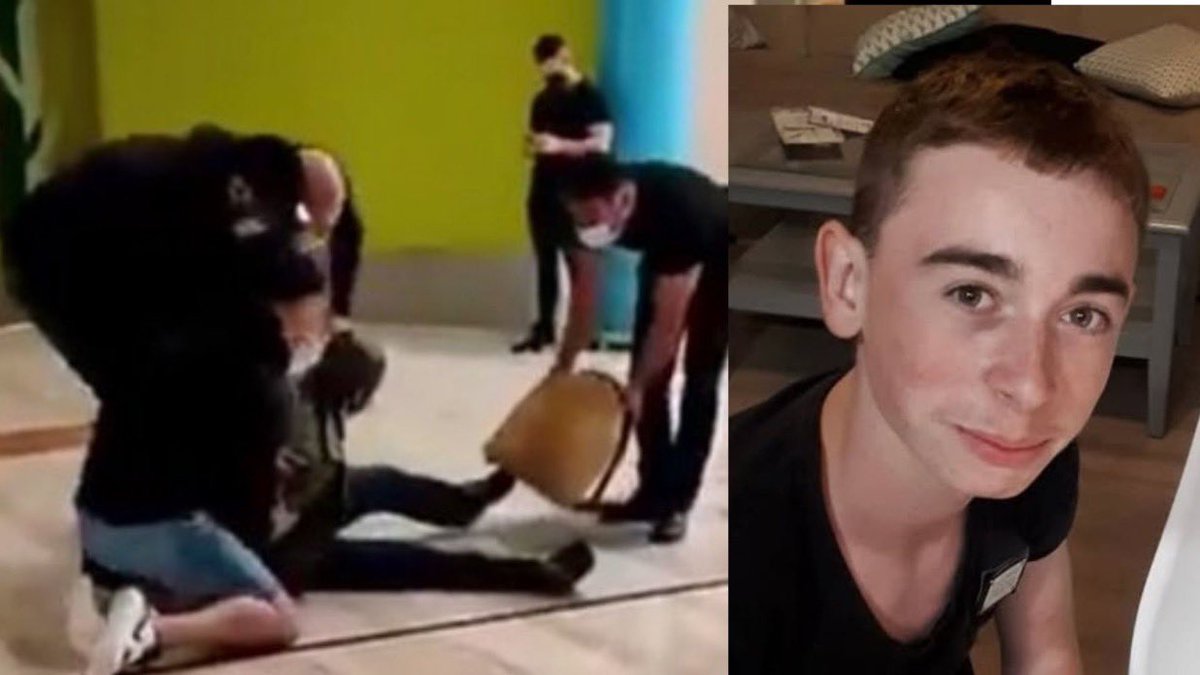
A French court has ruled that 67-year-old Senegalese national Ousmane Diallo cannot be held criminally responsible for the fatal stabbing of 18-year-old Théo in a mobile phone shop.
The incident occurred when Diallo became enraged after being informed he owed €93 for international calls to Senegal. He stabbed the young employee—Théo, who was on one of his first days on the job—once in the chest, resulting in his death.
Medical and psychiatric assessments led the court to determine that Diallo suffers from mental illness rendering him not criminally liable under French law. Instead of prison, he has been ordered to a psychiatric hospital for treatment until deemed recovered and no longer a danger.
The ruling has sparked widespread outrage online, particularly on X, where users highlight the victim's youth, the trivial trigger for the attack, and concerns over potential future release. Many describe it as a failure of justice, with comments questioning whether mental health determinations adequately protect the public or equate to leniency in violent crimes involving migrants.
No official appeals or further details on the exact psychiatric diagnosis or expected hospitalization duration have been publicly confirmed in immediate reports. The case underscores ongoing debates in France and Europe about criminal responsibility, immigration-related violence, and the application of diminished responsibility defenses.
BREAKING:
A French court rules that the 67-year-old Senegalese migrant Ousmane Diallo can’t be held criminally responsible for killing 18-year-old Théo.
Ousmane became furious in a mobile phone shop after having been told he would have to pay €93 for calls made to Senegal.
He stabbed Théo in the chest on one of his first days on the job.
The court ruled that Ousmane is mentally ill and will be sent to a psychiatric hospital instead until he recovers.
In March 2024, Singapore carried out the execution of Malaysian national Nagaenthran K. Dharmalingam by hanging after he had been convicted of drug trafficking. Authorities confirmed he was found guilty in 2010 for importing 42.72 grams of heroin across the border at Woodlands Checkpoint in April 2009, an amount that exceeded Singapore's strict trafficking thresholds triggering the mandatory death penalty under the Misuse of Drugs Act.
The inmate, who had spent over a decade on death row, consumed what would be his final meal shortly before the sentence was implemented. Video footage that circulated widely showed him eating calmly in a prison setting as guards stood nearby. He had confessed to the offense during initial investigations but later argued in appeals that he acted under duress, claiming a syndicate leader coerced him through threats and violence against his family and girlfriend.
His defense team repeatedly challenged the conviction and sentence, highlighting reports of borderline intellectual functioning and an IQ measured in the low range, which prompted strong international advocacy from human rights groups, the United Nations, and figures including the European Union and Malaysian officials who urged clemency or commutation to life imprisonment. Singapore's government and courts consistently rejected those arguments, ruling after medical evaluations that he did not meet the threshold for intellectual disability that would bar execution, and describing some late-stage legal motions as frivolous.
The case became one of the most prominent examples of Singapore's uncompromising stance on capital punishment for drug offenses, drawing renewed global criticism of the city-state's use of the death penalty while officials defended it as essential to maintaining one of the world's lowest drug-related crime rates and deterring trafficking through the region. The execution proceeded despite the sustained pleas, marking another instance where Singapore upheld its zero-tolerance policy amid ongoing debate over capital punishment's effectiveness and morality.
The Tragic Fate of Czesława Kwoka: A Documented Account
Czesława Kwoka, born on August 15, 1928, in the small village of Wólka Złojecka near Zamość in southeastern Poland, was a 14-year-old Polish Roman Catholic girl from a farming family. In late 1942, as part of the Nazi German Operation Zamość—a campaign of ethnic cleansing and forced resettlement to create "Lebensraum" (living space) for ethnic Germans in occupied eastern Poland—her village and surrounding areas were targeted. Approximately 116,000 Poles, including many Catholic families, were expelled from the Zamość region starting in November 1942.
On December 13, 1942, Czesława and her mother, Katarzyna Kwoka, were deported from a transit/resettlement camp in Zamość and arrived at the Auschwitz concentration camp in a transport of 318 women. Upon registration, Czesława was assigned prisoner number 26947, while her mother received 26946 (some records list slight variations in numbering for mother and daughter). The pair were among the non-Jewish Polish political prisoners and civilians deported as part of the broader Nazi persecution of ethnic Poles.
Shortly after arrival, Czesława was photographed for the camp's identification records by Wilhelm Brasse, a Polish inmate (prisoner number 3444) who had been a professional photographer before the war and was forced by the SS to take mugshot-style portraits of incoming prisoners—typically three views (front and profile). Brasse, who survived the camp and later gave testimony (including in the 2005 Polish documentary The Portraitist), recounted that just before the photograph was taken, a female camp supervisor (Kapo or SS Aufseherin) beat the girl with a stick because she did not understand German commands. This left visible bruising and a cut on her lower lip. Brasse reportedly asked her to wipe away the blood and tears before the shutter clicked, capturing her terrified expression that has since become one of the most recognized images from Auschwitz.
Czesława's mother, Katarzyna, died in the camp on February 18, 1943. Less than a month later, on March 12, 1943, Czesława herself was killed at age 14. Official camp death records, issued on March 23, 1943, falsely listed the cause as cachexia (extreme wasting) due to intestinal catarrh (gastroenteritis)—a common cover story used by Nazi administrators to obscure deliberate killings. Reliable survivor accounts and postwar historical research, including from the Auschwitz-Birkenau State Museum, confirm the actual method of murder was a phenol injection directly into the heart, a standard SS execution procedure in the camp for those selected for immediate liquidation.
Czesława Kwoka was one of an estimated 230,000 children and minors deported to Auschwitz between 1940 and 1945, of whom very few survived. Her registration photographs, preserved thanks in part to Brasse's efforts to save some negatives despite orders to destroy evidence, are held in the Auschwitz-Birkenau State Museum archives (Block 6 photographic exhibition) and have been shared by institutions like the United States Holocaust Memorial Museum and Yad Vashem. In 2018, Brazilian digital artist Marina Amaral colorized one of the images to mark the 75th anniversary of her death, making the human tragedy more immediate for modern audiences.
Her story stands as a documented example of the Nazi regime's systematic murder of Polish civilians, including children, in occupied Poland—separate from but parallel to the genocide of Jews.
14-year-old Polish girl Czesława Kwoka was murdered in the Auschwitz camp with a phenol injection into her heart.
Before taking the picture, the photographer asked her to wipe away her tears and the blood from her lower lip.
Baltimore Man Receives Life Sentence Plus 35 Years for Murdering Childhood Friend Just 48 Hours After Prison Release
Baltimore, Maryland — Matthew Crawley, 32 (age at sentencing in 2026; reported as 27 at time of arrest in 2025), was sentenced on February 19, 2026, to life in prison plus an additional 35 years for the first-degree murder of his childhood friend Taijah Addison.
The fatal shooting occurred on March 6, 2025, in the 700 block of Yale Avenue in Baltimore's Yale Heights/Southwest District neighborhood. Baltimore Police responded around 12:55 p.m. to reports of a shooting and found 38-year-old (some early reports listed 27–28) Taijah Addison seated in the driver's seat of a blue Honda Odyssey van. He had sustained multiple gunshot wounds — specifically three rapidly fatal shots to the neck, chest, and mouth — and was pronounced dead at the scene.
Surveillance video from the area captured the incident: Crawley exited the van, fired multiple shots into the driver's side, picked up spent shell casings, and fled the scene. Patrol officers located and arrested Crawley shortly afterward without incident in the nearby 500 block of Yale Avenue (near a dumpster). He was positively identified through video review, matching clothing, and other evidence including gunshot residue.
Crawley was charged with first-degree murder, use of a handgun in the commission of a crime of violence, and possession of a regulated firearm as a prohibited person. A jury found him guilty on these counts following a trial.
Notably, Crawley had been released from prison just 48 hours before the killing — on or about March 4, 2025 — after completing a 10-year sentence from a Baltimore County case for first-degree assault and use of a handgun in a crime of violence. Court records also indicate he was convicted of assaulting a correctional officer during that incarceration.
The sentence was announced by the Office of the State's Attorney for Baltimore City. Crawley's case drew widespread attention due to the rapid recidivism and the personal nature of the victim-offender relationship.
This incident highlights ongoing challenges with violent reoffending in Baltimore following release from long-term incarceration.
Baltimore man sentenced to life in prison plus 35 years for the murder of his childhood friend less than 48 hours after being released from prison.
He had been released from prison after serving a 10-year sentence for assault and use of a handgun in a crime of violence.
In January 2023, in the quiet town of Duxbury, Massachusetts, a young mother named Lindsay Clancy sent her husband Patrick out on a simple errand to pick up food. While he was gone, she used exercise bands to strangle their three small children—Cora, who was five; Dawson, three; and baby Callan, just eight months old. After the children were gone, she attempted to end her own life by cutting her neck and jumping from a second-floor window of their home. The fall left her permanently paralyzed from the waist down.
She was quickly taken into custody and charged with three counts of murder. From the beginning, her defense centered on severe postpartum mental illness. Her lawyers argued that what happened stemmed from profound postpartum psychosis, made far worse by an aggressive regimen of psychiatric medications—up to twelve different drugs at one point, including multiple benzodiazepines, antidepressants, antipsychotics, and sleep aids. Her husband had grown so alarmed by how detached and "zombified" she had become that he went to her doctors just one week before the tragedy, pleading with them that the medications were harming her and that she was hearing voices. Family members were also aware of her deteriorating state and had been trying to support the household through the crisis.
For years afterward, Lindsay Clancy remained at Tewksbury State Hospital, appearing at pretrial hearings only by video link from her hospital bed. On February 20, 2026—more than three years after the killings—she was wheeled into Plymouth Superior Court in person for the first time. Dressed in a black suit, she sat silently in her wheelchair beside her attorney, Kevin Reddington, as the brief hearing unfolded. Reddington described the period leading up to the incident as a "brutal existence" for the family, emphasizing the warnings that had gone unheeded.
The hearing focused on upcoming steps: debates over whether her court-ordered psychiatric evaluation (set for April) could be recorded, requests for early access to potential juror information, and a defense motion to split the trial into two phases—one to determine if the acts occurred, and a separate one to decide whether she was not criminally responsible due to a mental disease or defect under Massachusetts law.
The judge set arguments on several motions for March 2, 2026, with a final pretrial conference planned for June 18. The murder trial itself is now firmly scheduled to begin July 20, 2026, in Plymouth County—despite earlier defense efforts to move it elsewhere because of widespread publicity.
The case remains unresolved, leaving a grieving father, a paralyzed defendant, and a community still grappling with questions about postpartum psychosis, the dangers of polypharmacy in mental health treatment, and where responsibility truly lies when a mind unravels under the weight of illness and medication.
NEW: Mom accused of sending her husband on an errand so she could kill her 3 kids before paralyzing herself by jumping out a window, appears in court.
The attorney of Lindsay Clancy says she was prescribed as many as 12 medications by doctors.
Her husband says she was so over medicated that she began hearing voices in her head.
“Her husband actually went to the doctor the week before to ask for help and said you're turning her into a zombie,” defense attorney Kevin Reddington said.
“It was just a brutal, brutal existence that they were living. Her parents were aware of this, they were trying to help out the husband as well.”
The Massachusetts woman was charged with the murders of her three children: Cora, 5, Dawson, 3, and Callan, 8 months.
Clancy’s trial is set for July.