CÔTE D’IVOIRE-GHANA HIGH-LEVEL SUMMIT ON COCOA ECONOMY
JOINT DECLARATION
At the meeting in Abidjan on June 16, 2026, on the occasion of the Côte d’Ivoire-Ghana High-Level Summit on the Future of the Cocoa Economy, H.E. Alassane OUATTARA, President of the Republic of Côte d’Ivoire, and H.E. John Dramani MAHAMA, President of the Republic of Ghana, renewed their shared commitment to promoting a sustainable cocoa economy, placing the farmer at the center of priorities for sector governance and value sharing.
This commitment is built on the Abidjan Declaration of March 26, 2018, which serves as the foundation for cooperation between the two States in the cocoa sector.
Following a review of the progress made in recent years, the two Heads of State:
* Considering that Côte d’Ivoire and Ghana account for about 60% of global cocoa production, which confers upon them shared leadership and a special responsibility for the future of the sector;
* Recognizing that notable achievements of their joint efforts are the creation of the Côte d’Ivoire-Ghana Cocoa Initiative (CIGCI), the establishment of the Living Income Differential (LID), the harmonization of marketing and price announcements to producers, the implementation of traceability and the African Regional Standards for Sustainable Cocoa (ARS-1000), and the cooperation between research institutes to combat the Cocoa Swollen Shoot Virus Disease (CSSVD);
* Aware that the sector remains exposed to major challenges such as price volatility, illegal gold mining, adverse effects of climate change, the rise in the use of cocoa substitutes and equivalents, and the increasing demands of international sustainability regulations;
* Aware that Africa, which accounts for about 80% of global production, still captures only a marginal share of the value in the cocoa-chocolate supply chain;
* Convinced that fair remuneration for farmers is a pillar of the sector’s sustainability and a requirement for economic justice and social stability.
Consequently, agree to:
• Harmonize farm-gate price policies to optimize producer remuneration, stabilize the market and strengthen their commercial cooperation through several key measures, including market synergy, the alignment of premiums and the harmonization of crop-season calendars;
• Guarantee producers fair and decent remuneration and place them at the heart of the cocoa value chain;
• Strengthen scientific cooperation with a focus to the integrated management of cocoa diseases, especially Swollen Shoot;
• Create added value by increasing processing capacity, encouraging regional and continental trade, and stimulating national and regional consumption of cocoa-based products;
• Expand the Côte d’Ivoire-Ghana Cocoa Initiative to other African countries, to enhance regional cooperation, harmonize sector policies, strengthen collective bargaining power on global markets, and coordinate responses to the emerging challenges of the cocoa economy.
DONE AT ABIDJAN, ON JUNE 16, 2026
H.E. ALASSANE OUATTARA
PRESIDENT OF THE REPUBLIC OF
CÔTE D’IVOIRE
H.E. JOHN DRAMANI MAHAMA
PRESIDENT OF THE REPUBLIC OF
GHANA
6. Use of cocoa substitutes
The Committee expressed concern about the growing use of cocoa substitutes, reformulation strategies, and approaches adopted by chocolate manufacturers to reduce cocoa content in finished products.
The Committee recommended that the Initiative consider this matter to safeguard the cocoa economies of our countries.
Conclusion
At the conclusion of its work, the Committee reaffirmed the two countries’ determination to strengthen cooperation and promote a shared vision for a more sustainable, prosperous, and resilient cocoa sector.
The Committee emphasized that enhanced coordination on producer pricing policy, cooperation between research institutes, value-added growth, market development, and cooperation with other African producer countries remain essential to improve producers’ incomes and ensure the long-term viability of the cocoa economy.
Furthermore, the Steering Committee expressed its concern regarding the phenomenon of illegal gold mining, which threatens the sustainability of the cocoa sector.
A while ago, I presented the conclusions of the 7th Meeting of the Steering Committee of the Côte d’Ivoire–Ghana Cocoa Initiative (CIGCI) at the Côte d’Ivoire–Ghana High-Level Summit on the Future of the Cocoa Economy:
“The Steering Committee of the Côte d’Ivoire-Ghana Cocoa Initiative (CIGCI) held its regular meeting on 15 June 2026 in Abidjan.
Co-chaired by Ghana’s Minister of Finance, Dr. Cassiel Ato Forson, and Côte d’Ivoire’s Minister of Agriculture, Mr. Bruno Nabagné Koné, this meeting provided an opportunity to review bilateral cooperation.
The ministers agreed on the strategic levers to ensure the sector’s sustainability, competitiveness, and prosperity.
This report presents the key decisions and recommendations adopted by the Committee.
1. Harmonization of farm-gate pricing policies
To assure producers’ remuneration and stabilize the market, the two countries agreed to harmonize farm gate prices through a number of measures, including:
Market cooperation: reinforce trading room collaboration, data sharing, and harmonization of crop year calendars.
Alignment of principles of price determination to reduce gaps in producer prices and country differentials through a coordinated approach.
Task Force: creation of a technical group, comprising experts from both countries, to design the price coordination framework and periodically review prices.
Harmonization of crop year calendars: official change to the cocoa year, set from 1 September to 31 August from the 2026/2027 marketing year onwards.
The Committee thus reaffirms its commitment to the long-term coordination of cocoa price management and marketing.
2. Strengthening scientific cooperation
The Committee emphasized the importance of strengthening the partnership between the national research institutes of both countries. Efforts will focus primarily on:
Disease control, particularly in relation to cocoa swollen shoot virus disease.
Agricultural innovation, through the development of cocoa varieties more resilient to climate change.
To ensure that these technological advances directly benefit farmers, the Committee also recommends increasing public and private investment in research and development (R&D).
3. Implementation of the African Regional Standard (ARS-1000)
The Committee commended the efforts of the countries towards the effective implementation of the ARS-1000 standard for sustainable cocoa production and recommended the experts to work assiduously towards the acceptance of the ARS premium by buyers.
4. Expansion of the Côte d’Ivoire–Ghana Cocoa Initiative
In accordance with the provisions of its charter and in view of the need for coordinated action among African producing countries, the Committee recommended officially opening the Initiative to other countries, notably Nigeria and Cameroon. This expanded integration aims to:
Reinforce regional cooperation and harmonize sectoral policies.
Strengthen collective bargaining power in global markets.
Facilitate the sharing of best practices, market data, and research findings.
Coordinate responses to new challenges facing the cocoa economy.
5. Increasing value addition
Africa produces 80% of the world’s cocoa but captures a negligible share of the sector’s profits.
In light of this, the Committee reaffirmed the strategic importance of accelerating efforts towards local processing and industrialization within producing countries.
Priority actions include the need to:
Increase national processing capacities;
Encourage regional and continental trade;
Stimulate domestic and regional consumption of cocoa-based products.
The Steering Committee emphasized that greater value addition will contribute to job creation, industrial development, export diversification, and better retention of income within producing countries.
Excerpts of my opening remarks as Chairman of the Steering Committee of the Côte d’Ivoire–Ghana Cocoa Initiative (CIGCI) at the ongoing 7th Ordinary Meeting:
“I recall our virtual meeting of 4 May 2026 and our collective resolve to convene here in Abidjan for this in-person meeting, which is critical to reaffirming and strengthening our collaboration.
Sustained dialogue and deeper cooperation are not ends in themselves but rather means to an end.
While we may not be able to resolve all our challenges here today, our collective determination to make a genuine and lasting positive impact on our farmers, our countries, and future generations should remain the driving force that guides our work.
The relevance and necessity of this collaboration are undeniable, and we must ensure that it succeeds.
Allow me to reiterate what I said during our virtual meeting in May:
"As the world’s two leading cocoa-producing countries, we must engage more consistently and strategically to protect our economies.
By doing so, we can better anticipate challenges, mitigate shocks, and shape the future of the industry rather than merely reacting to its disruptions."
I therefore encourage us all to engage openly, constructively, and with a shared sense of purpose as we deliberate over the coming hours. Let us focus on identifying practical solutions and concrete actions that will strengthen our partnership and advance the interests of our farmers and our countries.
May God continue to bless our two countries and may we all serve as worthy ambassadors of sustainable and positive change.
The cocoa sector deserves to be transformed into one that is more resilient, prosperous, and profitable for the benefit of both our countries and our farmers.
Thank you for your kind attention.”
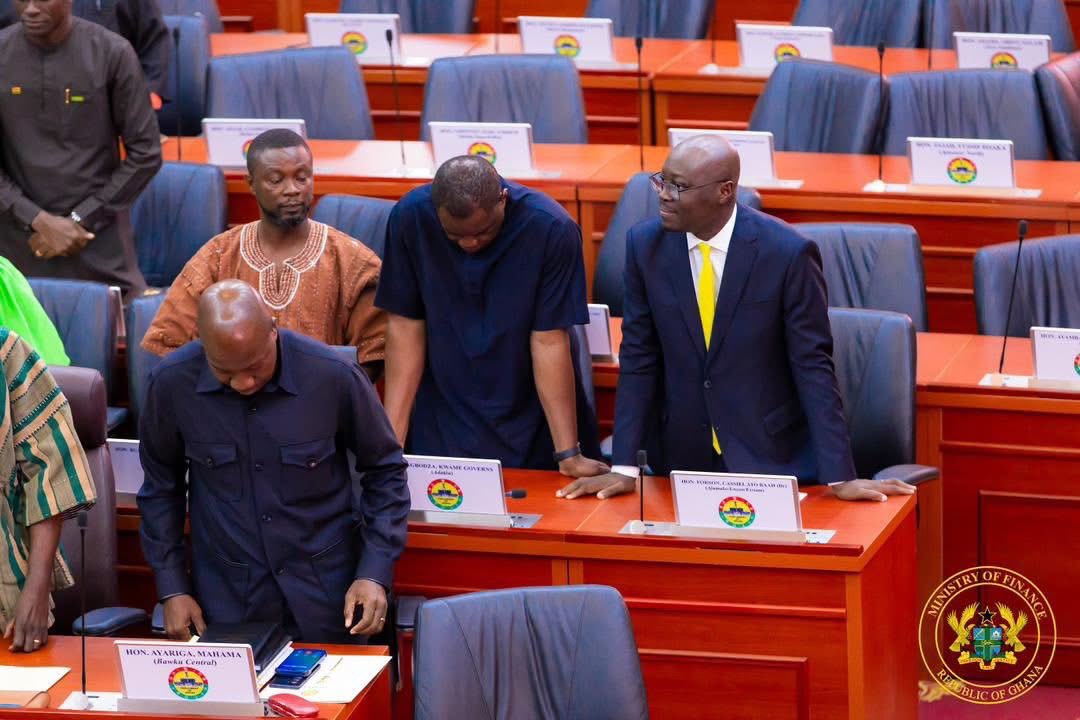
Not long ago, I informed Parliament that Ghana had successfully completed its IMF bailout programme.
Through bold reforms, fiscal discipline, and responsible economic management, we have brought inflation down, stabilised the cedi, rebuilt investor confidence, and returned the economy to a path of strong growth.
Today, Ghana is no longer focused on recovery. We have moved decisively into a new phase defined by growth, investment, jobs, and opportunity.
Our focus now is on building The New Economy.
At the Ghana–UK Investment Summit 2026, I outlined Government’s vision for the New Economy!
The New Economy is an ambitious framework that will be unveiled in the 2027 Budget to attract investment into commercial agriculture, mining value addition, energy, and strategic infrastructure.
The New Economy will drive growth, create jobs, and unlock sustainable opportunities for investors. Ghana is open for business!
33. Consequently, no further IMF financial bailout will be required in the foreseeable future. I repeat, no further IMF financial bailout will be required in the foreseeable future.
34. We have evolved from a position of “supplicant” to one of “partner”.
35. Mr. Speaker, it is therefore my singular honour to announce to the House that Ghana has successfully concluded the final review of the current IMF financial bailout programme, pending approval by the IMF Executive Board.
36. Mr. Speaker, as Ghana moves beyond the Extended Credit Facility, our engagement with the International Monetary Fund will transition to a reform-focused, non-financing Policy Coordination Instrument.
37. The Policy Coordination Instrument is a non-financing IMF instrument designed for countries that do not require IMF financing but seek a credible framework for reform, regular policy reviews, and a stronger signal to investors and development partners.
38. For Ghana, this marks an important shift—from seeking financial bailout to engaging as a credible reform partner—while continuing to benefit from policy discipline, external validation, and strengthened investor confidence.
39. Mr. Speaker, the PCI will enable us to continue leveraging the IMF’s regular policy assessments and expertise as a signal to investors, thereby certifying the credibility of our stewardship and further strengthening our credit rating.
40. In other words, Ghana has moved from the intensive-care unit (ICU) to the wellness center.
41. Mr. Speaker, to build on this hard-won foundation of stability, President Mahama’s administration has designed a new economic programme, The New Economy, to be unveiled in the 2027 Budget.
42. The New Economy will move Ghana from stabilization to transformation, with a clear focus on sustainable jobs, higher productivity, greater resilience, and broad-based prosperity.
43. Mr. Speaker, President Mahama is deeply grateful to Ghanaians for their sacrifice, patience, and steadfast forbearance.
44. We do not take their support for granted.
45. Mr. Speaker, our solemn pledge is that we will not be complacent; we will continue the hard work of building the Ghana We Want.
46. May God bless our homeland Ghana. I thank you, Mr. Speaker.
STATEMENT ON GHANA’S NEW ENGAGEMENT WITH THE IMF
1. Rt. Hon. Speaker, I come before this House to provide an update on the substantial progress we have made in restoring macroeconomic stability and debt sustainability ahead of the original timeline.
2. This address will also announce a new chapter in Ghana’s engagement with the International Monetary Fund.
3. Mr. Speaker, this is a consequential moment in President Mahama’s Reset Agenda and, indeed, in the life of our Nation.
4. It signifies Ghana’s passage from crisis management to stability, from dependence on financial bailout to partnership in reform, and from uncertainty to renewed confidence in our economic future.
5. Mr. Speaker, to appreciate the significance of this moment, we must briefly recall the gravity of the crisis Ghana faced in 2022.
6. On 1st July 2022, the previous administration turned to the IMF for a financial bailout after their gross mismanagement of the economy had driven the country into fiscal, balance of payments and debt crises.
7. President Mahama, the then NDC flag bearer, acknowledged the decision as necessary, though a belated intervention to arrest the decline and to ease the severe hardship being borne by the Ghanaian people through no fault of theirs.
8. The scale of that crises was profound, if not traumatic:
• The cedi came under intense pressure;
• inflation rose to painful levels, investor confidence deteriorated sharply;
• external reserves were strained; and
• Ghana lost access to the international capital market.
9. As a result, credit rating agencies responded by downgrading Ghana’s sovereign rating, repeatedly, in 2022, to levels never seen in our country’s history:
• In February that year (2022), Moody’s downgraded Ghana to Caa1.
• In August, S&P downgraded Ghana to CCC+.
• Again, in August, Fitch downgraded Ghana to CCC.
• And in September, Fitch again, downgraded Ghana to CC.
• Finally, in October 2022, Ghana lost access to the international capital market with Ghana’s Eurobond spreads widening to an all-time high of 3400 basis point.
10. This further deepened the economic and financial crises, to the point that COCOBOD was unable to secure a syndicated loan for the first time in many years.
11. Also, some domestic commercial banks could no longer obtain external funding or establish letters of credit, as international banks declined to confirm those instruments.
12. Mr. Speaker, on 5th December 2022, following the announcement that Ghana could not meet its maturing domestic debt obligations, the NPP administration introduced the Domestic Debt Exchange Programme (DDEP), imposing significant haircuts on domestic bondholders.
13. On 13th December 2022, Ghana formally requested debt treatment under the G20 Common Framework in order to restructure its bilateral debt portfolio of more than US$5 billion.
14. On 19th December 2022, the NPP administration again defaulted on the servicing of Ghana’s external commercial debt obligations.
15. The far-reaching haircuts affected:
• The Bank of Ghana;
• commercial banks;
• non-bank financial institutions;
• pension funds;
• insurance companies;
• individual bondholders; and
• even pensioners were not spared.
16. Mr. Speaker, ordinary Ghanaians bore the heaviest burden of that crisis. The consequences were felt across households, businesses, and institutions through:
• rapid depreciation of the cedi;
• runaway inflation of more than 50 percent;
• massive erosion of disposable incomes and savings;
• painful haircuts on domestic bondholders, including pensioners;
• punitive interest rates that constrained private sector activity;
• the imposition of nuisance taxes including E-Levy, Betting Tax, COVID-19 Levy and Emissions Tax;
• job losses, business distress, and weakened investor confidence; and
• a sharp rise in poverty and economic insecurity.
25. Among the principal measures we undertook were the following:
• We introduced the Public Financial Management (PFM) commitment authorization to control government expenditure;
• We audited government arrears and payables to eliminate recycled IPCs and overpayments;
• We stopped the misuse of the tax refund account to finance schemes such as SML;
• We amended the PFM Act to institutionalize a 1.5% of GDP primary surplus and 45% debt-to-GDP by 2034;
• We introduced the GOLDBOD to enhance FX stability and reserve accumulation;
• We operationalized the Sinking Fund with dedicated Cedi and US Dollar buffers to manage future debt maturities;
• We removed nuisance taxes such as E-Levy, Betting Tax, Emissions Levy, and VAT on motor insurance to support private sector activity;
• We established the Office of Value for Money to improve public expenditure efficiency;
• We established the Independent Fiscal Council to check compliance with the fiscal rules;
• We concluded IPP renegotiations, saving over US$250 million, and cleared over US$1 billion of legacy arrears in the energy sector;
• We reduced ministers of state from 123 (later 88) to 60; and
• We reduced government ministries from 30 to 23; and
26. Mr. Speaker, I am pleased to report that these measures have produced clear and measurable results.
• Real GDP growth reached 6.0% in 2025, marking the highest expansion in the post-pandemic period;
• Most importantly, non-oil GDP reached 7.6%, the highest in 14 years;
• For the first time, Ghana’s economy crossed the US$100 billion threshold in 2025, making it a fully-fledged emerging market economy;
• Ghana’s economy is now ranked the 8th largest in Africa;
• Ghana’s per capita income increased to US$3,385 for the first time;
• The primary balance recorded a surplus of 2.5% of GDP in 2025;
• Public debt-to-GDP ratio reduced substantially from 61.8% in 2024 to 44.7% at the end of 2025;
• Ghana achieved the debt-to-GDP target of 45% well ahead of the IMF programme and the PFM debt rule target of 2034;
• Debt service-to-domestic revenue ratio declined from 55.7% in 2022 to 28.8% in 2025, even with the resumption of full Eurobond obligations in 2025;
• Ghana achieved a moderate risk of debt distress from a high risk of debt distress under the DSA;
• Inflation declined from 23.8% in December 2024 to 3.4% in April 2026.
• 91-Day Treasury Bill has declined by over 2300 basis points from 28.4% in January 2025 to 4.8% in April 2026;
• The 2-year, 3-year, and 5-year bonds are now trading in the range of 11.0%–12.6%, compared to 20% in the previous year;
• The monetary policy rate has declined by 1,300 basis points from 27% in January 2025 to 14.0% in April 2026;
• The current account balance recorded a surplus of 8.3% of GDP in 2025; and
• The cedi appreciated by 40.7% against the US Dollar in 2025.
27. Mr. Speaker, these results affirm a simple but enduring truth: fiscal prudence and discipline always deliver results.
28. Macroeconomic stability is not an abstract policy objective; it is the foundation for jobs, incomes, investor confidence, and national prosperity.
29. It is also the lesson we must carry forward if we are to ensure that Ghana never again relives the hardships of 2022.
30. Prudence does not mean we are failing to spend. We can only spend what we have. Prudence is the difficult road to wealth creation.
31. Mr. Speaker, at the 77th Annual New Year School on 6th January 2026, President Mahama stated that:
"It is my hope that this will be the very last time we will ever go for a bailout from the IMF…It must be the 17th and the last time that Ghana goes for a bailout from the IMF."
32. The President further noted:
"We'll continue our collaboration with the IMF under Article 4 and other instruments... But it will definitely be the last time we go on our knees to beg for a bailout."
46. By 2050, one in four people in the world will be African. The critical question is whether Africa’s young population becomes a demographic dividend… or a demographic emergency.
47. Will young Africans become builders of globally competitive enterprises? Or consumers in an unequal digital world?
48. Will Africa produce innovation? Or just import innovation?
49. Will African cities become engines of productivity or monuments to unmanaged urbanisation?
50. These questions will shape the next quarter of a century.
Distinguished Guests,
51. The global relevance of Africa will not be gifted to us. It must be built deliberately through integration, industrialisation, digital transformation, energy security, strong institution, strategic leadership.
52. Even more crucially, it must be built through a new mindset.
53. A mindset that sees Africa not as a continent waiting for rescue… but a continent ready for partnership.
54. Not a continent at the margins of the future… but a continent capable of shaping the future.
55. This is why gatherings such as the Ishmael Yamson & Associates Business Roundtable matter deeply.
56. Because Africa’s transformation will require Governments, businesses, academia, financiers, innovators, and civil society to think beyond electoral cycles and beyond short-term transactions.
57. We must think beyond this week. We must think for decades. We must think continentally. And we must think strategically.
Ladies and Gentlemen,
58. The next quarter of a century will ask two defining questions of Africa:
i. Did we finally convert our potential into power and prosperity?
ii. Did we move from dependence to competitiveness?
59. History will judge our generation by how we answer those questions.
60. Let us therefore rise with ambition equal to our prospects.
61. Let us build an Africa that trades with itself.
An Africa that powers itself.
An Africa that industrialises.
An Africa that innovates.
An Africa that governs effectively.
An Africa that is efficient.
And an Africa that commands global relevance not through sentiment… but through performance.
62. The next quarter of a century belongs to those prepared to build it.
63. Let Africa build it.
64. Let Ghana lead it.
65. I wish the 12th Ishmeal Yamson and Associates Business Roundtable every success. I look forward to the robust and illuminating discussions that will follow.
66. Thank you.
My keynote address at the Ishmael Yamson & Associates Business Roundtable on the theme “unlocking the next quarter century: harnessing Africa’s digital infrastructure, trade & integration, energy & industry, governance, and societal development for global relevance”
1. Thank you very much for the warm welcome. Let me congratulate Ishmael Yamson & Associates for twelve years of consistency and intellectual leadership on this important platform.
2. I am pleased to join this distinguished gathering at a moment of profound consequence for Ghana, Africa, and for the future of emerging economies within a rapidly changing global order.
3. Over the past twenty-five years, Africa has not stood still. Across the continent, we have expanded infrastructure, deepened digital connectivity, strengthened institutions, educated more of our people, and created one of the most dynamic consumer and enterprise markets in the world.
4. Yet, we must also confront the reality that this progress has not sufficiently translated into transformation.
5. Africa still stands at a defining historical crossroad.
6. For centuries, we supplied the world with raw materials, labour, and strategic resources. However, we captured only a fraction of the value created from them.
7. Today, the pattern risks repeating itself in a new form. Our raw materials still leave. Increasingly, our data leaves.
8. The tragedy of Africa’s economic history, therefore, is not the absence of resources. It has been the persistent export of value and the import of dependency.
9. But this history is not our destiny. We must change the narrative.
10. The next quarter of a century presents Africa with perhaps its greatest opportunity since political independence.
11. The defining question before this generation for the next quarter of a century is this: will Africa finally become a production and value addition force within the world economy?
Ladies and Gentlemen,
12. Africa is entering this new era with extraordinary strategic advantages.
13. Our continent is home to more than 1.4 billion people, with one of the youngest populations in the world. The African Continental Free Trade Area creates a combined market exceeding US$3.4 trillion, making it the largest free trade area in the world.
14. And yet intra-African trade still accounts for only about 15 percent of Africa’s total trade, compared to nearly 70 percent within Europe and over 50 percent in Asia.
15. That statistic alone should provoke urgency reflections. Why should it take longer and cost more to move goods from one African border to another than across oceans?
Ladies and Gentlemen,
16. The next phase of Africa’s rise will be driven by infrastructure.
i. Commercial Agriculture infrastructure;
ii. Energy infrastructure;
iii. Transport and logistics infrastructure;
iv. Digital infrastructure;
v. financial infrastructure; and
vi. Human capital infrastructure.
17. Without these, integration will remain a dream.
18. Today, the global economy is increasingly digital. Artificial intelligence, cloud computing, fintech, digital payments, e-commerce, and data governance are reshaping competitiveness.
19. The nations that control data infrastructure and digital ecosystems will shape the future global economy.
20. Africa cannot afford to become just a consumer in the digital age. We must ask ourselves:
i. Who owns Africa’s digital rails?
ii. Who stores Africa’s data?
iii. Who finances Africa’s fibre backbone?
iv. Who controls Africa’s payment systems?
21. These questions transcend technology. They are economic transformation and sovereignty questions.
22. Africa requires a continental digital strategy that supports:
i. regional data centres and cloud infrastructure;
ii. Affordable broadband expansion;
iii. Cross-border digital payments systems;
iv. Cybersecurity and digital trust;
v. AI readiness; and
vi. Digital skills for millions of young Africans
23. Because the next global economic frontier will not simply be built with roads and ports. It will also be built with code, connectivity, computation, and innovation.
24. Fortunately, Ghana recognises this imperative.
25. Under the Reset Agenda of H.E. John Dramani Mahama we are going further. From digital public infrastructure reforms to fintech promotion, Ghana is deepening financial inclusion, improving public service delivery, and supporting digital entrepreneurship.
Distinguished Guests,
26. We cannot industrialise in darkness. Energy remains central to Africa’s transformation.
27. Yet over 600 million Africans still lack access to electricity. Africa collectively loses an estimated US$25 billion annually to power outages.
28. This is unacceptable in a continent endowed with abundant gas, hydro, solar, wind, and critical minerals required for the global energy transition. How can Africa speak meaningfully about industrialisation without reliable and affordable power?
29. The next quarter of a century must therefore become Africa’s industrial century. Not just extracting lithium. But refining lithium. Not just exporting bauxite. But producing aluminium. Not just exporting cocoa. But processing and building competitive value chains.
30. Ghana understands this challenge deeply. We are targeting 3,000 megawatts of installed generation capacity by 2030, with at least 40 percent from renewables.
31. Ladies and Gentlemen,
Trade integration is an economic survival strategy.
32. The AfCFTA represents one of the most consequential economic projects in modern African history. It could lift about 30 million Africans out of extreme poverty and boost continental income by US$450 billion by 2035.
33. But agreements alone do not create integration. Infrastructure, Efficient borders, payments systems, policy coordination and trust create integration.
34. We must therefore confront difficult questions:
i. Can African businesses compete globally if transport costs remain among the highest in the world?
ii. Can African manufacturers scale if markets remain fragmented?
iii. Can we build continental champions without harmonised regulations and integrated capital markets?
35. Clearly, the world is reorganising around regional blocs, supply chains, strategic autonomy, and economic resilience.
36. Africa must not arrive late again.
Distinguished Ladies and Gentlemen,
37. Governance reforms will determine whether Africa’s opportunities become prosperity or another missed historical moment.
38. Good governance is about respecting the social contract. It is also about:
i. Institutional credibility;
ii. Policy predictability;
iii. Rule of law;
iv. Fiscal discipline;
v. Transparency and public trust.
39. Investors do not just invest in resources. They invest in systems.
40. Africa therefore requires institutions capable of supporting long-term transformation rather than short-term cycles.
41. In Ghana, we remain committed to sustaining macroeconomic stability, strengthening investor confidence, entrenching fiscal discipline, and creating the conditions for sustainable private sector-led growth.
42. Because we recognise that macroeconomic stability is foundation for jobs, investment, industrialisation, and opportunities.
Ladies and Gentlemen,
43. The ultimate purpose of economic transformation is to ensure the creation of quality jobs and improved standard of living for all.
44. We must realise that this transformation would be driven by sustained growth that includes young people and women as well as provides jobs and drives social mobility. Productivity must be at the heart of this growth.
45. Africa’s greatest resource is not beneath the ground. It is above the ground. It is our people, our youth, our creativity and our resilience.
An update on the phenomenal work being undertaken by the Ghana Armed Forces on President Mahama’s transformational Accra-Kumasi Expressway project.
So far, about 51km of the entire stretch has been successfully cleared.
In June, following assessments by the relevant state agencies, the Ghana Armed Forces will commence the payment of compensation to affected citizens.
Steadily, deliberately, and with remarkable professionalism, the foundation is being laid for what will become one of Ghana’s most strategic and economically transformative corridors.
The progress made so far is truly impressive.
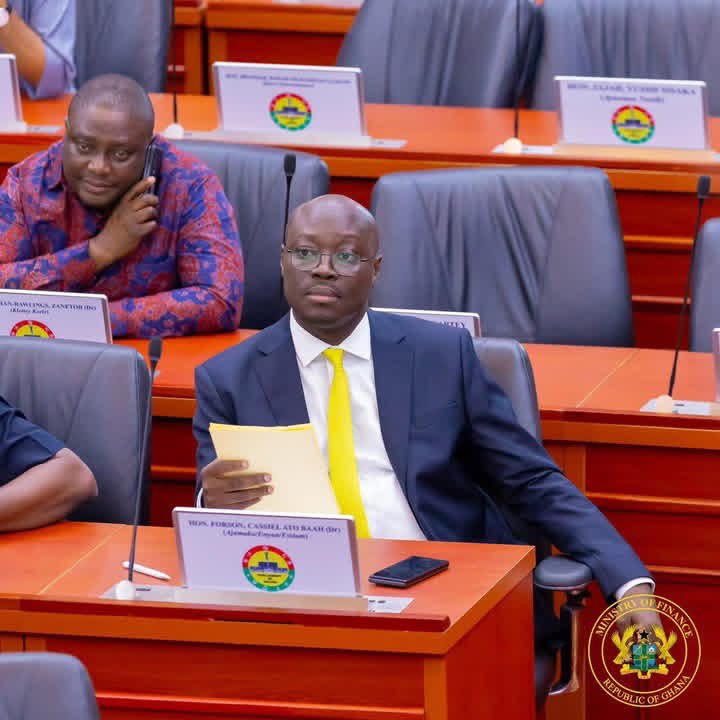
A while ago, I laid the following reports before Parliament:
(a) Annual Report on the Management of the Energy Sector Levies and Accounts for the Year 2025.
(b) Reconciliation Report on the Petroleum Holding Fund for the Year 2025.
(c) Annual Public Debt Management Report for the 2025 Financial Year.
(d) Annual Report on Public-Private Partnership Projects for the Year 2025.