"Microservices first" indicates that the person advocating that idea isn't thinking like an architect. No single architectural pattern is appropriate in all contexts. An architect will first identify the essential system characteristics and then pick an architectural pattern with pros and cons that match the characteristics. Microservices are fault-tolerant, highly elastic and scalable, incremental-development friendly, and support hot deploys into running systems. They are also slow, complex, and network-based (I see that as a huge negative). Use the pattern if those characteristics (pros and cons) work for you. If they don't, use a different pattern. There's also a third choice. A very simple microservice system can run as threaded components in a monolith, thereby giving up the elasticity but also lowering the complexity quite a bit by getting rid of the network issues. In other words, you can meld patterns to create new patterns. It's all about identifying characteristics and choosing (or inventing) appropriate patterns.
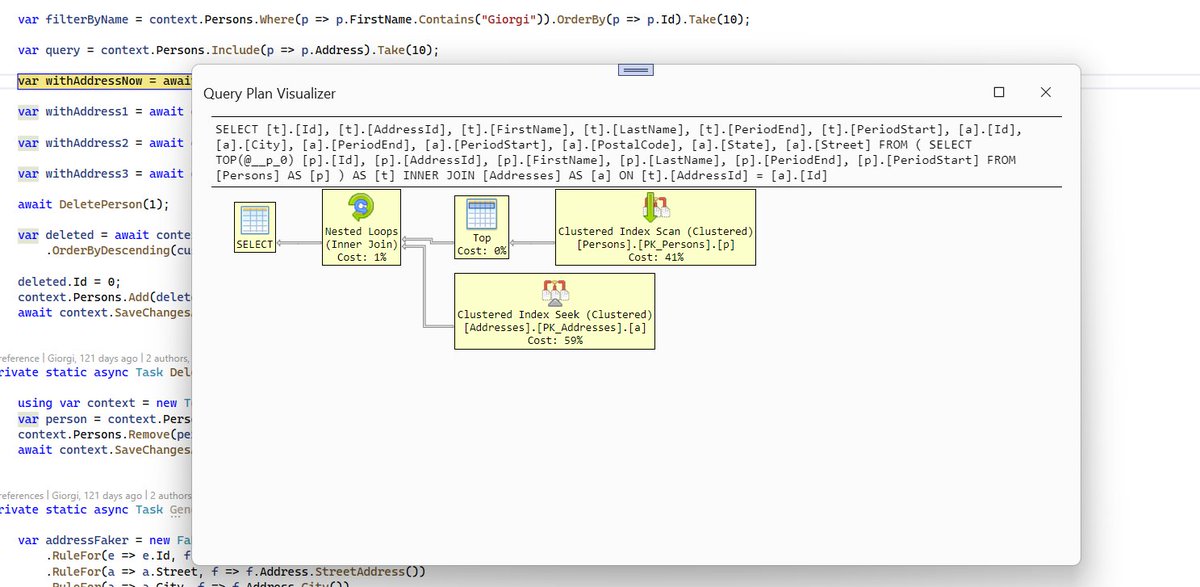
Entity Framework Query Plan Visualizer ⬇
This new Visual Studio extension by @GioDalakishvili looks like it could be a game changer. It enables us to view the query plan of our queries directly inside VS.
#dotnet
𝗪𝗵𝘆 𝗱𝗼𝗲𝘀 𝗚𝗼𝗼𝗴𝗹𝗲 𝗿𝗲𝗰𝗼𝗺𝗺𝗲𝗻𝗱 𝗠𝗼𝗱𝘂𝗹𝗮𝗿 𝗠𝗼𝗻𝗼𝗹𝗶𝘁𝗵𝘀 𝗶𝗻𝘀𝘁𝗲𝗮𝗱 𝗼𝗳 𝗠𝗶𝗰𝗿𝗼𝘀𝗲𝗿𝘃𝗶𝗰𝗲𝘀?
In the last decade, we have seen a massive trend of using microservices everywhere. We were building systems for a few hundred or thousand users and wanted to know how to make a system for millions of users. This was over-engineering and needed to be corrected. Why it was wrong? Because the development lasted long and we created incredibly complex systems, hard to maintain. This is especially true for startups that must go fast and stay simple.
A recent paper by authors from Google found that most of their developers split binaries for one of the following reasons: it improves performance, fault tolerance, and abstraction boundaries and allows for flexible rollouts.
Yet, splitting applications into microservices has its challenges:
🔸 𝗜𝘁 𝗵𝘂𝗿𝘁𝘀 𝗽𝗲𝗿𝗳𝗼𝗿𝗺𝗮𝗻𝗰𝗲. The overhead of serializing data and sending it across the network is increasingly becoming a bottleneck
🔸 𝗜𝘁 𝗵𝘂𝗿𝘁𝘀 𝗰𝗼𝗿𝗿𝗲𝗰𝘁𝗻𝗲𝘀𝘀. It is incredibly challenging to reason about the interactions between every deployed version of every microservice.
🔸 𝗜𝘁 𝘁𝗮𝗸𝗲𝘀 𝘄𝗼𝗿𝗸 𝘁𝗼 𝗺𝗮𝗻𝗮𝗴𝗲. Rather than having a single bi-nary to build, test, and deploy, developers must manage 𝑛 different binaries, each on their release schedule.
🔸 𝗜𝘁 𝗳𝗿𝗲𝗲𝘇𝗲𝘀 𝗔𝗣𝗜𝘀. Once a microservice establishes an API, it becomes easier to change by breaking the other services that consume the API.
So, they proposed the following approach:
𝟭. 𝗪𝗿𝗶𝘁𝗲 𝗺𝗼𝗻𝗼𝗹𝗶𝘁𝗵𝗶𝗰 𝗮𝗽𝗽𝗹𝗶𝗰𝗮𝘁𝗶𝗼𝗻𝘀 that are modularized into logically distinct components. A component is a long-lived agent, similar to an actor.
𝟮. 𝗟𝗲𝘃𝗲𝗿𝗮𝗴𝗲 𝗮 𝗿𝘂𝗻𝘁𝗶𝗺𝗲 𝘁𝗼 𝗱𝘆𝗻𝗮𝗺𝗶𝗰𝗮𝗹𝗹𝘆 and automatically assign logistical components to physical processes based on execution characteristics. So, if both components are in the same OS process, they are called regular method calls, but if they are co-located, calls are executed as RPCs over the network. Runtime decides whether these modules should be collocated or moved to different machines (and scaled, etc.).
𝟯. 𝗗𝗲𝗽𝗹��𝘆 𝗮𝗽𝗽𝗹𝗶𝗰𝗮𝘁𝗶𝗼𝗻𝘀 𝗮𝘁𝗼𝗺𝗶𝗰𝗮𝗹𝗹𝘆, preventing different versions of an application from interacting.
This approach consists of two main parts: a programming model with abstraction that allows developers to write modularized applications and a runtime for building, deploying, and optimizing these applications. They claim that it reduces application latency by up to 15x and costs by up to 9x by simplifying application management and deployment.
If you want to check the framework implementing the approach from the paper, check https:// serviceweaver. dev/.
What do you think about this approach? Does it look like EJBs or CORBA?
#microservices
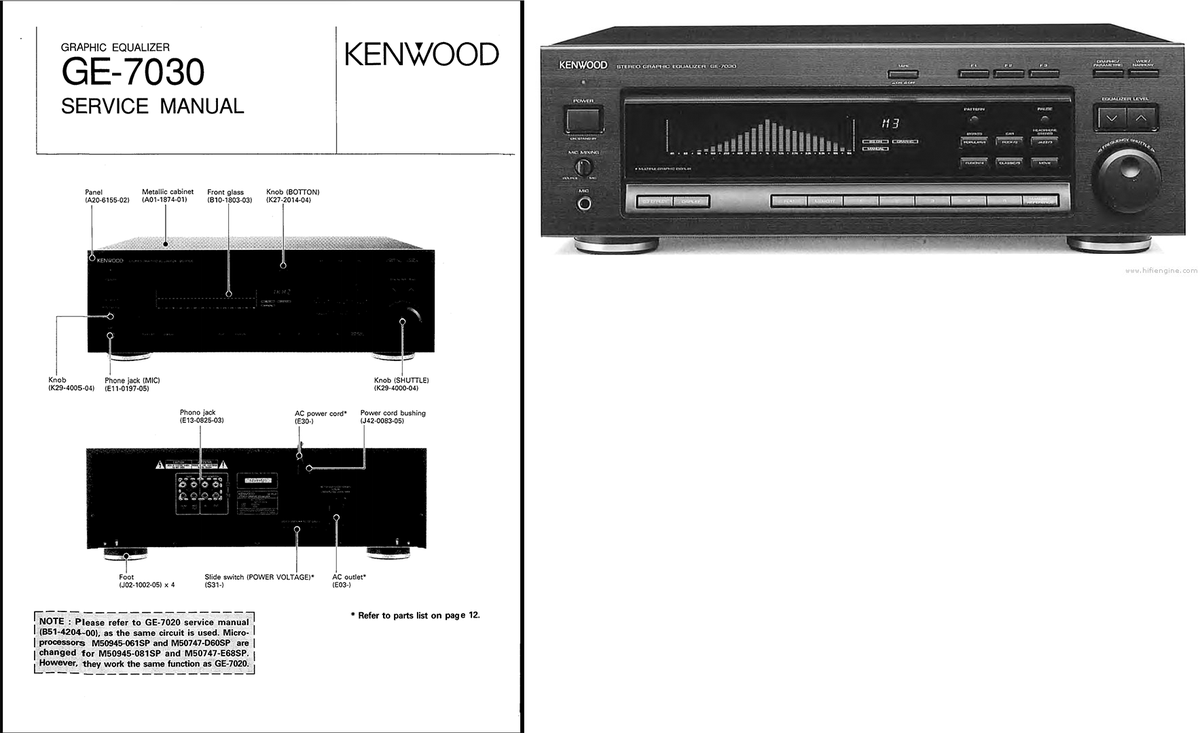
Peu de gens savent que jusqu'au début des années 2000 les fabricants d'appareils fournissaient le manuel technique avec les schémas et la liste des composants électroniques POUR POUVOIR LES REPARER, à l'instar de cet ampli Kenwood de 1991.
Pourquoi ont-ils arrêté de le faire ?
#Ukraine 🇺🇦: Le prix d’une défaite 🧵
On entend depuis quelque temps une petite musique qui met en avant la possible défaite de l’Ukraine face à la Russie. Quelles en seraient les conséquences ? Que cela soit pour l'Ukraine, l'Europe mais aussi au niveau mondial ⤵️
1/21
Je voulais répondre en-dessous de ce comm pour l’instruire, mais bon, une piqûre de rappel ne fera de mal à personne.
Ainsi, thread sur les fameux « 20 millions de morts russes » : pourquoi c’est inexact, et pourquoi y’a pas de raison de vénérer la Russie pour ça
En joie ! 🧵
Today we’re releasing TypeChat (https://t.co/0svSoiFx3r), an open source project that uses AI to bridge between natural language and application schema and APIs. It uses TypeScript in novel and interesting ways. Check it out and let us know what you think. @TypeScript
Y'a un tweet qui provoque l'ire des devs depuis quelque temps, a propos de la performance du code en 2000 vs 2023. J'lui fait pas de pub, Parceque c'est un peu navrant et je ne veux pas tirer sur l'ambulance... Par contre y'a un truc qui semble passer sous les radars 🧵⬇️
Yes, but all documentation is technical debt. You constantly have to update it. It’s always wrong. Consequently, you should write as a little of it as possible.
We know that the entire free world supports us.
And we know that the entire free world will help us stop these bloodthirsty and reckless terrorists. Terrorists operating under the guise of a state.
#russiaisaterroriststate
The argument that "we need to use microservices to get hard boundaries between components," is really "we are so undisciplined that we need to add considerable complexity to protect ourselves from ourselves." →