Oh Mother, so stricken with Sorrow, seven swords of grief and horror, each one buried deep as the pain of seeing our Lord and your son crucified, remind us by these seven afflictions of the immeasurable sacrifice, the cost for our salvation
Ave María... Amen
Dragons are traditionally:
Prideful
Gluttonous
Wrathful
Slothful
Greedy
Lustful
Envious
monsters which are defeated by people who are:
Humble
Prudent
Patient
Diligent
Temperate
Grateful
Charitable
Pretty much the entire canon of Western literary tradition follows this.
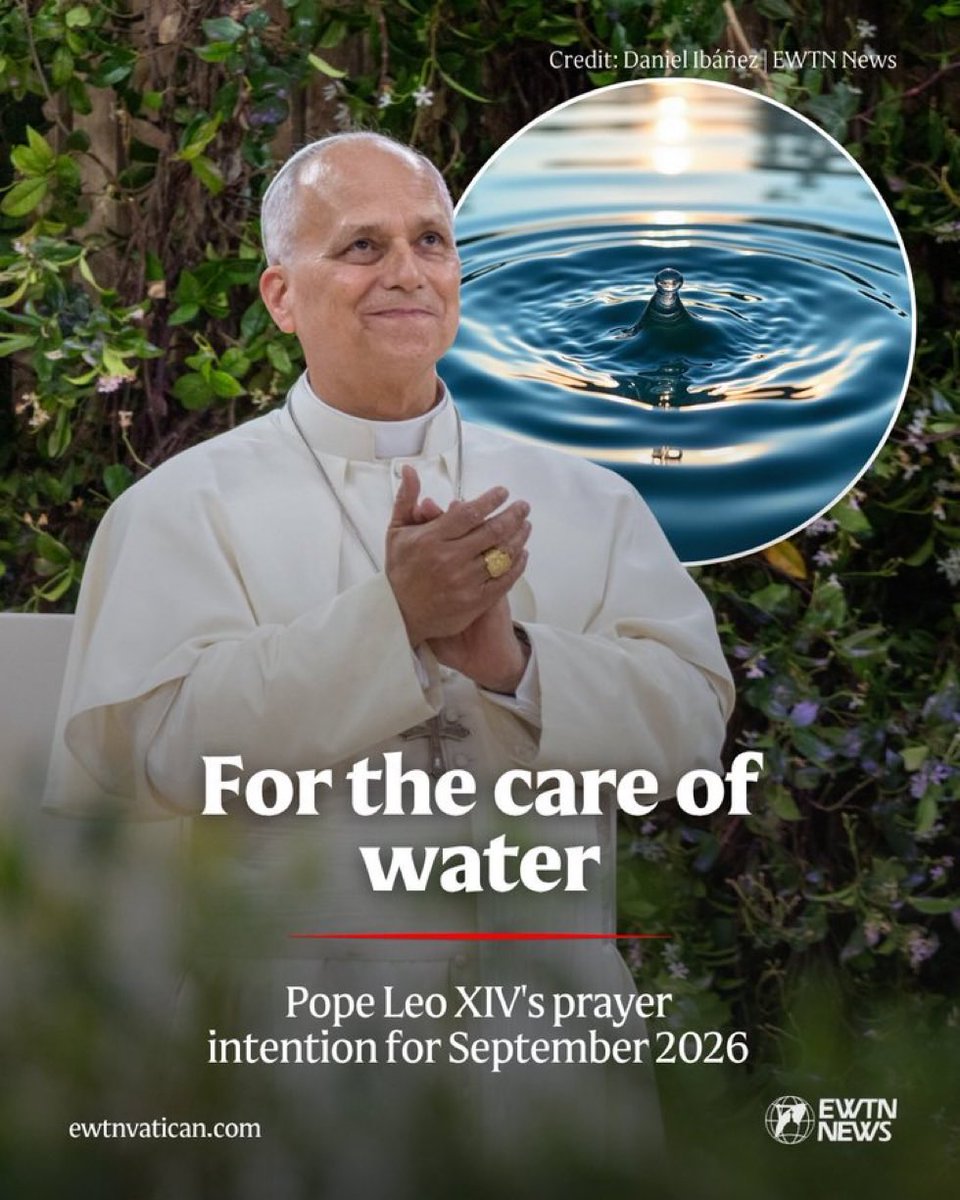
Bad water destroys our bodies and minds. Being a traditional Catholic is not “Go to Latin Mass and just drink the government’s hormonal cocktail tap water.”
The Pope praying and advocating for clean water is righteous and good and I support him. People mocking the pope for this are misguided. Jacob was a well digger. The ministries of Moses and Elijah were validated by access to clean water.
We support a herd of cattle on natural spring water and I want our aquifers protected from pesticides and chemicals. Our family also invested in home water filtration to remove all chemicals (birth control and pesticides) from our water.
If you’re a Catholic mocking Pope Leo for this, check yourself.
Beh eh eh
Goat maxxing today, grazing in my favorite pasture, sunning my fur, and head butting anyone within range of head butting distance (playfully of course)
☀️
🐐
La mentira y éxito más grande del sistema democrático es haberte hecho creer que elegiste a quienes te gobiernan. Nunca elegiste. Votaste, llenaste un papel ilusionado creyendo la farsa, pero jamás (asi tu candidato haya ganado) elegiste. Lo único que hiciste fue entrar a jugar en el tablero del diablo: aceptaste las reglas y autorizaste con tu firma TODA la corrupción intrínseca en ese sistema y lo peor, las leyes que se impusieron contra ti y que blindan a quienes cediste el poder.
La democracia es una privatio boni, es la depravación e inversión ontológica del sistema de gobierno justo, sabio, amante de su pueblo, observante de la ley natural y promotor del bien común: la monarquía. En la realidad, mientras que la monarquía católica es el reflejo de la jerarquía y el orden del cielo, la democracia es el modelo sinárquico del infierno. Donde todos los demonios creen gobernar, pero quien los controla y destroza si se rebelan, es Satanás. Su fin es la reversión del orden creado, es el mecanismo de disolución ontológica que logra desconectar al hombre de Dios para desfigurarlo como Imago Dei. Por eso te pintaron a la monarquía como el cuco y a la democracia, como la salvación.
Es hora de madurar y comprender que el ratoncito Pérez no se lleva tus dientes.
Pope St. Gregory the Great stands among the most influential figures in Church history. A pope, theologian, missionary leader, and Doctor of the Church, he helped guide both the Church and society through the challenges of the late sixth century. His leadership, writings, and example continue to shape Catholic life more than 14 centuries after his death.
Born in Rome around 540 into a wealthy and respected Christian family, he received a comprehensive education and entered public service. He served as prefect of Rome, one of the city’s highest civil offices. Yet worldly success did not satisfy him. After his father’s death, Gregory distributed much of his wealth, transformed his family home into a monastery, and became a monk.
Gregory’s wisdom and talents soon led the Church to call him to greater responsibilities. He served as a papal ambassador to Constantinople before being elected pope in 590. Although he preferred the quiet life of a monk, he accepted the office out of obedience and reverence for God’s Will.
As pope, Gregory cared deeply for the poor and worked to ensure that Church resources were used to assist those suffering from disease, famine, and war. He organized a structure to produce and deliver food to the people. It is said he would not eat until the people were fed.
He reformed Church administration, strengthened pastoral care, and encouraged bishops to be faithful shepherds of their people. His missionary vision led him to send St. Augustine of Canterbury and his companions to evangelize the Anglo-Saxons in England, a mission that would have a lasting impact on Christianity in the British Isles and beyond.
Gregory was also a prolific writer. His works on pastoral leadership, prayer, Scripture, and the spiritual life became classics of Christian literature. He is credited with giving the Church the Gregorian Chant, and many of his liturgical reforms are used in today’s liturgies. His humility was evident in the title he preferred for himself: “Servant of the Servants of God.”
St. Gregory died in 604 and was later declared a Doctor of the Church. Known as “Gregory the Great,” he remains a model of wise leadership, pastoral charity, and faithful service to Christ.
https://t.co/CBR3L2mO8v
A community of Discalced Carmelite sisters is using centuries-old methods to build a monastery in hopes that it will serve as “a beacon of light” for generations to come in Fairfield, Pennsylvania.
When the sisters of the Carmel of Jesus, Mary, and Joseph realized they had outgrown their 1940s monastery in the Diocese of Harrisburg, they knew they wanted to build their next home “in a way that is designed to last,” that would speak to St. Teresa of Ávila’s vision for their charism, Catherine Bauer, the director of marketing and development for the sisters, told EWTN News. “And by that, they mean last a thousand years.”
Bucking modern architecture and building conventions, the Fairfield sisters have opted to build their monastery using old-world methods including traditional stonemasonry and timber framing. While the scale of the monastery “will be on the smaller side,” according to Bauer, “it’s more about the stonework, the authenticity of building from the ground up using no nails, no glue, [and] no electricity running through it.”
“They will also have old-world methods of plumbing and water systems,” she added.
The budget for the project, which began in 2013 and is about 20% complete, is $100 million. The sisters have raised about $22 million so far.
“The idea is that over the course of the next 12 or 15 years it takes to build this, once it’s completed, little or no maintenance will be required for this building for future generations,” Bauer said. “So essentially, they spend the money up front now and then in 50 years, you’re not replacing various systems and roofing and walls and all of that.”
While the up-front cost of their home may be steep, the sisters have proven resourceful not only in sourcing local materials such as stone and timber but also stained glass and an altar for their oratory.
The marble altar the sisters found had once served as the original altar at St. Charles Borromeo Seminary. Bishop Emeritus William Gainer, who delivered the homily at the oratory’s dedication in 2024, revealed that he had said his first Mass at that altar decades prior, she noted.
“We’re trying to salvage a lot of these things and which is amazing, you know, giving these beautiful items a home,” Bauer said.
While the Carmelites themselves are hidden away, Bauer said, “the monastery is meant to be a beacon of light, a beacon on the hill for the community at large, for the faithful to come and visit, and to be an oasis for everyone, a source of grace and comfort and holiness.”
The public will be able to attend Mass and receive the sacraments and to pray with externs at the monastery.
Ultimately, Bauer said, the mission of the Carmelite order is to beat with the heart of the Church.
“The Carmelite charism is to pray for the priests,” she said. “That’s their whole mission, is to pray for priests and for the Church. And that’s how we’re going to survive. They are the heart of the Church. They’re the ones that keep the blood pumping through the rest of the body of the Church.”
More: https://t.co/OkaIlQFAMS








![EWTNews's tweet photo. A community of Discalced Carmelite sisters is using centuries-old methods to build a monastery in hopes that it will serve as “a beacon of light” for generations to come in Fairfield, Pennsylvania.
When the sisters of the Carmel of Jesus, Mary, and Joseph realized they had outgrown their 1940s monastery in the Diocese of Harrisburg, they knew they wanted to build their next home “in a way that is designed to last,” that would speak to St. Teresa of Ávila’s vision for their charism, Catherine Bauer, the director of marketing and development for the sisters, told EWTN News. “And by that, they mean last a thousand years.”
Bucking modern architecture and building conventions, the Fairfield sisters have opted to build their monastery using old-world methods including traditional stonemasonry and timber framing. While the scale of the monastery “will be on the smaller side,” according to Bauer, “it’s more about the stonework, the authenticity of building from the ground up using no nails, no glue, [and] no electricity running through it.”
“They will also have old-world methods of plumbing and water systems,” she added.
The budget for the project, which began in 2013 and is about 20% complete, is $100 million. The sisters have raised about $22 million so far.
“The idea is that over the course of the next 12 or 15 years it takes to build this, once it’s completed, little or no maintenance will be required for this building for future generations,” Bauer said. “So essentially, they spend the money up front now and then in 50 years, you’re not replacing various systems and roofing and walls and all of that.”
While the up-front cost of their home may be steep, the sisters have proven resourceful not only in sourcing local materials such as stone and timber but also stained glass and an altar for their oratory.
The marble altar the sisters found had once served as the original altar at St. Charles Borromeo Seminary. Bishop Emeritus William Gainer, who delivered the homily at the oratory’s dedication in 2024, revealed that he had said his first Mass at that altar decades prior, she noted.
“We’re trying to salvage a lot of these things and which is amazing, you know, giving these beautiful items a home,” Bauer said.
While the Carmelites themselves are hidden away, Bauer said, “the monastery is meant to be a beacon of light, a beacon on the hill for the community at large, for the faithful to come and visit, and to be an oasis for everyone, a source of grace and comfort and holiness.”
The public will be able to attend Mass and receive the sacraments and to pray with externs at the monastery.
Ultimately, Bauer said, the mission of the Carmelite order is to beat with the heart of the Church.
“The Carmelite charism is to pray for the priests,” she said. “That’s their whole mission, is to pray for priests and for the Church. And that’s how we’re going to survive. They are the heart of the Church. They’re the ones that keep the blood pumping through the rest of the body of the Church.”
More: https://t.co/OkaIlQFAMS](https://pbs.twimg.com/media/HRI4n_6XEAAHR4Z.jpg)