Hoy es viral: arqueólogos españoles han hallado en Egipto una momia con un papiro de la 'Ilíada' de Homero en su interior.
¿Qué hace un texto griego en una tumba egipcia de época romana?
Como arqueóloga, os explico por qué este hallazgo es increíble.
Abro hilo👇🧵
Muere el escritor suizo Erich von Däniken a los 90 años.
Fue uno de los autores más leídos del siglo XX en el terreno de la pseudociencia, lo que fue tachado de charlatán.
Sus teorías lo enfrentaron de manera permanente con la ciencia académica, haciendo mucho daño también a la historia vendiendo millones de libros en todo el mundo.
@AlexisEscobarM Yo creo que es por otra razón: las entradas son nominativas y no se pueden revender.
Mucha gente compraba para reventa, quizá un altísimo porcentaje, ¿no crees?
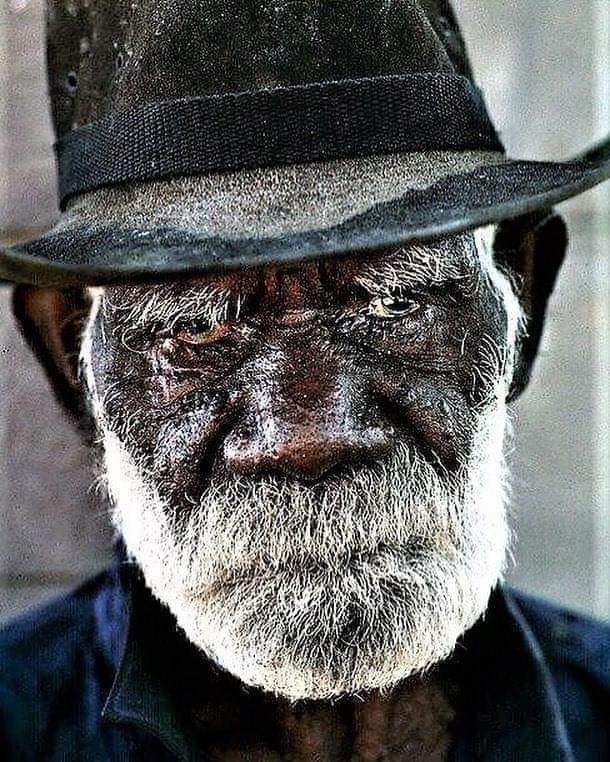
La Trobe University researchers have completed the largest and most comprehensive mitochondrial DNA study of Aboriginal Australians in a bid to better understand their ancestry :
DNA samples of 594 self-declared Indigenous Australians from around the country were analysed and classified into mitochondrial haplogroups - genetic groups that share a common ancestor and often show a distinct distribution.
The findings have been published in the Journal of Human Genetics.
Dr John Mitchell from La Trobe’s Department of Biochemistry and Genetics, who led the study, said the research revealed there was a high level of genetic diversity among Aboriginal Australians.
“This comprehensive genetic survey of Aboriginal Australian mitochondrial DNA supports long-term settlement of Australia by the ancestors of the Aboriginal Australians,” Dr Mitchell said.
“All indigenous haplogroups were found to be ancient, with estimated ages greater than 40,000 years, and all were widespread throughout the continent.”
PhD student Nano Nagle, who was first author of the publication, said previous mitochondrial DNA studies on Aboriginal Australians usually involved less than 100 participants who were mostly from the Northern Territory and single locations in Western Australia and New South Wales.
“Therefore we had very little information with regards to the distribution patterns of these indigenous haplogroups,” Ms Nagle said.
“We also had limited data from South Australia and Queensland and none, until now, from Victoria, despite some of these states having large populations of Aboriginal Australians.”
Ms Nagle said Aboriginal Australians were one of the most poorly studied populations from a human evolution perspective, despite being one of the oldest continuous cultures in the world.
“There has been ongoing debate for years among archaeologists, anthropologists and geneticists about when they arrived in Australia and the path they took to get here.“
“Our research found their migration to Australia was both ancient and complex, with at least two routes of entry.
“It supports previous findings that Aboriginal Australians arrived in Australia up to 55,000 years ago via the Indonesian island chain, but we found no evidence of any subsequent significant immigration until 1788.
“Our findings confirm they were isolated in Australia for tens of thousands of years before European colonisation.”
Lesley Williams, an Aboriginal Elder and advisor to the study, said Aboriginal people were increasingly interested in finding out about their genetic history.
“I’m not surprised, but still heartened, to discover that this DNA analysis supports what our parents have taught us over many generations that we have lived here in Australia since the Dreamtime.”
#archaeohistories