@1985Deanne I thought it was a joke honestly he couldn’t care less about carers. He won’t be doing it for nothing. Come on Carers UK you can do better than Jeremy Vine .
🎤 Here’s the first of a series of insights from the Team Leader on the factors playing a part in flying the Red Arrows back from North America.
#RedArrows | #RAF
Thousands of residents have already helped shape council services. Join Let’s talk Lincolnshire and be part of it. Look out for opportunities to have your say, which could help us shape future decisions!
https://t.co/Dj04dXtbnU
#Lincolnshire#LetsTalkLincolnshire
@muddymuddymum Roll a tennis ball on the bottom of your feet . It’s painful but worth it. Stand on a step stool with the balls of your feet and stretch your arches.
I do hope that the plan to reform social care (when it eventually arises) recognises that the need for care is not exclusively a situation that elderly people find themselves in, young disabled people will need support when the time comes that our families can't look after us any more.
Few things to remember @EdwardJDavey
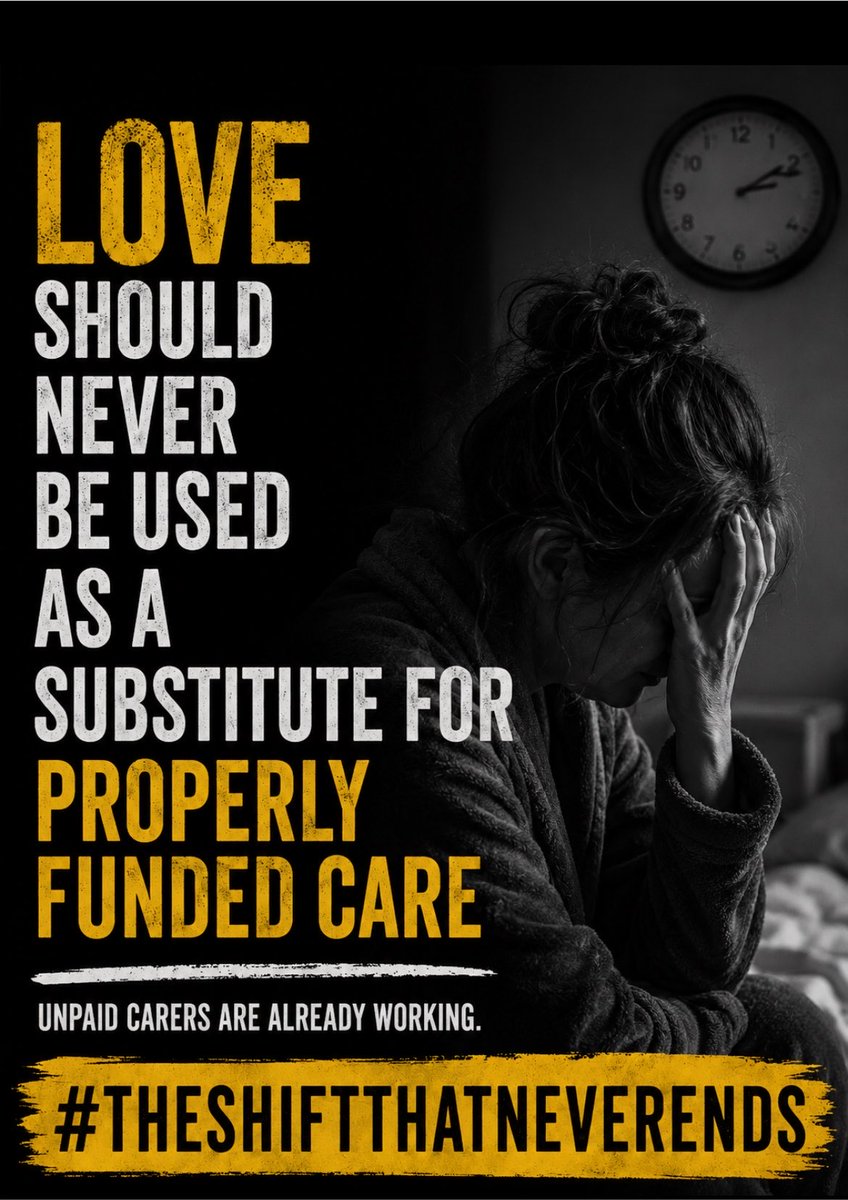
If every unpaid carer stopped caring, the health and social care system would experience immediate and catastrophic failure.
Total system collapse - Unpaid carers provide care equivalent to millions of paid workers; removing this workforce would overwhelm every part of health and social care.
Hospital bed occupancy would surge instantly - People currently supported at home would require admission, filling all acute, community, and step‑down beds within days.
A&E departments would gridlock - Emergency departments would become holding areas for people with nowhere else to go, causing dangerous delays and clinical risk.
Social care would be unable to cope - Residential and domiciliary care services already operate at or beyond capacity; demand would exceed supply many times over.
Massive increase in demand for long‑term placements - Thousands would require immediate residential or nursing home care, which simply does not exist.
Rapid rise in safeguarding concerns - Adults and children who rely on carers for medication, nutrition, mobility, and safety would be left at significant risk.
Primary care would be overwhelmed - GP practices would face unprecedented demand for urgent appointments, medication management, and crisis intervention.
Community health teams would break down - District nurses, OTs, physios, mental health teams would face impossible caseloads.
Public health emergencies would emerge - Neglect, malnutrition, medication errors, falls, infections, and deterioration would spike dramatically.
Economic shock to the UK - Millions of people would need state-funded care; costs would run into hundreds of billions annually.
Workforce crisis would deepen - Paid care staff could not absorb the workload; burnout, resignations, and sickness absence would escalate.
Mortality rates would rise - Many people with complex needs would not survive without the daily care currently provided by unpaid carers.