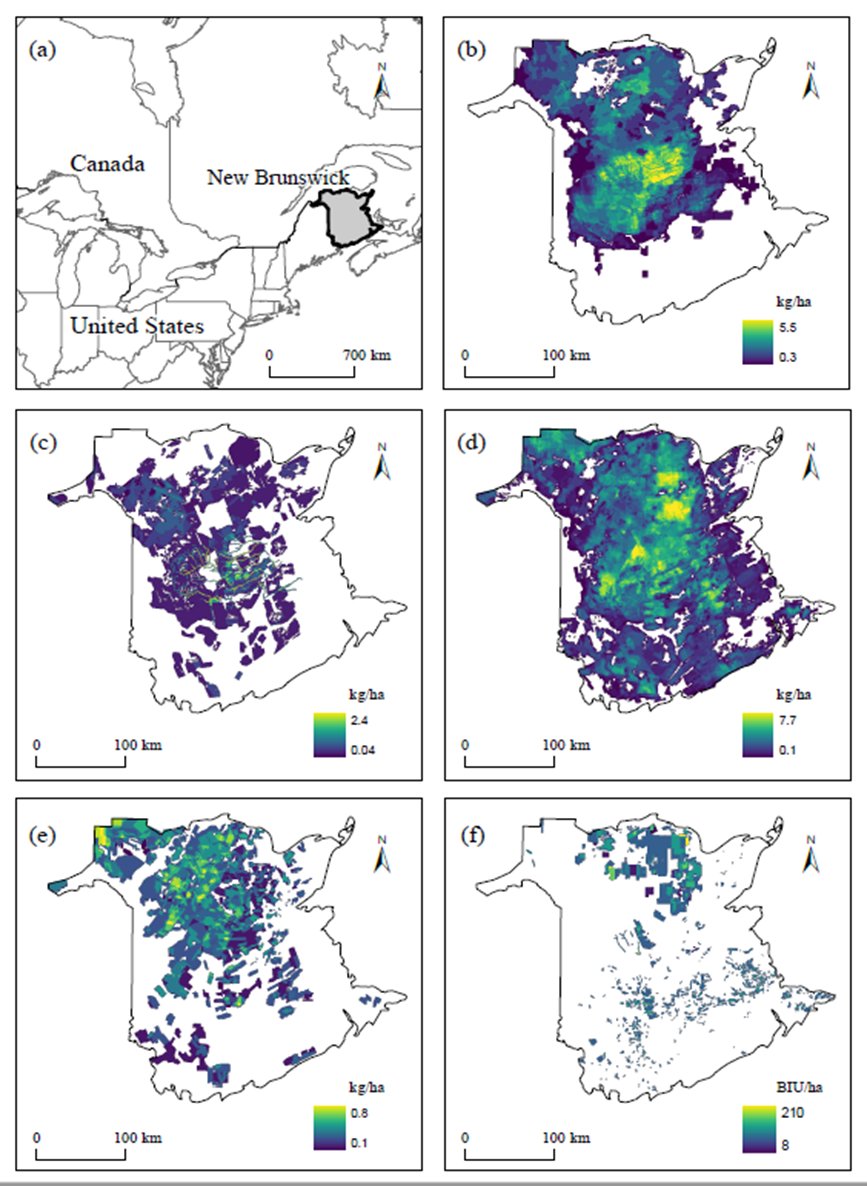
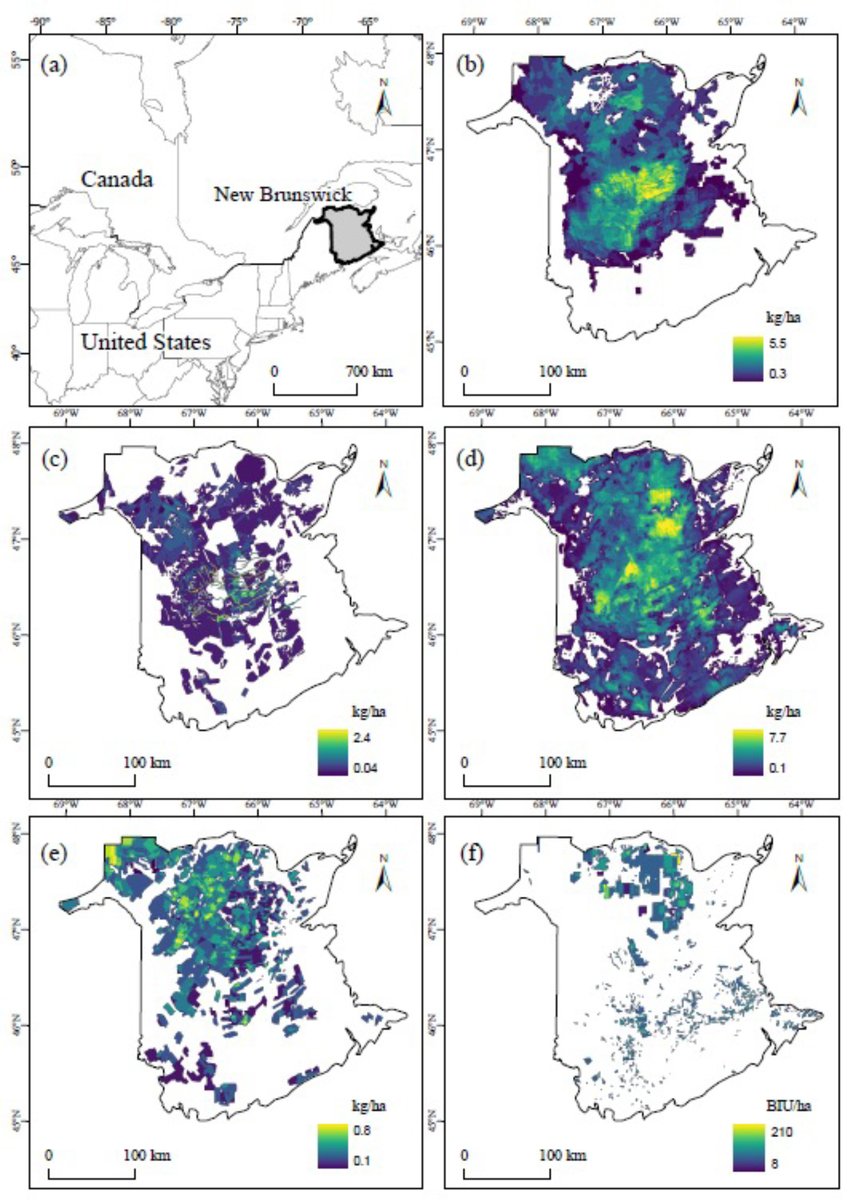
On our way to Renous and LSW watersheds to study #lake recovery from DDTs. Map data from Heartz et al. Ecology is hosted by Gov of NB here: https://t.co/7G72ALGQin Map helps us select lakes across DDT gradient which we will groundtruth with sediments @CB_Edge#PowerOfPaleo
Interested in legacy effects and ecosystem recovery after broad scale applications of pesticides? Come join our working group!
English: https://t.co/cdUdTgJmLA
French: https://t.co/eJm2DKhrhF
Interested developing novel forest management planning tools and applying them to a unique management situation? Anthony Taylor and I are looking for a PhD Student.
On my recent trip to @GLFC_CFS, I had the pleasure of touring the Insect Production and Quarantine Laboratories. The scientists behind rearing these bugs deserve praise for their contributions to pest management and related research throughout Canada. A 🧵about 🐛🪲...
From 1952-1993 one of the worlds largest aerial pesticide application programs occurred in New Brunswick, Canada. During the program 97% of forested land (6.2 million ha) in New Brunswick was treated. The dataset is now online and open access.
https://t.co/2Uo24ZJyXb
@ottawavalleywx@ciee @CFS_Science_ATL You can find the insecticide application data for Spruce Budworm and a ton of additional information here. https://t.co/Zyau3zkPe4
Herbicide application data (Vegetation management) can be found here https://t.co/JgxNAlOoix
A fun project that involved fantastic collaborators across two levels of government and academia. The project would not have been possible without help from the @ciee living data project and @CFS_Science_ATL