A must-read! We are resharing this book ahead of its publication tomorrow.
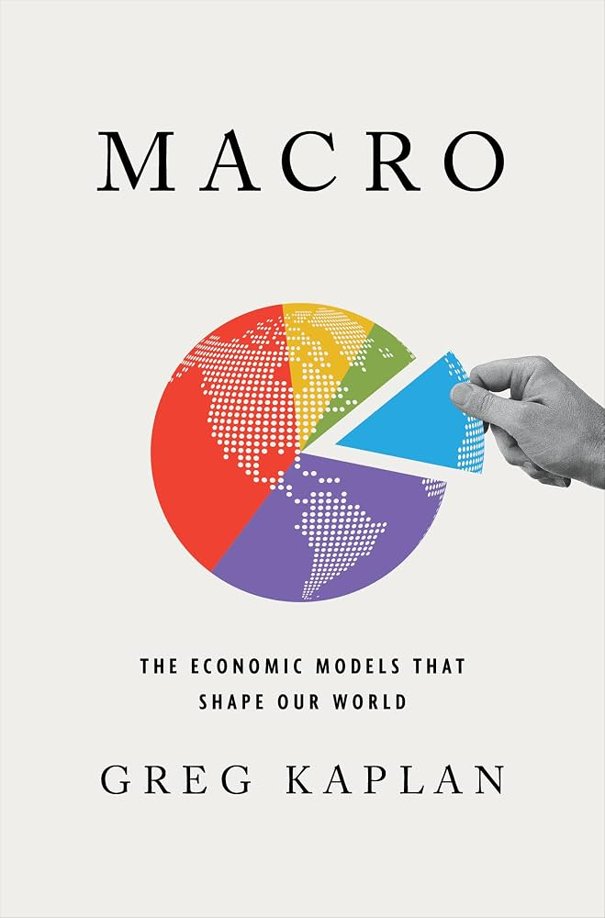
"Macro: The Economic Models That Shape Our World" by Greg Kaplan.
https://t.co/zoptrR1SZq
"Macroeconomics and macroeconomic policies shape our lives in profound ways, influencing everything from the price of groceries to the likelihood we’ll have a job next year. But much of what we hear about macroeconomics―from politicians, pundits, and even professors―bears little resemblance to how economists think about policy or to people’s actual experiences. Clearly, economists haven’t done a great job explaining their work to us―until now. Macro is an inviting tour through the world of modern macroeconomics, taking readers to the research frontier―HANK, a framework that will change how we see inflation, debt, recessions, and more? In clear and engaging prose, Chicago economist Greg Kaplan demystifies how our everyday behavior connects to the biggest questions in fiscal and monetary policy. Tracing the evolution of economic thinking from Keynes to today, he guides readers through the models used to explain our economy, uncovers their flaws, and reveals what cutting-edge research tells us about managing the economy in good times and bad. These earlier models are valuable, Kaplan argues, but those that underlie much of conventional wisdom are fundamentally out of touch with the realities of how people spend and save, particularly the millions of Americans living paycheck to paycheck. The journey culminates in the HANK (Heterogeneous Agent New Keynesian) model, the current state of the art that is more consistent with reality. HANK accounts for our diverse spending and saving habits and will transform the way we think about economic policy."
Gita Gopinath: "A tour de force. With rare clarity and intellectual power, this book bridges the gap between cutting-edge research and real-world policy debates. Essential reading for anyone serious about macroeconomic policy."
https://t.co/zoptrR1SZq
Excited to share this tool--a Macroeconomic simulator that lets you run the Federal Reserve's large macroeconomic model FRB/US.
It has 13,442 different simulations pre-loaded--different versions of 15 different shocks.
I plan to add more models over time.
Here is a Fed hike.
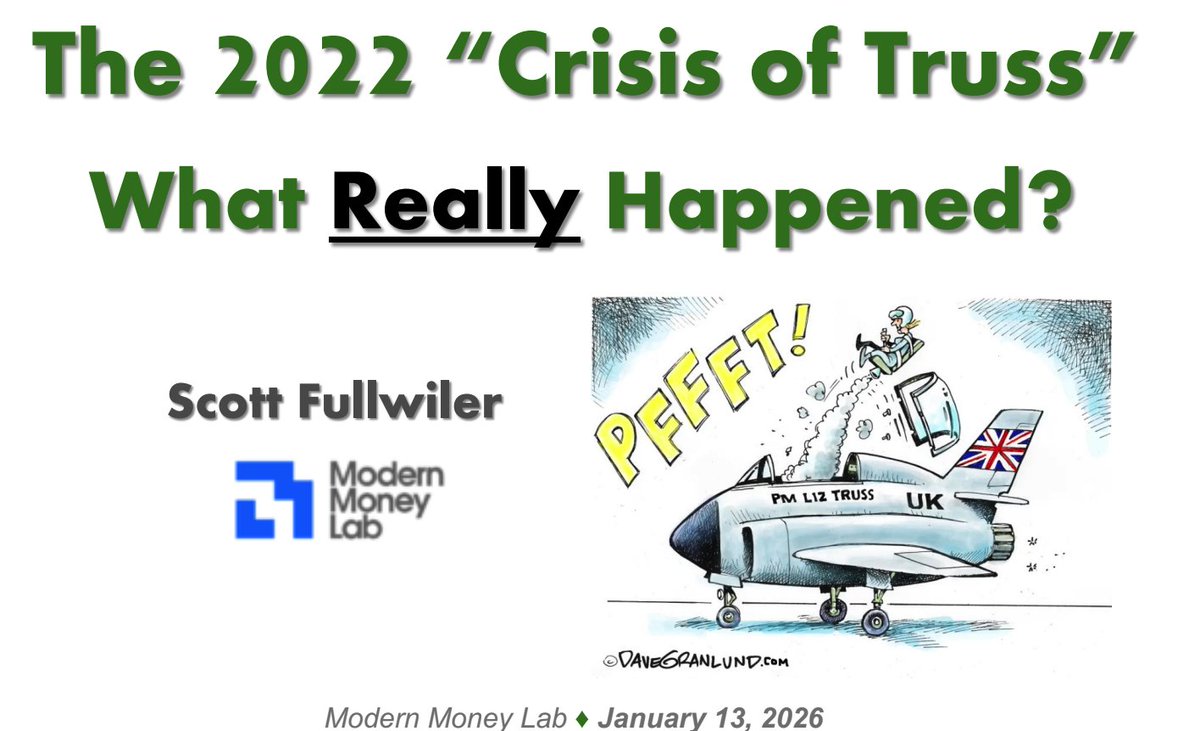
No one puts together a presentation like @RevHierophant . Grad students in the @modernmoneylab get the full experience. The rest of us can scroll through on our own. https://t.co/mpgwUWSKXr
@chrisgrayson@upstatefederlst Young men read plenty of fiction when it's written by Stendahl or Ernest Hemingway, Raymond Carver or Cormac McCarthy. So much of the canon of high literture basically caters to their tastes (I.e. the bildungsroman).
What is now is not what is always.
I may not agree with all of this, but these are nonetheless points well put and worth considering.
Keeping matters thematically focused - I might assert that Zhu Rongji is the Alexander Hamilton of post-Mao China.
Both men unified the fiscal systems of their respective nations following a period of recent turmoil, as well as took measures to establish and/or strengthen their central banks.
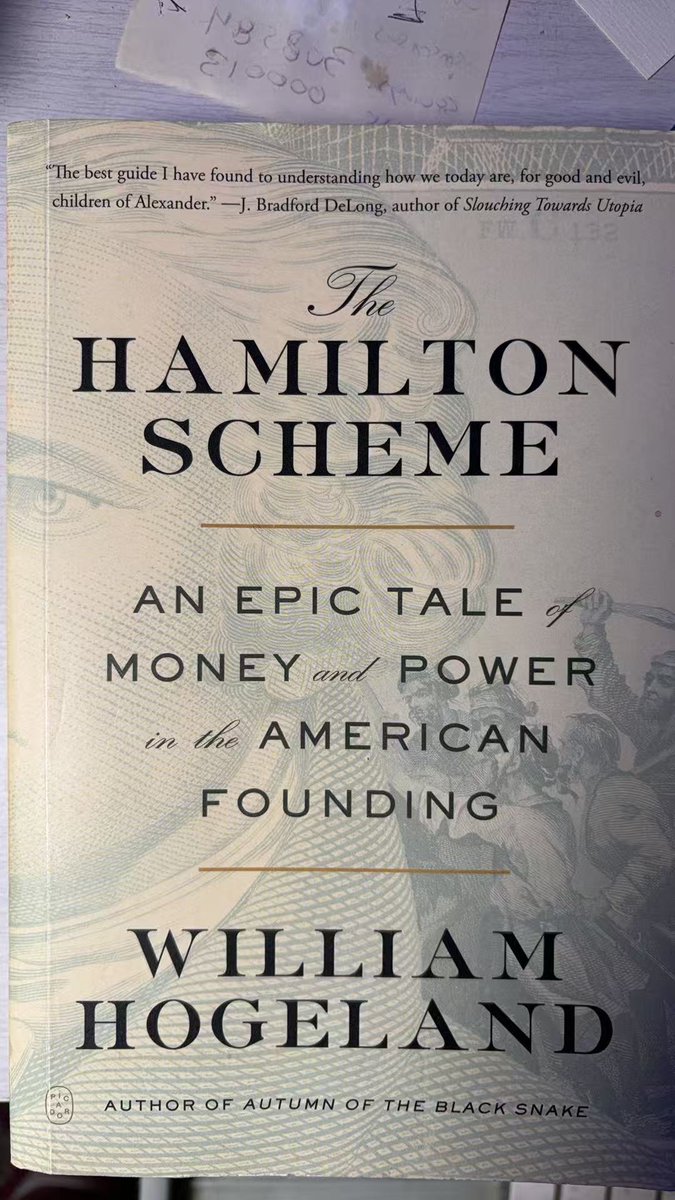
I’ve just finished reading William Hogeland’s book on Hamilton.
As a hard-core admirer of Hamilton since the early 1990s, and someone who has long regarded him as the greatest of the Founding Fathers, I think it is a brilliant book, even though Hogeland sets out quite deliberately to demolish Hamilton’s highly romanticized current reputation. He shows that Hamilton’s ambitions were not particularly democratic, although I suspect many of us already knew that, and had long thought that, for all his genius, or perhaps precisely because of it, he would have made a dangerous president who would have undermined democratic institutions. Nonetheless, the book confirms, even more than many of the more favorable accounts, just how brilliant, far-seeing, and hard-working a figure he was.
In a way, it is also a very good explanation of why democracy is simultaneously so grubby and yet the best of all political systems. It is built around institutional adjustment, a system that may seem messy but that. effectively prevents any one individual or group from taking the country too far in any direction.
Democracy may not be especially efficient in the short term, but it is incredibly efficient in the long term. Even a genius like Hamilton, with his extraordinary gifts, ferocious energy, powerful allies, and formidable reputation, could not take the country too far down a dangerous road. Other countries could learn from that.
The book has also greatly increased my interest in Albert Gallatin, the great opponent of Hamilton, whose statue in front of the US Treasury I have always resented. In Hogeland’s telling, he turns out to have been a great builder and rather like Hamilton himself.
P.S. Interesting trivia. It seems that the body of Charles Atlas was the model for both Hamilton's statue and Gallatin's statue.
"high interest rates may have acted as a boost to the so-called AI hyper-scalers—companies such as Google, Amazon, and Apple—that were flush with cash and could therefore earn high rates due to the restrictive monetary policy." 🤔https://t.co/whJ4sdozfT
@teachrobotslove Somerset Maugham argues that 19th century novels were far too long and digressive, because their authors wrote them for serialised publications to make money.
He varied it so much that he really didn't write in iambic pentameter whatsoever.
It's a terrible meter to use with English, because it was designed for the tongues of Mediterranean antiquity, not a Germanic language heavily influenced by Nroman French.
I worked that out because I scan English verse - something you obviously can't do with competence.
I never studied literature at university - the notion of doing so is a waste of time.
Sad to see master's diplomas from Ivy League's impart so little these days.
You further prove my point - this kind of thing brings your alma mater into sorry disrepute.
I have no credentials on the matter whatsoever, but I understand English prosody better than you ever will.
Which is why the document in the photo you showed me is completely worthless.
John Dryden, Alexaner Pope and Samuel Johnson wrote in iambic pentameter. Shakespeare and Milton did so rarely.
They're not and you're a fraud.
You can't even scan English verse, but Columbia somehow decided to award you a master's thesis.
This type of thing brings modern academia into complete disrepute.
I can't even begin to imagine what it's like to live a total lie - to profess to be an expert on Shakespeare but fail to even scan his verse correctly.
@trottskyathome@eclaircie_ Glad for you that you've learned something today. Proust may be beyond you, but at least you are now well-apprised of your limitations.
@estayidososhial@eclaircie_ That wasn't really Proust's aim - that was Balzac's.
Proust's goal was to explore the mysterious nature of time and personal identity, as well as the nature of the self - particularly as they impinged upon by the trappings of amorous love.