Head of People at @ElectricCapital, ex @meta, @whatsapp, @apple, @yahoo. Sharing insights from 20+ years of working with people. Wine and mystery book lover.
I’ve never seen a startup scale in a straight line.
Growth comes when you unlock the key to your next S-curve.
5 phases every founder (and their startup) has to go through:
New episode with @avichal out now! @JasonYanowitz@ElectricCapital
We discuss:
- Investing in crypto & AI
- The Ethereum bull case
- Are tokens cheap?
- How to fix DeFi
- Highest conviction ideas & more!
Timestamps:
00:00 Introduction
13:58 How To Build A Breakout App
21:46 Where Electric Sees the Most Opportunity
33:35 Why Do Tokens Trade At A Discount?
39:42 Why Avichal Is Still Bullish On SOL & ETH
42:46 Who Wins The Crypto Exchange Wars?
48:10 The Ethereum Roadmap
54:16 How To Make DeFi Safe Again
57:50 Final Thoughts
The 2026 DeFi security stack:
- Audits (human, agentic)
- Formal Verification
- Guarded Launches
- Rate limits, settlement gates with emergency overrides
- Bug bounties
- First loss junior capital tranches
- Multisig opsec review
- Gsuite/slack/telegram/X opsec review
- DNS / package dependencies / Web2 stack security audit
- Collateral asset review and disclosure (market, operational, oracle)
- Infra dependency risk (bridges, pools, oracles, etc.)
- Realtime monitoring
- Incident response run-books
- Periodic reviews to catch drift in any of the above
- Review depth and sophistication that scales with value at risk
What am I missing?
I was an early designer on Google Maps. I still use it everyday.
The Maps AI update is awesome b/c natural language has the potential to solve Maps' oldest limitations.
And not so awesome b/c "Ask Maps" feels tacked on instead of deeply integrating AI into Maps.
Here's why:
—
Google Maps was built around discrete searches.
This works well for simple tasks like Where is… or How do I get to… "548 Market St."
But many real-world navigation challenges aren’t simple queries. They involve intention and tradeoffs.
My actual thinking is something more like:
"I need to get to 548 Market St and find parking nearby. I’m happy to walk a block or two if it saves $20, but these shoes will likely give me blisters if I have to walk too far."
Historically, I had to translate that into Maps’ UI with a series of separate searches like:
"548 Market St" then "Parking"
But by the time I see parking places, 548 Market St has disappeared. So I have to scan the results and pop back and forth between searches to find a solution.
Natural language has the power to fix this.
AI gives users the power to describe what’s actually in their head instead of translating it into sequential queries for the Maps UI.
How amazing would it be to tell Maps:
"I’m on my way to Tahoe with my family. I want to stop at an In-N-Out near a freeway exit and a fast charger. But I want to stop later in the trip since I have plenty of charge and nobody’s hungry yet. What are my best options?"
It’s exactly these kinds of tradeoffs (distance, timing, price, convenience, etc.) that AI should excel at handling.
—
But Google isn’t revolutionizing Maps with an all-powerful, natural language input box.
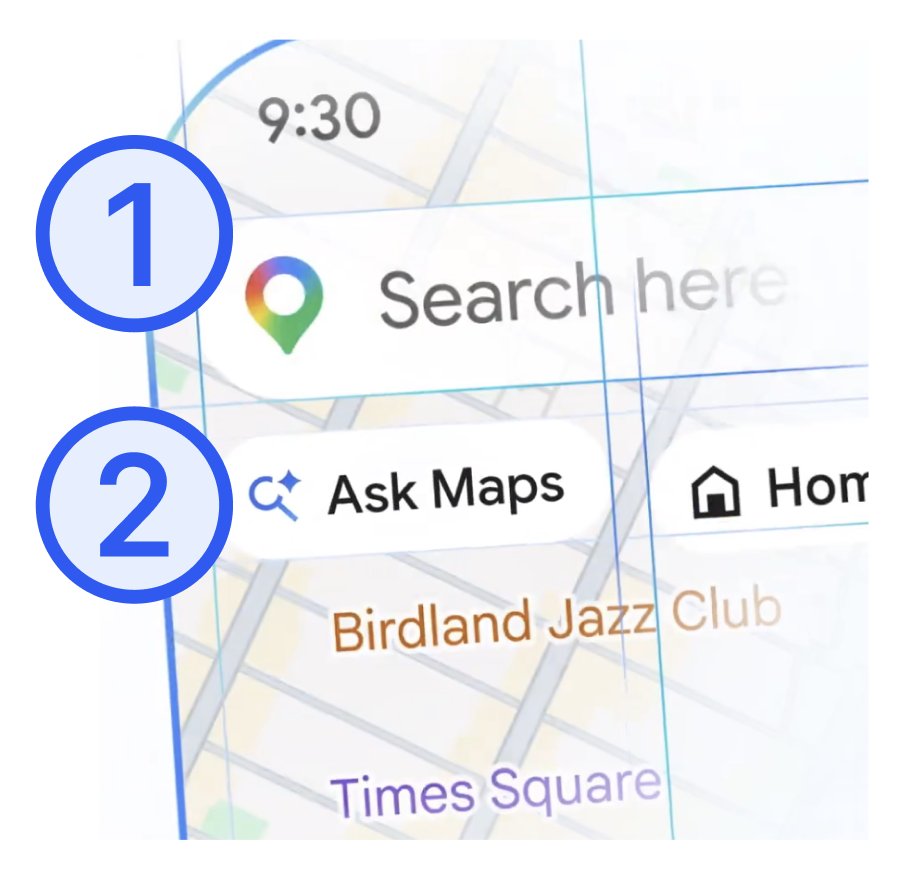
Instead, it cleared some pixels to add an ���Ask Maps” button that serves as a portal into Gemini.
So now Google Maps has two search boxes:
1. Classic Search
2. Ask Maps AI
This makes the UI more complex.
And it misses the opportunity to deeply integrate AI into Google Maps so that it feels native.
Why not start with one, AI-fueled omni-box that can handle both:
“548 Market St”
and
"I am heading to 548 Market St and running late. I need a place to park and get into the building ASAP!"
—
The promise of AI is to make things simpler.
Giving people the ability to express the nuance in our heads is a first step.
Hopefully the next step is using AI to augment and improve Maps’ core tasks natively.
And for the steps after that, I really hope the team is dreaming big!
I would love to see some of the bolder integrations that I’m sure the team explored internally.
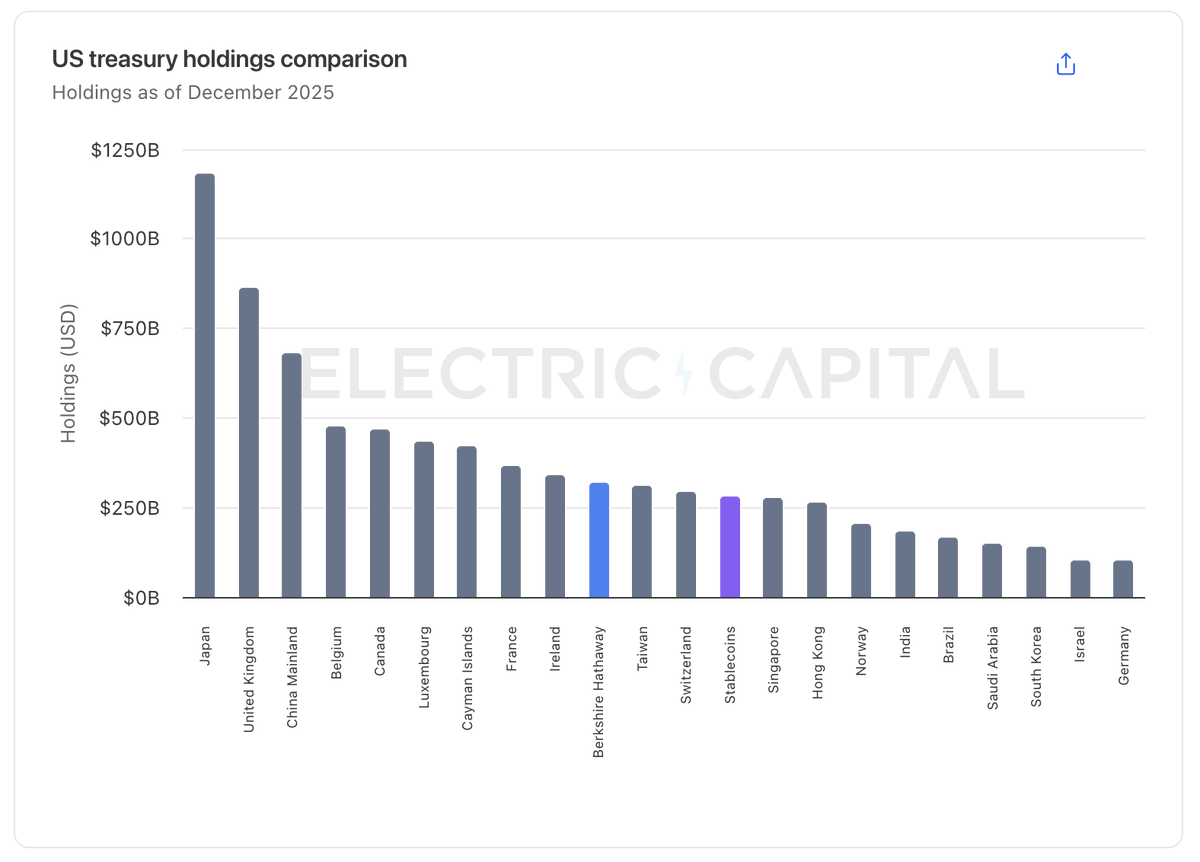
Stablecoins hold more US treasuries than Hong Kong, India, and Brazil.
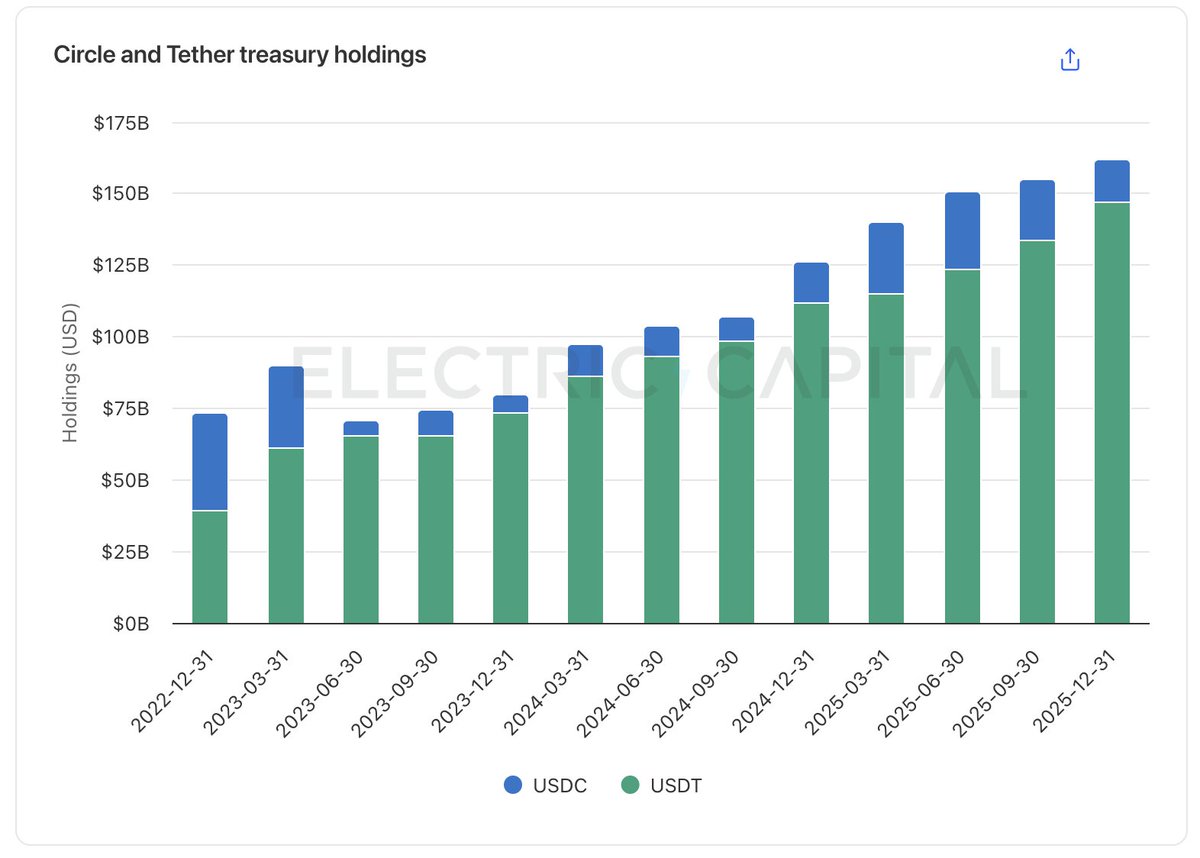
Circle + Tether alone hold $162B.
One of the biggest shifts in how money moves is happening right now.
Stay current with 18 charts on stablecoins at
https://t.co/0EalVDIHMj
Follow for more data & insights
Yesterday Mark Cuban reposted my work, DM'd me, and told me to keep telling my story.
So here it is.
I'm a Master Electrician. IBEW Local 369. 15 years pulling wire in Kentucky. Zero coding background. I didn't go to Stanford. I went to trade school.
Every week I'd show up to a home where someone just bought a Tesla or a Rivian. And every time, someone had already told them they needed a $3,000-$5,000 panel upgrade to install a charger.
70% of the time? They didn't need it.
The math is in the NEC — Section 220.82. Load calculations. But nobody was doing them for homeowners. Electricians upsell. Dealers don't know. And the homeowner just pays.
I got angry enough to build something about it.
I found @claudeai. No coding experience. I just started talking to it like I'd explain a job to an apprentice. "Here's how load calcs work. Here's the NEC code. Now help me build a tool that does this."
6 months later — @ChargeRight is live. Real software. Stripe payments. PDF reports. NEC 220.82 calculations automated. $12.99 instead of a $500 truck roll.
I'm still pulling wire. I still take service calls. I wake up at 5:05 AM for work.
But something shifted.
Yesterday @vivilinsv published my story as Claude Builder Spotlight #1. Mark Cuban saw it. The Claude community showed up. And for the first time, I felt like this thing I built in my kitchen might actually matter.
I'm not a tech founder. I'm a dad who wants to coach little league and be home for dinner. I just happened to build something that helps people.
If you're in the trades and thinking about using AI — do it. The barrier isn't technical skill. It's believing you're allowed to try.
https://t.co/cDVdY5mcLv
Introducing Royco Dawn.
Dawn takes any yield source from DeFi vaults to RWAs and splits them into two pools: Senior and Junior.
Two distinct risk profiles. Two different yields.
Today, we're opening the doors for the first time.
(1/7)
1/ We @ElectricCapital want to invest in 26 ideas that give users control, privacy, & access.
Why now:
•Trust in institutions is collapsing
•AI centralizes power but lowers build costs
•User-owned tech defends personal freedom
https://t.co/s5QXXDPs1p
👇
A few months ago, I got a text:
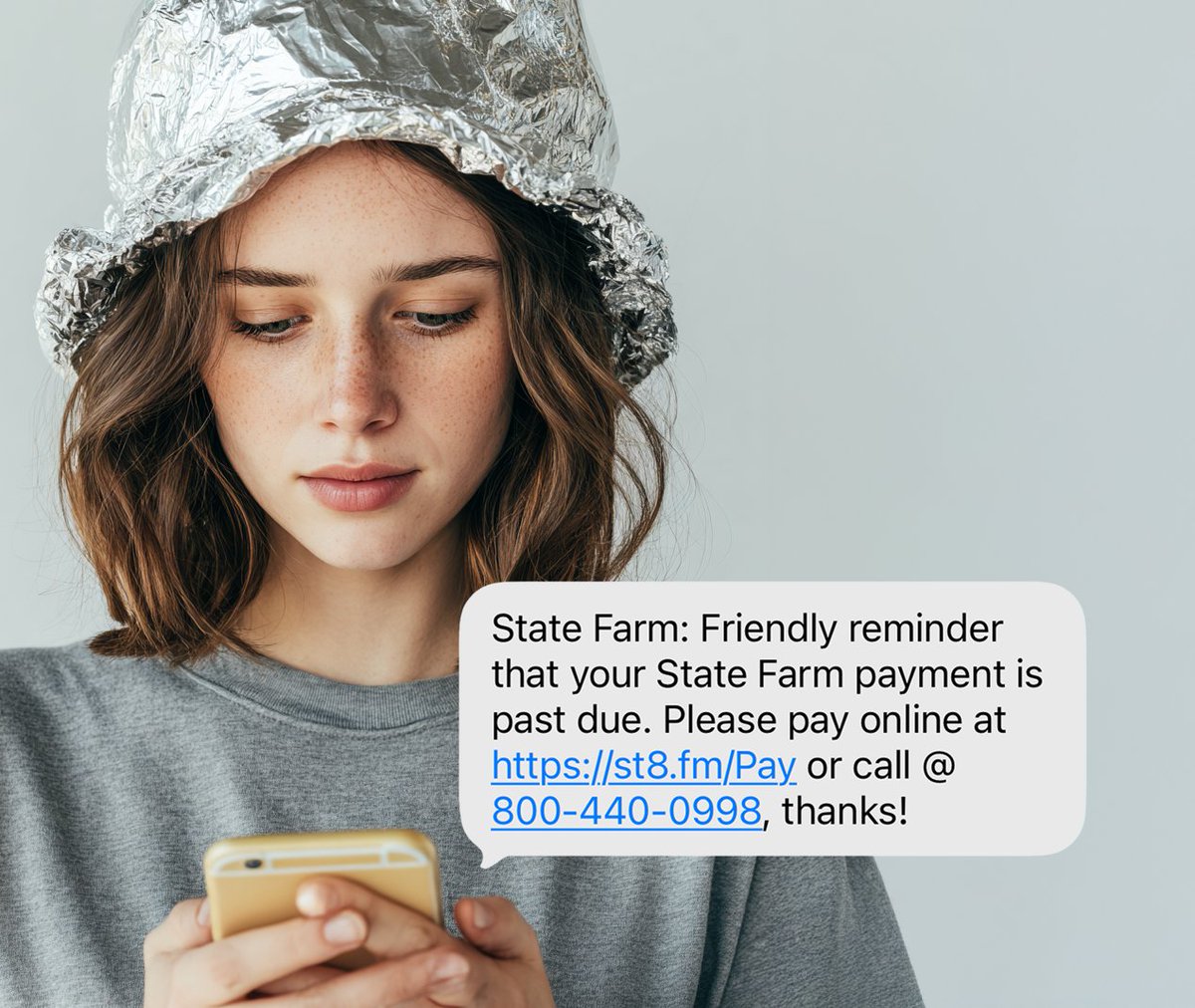
"State Farm: Friendly reminder that your State Farm payment is past due. Please pay online at st8farm..."
And I was like yeah, whatever — I know a scam when I see one.
I confirmed the check was cashed and I forgot about it.
Until last week...
I was going through the mail, and there was an urgent notice that our policy was about to be canceled for non-payment.
I called State Farm.
They showed no record of payment.
So I sent them images of the cashed check. They opened a case and escalated to central payments. A few days passed and I called again. No update.
Today (the official policy cancellation day), I call again. State Farm declares they never received nor cashed the check, so someone else must have cashed it.
To keep the policy active, I need to pay again while they sort it out. So they send me a payment link and I pay it — not thinking twice this time.
Then I call our bank. The agent tells me I’ll need to open a forged-endorsement case. To do that, they will send me a paper form in 7-10 business days.
I ask if they can send an electronic version, but the agent says: “No. After all, you wrote a physical check.”
Touché.
At this point my head is spinning, thinking about the absurdity of paper checks. But something isn’t sitting right. And then it hits me.
How do I actually know the second payment I just made was to the real State Farm?
Did I just fall for a different scam? Is this some elaborate scheme where the scammers have gotten relentless and weirdly sophisticated?
I look back at the link “State Farm” sent and I start freaking out.The payment URL isn’t statefarm. It’s statefarmservice. Fuck. I start panic-searching, verifying URLs and emails. I call “State Farm” back, assuming they’ll ghost me.
But no, they pick up. They try to reassure me. The agent I’m speaking with sounds as rattled as me. They aren’t sure how to convince me they are legit.
I search back through my old emails. I’ve been exchanging emails with people from this State Farm office for years and all of their email addresses have the same weird 4 character code…
At this same time, the supervisor calls me. She assures me where they are located and tells me who the different people are in the office that I’ve been speaking with. She sincerely apologizes for all the trouble.
And finally, I exhale. Everything seems legit.
Which means the problem isn’t just the scammers. It’s that in 2025, we have to be so vigilant with cyber-security that we can’t trust anyone.
Because anyone can pose as someone else, it is nearly impossible to verify anyone’s identity — even when they’re actually real.
Maybe the best strategy is to move from full blown paranoia to reasonable caution?
But then again, a man posing as a delivery driver in SF just bound a homeowner with duct tape and stole $11M in crypto…
For the moment, I’m setting aside my tin-foil hat and just trusting my gut that the State Farm people are who they say they are.
But I may burn my last remaining checkbook while I wait out this 90-day forged-endorsement process...
Stay tuned.
Crypto holders seem demoralized by current prices —
What is a spot price?
The spot price is what someone is offering you to give them your asset right now.
In just the 8 years Bitwise has been around people have offered $4k, then $18k, then $3k, then $65k, then $16k, then $73k, then $125k, and now $89k to you to give them your Bitcoin.
Don't like the price? Don't take the price.
DeFi will win.
But that doesn't mean it's got everything figured out today, and this week was a good reminder.
Eight observations from this week:
#1: 1 stablecoin != 1 stablecoin. Many different types of products hiding behind the stablecoin term. We need better names to help people understand that each product is different.
#2: 1 curator != 1 curator. Risk models and abilities of different curators can vary wildly. These are all relatively new entities, so nobody has an established track record yet.
#3: 1 audit != 1 audit: Audits and even formal verification differ in depth and coverage. We need to go deeper than seeing a name next to a protocol. Ask the deeper questions.
#4: Protocols need to be careful which curators they work with. Curators don't seem necessarily long term aligned with the underlying protocols themselves. In tough moments curators may do things to protect themselves at the cost of the protocols.
#5: Much of the market does not understand the difference between curators and their underlying protocols. Not crazy given most vault names have both the curator and the protocol in it. That means curator mistakes have protocol brand blowback.
#6: Some of the best potential curators are actually the protocol builders. They know how hard it is to build safely onchain. They can spot sketchy stuff a mile away. The fact these builders cannot serve as curators is a failure in our regulatory rules.
#7: Pegged oracles come back to haunt us again. I understand they are a shortcut. But we should be extremely skeptical. There is likely a hidden risk that is not being priced in for lending markets with pegged oracles.
#8: ETH is a riskier collateral asset in DeFi. When hacks occur, there are no clawback mechanisms, outside of another DAO fork. Stables have some recourse by appealing to circle/tether. I'm not sure that the market has fully priced this in yet.
Each layer we add to DeFi will come with its own problems. No financial system will ever be free of fraud or theft, but onchain transparency means we can spot issues, debug, correct, and fortify faster than ever before.
It's painful in the moment, but weeks like this only make DeFi stronger -- as long as we take away the right lessons.
The infiniFi Pre-Deposit Vault on @Plasma is opening soon.
Earn ~10% APY, XPL rewards, & 4x infiniFi points (highest multiplier), bridged & optimized liquidity across Pendle + lending venues.
The vault is first-come first-serve, but here’s how to get notified early���
Oldest coin, best coin
“Hypergamble into elite status” has become the prevailing narrative in crypto. Everyone’s been led to believe the working class will be rendered obsolete and that we only have 2-3 years left to “make it” before the world spontaneously combusts.
While there are plenty of good reasons to be long financialization, the pendulum may have swung too far. Even if speculation has found its product–market fit, living with a 20x leverage slider two inches from one’s life savings can’t be good for the human psyche.
@dawndotxyz is @asula_labs' first product and our opinionated response to the culture of hyper-gambling. Bitcoin is the greatest savings asset ever created. Stablecoins have the potential to be the world’s most efficient payments asset. To bring the next generation onto crypto rails, we need to build sustainable financial services around these two principle asset classes. Even foundational services like insurance and credit become meaningfully differentiated when built on better rails with better assets.
However, we're far from this future and need input from real users to get there. If you'd like to be one of the first users of @dawndotxyz please join the waitlist: https://t.co/T1ZUhpRw31
Also, please reach out to me on twitter or tg if you have thoughts/opinions/ideas on how to make dawn the best savings product ever.
Delighted to announce @0xren_cf has been promoted to General Partner at @ElectricCapital!
Ren started as an engineer at Electric & has grown into a phenomenal investor and unique thinker.
Founders are lucky to work with him. We are lucky to have him at Electric.
Link below 👇
1/
Who’s actually using stablecoins? And where?
We analyze $13.6T in stablecoin transactions on @ethereum , @base , @solana , @BNBCHAIN , and @trondao to see where the users may be based.
Here’s what we found 👇
1/ The killer feature for Meta’s glasses is not AI.
Sure, all the AI updates sound cool: gesture-based interactions, image identification, real time navigation, translation, live captions, video streaming, etc...
But the real killer feature is 👇
@elizlaraki@SoloStove I rarely think about how design influences my experience, but because of this post, I will be focusing on it more often! Thank you!!