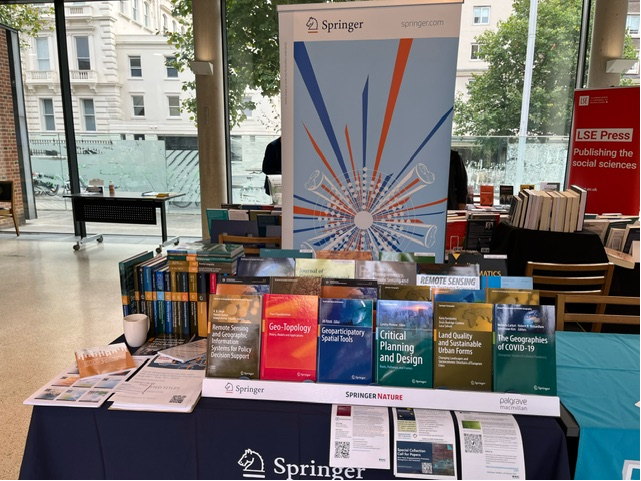
Carbon Balance and Management is at #RGSIBG24! Come find us right by the registration area to learn about our new collections, available fee waivers, and opportunities to publish with us 👋
@RGS_IBG
This study in #CarbonBalanceAndManagement analyzes and discusses the variation characteristics of soil inorganic carbon and soil organic carbon under different vegetation and precipitation conditions in the Alxa desert region, China
Read the full article: https://t.co/eyghnyht7p
🌾This research article finds that adoption of no-till and cover cropping practices in the US could increase the terrestrial #carbon sink with limited effects on crop availability for food and fodder markets 🌽
Read the full article: https://t.co/R0YJZx6SyC by @marideeweber
This article in #CarbonBalanceAndManagement describes the unexpected challenges in a project to measure and model soil organic carbon stocks of farms at field scale to inform carbon-smart agriculture 🌾
Read the full article: https://t.co/9NMF4GR2iZ
🇮🇩 Indonesia, owing to the largest mangrove cover in the world, has approximately 33% of all carbon stored in coastal ecosystems globally - but these important ecosystems are experiencing significant declines due to large-scale deforestation
Full article: https://t.co/GPeaiCHnmZ
🌲The largest European forest #carbon sinks are in the Dinaric Alps old-growth forests
🌱36% of the carbon here is concentrated in just 5% of the very large trees
📈These ecosystems are vulnerable to climate change due to droughts
Read the full article: https://t.co/26QPqsGwZT
The carbon sequestration costs of collective forests in China have shown an increasing trend since 1992. Predictions indicate that by 2030, the average carbon sequestration cost of collective forests in China will reach ¥125 per ton
Read the full article: https://t.co/IClInKr71Z
Google Plus Code can be a valuable tool to quantify the impacts of changing forest conditions and forest management activities on #carbon storage 🌲🌳
Read the full article: https://t.co/FYj9nfvkmk #CarbonBalanceAndManagement
How has the urbanisation of provincial China ���🇳 coordinated with the increasing pressure for carbon emission reduction in the construction industry? 🏙️🏗️ in #CarbonBalanceAndManagement
Read the full article: https://t.co/SvDLaLNmNQ
🌳🌲Plantation forests in New Zealand 🇳🇿
This research finds that no single species was universally better at sequestering #carbon🌳🌲
#CarbonBalanceAndManagement#ClimateChange
Read the full article: https://t.co/SCrsdBfZmR
Impact of key factors on the #carbon mitigation potential of managed temperate forests including:
🌎 Potential #climate change pathways
🪵 Salvage logging
🌲 'Young' and 'mature' forests & forest type
Read the full article: https://t.co/xLbb587VM8 #CarbonBalanceAndManagement
Excited that our #study "Quantifying the impact of key factors on the #carbon#mitigation potential of managed temperate #forests" is now published in @CBMjournal!
We show why mitigation studies often diverge in their findings and how to reconcile this.
https://t.co/URj0F9Y07E
This review article recorded data on city, #climate, and land use/land cover characteristics to examine drivers of black #carbon content and contribution to total organic carbon in soil
Read the full article: https://t.co/ME0Qqq1bKT #CarbonBalanceAndManagement
We had a most memorable event in Canberra, Australia, to celebrate the life of Will Steffen, both his professional & personal achievements and impact
The speeches delivered during the celebration were recorded and can be accessed through the link below
https://t.co/wpZSpIj6JW
Great set of short video explainers from UK climate scientists. Here I explain the role of natural carbon sinks in determining the remaining carbon budget. It’s the background behind this fig in IPCC WG-I summary (SPM.7). “the harder we hit nature, the less help we’ll get back”
We have already emitted about 80% of the CO2 that would lead us to 1.5C. The remaining budget is 500 GtCO2. Which is a meaningless number until you put it in context – we emit about 40 GtCO2 each year globally – so we have about 12 years left. Measured from the start of 2020
We are establishing a new @gcarbonproject office at Stanford University to support a growing body of methane research, including improvements in the global and regional methane budgets.
Four postdoc positions available. March 1 deadline.
https://t.co/SKPB8jxDd0