Thanks to better care, pets are living longer—and as pets get older, they need extra care and attention. During today's #NPW2026 theme of "Plan for their care: Give them a lifetime of love," learn about basic considerations when caring for senior pets. https://t.co/6irsMHGfcK
Did you know? Even indoor pets can be at risk from parasites. They can hitch a ride in on shoes, clothing, or other animals. Today, March 20th is World #ParasiteAwarenessDay, and it’s a great chance to talk to a veterinarian about the right prevention plan for your pet.
Researchers at the University of Minnesota are developing a breath test that may help detect heart disease earlier and guide treatment decisions for canine patients. https://t.co/kLCl7SpR5B
The benefits of better utilizing veterinary technicians extend to these industry professionals as well as patients, clients, and the entire practice team. #VMX2024 https://t.co/D71ZMirpO9
Don't miss our CE Lecture: Love is in the Air(way)!
Join our virtual lecture tomorrow, February 15 from 7:00pm - 8:00pm (PT), where Sarah Harris, CVT, VTS (ECC), will help you recognize and provide initial treatment for respiratory distress.
https://t.co/UnkTCRtvkS
How to help support the Colorado Pet Pantry - The nonprofit group distributes pet food to families in need throughout Colorado. https://t.co/HePID0grPE via @9NEWS
Did you know August is Itchy Pet Month?
Thank you to IDEXX's Pet Health Network and Dr. Mike Paul, DVM author of the post for
Source: https://t.co/PxFpGlS4aG
Scientists have developed a promising new gene therapy that some suggest may one day replace surgery as the primary method to sterilize female cats. https://t.co/muLPZNDyQz
We are thrilled to invite all CCD students, staff, and faculty to join us in representing the Community College of Denver at the 2023 Denver Pride Parade! We are limited to 50 attendees to march with CCD. Sign up with the link.
Learn more and Sign up here: https://t.co/3E6Bps6MyJ
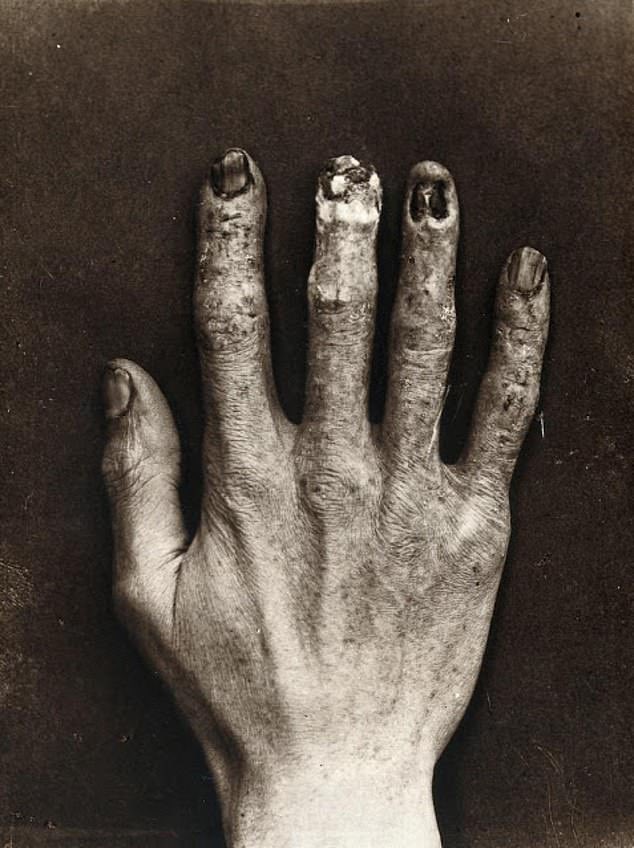
Hand of an X-ray Technician at the Royal London Hospital in the 1900s.
Physicist Wilhelm Conrad Röntgen unveiled one of the most significant breakthroughs in medical history with the discovery of X-rays. While experimenting with cathode light's ability to penetrate glass, Röntgen noticed an unexplained glow emanating from a nearby screen. Fascinated, he named this mysterious light "X-rays."
X-rays are electromagnetic waves similar to light, but with wavelengths 1,000 times shorter. Röntgen soon realized their remarkable ability to penetrate flesh while being absorbed by bones, leading to their immediate recognition as a medical marvel.
Although the usefulness of X-rays was swiftly recognized, the harmful effects of radiation were not initially understood. It was only later, as X-ray equipment operators began falling ill with conditions like cancer, that the dangers of radiation poisoning became apparent.
During the Balkan War, X-rays were first employed in battle to locate bullets and identify fractures. In recognition of his groundbreaking discovery, Wilhelm Conrad Röntgen was awarded the first Nobel Prize in Physics in 1901. Remarkably, he chose not to patent X-rays for personal gain and remained humble in the face of his monumental achievement.
The accompanying image portrays a severely damaged hand, resulting from the practice of testing X-ray machines by capturing an X-ray image of the technician's hand. At the time, the immense radiation exposure involved was not fully comprehended.
Exposure to certain levels of radiation can cause harm to the human body and prove fatal when the dosage is sufficiently high.
Research results published this spring indicate the behaviors commonly attributed to certain dog breeds likely predate those breeds, and a dog’s breed is more predictive of how it will look than how it will act. https://t.co/u7sPs4evlT
The window to apply for the #VTNE Exam is now open! You have until March 4th to apply for the exam. Make sure to follow all the steps and apply for the exam at https://t.co/Sx8rF1HkiB