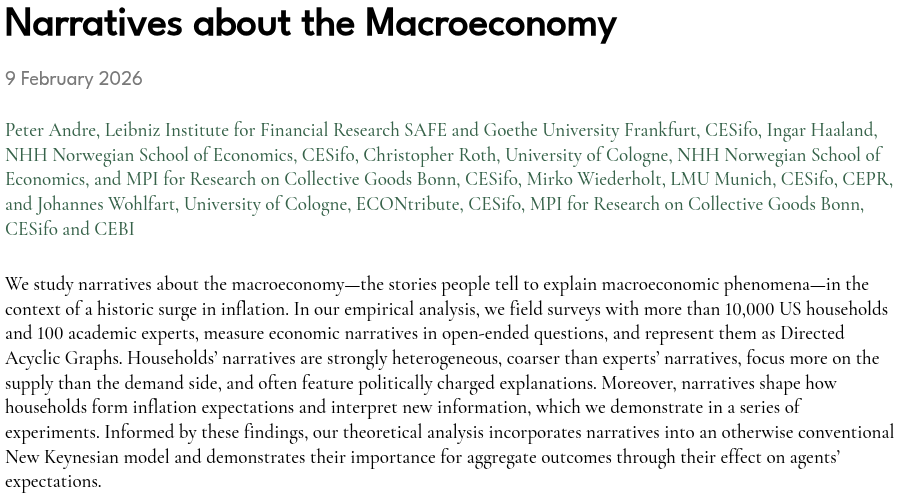
Check out our new paper on the Smoot-Hawley Tariff. Using new evidence, we reassess its economic impact and draw lessons that remain highly relevant in today's trade policy debate
Taking place tomorrow at @UTAustinEcon: first edition of the CMT Expectations conference, organized by @BachmannRudi, @YGorodnichenko and Oli Coibion.
We are looking forward to a great program and a fantastic keynote speech by @S_Stantcheva
But to me, the core problem with the econ academic profession is that there's been a massive increase in the number of economists doing great work, yet we remain too fixated on "top 5" journal publications. Worse, the # of paper slots has not kept up with supply of good work.
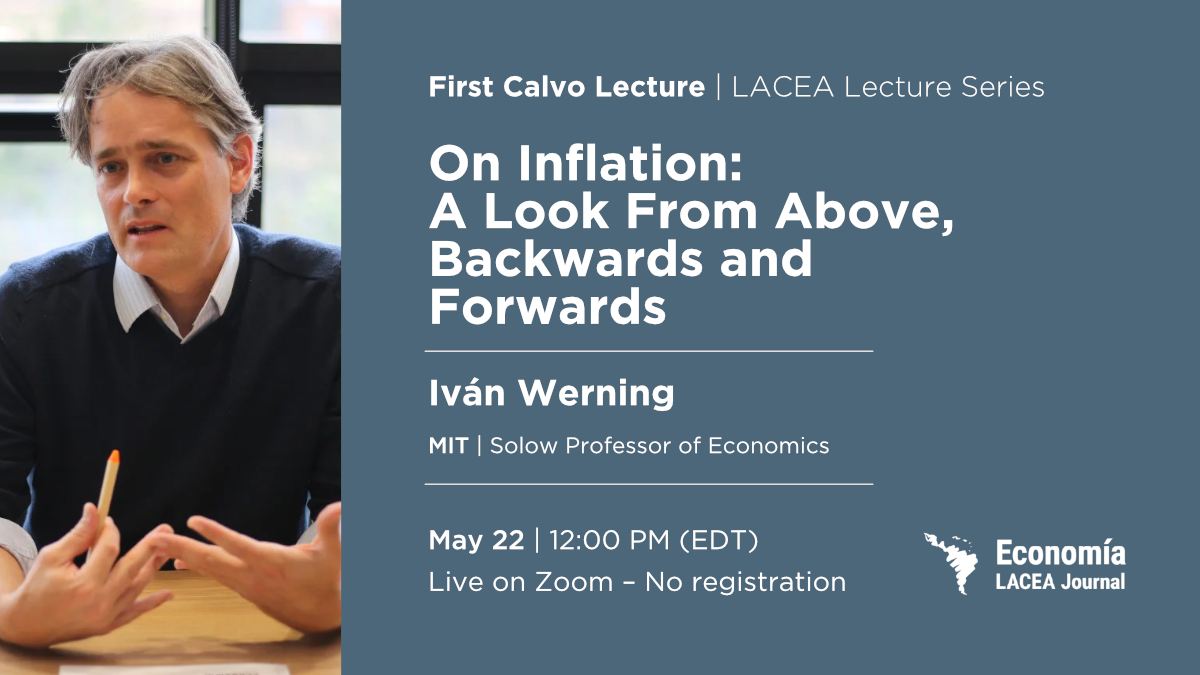
🎙️ First Calvo Lecture
We are pleased to launch the Calvo Lecture Series with @IvanWerning (MIT), introduced by @SFGaliani:
“On Inflation: A Look From Above, Backwards and Forwards”
📅 May 22
⏰ 12:00 PM (EDT)
💻 Live on Zoom (no registration)
🔗https://t.co/hsWLaZdifN
Super interesting!
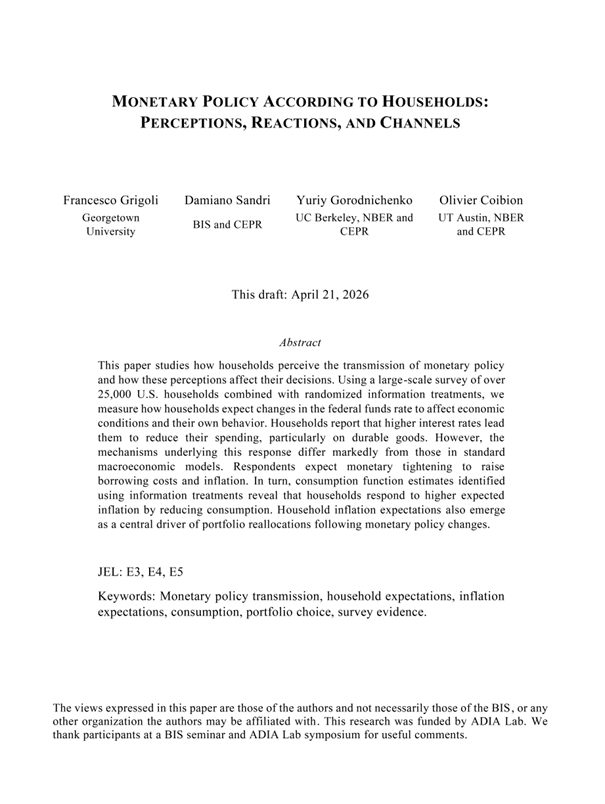
"Monetary Policy According to Households: Perceptions, Reactions, and Channels" by Francesco Grigoli, Damiano Sandri, Yuriy Gorodnichenko, and Olivier Coibion.
"This paper studies how households perceive the transmission of monetary policy and how these perceptions affect their decisions. Using a large-scale survey of over 25,000 U.S. households combined with randomized information treatments, we measure how households expect changes in the federal funds rate to affect economic conditions and their own behavior. Households report that higher interest rates lead them to reduce their spending, particularly on durable goods. However, the mechanisms underlying this response differ markedly from those in standard macroeconomic models. Respondents expect monetary tightening to raise borrowing costs and inflation. In turn, consumption function estimates identified using information treatments reveal that households respond to higher expected inflation by reducing consumption. Household inflation expectations also emerge as a central driver of portfolio reallocations following monetary policy changes."
https://t.co/mAEM5gQFB9
Thanks @Ale_M_Peter and @Federomei1 for the chance to share my story as a mum in early tenure track years. I hope it resonates with many, maybe shifts a few perspectives. Follow @OneExtraYear for more!
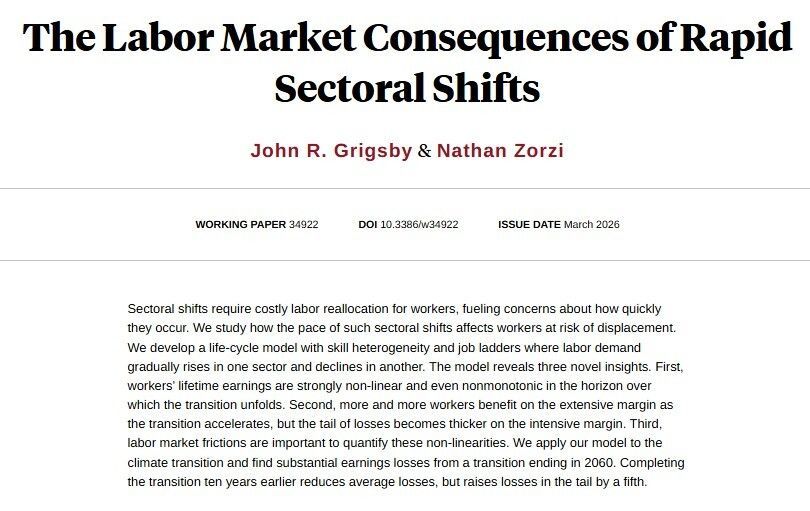
Workers' outcomes are highly non-linear, even non-monotone in the pace of sectoral shifts. More and more workers gain as a transition accelerates, but the tail of losses thickens, from @JohnRGrigsby and @Nathan_Zorzi https://t.co/1BIkUE3s4W
1/6🧵
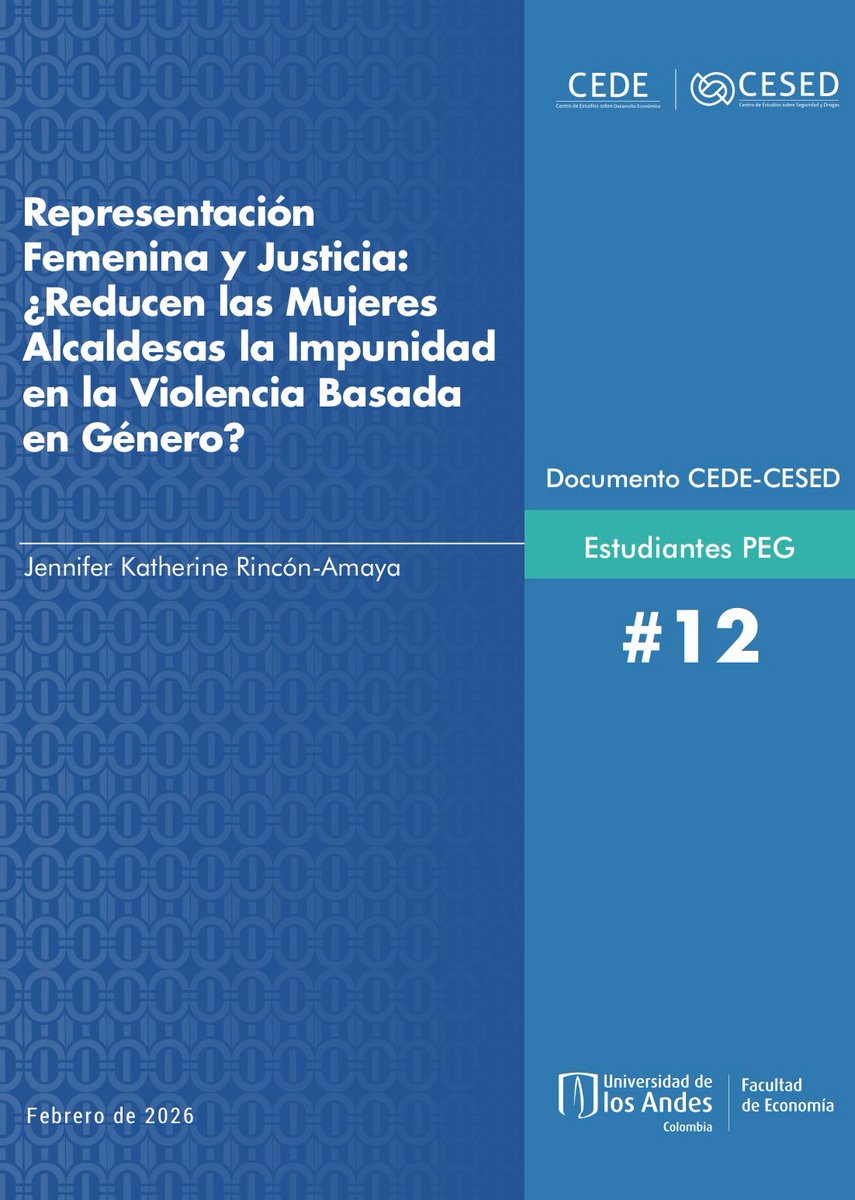
¿Qué pasa con la justicia colombiana cuando una mujer llega a la alcaldía en un contexto de alta impunidad frente a la violencia de género?
Estoy muy feliz de compartir que mi tesis de maestría fue publicada como Documento CEDE-CESED en la Facultad de @EconomiaUAndes
Join us for the Inaugural James Robinson Annual Lecture, hosted by the #CEDE at #EconomiaUniandes. James Robinson — 2024 Nobel Prize in Economic Sciences — will present The Fundamental Disequilibrium in Latin America: https://t.co/Vobkevj226
🗓 January 27, 2026 | ⏰ 4:00 p.m. – 6:00 p.m.
📍 Mario Laserna Auditorium – @Uniandes
🔗 Register here: https://t.co/Vobkevj226
Why is a conflict between fiscal and monetary policy dangerous? @LeonardoMelosi and I show that when fiscal authorities ignore debt sustainability while central banks fight inflation, the economy can enter a vicious spiral of high inflation, recessions, and more debt accumulation
Studying whether the returns to quality upgrading get passed through to primary agricultural producers finds that in Colombian coffee, the answer is mostly no, but sometimes yes, from Rocco Macchiavello, Josepa Miquel-Florensa, @nico_de_roux, @EricVerhoogen, @BernaMario, and Patrick W. Farrell https://t.co/odXGPywElj
Constructing a new dataset of FOMC meeting transcripts from 1966 to 1990 to analyze the sources of heterogeneity in individual monetary policy preferences and how this heterogeneity shapes policy decisions, from Cooper Howes, Marc Dordal i Carreras, Olivier Coibion, and @YGorodnichenko https://t.co/lVPDjuj5BS
🚀 Draft chapters my forthcoming MIT Press book:
𝗛𝗲𝘁𝗲𝗿𝗼𝗴𝗲𝗻𝗲𝗼𝘂𝘀 𝗔𝗴𝗲𝗻𝘁 𝗠𝗮𝗰𝗿𝗼𝗲𝗰𝗼𝗻𝗼𝗺𝗶𝗰𝘀: A Tractable New Keynesian Framework
A modern, analytical roadmap to TANK & HANK models for researchers, students and policy institutions
https://t.co/La1oqEmGEY
👇
Real question. Is there any central bank in an advanced economy that has shrunk its balance sheet back to pre-2008 levels after launching large-scale asset purchases?