Evolutionary Biologists and Computer Scientists collaborate to address foundational questions on the Tree of Life, thanks to VILLUM and Novo Nordisk Foundations
Hyperiax 2.0 is out! @marcustellx and the rest of the Hyperiax team have done an amazing job at revising the interface and in using Jax much more efficiently for tree computations. Hyperiax now traverses trees with >500 mill. nodes in <50 ms.
Score matching for bridges can be learned without time-reversal https://t.co/UdRs1y0Wr1 w/ @thelibbybaker@MoritzSchauer We learn grad log p(t,x; T,y) for a target y directly without reversing time by combining score matching with adjoint diffusions (Milstein 2004) that give the reversed dynamics and that can be simulated directly, thus avoiding two-step learning involving both the forward and backwards process
We welcome our new postdoc @RicardoAranda44, cosupervised with @ras_nielsen as part of our @VILLUMFONDEN project Stochastic Morphometry. Ricardo will study bird beak evolution (like in this kākāpō) using methods developed by our @CCEM_ucph team.
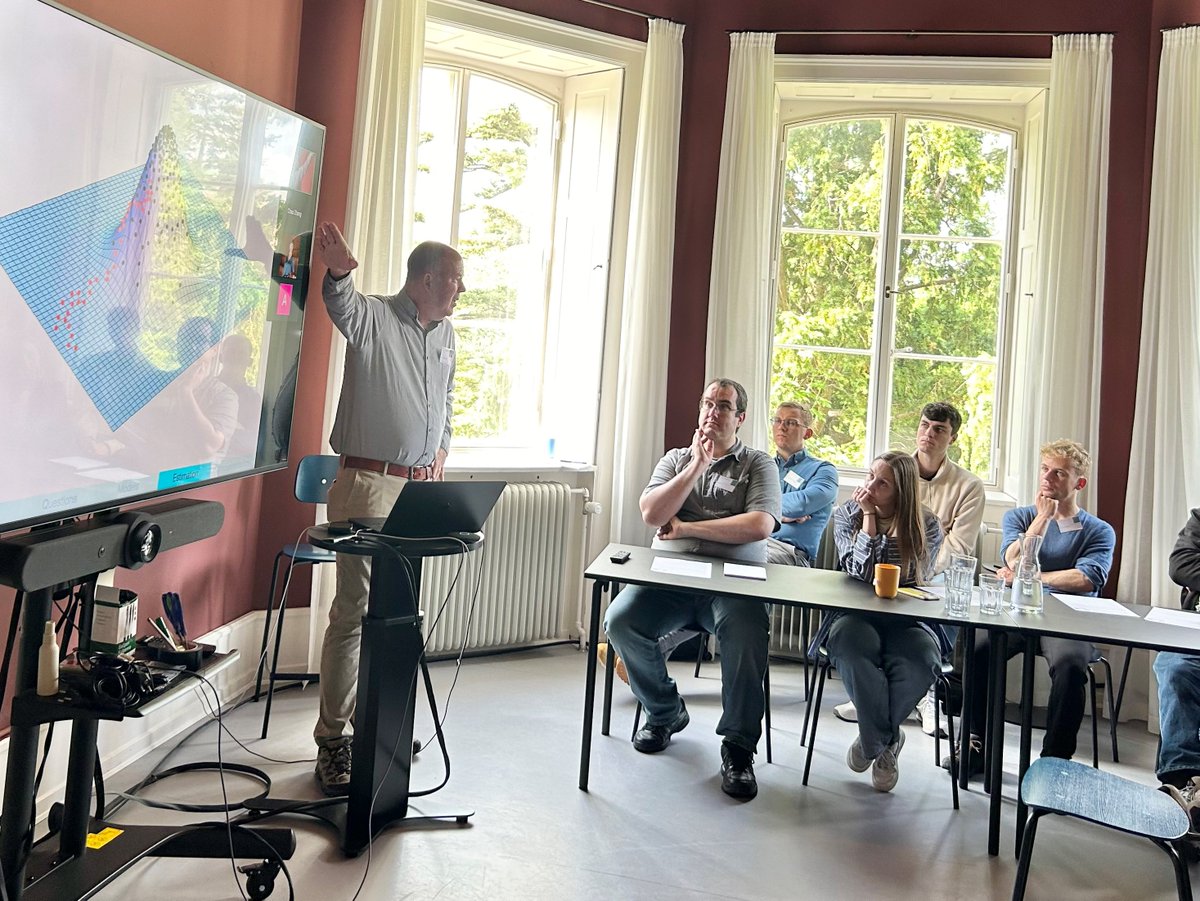
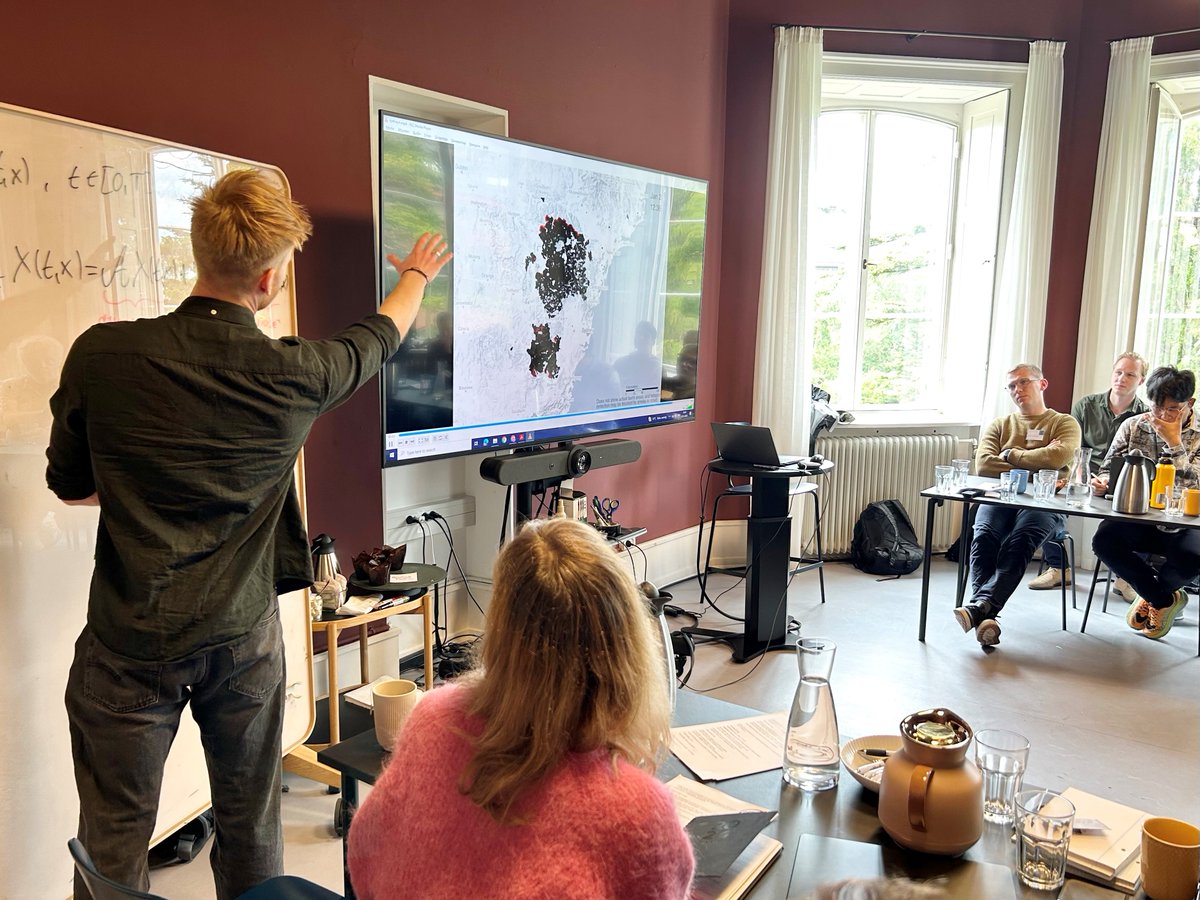
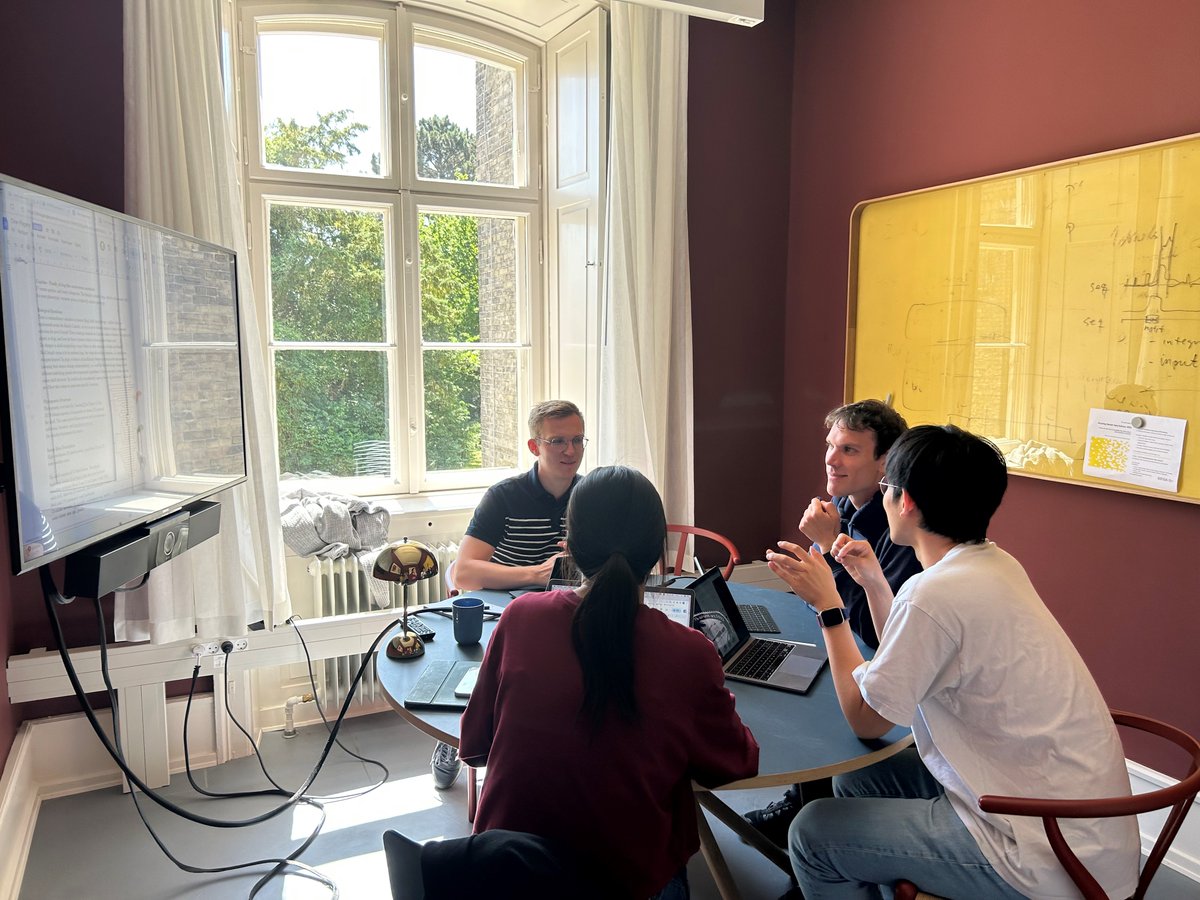
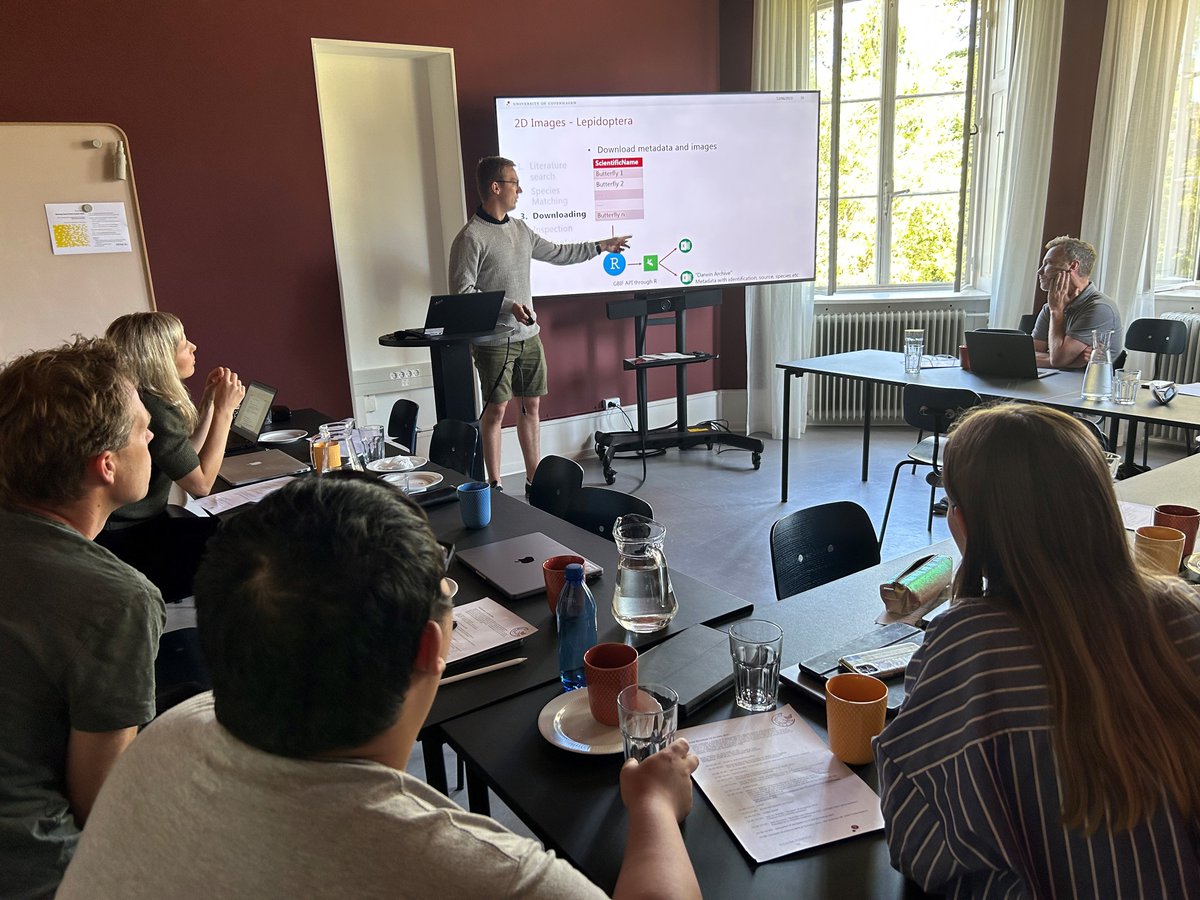
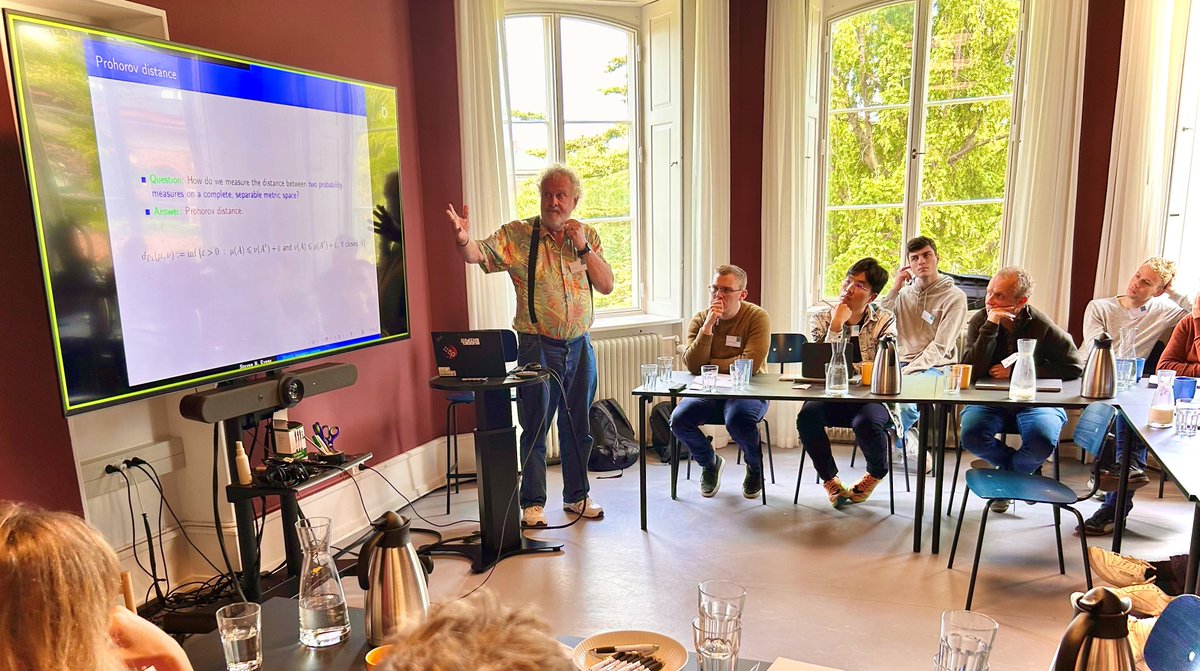
This week CCEM hosted a 3-day workshop featuring talks on phylogenetic and morphological analytics and stochastic processes as well as discussions with colleagues from UC Berkeley, Chalmers Uni., VU Amsterdam and Uni. of Delft. Thank you to all speakers and the VILLUM Foundation!
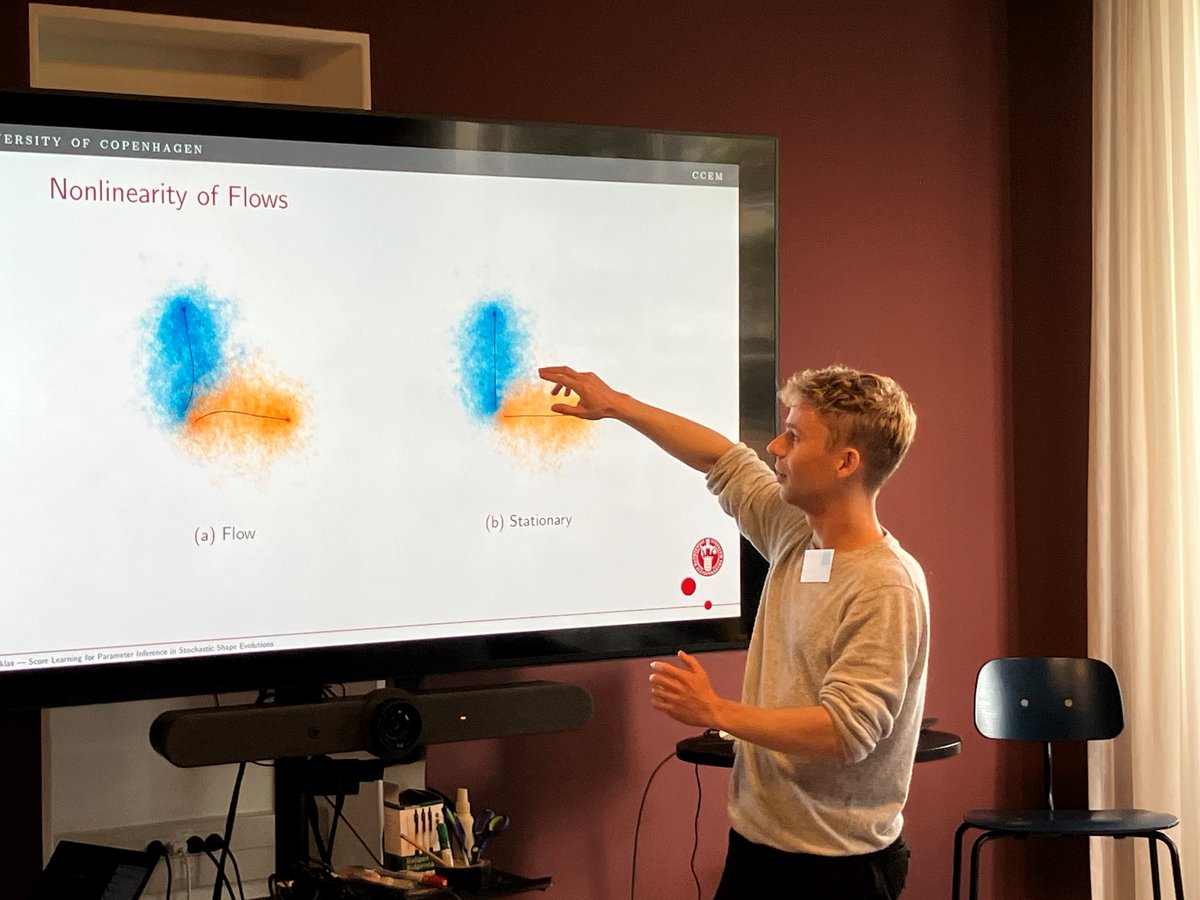
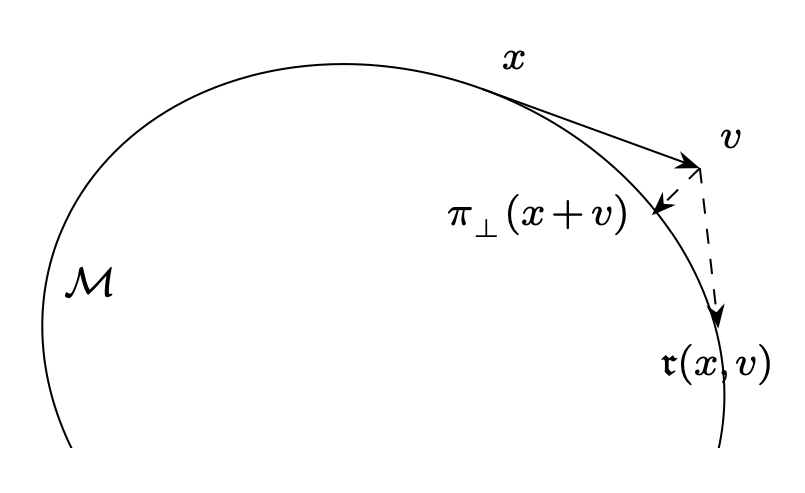
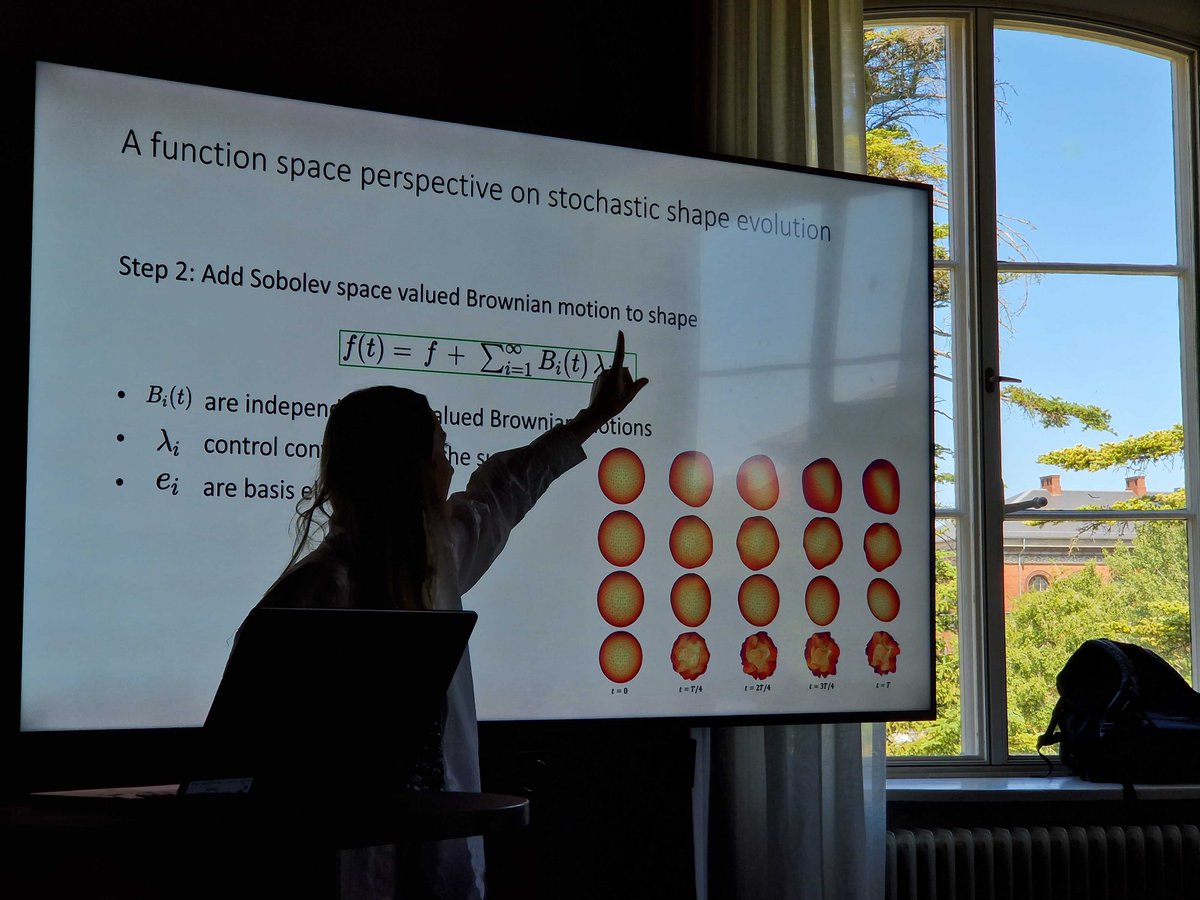
Conditioning shape processes is not restricted to finite configurations of landmarks - we can lift to infinite dimensions and condition nonlinear processes using Doob's h-transform, talk today by @thelibbybaker at CIRM Luminy
Coming soon will be other examples from the above references, and later on SDE cases and inference in SDE models for shapes. A major focus at @CCEM_ucph is to make inference in infinite dimensional models of shape variation along phylogenetic trees possible. The above notebooks exemplify steps towards this.
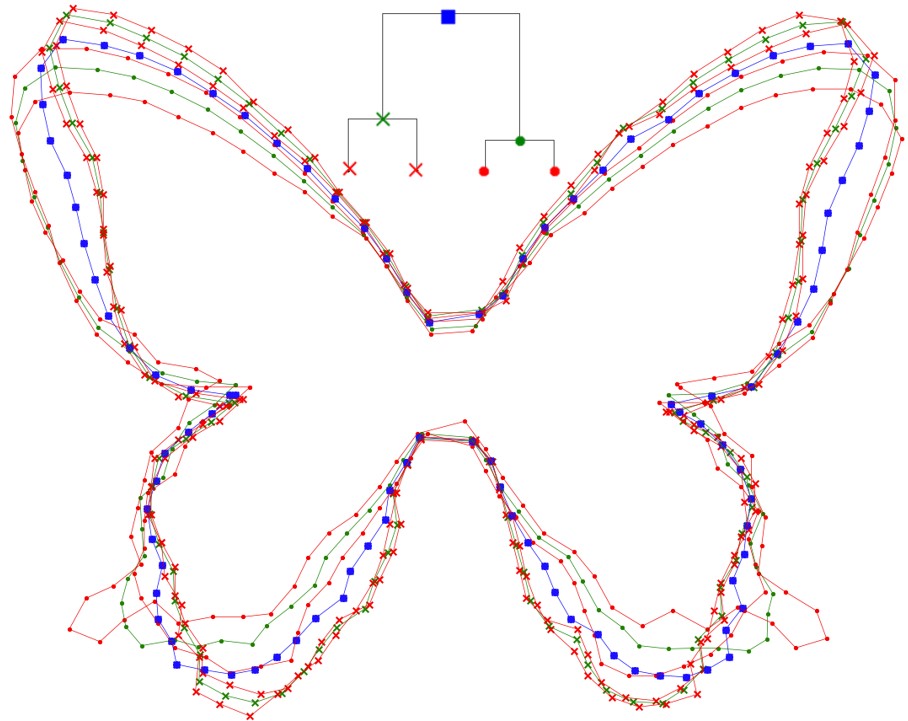
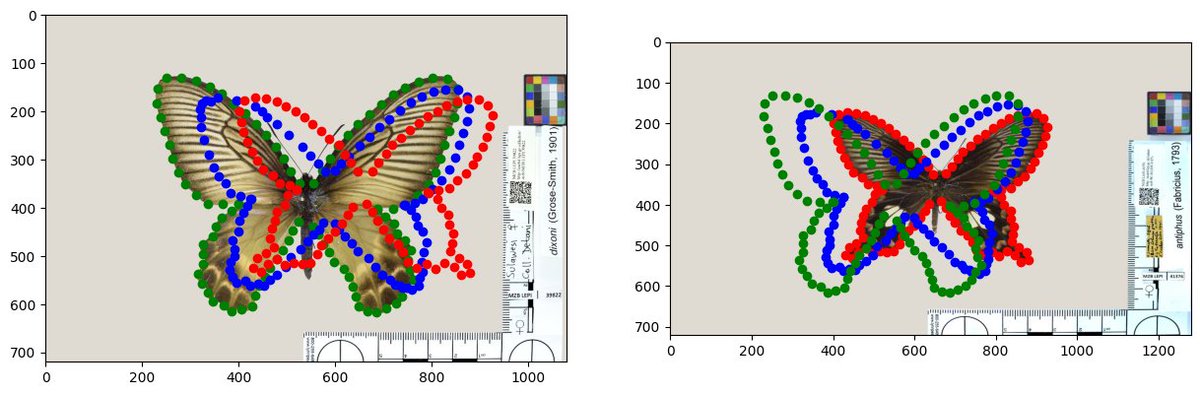
Our notebook Upwaards LDDMM utilizing the Hyperiax framework https://t.co/aJICl3L6AA… ..., is used here to estimate the ancestral shape (in blue) and two intermediate shapes (in green) for four different butterfly species belonging to Papilionoidea. @CCEM_ucph
Our notebook, https://t.co/aJICl3L6AA ..., implements a fast estimation of shape in inner nodes in a phylogenetic tree. Hyperiax is used here to estimate the intermediate shape(in blue) between two different species of butterflies!
@CCEM_ucph
Our notebook https://t.co/xZWLqK1MaJ implements fast estimation of inner nodes of a phylogenetic tree - a simple application of our new tree traversal framework Hyperiax! We also show how Hyperiax can be used for fast simulation of trees under a Brownian Motion model. @CCEM_ucph
Hyperiax: Tree traversals using JAX https://t.co/NProBiuMFj
Developed by the team at @CCEM_ucph, initially for applications in phylogenetic analysis of morphological data, but Hyperiax has evolved into a general tree traversal, message passing and edge/node computation framework. Current examples include phylogenetic mean estimation, recursive shape matching using the LDDMM shape models, and backwards filtering, forwards guiding in Gaussian models. @gefanyang@mortenakhoej @FrozakenDk
CCEM's PhD student Michael Severinsen is currently on a research stay at UC Berkeley - pictured here in front of dog skulls affected by artifical selection in California Academy of Sciences which is one of the foci of the research during his stay #VillumFoundation
Come join us for a postdoc in Copenhagen aimed at developing computational methods to map genotype-phenotype interactions in birds. https://t.co/6UnJMAjbi8
CCEM Annual Workshop 2023 was concluded by inspiring talks by Kyle Copas on GBIF – Global Biodiversity Information Facility, by Guojie Zhang on the B10K bird genome project and by Gavin Thomas on the Mark My Bird project. Thank you to all for great discussions! #VillumFoundation
First day of CCEM's annual workshop 2023 featured engaging discussions and six exciting talks on phenotypic and morphological analyses, evolutionary modelling of shape data, phylogenetic root estimation and species tree inference. #VillumFoundation