建筑隐藏了什么? 15-6 - 大气自由能系列 - 仍在工作的古代建筑
最后视频可能是现代呈现古代建筑在晚上的状态,是否使用了大气自由能源?自己判断!
What Lies Hidden in Architecture? 15-6 - Atmospheric Free Energy Series - Ancient Structures Still in Operation
The final video may depict modern representations of ancient architecture at night. Was atmospheric free energy utilized? Judge for yourself!
埃及吉萨金字塔与猎户座的镜像对应关系 (地平模型系列 21-2)
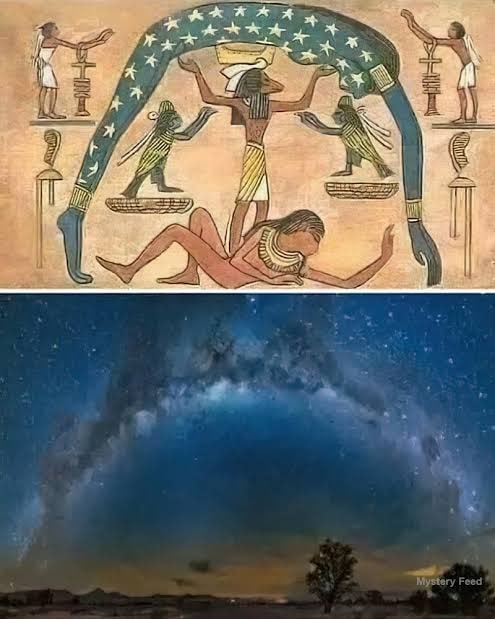
埃及吉萨金字塔群的排列位置,对应了猎户座腰带的三颗星。除了这三颗星,古埃及人认为银河乃为天上的神圣河流,而尼罗河则是银河在人��的延伸。当法老死后,灵魂会搭乘神圣的太阳船,沿着天上的银河航行,最终抵达银河尽头的猎户座(象征掌管冥界与重生的奥西里斯神),在那里获得永生。
更甚者,地球上的座标、历法与赤道与南/北回归线,全是日月星辰在大地上的投射。
The Mirror Image Correspondence Between the Pyramids of Giza and Orion (Horizon Model Series 21-2)
The arrangement of the pyramids at Giza corresponds to the three stars of Orion’s Belt. In addition to these three stars, the ancient Egyptians believed that the Milky Way was a sacred river in the heavens, and that the Nile was its earthly extension. When a pharaoh died, his soul would board the sacred solar barque and sail along the celestial Milky Way, eventually reaching Orion—the end of the Milky Way (symbolizing Osiris, the god who rules the underworld and rebirth)—where it would attain eternal life.
Furthermore, Earth’s coordinates, calendars, the equator, and the Tropics of Cancer and Capricorn are all projections of the sun, moon, and stars onto the Earth’s surface.
水手们如何利用北极星导航-地平模型系列 20
人们之所以能在一望无际的汪洋大海中航行,是因为黑暗与迷惘之中,始终存在着引导我们前行的方向。
How Sailors Use the North Star to Navigate—Horizon Model Series 20
The reason people are able to navigate the vast, endless ocean is that, even in the darkness and confusion, there is always a direction to guide us forward.
周日视运动(Diurnal motion)与北极星-地平模型系列 19
周日视运动是地球上的观测者看到天空中的天体(如日月星辰)每天绕着天轴(北极星),见图,做圆周运动的视觉现象。其中,「周日」是指「以一天为周期」;「视」是指「视觉上的」,总合起来就是观测者面对北极星,所有的星星、太阳、月亮每天都会固定东升西落「一圈」,见视频1。
那么,观测者移至大地(地球)的北极,日月星辰的周日视运动,则会以头顶绕着北极星做圆周运动,这样的景象,只有天动说(地心说)的模型才能与之符合,见视频2。
Diurnal Motion and the Polaris-Horizon Model Series 19
Diurnal motion is the visual phenomenon observed by an observer on Earth in which celestial bodies (such as the Sun, Moon, and stars) appear to move in a circular path around the celestial pole (Polaris) each day, as shown in the figure. Here, “diurnal” refers to “a cycle of one day”; “apparent” means “visual”; taken together, this means that when an observer faces the North Star, all the stars, the Sun, and the Moon appear to complete a full “circle” each day, rising in the east and setting in the west, as shown in Video 1.
If the observer moves to the Earth’s North Pole, the diurnal apparent motion of the Sun, Moon, and stars will appear to trace a circular path around the North Star directly overhead. This phenomenon can only be explained by the geocentric model (the Earth-centered model), as shown in Video 2.
电影的那些事 - 2026《兰香如故》日晷(赤道式日晷)与天 - 地平 vs 地球 系列 53-2 (地平模型系列 18-2)
日晷始终指向天! 乃为天道。
「故天以晷数成岁,国以法教为治。晷运于天,则时成于地;法动于上,则治成于人。 晷舛则时失其序,法乖则人乱其行。故时失则五谷不殖,人乱则政教不行。」
All About Movies - 2026 “The Fragrance of Orchids Remains the Same”: Sundials (Equatorial Sundials) and the Sky - Horizon vs. Earth Series 53-2 (Horizon Model Series 18-2)
The sundial always points toward the heavens! Such is the way of Heaven.
“Therefore, Heaven uses the sundial’s shadow to measure the year, and a nation governs through laws and teachings. When the sundial’s shadow moves across the heavens, the seasons are established on earth; when laws are enacted from above, order is established among the people. If the sundial’s shadow is misaligned, the seasons lose their order; if laws are disregarded, people’s conduct falls into chaos. Thus, when the seasons are disrupted, the five grains fail to thrive; when people are in chaos, governance and education cannot be carried out.”
日晷(赤道式日晷)与北极星 - 地平 vs 地球 系列 53 (地平模型系列 18) (东西古文明一致性的传说与科技系列16)
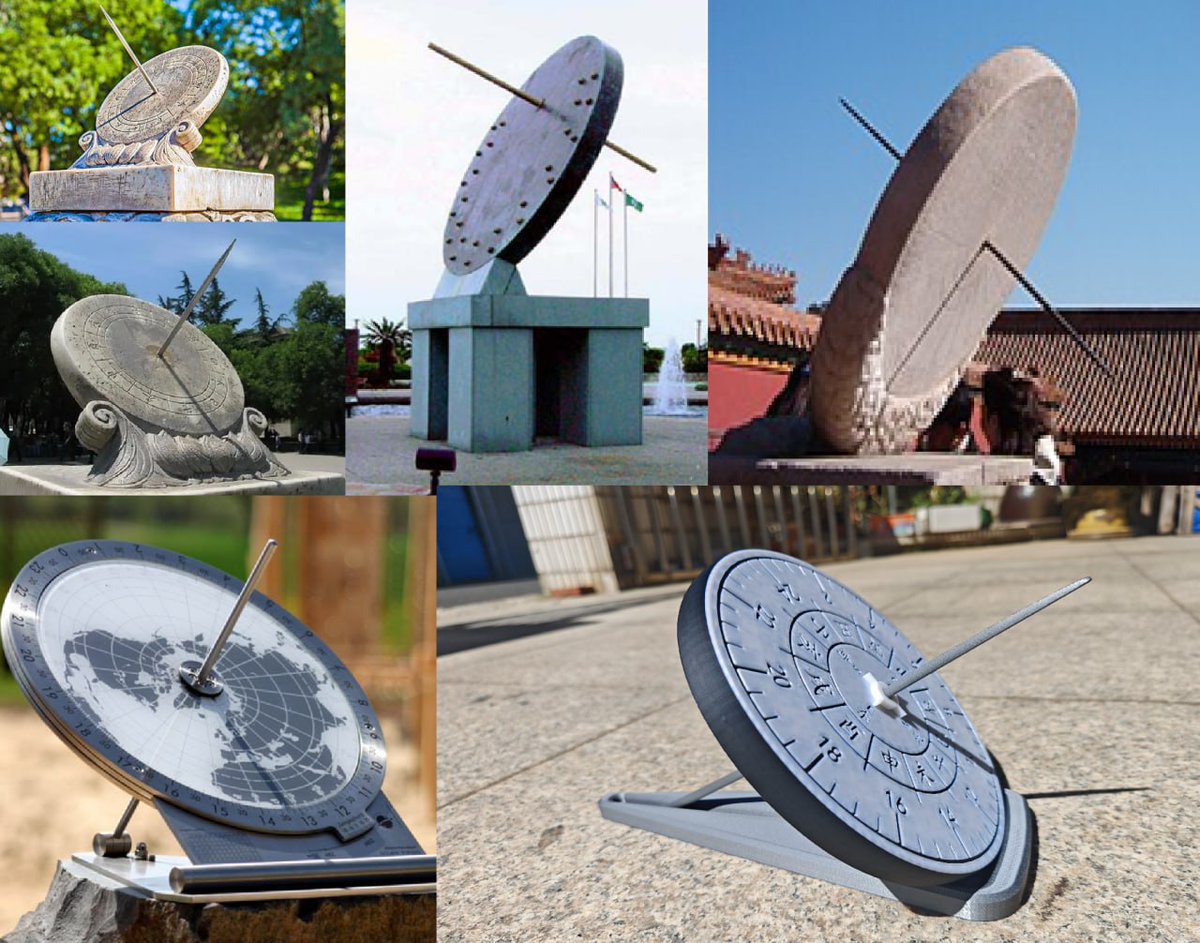
日晷(利用日影��量时间的工具)是人类最古老的计时发明之一,在东西方古文明,包括古埃及、古巴比伦、古中国、古希腊、古罗马与古印度,都曾被广泛使用。
然而,一年四季太阳在天空中的位置并不相同,那么,究竟怎么可能利用影子的变化来判定准确的时间?
实际上,真正的日晷需要以北极星作为校准位置,也就是所谓的「真正的北方」。换句话说,太阳是绕着以北极星为中心的轴线进行周日视运动,因此日晷才能够准确地测量时间,见视频。
由此来看,日晷的运作方式与地心说的宇宙模型相互呼应,因此,地心说才是正解。
The Sundial (Equatorial Sundial) and the North Star - Horizon vs. Earth Series 53 (Horizon Model Series 18) (Legends and Technology of Consistency Among Ancient Eastern and Western Civilizations Series 16)
The sundial (a tool that measures time using the sun’s shadow) is one of humanity’s oldest timekeeping inventions and was widely used in ancient civilizations across the East and West, including Ancient Egypt, Ancient Babylon, Ancient China, Ancient Greece, Ancient Rome, and Ancient India.
However, the Sun’s position in the sky varies throughout the four seasons. So, how is it possible to determine the exact time based on the changing shadow?
In fact, a true sundial must be calibrated using the North Star—that is, “true north.” In other words, the Sun performs a diurnal apparent motion around an axis centered on the North Star, which is why a sundial can accurately measure time, as shown in the video.
From this perspective, the way a sundial works aligns with the geocentric model of the universe; therefore, the geocentric model is the correct answer.
地平模型系列 17 - 太阳(日轮)与大地(地球)的横断面比例模型与赤道、南北回归线的由来
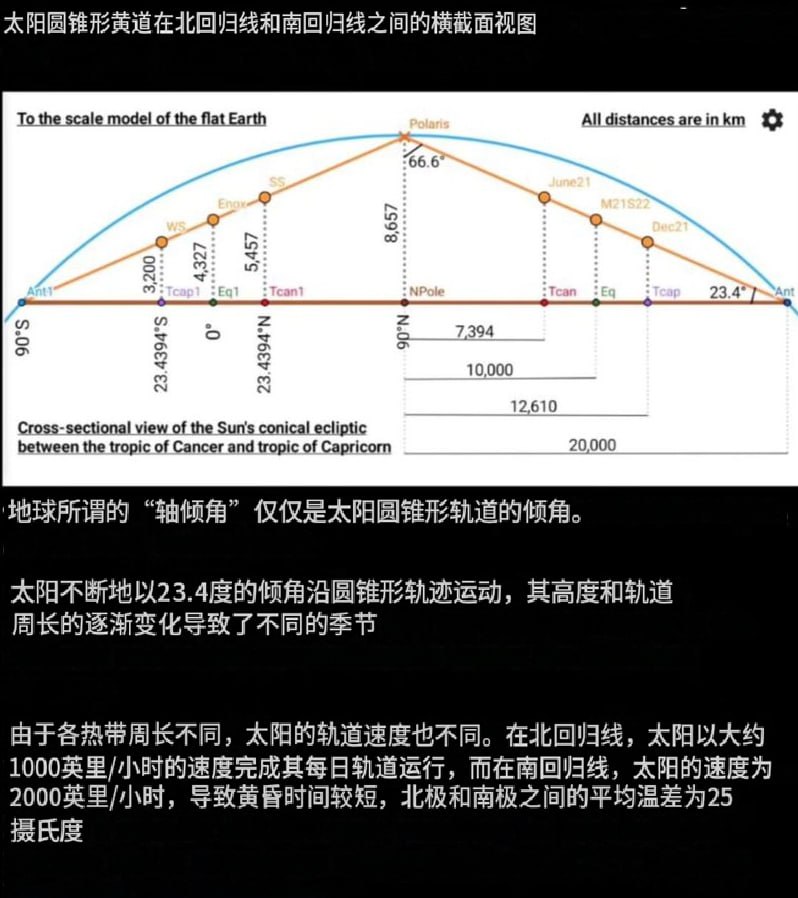
图为太阳圆锥形黄道在北回归线和南回归线之间的横断面视图,并提供与地面的距离与夹角。而大地(地球)15、16世纪地图里赤道与南北回归线的由来,就是来自太阳对应的位置。
视频是站在大地(地球)面对北极星视角时的白天与黑夜,都是绕着北极星的转轴做周日视运动。
PS:周日视运动(Diurnal apparent motion)是指地球上的观测者看到天空中的天体(如星星、太阳、月亮)每天在天空中绕着轴线旋转的视运动现象。
Earth Model Series 17 - Scaled Cross-Section Models of the Sun (Solar Disk) and the Earth, and the Origin of the Equator and the Tropics of Cancer and Capricorn
The figure shows a cross-sectional view of the Sun’s conical ecliptic between the Tropic of Cancer and the Tropic of Capricorn, along with the distances and angles relative to the Earth’s surface. The origins of the equator and the Tropics of Cancer and Capricorn on 15th- and 16th-century maps of the Earth stem from the corresponding positions of the Sun.
The video shows day and night as viewed from the Earth while facing Polaris; both are examples of diurnal apparent motion around the axis of Polaris.
PS: Diurnal apparent motion refers to the phenomenon observed by an observer on Earth in which celestial bodies (such as stars, the Sun, and the Moon) appear to rotate daily around an axis in the sky.
行星逆行与行星对冲,在占星学上宇宙的考验与命运的牵引 - 地平模型系列 16-6
在西方占星、古典中国占星、吠陀占星(Vedic Astrology)以及阿育吠陀(Ayurveda)的体系中,人体的左右脑(理智/情感)与脉轮,都深受日月、五大行星的影响,如图一、视频1一行星的运行(行星的快慢没在视频表现出来)。
虽然关于脉轮与日月、五大行星的具体对应关系,没有一个统一的说法(如图二三四五呈现各异),但不可否认的是,人体的能量与频率都会受天空星体周期的牵引。
这种影响在行星逆行与行星对冲(特别是冲日)时尤为明显,这往往是内在心灵或灵魂迎来考验与挑战的时刻。在吠陀体系中,这更被视为「业力重修」与「内在觉醒」的契机。
1.当行星逆行时,其运作节奏会变得迟缓,此时行星会以更持久且强烈的能量,压抑或反向增强其所对应的脉轮,甚至可能导致脉轮能量反转。
2.当行星对冲时(两颗行星在黄道上呈现 180° 相对位置),其所对应的脉轮能量便会产生剧烈冲突;特别是在「冲日」期间,星体强大的能量甚至会暂时凌驾于「小我」的理智判断之上。
总之,不论星相带来的是顺境还是逆境,宇宙的波动,都是为了让生命体验更加平衡与丰盛。唯有以平常心观照,才能在星辰的指引下活出圆满
Planetary Retrograde and Planetary Opposition: Cosmic Trials and the Pull of Destiny in Astrology—Horizon Model Series 16-6
In the systems of Western astrology, Classical Chinese astrology, Vedic astrology, and Ayurveda, the left and right hemispheres of the human brain (reason/emotion) and the chakras are all deeply influenced by the Sun, Moon, and the five major planets, as shown in Figure 1 and Video 1, which depict the movements of these celestial bodies (though the varying speeds of the planets are not depicted in the video).
Although there is no unified consensus regarding the specific correspondences between the chakras and the Sun, Moon, and the five major planets (as illustrated by the variations in Figures 2, 3, 4, and 5), it is undeniable that the human body’s energy and frequency are guided by the cycles of the celestial bodies.
This influence is particularly evident during planetary retrograde motion and planetary oppositions (especially solar oppositions), which often mark moments when the inner mind or soul faces trials and challenges. In the Vedic system, this is further regarded as an opportunity for “karmic rectification” and “inner awakening.”
1. When a planet is retrograde, its operational rhythm slows down. At this time, the planet exerts a more sustained and intense energy, which may suppress or conversely amplify the corresponding chakra, and may even cause the chakra’s energy to reverse.
2. When planets are in opposition (two planets are positioned 180° apart on the zodiac), the energies of their corresponding chakras clash violently; particularly during a “solar opposition,” the powerful energy of the celestial bodies may even temporarily override the rational judgment of the “ego.”
In short, whether the astrological aspects bring favorable or unfavorable circumstances, the fluctuations of the universe are all intended to make life’s experiences more balanced and abundant. Only by observing with equanimity can one live a fulfilling life under the guidance of the stars.
占星命盘的星盘分析- 地平模型系列 16-5
利用自己的出生年月日、时间以及出生地,计算对应天体(行星与群星呼应的关系)。
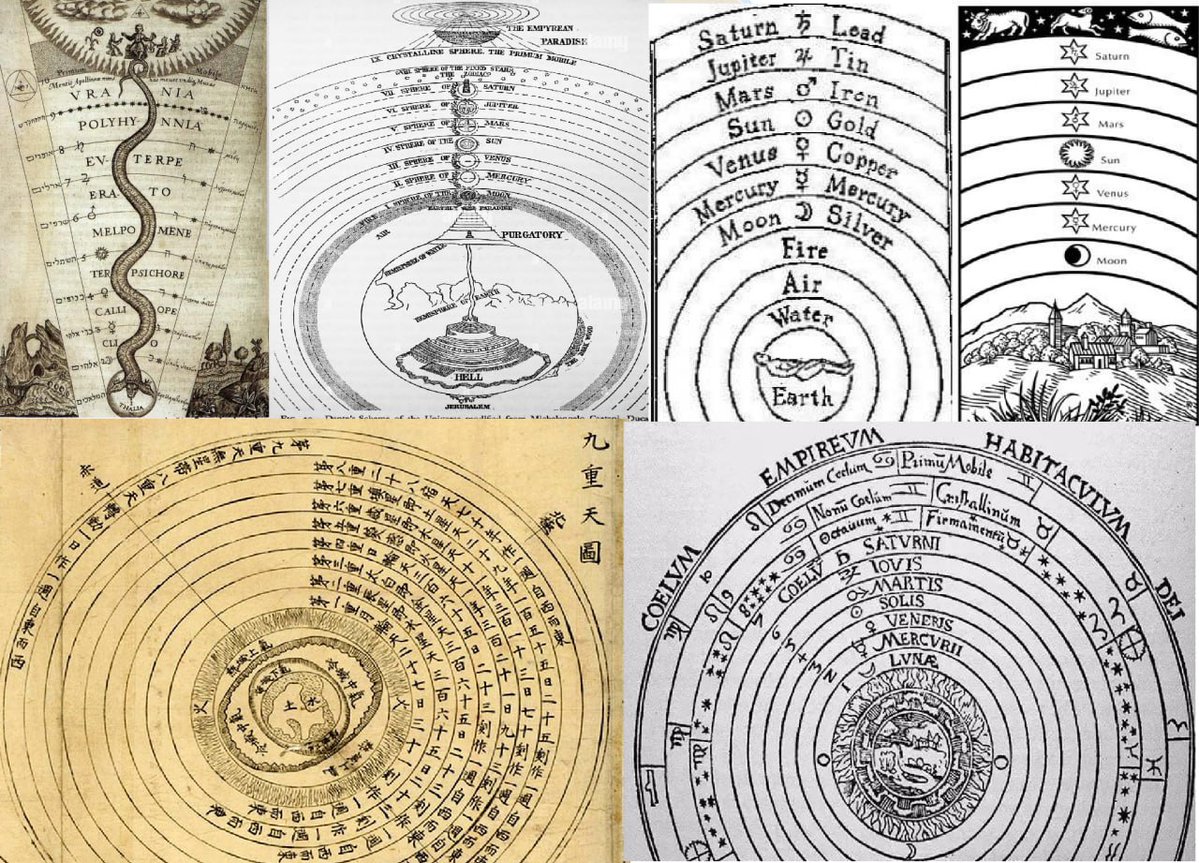
PS:图四:九重天图显示各行星的周期。
Astrological Chart Analysis—Horizon Model Series 16-5
Use your date, time, and place of birth to calculate the corresponding celestial bodies (and the relationships between the planets).
P.S.: Figure 4: The Nine Heavens Chart shows the cycles of each planet.
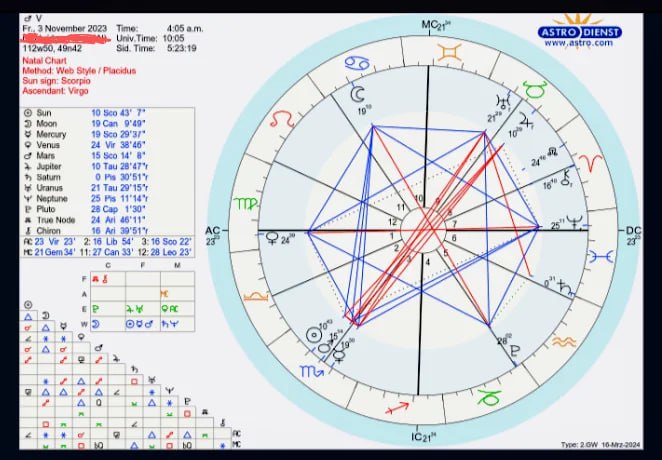
占星命盘的四大���轴 - 地平模型系列 16-4
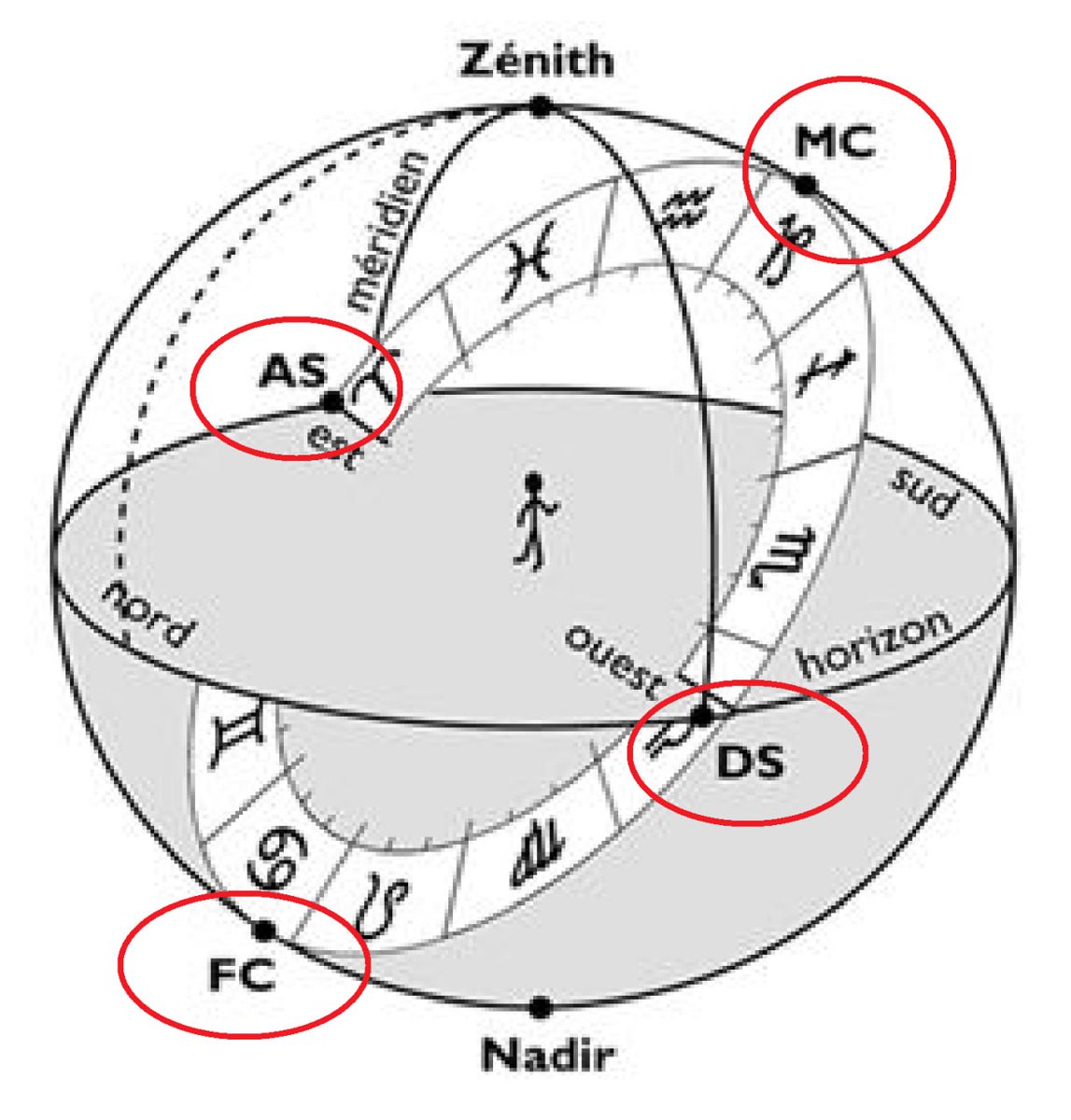
占星学中四大尖轴划分了星盘的四个方向,上升、下降、天顶(北极星)和天底。
上升星座是地平圈与黄道圈的东方交叉点(ASC)
下降星座是地平圈与黄道圈的西方交叉点(DES)
天顶星座是北极星(MC)
天底星座是天顶星座的相反方向(IC)
其中,黄道圈是太阳在天球上每年遵循的路径。
图二的天顶,是个人视角的天顶,不是天顶星座的天顶,天顶星座就是那个箭头,北极星。
The Four Axes of the Astrological Chart - Flat Earth Model Series 16-4
The four major axes in astrology divide the four directions of the chart: Ascendant, Descendant, Zenith (Polaris) and Nadir.
The ascendant is the eastern intersection of the horizon and the ecliptic (ASC)
The Descendant is the western intersection of the horizon and the ecliptic (DES)
The zenith constellation is Polaris (MC)
The IC is the opposite of the IC.
Among them, the ecliptic is the path that the sun follows on the celestial sphere every year.
The zenith in Figure 2 is the zenith from a personal perspective, not the zenith of the zenith constellation, which is the arrow, the Polaris.
占星命盘的群星带(星座/星宿)是转盘 - 地平模型系列 16-3
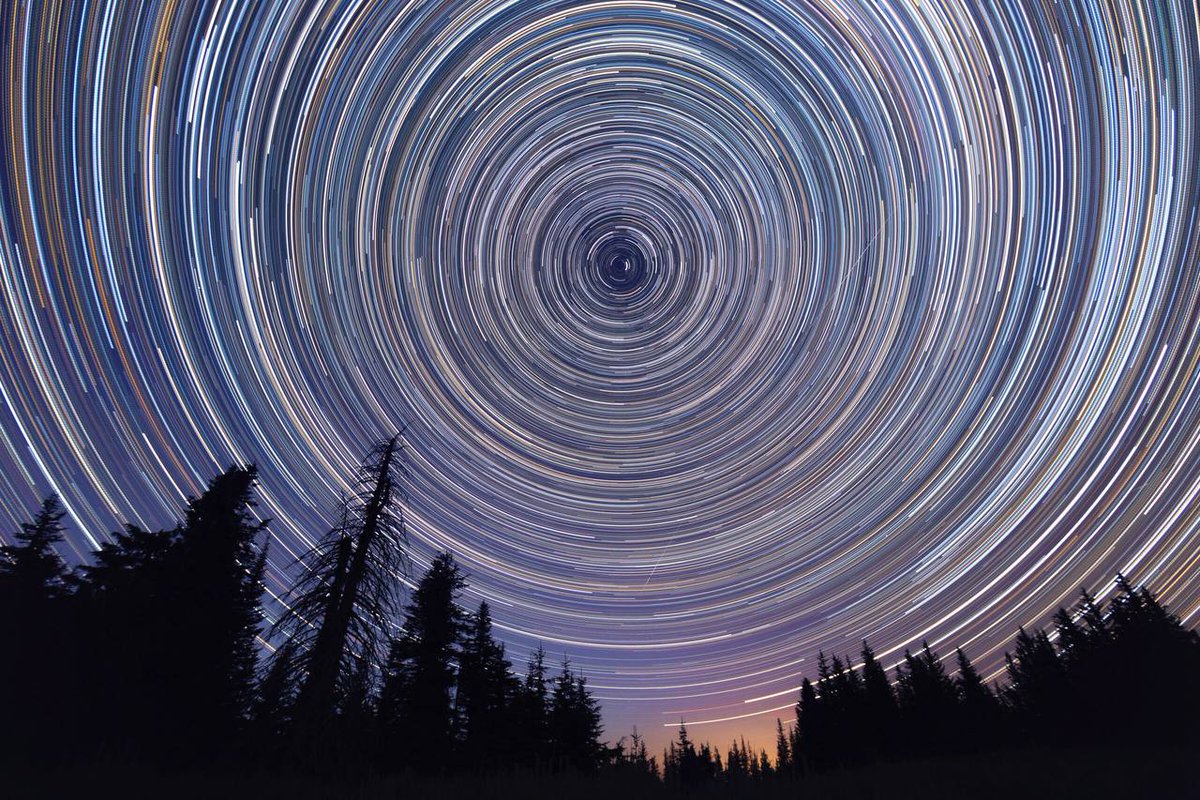
星轨,亦称星迹(Star trail),是通过长时间曝光以拍摄夜空中星体视运动的影���,可以看到群星以北极星为圆心的圆盘转动。所以星座或星宿是转动的圆盘做呈现。
再进者,以圆环表示群星所在的位置,如图四。
更多资讯,可参考星轨系列(地平模型系列7)
图一:星座图
图二:古中国星宿图
图三:天空星轨
图四: 行星与群星周期图
The star belt (constellations) of the astrological horoscope is a rotating disk - Flat Earth Model Series 16-3
Star trail is the image of the apparent motion of stars at night captured through long exposure. In these images, the stars can be seen rotating in a disk with the Polaris as the center. So the constellations are presented in a rotating disk.
Furthermore, the circle is used to indicate the positions of the stars as Figure4.
For more information, please refer to the Star Trail Series (Flat Earth Model Series 7)
Figure 1: Constellation diagram
Figure 2: Ancient Chinese star map
Figure 3: Star trails in the sky
Figure 4: Planets and star cycle diagram
占星命盘的行星 - 地平模型系列 16-2
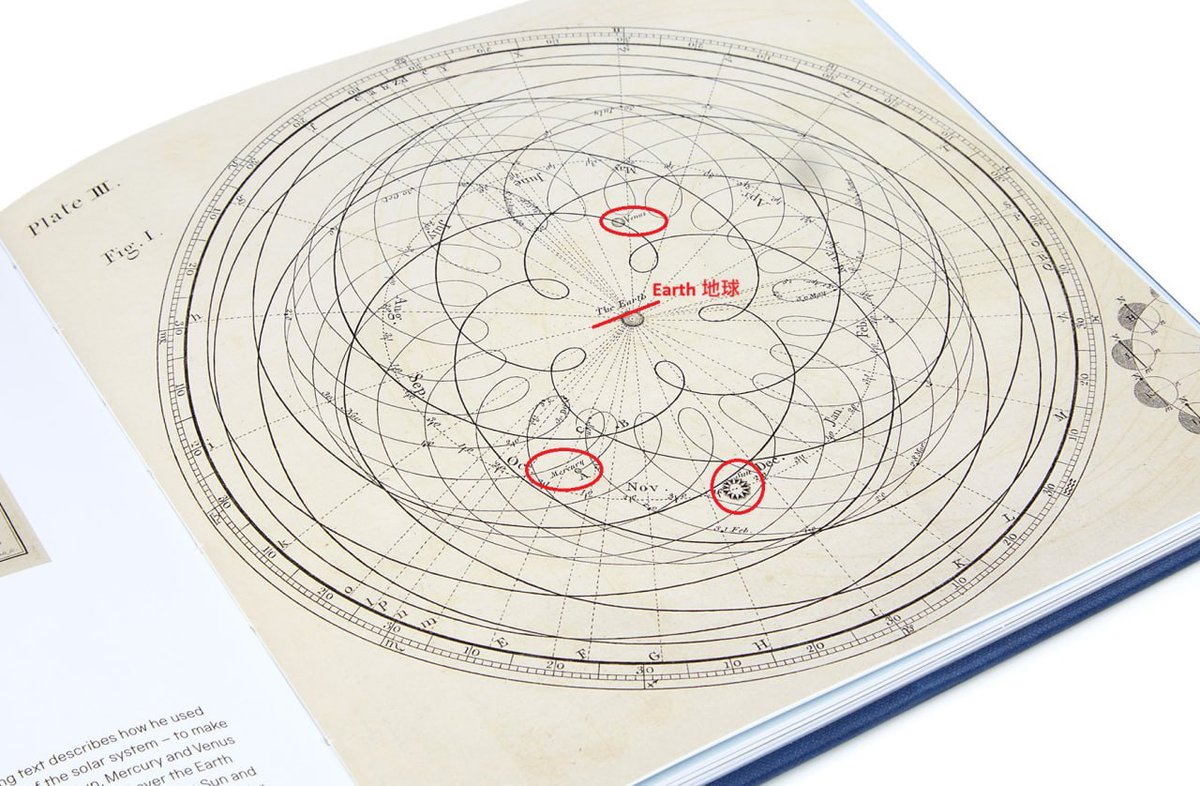
占星学中行星包括太阳、月亮、水星、金星、火星、木星、土星。顺序如图一。
其行星运动方式如图二、三、四、视频。
其中,图二、三至少是1756年前就有的纪录。
出生时间点,各行星所在位置,就是占星命盘查询主要��据。
Planets in the Astrological Chart - Flat Earth Model Series 16-2
The planets in astrology include the Sun, Moon, Mercury, Venus, Mars, Jupiter, and Saturn. The sequence is shown in Figure 1.
The planetary motion is shown in Figures 2, 3, 4, and the video.
Among them, Figures 2 and 3 are records from at least 1756.
The time of birth would map to the positions of the planets are the main basis for astrological chart query.
占星命盘的基�� - 地平模型系列 16-1 (东西古文明一致性的传说与科技系列11)
不管印度、中国、西方,基底都是相同的方式,占星学分成三个角度。
1. 占星学中行星包括太阳、月亮、水星、金星、火星、木星、土星。顺序如图一。至于天王星、海王星和冥王星是近年从群星带分出。
2. 占星学中星盘是指群星带(西方以星座、东方以星宿为表现方式)是个转盘。如图二。
3. 占星学中四大尖轴划分了星盘的四个方向,上升、下降、天顶(北极星)和天底- 如图三、四。其中图四以眼睛视角改为圆球,如浑天仪设计,可参考视角系列。
占星命盘就是出生时,行星与星盘与四大尖轴的所在的位置。
完全架构在地心说。
The Foundation of the Astrological Chart—Horizon Model Series 16-1
Whether in India, China, or the West, the foundation is the same: astrology is divided into three perspectives.
1. In astrology, the planets include the Sun, Moon, Mercury, Venus, Mars, Jupiter, and Saturn. The order is shown in Figure 1. As for Uranus, Neptune, and Pluto, they have been distinguished from the celestial sphere in recent years.
2. In astrology, the birth chart refers to the celestial sphere (represented by constellations in the West and asterisms in the East) as a rotating disk, as shown in Figure 2.
3. In astrology, the four cardinal axes divide the celestial chart into four directions: the Ascendant, the Descendant, the Midheaven (Polaris), and the Imum Coeli—as shown in Figures 3 and 4. Figure 4 depicts a spherical representation from the observer’s perspective, similar to the design of an armillary sphere; see the “Perspective Series” for reference.
An astrological birth chart represents the positions of the planets, the celestial chart, and the four cardinal axes at the moment of birth.
This system is entirely based on the geocentric model.