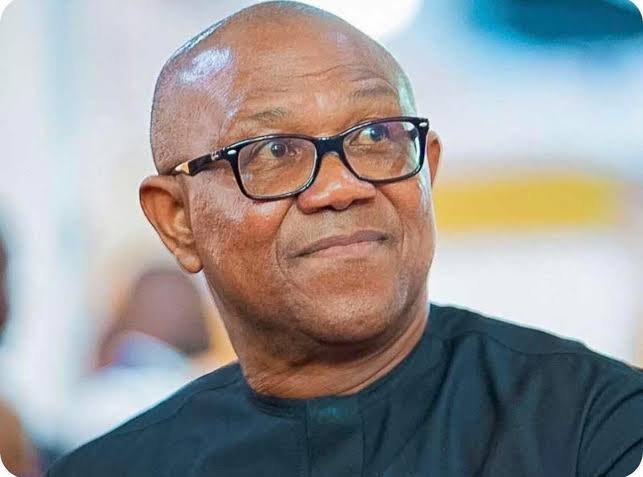
ON THE ANAMBRA DEBT QUESTION
I have remained silent over the past few days because I have been grieving the loss of my very dear elder brother and friend, Chief Okey Ezeibe. However, the time has come for me to address some of the matters that have occupied public discussion in recent days.
I respectfully urge everyone to concentrate on the existential challenges confronting Nigeria and the hardships endured by its citizens, rather than on the needless distractions that have become widespread in our politics.
I wish to assure the public that I have no disagreement with my dear elder brother, Governor Soludo, or with any governor in Nigeria. I am not seeking the office of governor in any state, and I will not seek that position again, even if the Constitution is amended.
Accordingly, I appeal to governors to support whichever presidential candidate they choose while also permitting and assisting other presidential candidates and contenders for other offices to campaign freely and without interruption in their states. Ultimately, voters should be allowed to determine whom they wish to serve them.
Regarding the multilateral funding inaccurately described as “debt owed by Peter Obi” in Anambra State, I wish to state unequivocally:
As Governor of Anambra State, I did not approach any financial institution to borrow funds or issue a bond on behalf of the state. Indeed, at his farewell ceremony, the then Director-General of the DMO, Abraham Nwankwo, appointed me chairman and declared that, during his 10 years in office, I was the only state governor who had not approached him for a loan facility.
When I left office, the Anambra State Government owed no unpaid salaries, gratuities, or pensions. Neither did it owe any contractor or supplier who had completed work that the government had verified and certified.
Regarding development financing from the World Bank, these are concessionary development-support funds secured by the Federal Government for states selected by it to address specific needs. Repayment is spread over 25 to 30 years.
The Anambra State Government must therefore differentiate among three separate figures: the total amount approved for the multiyear development program; the amount Anambra State actually drew during my tenure; and the funding balance outstanding when I handed over on 17 March 2014.
The government has combined these distinct categories, added them together, and described the resulting US$123.77 million as “loans left by Peter Obi.” That is an incorrect application of public-sector accounting.
The eight facilities identified were primarily World Bank and IFAD development programs negotiated by the Federal Government, with participating states receiving access to the funds through subsidiary arrangements. They were not conventional commercial loans that I personally secured during my tenure.
This does not suggest that Anambra had no repayment responsibilities; rather, each facility must be examined in light of its approval, effectiveness, drawdown, and repayment record.
The clearest contradiction appears in the government’s own figures. It states that the original facilities amounted to approximately US$123.77 million and that US$92.35 million remained outstanding in June 2026. However, the DMO’s published records showed Anambra’s total external debt at approximately US$18 million when I began my tenure in March 2006, about US$30 million in March 2014, when I left office, and approximately US$45.15 million as of 31 December 2014, nine months after my departure.
The Anambra State Government must therefore clarify how a state whose recorded external debt was about US$30 million in March 2014 and US$45.15 million in December 2014 could supposedly have inherited US$123.77 million from Peter Obi, who left office in March of that same year.
SENATOR KWANKWASO VISITS THE OBIDIENT HEADQUARTERS
Yesterday, I had the pleasure of hosting my dear elder brother and our vice presidential candidate, His Excellency, Senator Rabiu Musa Kwankwaso, alongside the gubernatorial, senatorial, and other candidates of our great party, the Nigerian Democratic Congress (NDC), from various states across the country, at the Obidient Headquarters in Abuja.
Our discussions focused primarily on strategies to expand and deepen the reach of our party and take our message of national redemption to rural communities and the hinterlands.
I reassured our candidates of my continued support in their respective states and constituencies. I also reaffirmed my commitment to working with them and undertaking the necessary groundwork to secure victory for our party.
My partnership with His Excellency Senator Rabiu Musa @KwankwasoRM is a partnership to rescue Nigeria from the calamitous and ineffective leadership that has brought our country to its present condition.
Our commitment is to commence lifting vulnerable Nigerians out of poverty, reduce the number of out-of-school children, support small and medium-sized businesses, secure our nation, unite our people, and move Nigeria from consumption to production.
A New Nigeria is POssible, and Nigeria will be OK. -PO
You have one job: Don’t Die.
Don’t Die is a casual yet strategic roguelike played with Dice. Defeat monsters, upgrade your dice, and build game-breaking combos that defy the odds. But most importantly, Don’t Die.
Win up to 10x in 30 mins or less🧵:
The African mobile gaming revenue is over $1.8b but the source is not what you think.
Most players prefer watching ingame ads for actual rewards in game, rather than actually making ingame item purchase.
The only reason that method is sustainable is actually due to the sheer volume of the entire region. Over 87% of African gamers game on mobile a number close to around 1.4 billion gamers Africa-wide.
Abdallah Elshabrawy when asked by @pgbiz,
If you had to choose today, and regardless of quality, would you bet on mobile or PC for sustainable revenue in Africa, and why?
His reply:
"I'd choose mobile. 87% of African gamers are on mobile and revenue follows accordingly.
App stores solve distribution at zero marginal cost, development cycles can compress to 90 days with reusable infrastructure, and organic growth through social sharing remains possible in ways it simply isn't on PC in this market.
That said, mobile across a continent of 1.4 billion people generating $1bn to $1.8bn in traditional game revenue is not a large number. This is a market in early formation with real structural constraints on monetisation, real scale requirements that most studios won't meet and real payment infrastructure gaps that demand specific technical decisions from day one.
The studios that win here will be the ones who understood that going in and built for the conditions that actually exist, not the ones chasing a market size number that doesn't reflect their reality."