Open Book | Series on what's wrong with on-chain privacy today
#1: Why institutions still stay off-chain
Of $435B in tokenized real-world assets, 91% can't leave the issuing platform. The movable part is merely ~0.01% of global bonds and equities.
One reason insiders keep naming: on a public chain, anyone can read every transaction. But finance runs on information that cannot always be public.
@formation_so@SECGov@solana Every trade on a public ledger in real time means the first fund building a GLXY stake there is showing the market its size while it's still buying.
See you all in NYC on 13th November. Covering an interesting topic “Bringing Public Equities and Commodities On-Chain: Market Structure, Settlement, and Adoption” with Sean Farrell (Fundstrat), Matt Ducie (DTCC), Dennis Lee (NYSE) & Laura Kiernan (Streamex)
Time: 4:00–4:40 PM,
FalconX Stage, Convene, 360 Madison Avenue, NYC
@0xM0RA Checkout @celar_cc, the encrypted-compute privacy L1 solving for this today. Our smart contracts are designed to work on encrypted data, using FHE, so balances and amounts can stay confidential while the network can still be checked. Privacy is a choice made per transaction.
Banks are wading into DTCC's tokenized offering, and its CTO puts MEV and privacy near the top of his list.
On a public chain they're one leak, an order readable before it settles. It's the problem we're solving here at Celar.
DTCC digital assets CTO Dan Doney just said MEV is one of the biggest issues they consider as part of their tokenization effort.
He says “MEV resistant chains do exist” and they want to work with them.
More broadly - he says quantum, privacy, and scalability are the larger issues at hand for them.
He says that blockchain networks simply cannot handle the scale that DTCC is doing on a given day.
For reference, this is about $12-15 trillion in settlement per day.
@crypto_banter@HypeStrat Will HypeStrat Markets put client positions on Hyperliquid one address per client, or as one omnibus? Per client means every liquidation price sits on a public dashboard.
@TheBlockCo 15,124 BTC in October works out to about 490 a day. A seller who can spot that bid onchain before the filing will price every one of them higher.
@coinbase Does a Samsung Wallet to Samsung Wallet payment actually hit Solana, or stay on Bastion's ledger? If it's onchain, every shop taking USDC on it has its daily takings public.
@lookonchain It took @lookonchain just 40 minutes to post from transfer, with the collateral label attached. Any treasury raising cash against a known date negotiates with its size and venue already public.
@centrifuge@Schroders@solana Taking SISF past Treasuries into emerging market debt widens what onchain credit can hold. Will be interesting to see if holders' positions in the feeder be readable on Solana, or does the share class limit that?
@MorganStanley@The_DTCC That's a real first step. When the service adds chains in 2027, does collateral visibility change? On a public ledger a desk's moves would be readable by every rival.
@aztecnetwork One second proofs on a phone is a real threshold for private apps.
Curious how you see apps that need shared private state, like a sealed-bid auction where no one user holds every bid.
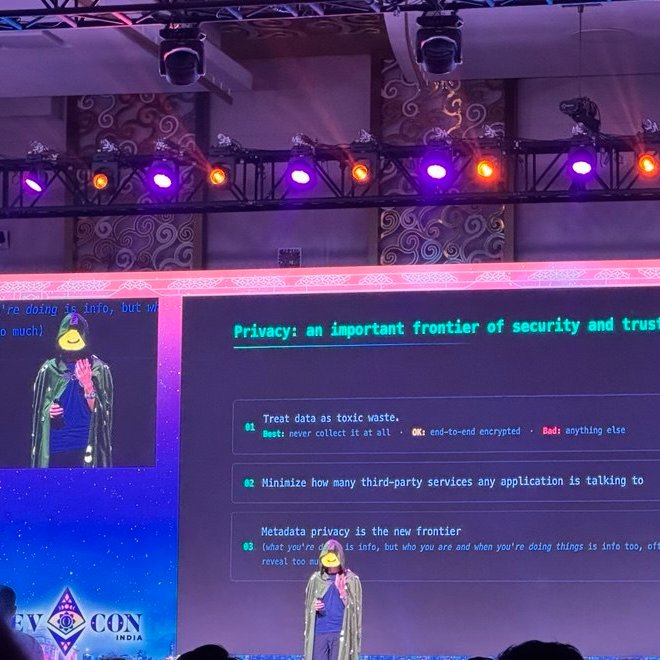
“Something we need to figure out together.” - @VitalikButerin at his Devcon keynote.
Here’s our part: privacy is built native to the chain on Celar. Our smart contracts are designed to compute on encrypted data using FHE, so balances and amounts stay confidential while the network can still be checked. Privacy is a choice user makes per transaction.
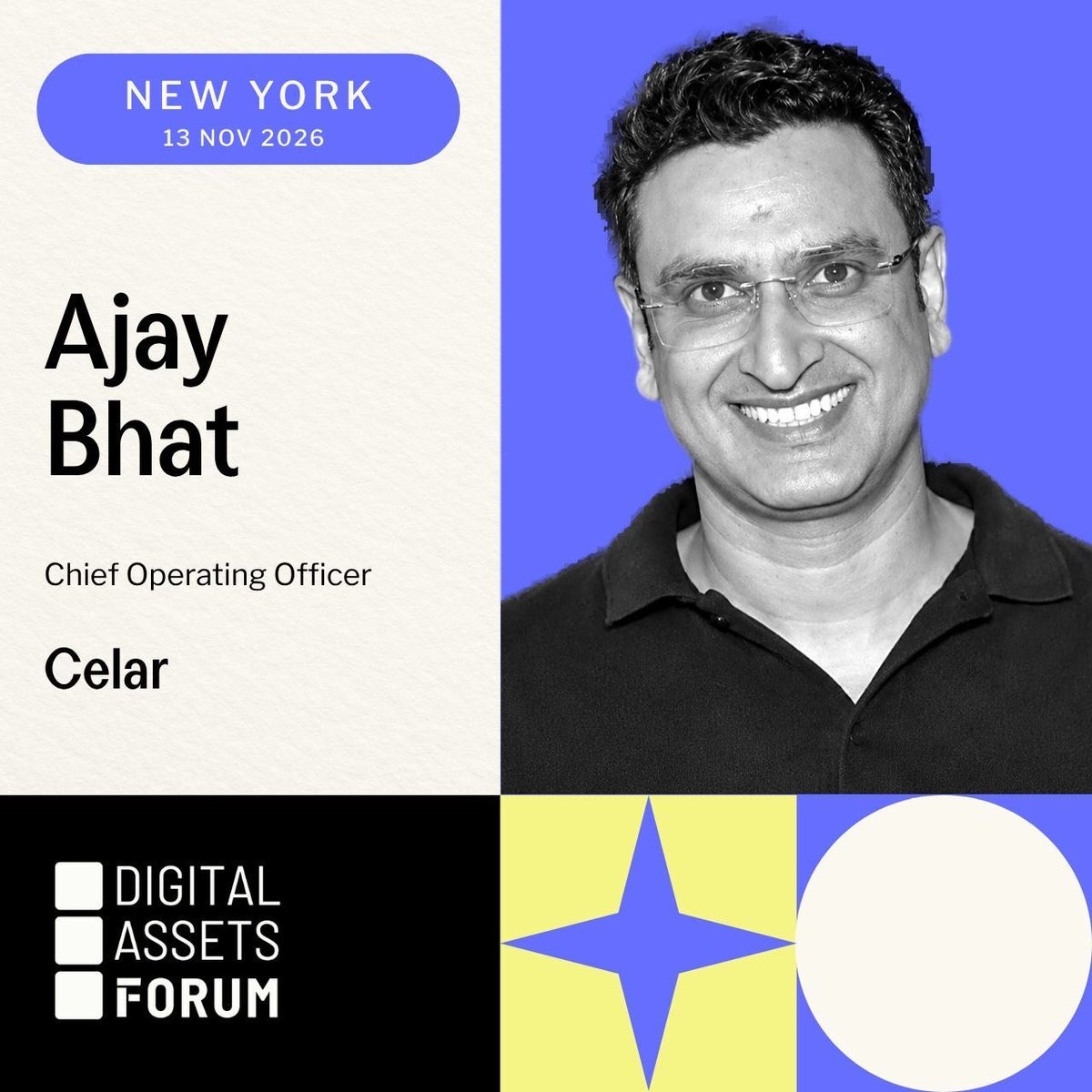
Moderating "Bringing Public Equities On-Chain" at the @DAF_Global, New York, 13 November.
With Dennis Lee (NYSE), Matthew Ducie The Depository Trust & Clearing Corporation (DTCC) and Sean Farrell (Fundstrat).
Exchange, settlement and investor views on tokenized stocks, plus a question close to what we're building at @Celar_cc: how much privacy should these markets have?
https://t.co/DDpiDfa0k3