India's Grooming Scandal
For a long time, we've heard about the grooming scandals in British towns like Rotherham and Rochdale. Reports describe how organized groups of British Pakistani men targeted vulnerable, non-Muslim white girls. They used false affection, gifts, and eventually blackmail to trap and abuse these girls. However, if we look closely, we see a similar situation unfolding in our own country. India is facing its own grooming crisis, and it follows the same psychological pattern seen in the UK, but it's aimed at Hindu and other non-Muslim women in our colleges and modern workplaces.
Recent police and Special Investigation Team (SIT) findings in cities like Nashik and Nagpur reveal that these incidents are not just isolated relationship issues or messy breakups. There is a clear method behind this. It always starts with finding someone vulnerable. In the UK, predators targeted young girls from broken homes or state care. In India, the focus has shifted to young, non-Muslim "Gen Z" women, often professionals or college students living away from their families for the first time. They may seem independent, but they often feel lonely, stressed, and are looking for their place in the world. This makes them more open to a charming outsider offering attention, romance, or career guidance.
The trap begins with an overwhelming amount of attention and emotional support, which makes the woman feel secure. However, once physical intimacy occurs, the warmth fades, and control starts. Perpetrators frequently use private photos, videos, or text messages collected during the relationship as leverage. In a society like ours, where family honor and reputation matter deeply, the threat of having these private moments shared with parents or coworkers is frightening. Driven by the fear of public shame, these women feel trapped and compelled to comply.
This crisis in India takes on an even darker aspect of financial and religious control. While victims in the UK were passed around peer groups for abuse, women in India face a systematic stripping of their identity and assets. Police complaints indicate a pattern where women are coerced into handing over their salaries and savings. This control is often solidified through intense pressure to convert to Islam, followed by marriage—sometimes to men who are already married.
These marriages can legally strip the non-Muslim woman of her independent income, property, and potential family inheritance. To complicate matters further, the perpetrators often use blackmail to force the victim to introduce them to her non-Muslim friends, making her an unwilling participant in entrapping the next person.
This is an organized trap that relies on isolating women and exploiting their fear of shame. To protect them, we must learn to recognize the warning signs early. Most importantly, we need to stop judging the victims. When a woman finds herself in this nightmare, she must know she can speak up and seek help without fearing that her family, career, and life will be destroyed.
There are three phases of Indian Islamic architecture
First phase when they desecrated all the temples and converted them into mosques.
When no temples were left to destroy they moved to second phase. They forced local artisans to make mosques for them. This phases shows strong Indian imprint and same regional diversity that we see in temple architecture
Third phase when Mughal destroyed all the regional traditions and any Indian touch with it and imposed their architecture everywhere
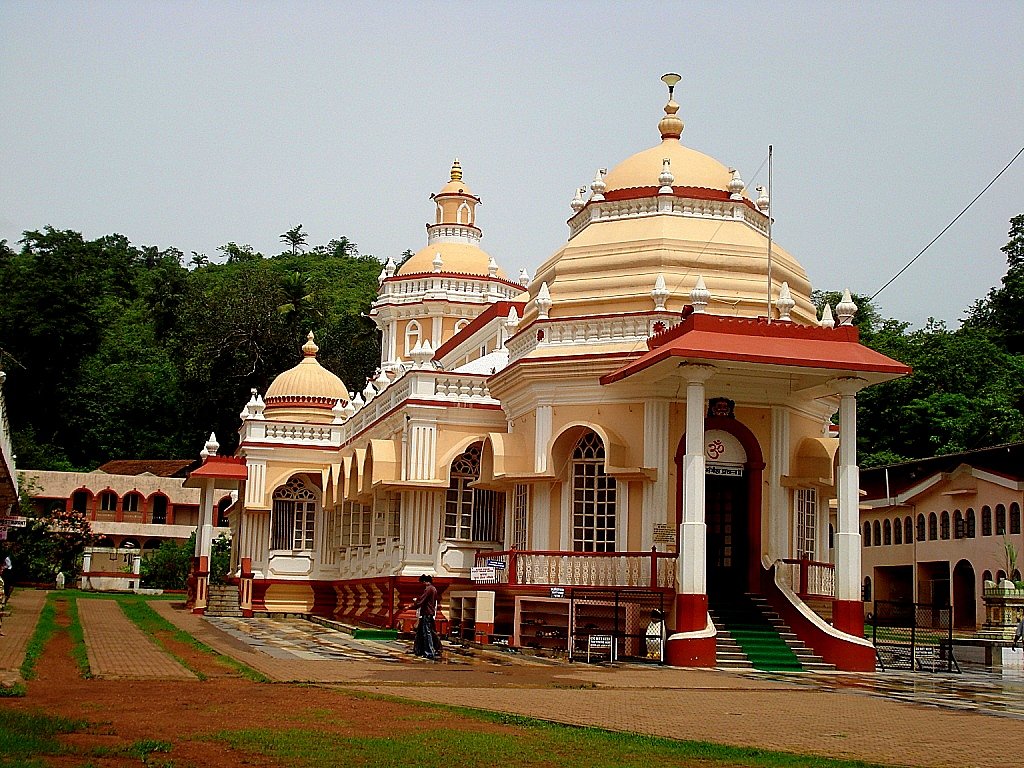
This mosque looks like the temple because it was part of second phase.
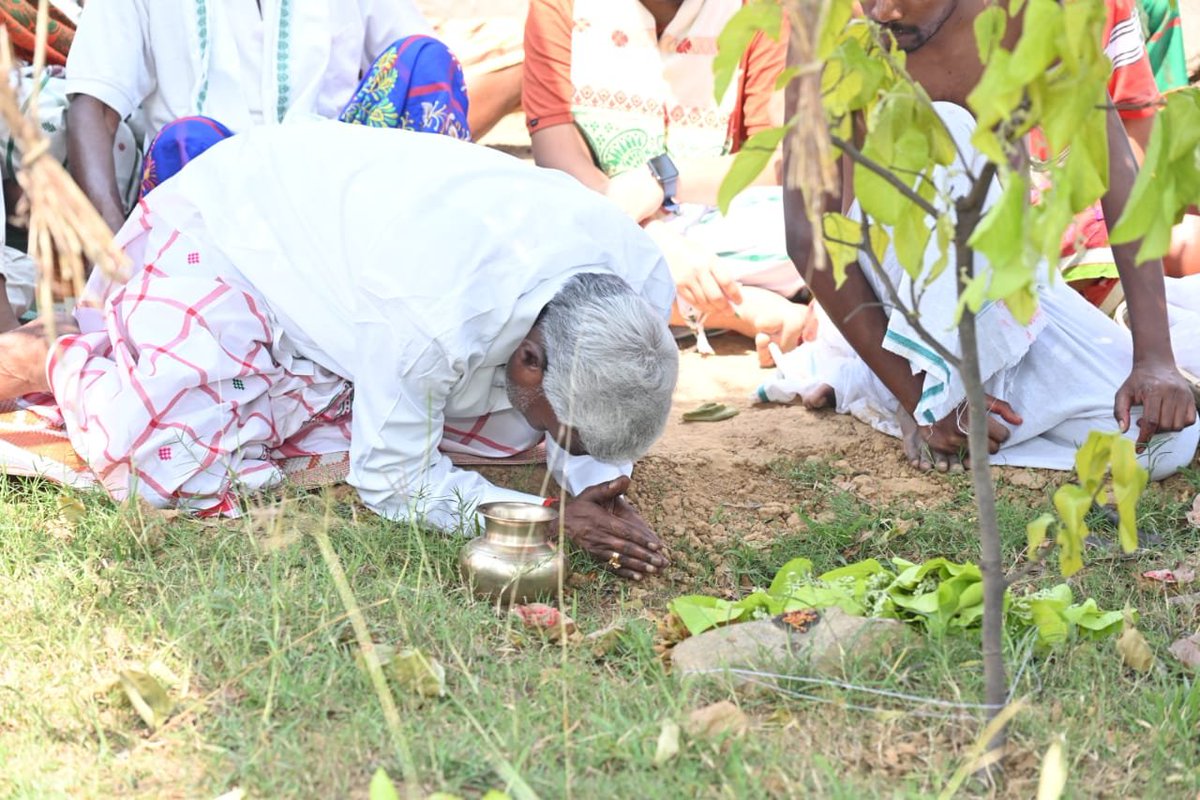
झारखंड के आदिवासी इलाकों में चर्च की बढ़ती संख्या पर मेरे बयान से काफी हंगामा हुआ। अपना धर्म बदल चुके कई लोग इ��� बात से परेशान हैं कि मैने सिर्फ चर्च की बात की, मंदिरों की नहीं। चलिए, आज इस मुद्दे पर विस्तार से बात करते हैं।
झारखंड के अधिकतर गांवों में आदिवासी-मूलवासी एक साथ रहते हैं। हमारे गांवों में हजारों सालों से जाहेरस्थान/ सरना स्थल/ देशाउली/ मांझी थान है और सनातन समाज के मंदिर भी, जिनमें मूलवासी पूजा करते हैं। आदिवासी- मूलवासी दोनों समुदाय एक दूसरे के पूजा स्थलों में सिर झुकाते हैं, एक-दूसरे के पर्व - त्योहारों में शामिल होते हैं और दोनों सबकी आस्था का सम्मान करते हैं।
इसके अलावा दिउड़ी मंदिर, रंकिणी मंदिर जैसे कई मंदिर हैं, जहाँ आदिवासी समाज के पाहन पुजारी की भूमिका में होते हैं, और सनातनी लोग भी वहाँ पूजा करते हैंं। ठीक उसी प्रकार, हम भी उनके पर्व-त्योहारों में शामिल होते हैं। लेकिन एक दूसरे के धार्मिक स्थलों एवं परंपराओं का यह परस्पर सम्मान हमारी आस्था, हमारी जीवन शैली को कभी नहीं बदलता।
हम आदिवासी पेड़ के नीचे बैठ कर पूजा करने वाले लोग हैं, और जन्म से लेकर शादी-विवाह एवं मृत्यु तक, हमारी बिल्कुल स्पष्ट जीवनशैली है। बच्चे के जन्म, नामकरण, विवाह समेत जीवन के सभी महत्वपूर्ण पड़ावों पर, हमारी सामाजिक प्रक्रियाएं मांझी परगना/ नायके/ पाहन/ मानकी/ मुंडा/ पड़हा राजा आदि पूरी करवाते हैं। जीवन के हर महत्वपूर्ण पड़ाव पर हम जाहेरस्थान/ सरना स्थल/ देशाउली/ मांझी थान जाकर मरांग बुरु/ सिंगबोंगा की पूजा करते हैं।
हजारों सालों के इस सामाजिक सह-अस्तित्व में हम लोग एक-दूसरे के हर सुख-दुख के साथी बने, यथासंभव सहयोग किया, लेकिन उन्होंने कभी हमें हमारी आस्था या जीवनशैली बदलने के लिए मजबूर नहीं किय��। अभी धर्मांतरण की रफ्तार देख कर लगता है कि अगर उन्होंने ऐसा किया होता, तो शायद हमारी संस्कृति बहुत पहले खत्म हो गई होती।
हजारों सालों के हमारे इतिहास में, आपको ऐसा कोई भी मूलवासी/ सनातनी नहीं मिलेगा, जिसने किसी मदद, सहायता या सहयोग के बदले, अथवा हमें लालच/ धमकी देकर हमारे लोगों का धर्म परिवर्तन करवाने की कोशिश की हो। वे कभी स्वयं को आदिवासी नहीं बताते। वे लोग आरक्षण समेत हमारे समाज को मिले अन्य अधिकारों को छीनने अथवा उसमें अतिक्रमण करने भी प्रयास नहीं करते, तो फिर उनसे कैसा बैर?
दूसरी तरफ, इस क्षेत्र में ईसाई मिशनरियों ने 1845 में धर्म प्रचार शुरू किया, लेकिन मात्र 180 वर्षों में इन्होंने हमारी परंपराओं एवं धार्मिक आस्था पर चोट पहुंचाई, आरक्षण पर कब्जा किया, भाषाओं/ लिपियों का विरोध किया तथा हमारे अस्तित्व को मिटाने की हर संभव कोशिश की। ह���ारे लाखों लोगों का धर्मांतरण कर के इन्होंने ऐसे हालात बना दिये हैं कि सिमडेगा समेत झारखंड के कई हिस्सों में हमारे जाहेरस्थानों/ सरना स्थलों पर ताला लग चुका है, क्योंकि वहाँ धर्मांतरण की वजह से पूजा करने वाला कोई नहीं बचा।
आदिवासी समाज की पहचान पारंपरिक जीवनशैली, विशिष्ट संस्कृति, भाषा, रीति-रिवाज एवं रूढ़िजन्य परम्पराओं से है, लेकिन ये लोग उसे मिटाने में लगे हुए हैं। ये लोग DNA की बात करते ह���ं, लेकिन यह ��हीं बताते कि इन्हीं मिशनरियों की वजह से दुनिया के कई हिस्सों में आदिवासी संस्कृति विलुप्त हो गई।
लैटिन अमेरिका की अयोरेओ जनजाति, केन्या की संबुरु जनजाति, ब्राजील की वाई वाई जनजाति, फिजी और पैसिफिक आइलैंड्स की जनजातियां धर्मांतरण के बाद अपनी मूल संस्कृति को भूल चुकी हैं। उनके पारंपरिक रीति-रिवाज, त्योहार, भाषा, नृत्य, पूजा-पाठ और सामाजिक संरचनाएं खत्म कर दिए गए। आप खुल कर क्यों नहीं कहते कि भारत में भी आपका असली मकसद यही है?
धर्मांतरण कोई राजनैतिक मुद्दा नहीं, बल्कि हमारे समाज के अस्तित्व से जुड़ा मामला है। अगर धरती आबा भगवान बिरसा मुंडा, वीर सिदो कान्हू, वीर पोटो हो, वीर टाना भगत, वीर तेलंगा खड़िया एवं अन्य मार्गदर्शकों के दिखाए राह पर चलते हुए अगर हम लोग अपनी परंपराओं को नहीं बचाएंगे तो भविष्य में हमारे जाहेरस्थानों, सरना स्थलों, देशाउली आदि में पूजा करने वाला कोई नहीं बचेगा। हमारा अस्तित्व ही खत्म हो जाय���गा। (Part 1/2)
Something nobody's connecting: India's fertilizer production hit 62.37 lakh tonnes in just Mar-Apr 2026 while West Asia is in full crisis mode. Imports were only 15.39 lakh tonnes.
Five years ago we'd have been panicking. This time the plants kept running.
Quiet wins don't trend. But domestic urea capacity going from deficit to near self-sufficiency might be the most underrated industrial story of the decade.
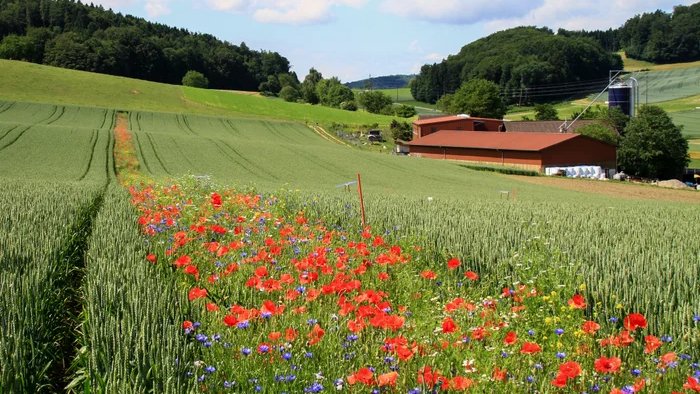
Farmers have figured out that the cheapest pesticide is a strip of flowers.
When you plant wildflowers through a crop field, not just around the edge but in strips running through the middle, you get ladybugs, lacewings, hoverflies, and parasitic wasps living in the field instead of visiting it.
They eat the aphids, the caterpillars, and the mites for free, all summer long.
In controlled trials, fields with tailored flower strips had leaf-beetle numbers 40 to 50% lower and crop damage cut by around 60%, enough to drop below the threshold where spraying was even considered worth it.
The flowers attract a standing army to our fields.
We spent decades engineering chemicals to kill the insects eating the crop, when the insects that eat those insects would have worked for the price of seed.
Mini Shai-Hulud: The Worm Returns and Goes Public
In this blog post, we analyze the newly released malware, examine how this attack wave differs from earlier waves, and provide mitigation recommendations for maintainers and organizations.
Full Write-up: https://t.co/HObnztsyno
@ANI The only "majoritarian" nation in the world where the majority has to fight it out in the law courts to get access to their ancient historic sites and temples. Rest of the world already has stronger indigenous rights than what we have in India.
In late April, India paid $935 a tonne for urea on the world market - nearly double what it had paid in February. The farmer is still buying his bag at ₹242 this Kharif, the same price since 2018.
The government is absorbing the entire gap.
The gap is scary actually.
- India buys a 45-kg urea bag at ₹3,600. Sells it to the farmer at ₹242. Taxpayer covers the gap.
- The same gap exists on DAP, on potash, on phosphoric acid. All capped well below their landed cost.
- Every $100 rise in global urea adds ₹29,000 crore to the subsidy bill. India consumes 35 million tonnes a year.
Gap is also widening
- The fertiliser subsidy bill was ₹81,000 crore in FY20.
- It hit ₹2.54 lakh crore at the FY23 peak after Russia-Ukraine.
- For FY27, the budget set aside ₹1.71 lakh crore. That was before Hormuz closed.
A single tender on 22 April alone added ₹9,000 crore to FY27's books. The full-year number is now tracking above ₹2 lakh crore.
The gap is starting to crowd things out:
- ₹2 lakh crore is more than the Centre's annual outlay on health.
- It is roughly four times the rural roads budget.
- Defence spending is surging at the same time. Revenue receipts are softer than budgeted.
The state can absorb one large shock per cycle. Two simultaneous shocks?
The farmer hasn't felt the 2026 shock. Wait. He hasn't felt any shock for some time now. The exchequer and tax payer alone have.
Problem is paying farmers so much forecloses everything else the govt has to do.
A @swarajyamag deep-dive on what India's 2026 fertiliser absorption is really costing:
https://t.co/fphe2h3T88
We need to maintain a Colonial Hall of Shame. A detailed register of who and what did they do. Names like this.
1. John Gilchrist: Formally separated Urdu and Hindi
2. William Bentinck: Tried to sell Taj Mahal for marble
3. William Jones and Max Muller: Aryan Invasion Crackpottery
So on and so forth. Detailed write up on their views, their motivations and the implications of their work. Every single one.
The idea of the "Indo-US Cyber Security Forum–2002" was the brainchild of Richard Armitage, who was then the Deputy Secretary of State and had an intriguing career with the CIA. The US reportedly gained access to the computer network of the NSCS through a woman system analyst.
Let me explain what just happened today because it deserves so much recognition.
GalaxEye is a Bengaluru startup founded in 2021 by IIT Madras engineers. Today they launched Mission Drishti on a SpaceX Falcon 9. It is India's largest privately built satellite at 190 kg. And it carries a technology that no commercial satellite has ever carried before.
Normal satellites take photos of the Earth using optical cameras. Like your phone camera, but from 500 km up. The problem is obvious. Clouds. Night. Fog. Smoke. If any of these are in the way, the photo is useless. India has monsoon cover for 4 months a year. That is 4 months where optical satellites are partially or fully blind over large parts of the country.
The alternative is SAR. Synthetic Aperture Radar. Instead of taking photos with light, it sends radar waves down and reads what bounces back. Radar goes through clouds, through darkness, through smoke. A SAR satellite can image a flooded village at 2 AM during a cyclone when no optical satellite can see anything.
The problem with SAR is that the images look nothing like photos. They look like grainy black-and-white radar maps. A military analyst or a trained geospatial engineer can read them. A farmer, a disaster response team, or a city planner cannot.
Until today, if you wanted both optical and SAR data for the same location, you needed two different satellites, passing over at different times, at different angles. Then someone had to manually align and fuse the two datasets. Expensive, slow, and the data never perfectly matched because the satellites saw the same spot minutes or hours apart.
GalaxEye put both sensors on one satellite. Optical and SAR, fused into what they call OptoSAR. Three times more information than a single sensor. Processed onboard by an NVIDIA AI chip at 1.8 metre resolution.
Now in practice, during the next cyclone hitting Odisha, one satellite pass gives you a clear image of which villages are flooded, which roads are cut, and which buildings are standing. Day or night. Cloud or clear. In near real-time.
For defence, it means you can monitor a border area 24/7 regardless of weather. For agriculture, it means tracking crop health across an entire monsoon season without a single cloud gap. For infrastructure, it means monitoring construction progress on highways and bridges without waiting for a clear day.
GalaxEye tested their SAR tech on ISRO's POEM orbital platform. The satellite was tested at ISRO facilities. IN-SPACe provided regulatory clearance. NSIL, ISRO's commercial arm, will distribute the imagery globally. And it launched on SpaceX because ISRO's PSLV doesn't have the right orbit slot for this mission.
Yes, four IIT Madras graduates built a world-first satellite in 4 years in Bengaluru.
Take a bow!
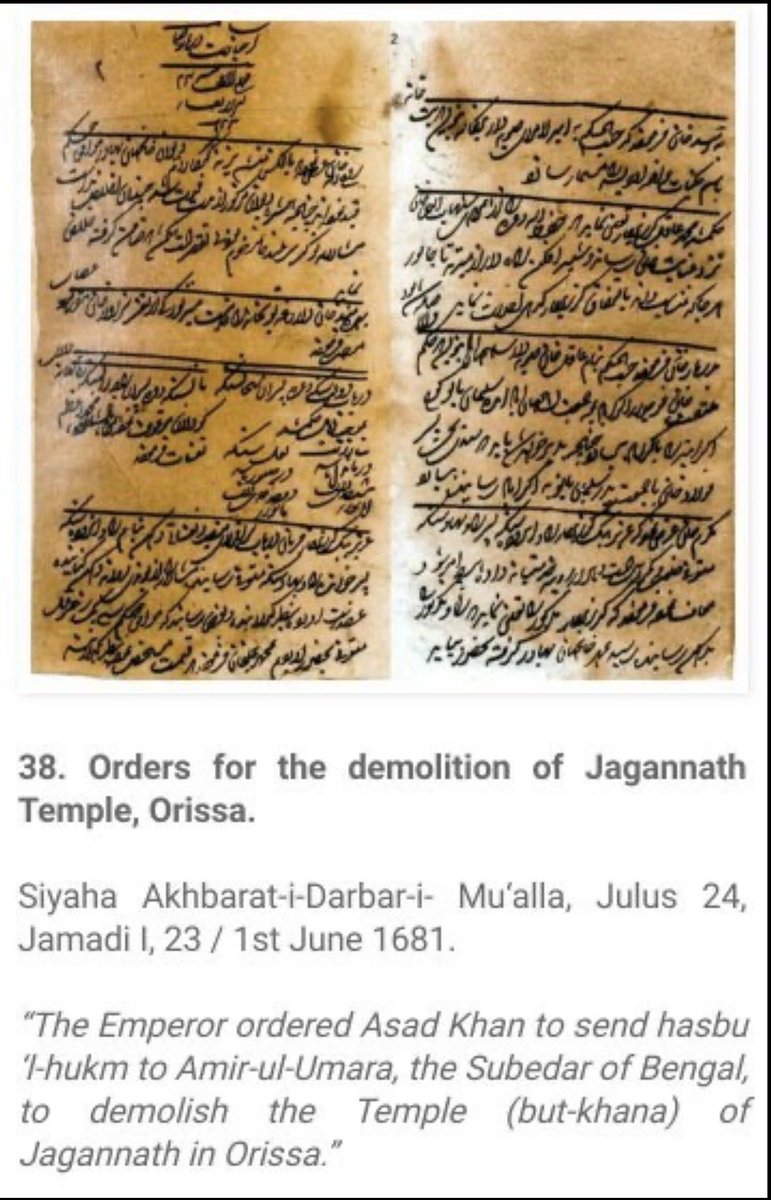
Aurangzeb had ordered to demolish Jagannath Temple. How was it saved?
By 1681 Aurangzeb has reached the lowest level of religious bigotry. He issued a farman to destroy Jagannath Temple. He ordered his subedar of Bengal Province ,Amir-ul-Umara to demolish it.
Receving the farman the Officials arrived in Puri to destroy the temple. Odisha was under the mughal rule,however it still had the king of Khurdha known as Gajapati who acted as the protector of the temple. Now listening this news there was fear, anger and desperation everywhere. But everyone was helpless. So finally a plan was carved out. There was a negotiation with the mughal subedar . He was offered a huge amount of money as bribe. Still he knew the consequences of not executing Aurangzeb's order. However, the bribe amount was huge and Odias were successful in persuading him with the offer and he finally decided to take the risk and somehow convinced Aurangzeb that his order has been carried out.
•A replica of lord Jagannath was created and it was sent to Aurangzeb's court in Delhi to mislead him.
•The temple was closed permanently. All the rituals were stopped. The pilgrimage was stopped. A rumor was spread that jagannath temple and the idol has been destroyed.
•Annual puri Rath Yatra was stopped
By doing all this an atmosphere was created in such a way that Aurangzeb believed that his orders has been carried out.
During that time the Marathas down south were creating a huge problem for Aurangzeb. Therefore, he had to come to Deccan to suppress the rebellion. Sikhs, Jats etc were constantly creating trouble. So, Aurangzeb was not able to concentrate on these kind of matters.
So, a big thanks to Marathas and other groups because of whom the pride of Odias and Hindus the Jagannath temple was spared from wrath of iconoclasts. Finally the temple was reopened in 1707 after the death of Aurangzeb and Rathayatra restarted.
If you are in India, and have to share one fact to your friends and family this summer, use this:
In the last many decades, the whole world has been heating up. Annual mean temperature in every country has been rising 1-1.5 degrees a decade.
But India has been an anomaly. It has heated up the least at 0.5-1 degrees a decade. This is a scientific fact acknowledged by climatologists worldwide.
India has also increased its green cover, tree cover in cities, and forest cover in the last decade or so. This is not India's own data alone.
This is data by UN in their Global Forest Resources Assessment – GFRA 2025 report based on satellite imagery, which can't lie.
India has also increased ecological conservation efforts in recent decades as its wealth grew. It has improved its populations of endangered animals like Asiatic lion, Rhinos, Tigers and many birds and animals.
This is much better than many other countries - even developed ones (where they will shoot a wolf, shark, or bear if they increase in population, get close to human habitation, and attack a human).
Anyway, there will always be programmed Indians who will come to discount India's tremendous achievements in Paris climate goals and in protecting its environment even as a highly populous developing country.
We can't do much trying to convince these DS programmed and blackpilled bots. Just watch the comments below. They will come to tell you how numbers are fake, how they saw it has become bad, or change the goal post to another topic to berate India.
My boss's boss is like 42, never married, no kids. Earns $275-300K per year. Goes on a minimum of two international vacations a year w/ his girlfriend. 10+ days, all out.
Eats the best food, stays in top notch accomodations. Excursions, tours, nicest beaches, etc.
Great guy, I'm happy for him.
But what I've realized is that without kids, you end up chasing a lifestyle that has to continually be topped in order for you to be satisfied and find happiness.
What he and others like him don't understand is that when you have children, seeing THEM experience life's most basic things and watching their eyes light up at all the "firsts", brings greater pleasure and joy than any vacation or travel experience ever could.
Seeing THEM try blueberries for the first time is greater than dining at the best 5 star restaurant in Europe.
Seeing THEM learn how to walk is greater than walking the Great Wall of China or strolling along the most picturesque beach.
Watching THEM giggle uncontrollably at "peek-a-boo" tops any A-list comedian act.
Seeing THEIR excitement when building a fort out of cardboard boxes and making a door big enough for daddy is superior to staying at 5-star resorts.
Flying kites with THEM far outweighs excursions like parasailing or helicopter rides.
Seeing THEM perform a recital on stage for the first time is more rewarding than watching a Broadway show or top notch symphony orchestra.
-----------------
When you have children, all of a sudden you realize that life's greatest joys are not in the pursuit of things or pleasure or travel, but rather in the LOVE and bond you share with your very own image bearers.
Seeing the beauty and magnificence and wonder of life all over again for the first time through THEIR eyes and expressions gives you something the world simply cannot offer, nor even come close.
It’s a genuinely insane proposition that the Indian diaspora perpetuates caste.
Every single wedding has a family member (or couple itself) in an inter-regional/inter-caste relationship, if not interracial.
It’s truly shocking that this notion has been peddled in popular discourse.
Hell, even urban India itself checks out for inter-regional/inter-caste relationships being commonly observable atp.
Xavier's story part 3:
Part III: When the Marathas Came
In 1739, everything changed. The sound that had been absent from the forests around Mangeshi for nearly two centuries returned: the ring of hammers on stone, the call of masons at work, the unmistakable noise of a temple being built to last. For the first time since 1560, the Hindu community could construct something permanent, something beautiful, something worthy of their god who had waited so patiently in a shed for deliverance.
The transformation came courtesy of the Marathas, a confederation of Hindu warrior kingdoms that had risen to challenge Mughal power in the north and Portuguese authority along the western coast. In 1739, the Peshwas, hereditary prime ministers of the Maratha Empire, made a decision that would change the course of Indian religious history. On the recommendation of their military commander Shri Ramchandra Malhar Sukhtankar, a devoted follower of Shri Mangesh, they donated the entire village of Mangeshi to the temple.
This was more than charity; it was revolution. For the first time in two centuries, a Hindu temple in the region would have not just protection but patronage. The community that had survived on scraps and secrecy suddenly found itself with land, resources, and most importantly, the political backing to build something magnificent.
The construction that began around 1744 represents one of the most remarkable stories of religious resilience in human history. Every beam placed, every carving completed, every decorative element added was a declaration that the long dark age was ending.
The Marathas understood something that the Portuguese had missed: temples are not just religious buildings but symbols of political legitimacy. Across their expanding empire, they were rebuilding Hindu temples that had been destroyed by previous Muslim rulers. At Nashik, Trimbakeshwar, and dozens of other sites, Maratha patronage was restoring the physical landscape of Hindu devotion. The reconstruction at Mangeshi was part of this broader campaign, a deliberate assertion that Hindu power was returning to the subcontinent.
But the Marathas also grasped something subtler about the politics of faith. By protecting and patronizing the refugee temples of Goa, they were sending a message to Portuguese authorities: Hindu power was not confined to distant kingdoms but was present right on their borders, ready to shelter those whom Portugal had tried to destroy. The rebuilt temple at Mangeshi became a visible reminder of Portuguese failure and Hindu endurance.
The irony was rich. Just as the temple was being reconstructed with Maratha support, the region fell back under Portuguese control in 1763-1764. Portuguese officials suddenly found themselves governing a Hindu temple that was more magnificent than anything that had existed in the region for centuries. The shed had become a palace, and there was nothing they could do about it.
By this time, however, Portuguese religious policy had undergone a quiet revolution. The brutal efficiency of the early Inquisition had given way to pragmatic accommodation. Repeated military defeats by the Marathas had exposed Portuguese vulnerability. Ongoing rebellions within Goa had demonstrated the limits of forced conversion. Most importantly, the economic costs of religious persecution had become impossible to ignore.
The Portuguese were learning what empires throughout history have discovered: that destroying people's deepest beliefs is far more expensive than tolerating them. The Inquisition apparatus required enormous resources to maintain. The exclusion of Hindus from public office deprived the colonial administration of skilled personnel. The prohibition on Hindu trade disrupted commerce. The forced relocations had devastated agriculture. After two centuries of trying to create a purely Catholic Goa, the Portuguese were discovering that diversity might be more profitable than purity.
The architecture of the Mangeshi temple represents more than aesthetic achievement. It embodies a moment when the balance of power in the region fundamentally shifted. Portuguese officials who walked through the temple's halls in the 1760s were witnessing the physical manifestation of their empire's decline and Hinduism's resurgence. The god who had hidden in a shed for two centuries was now receiving visitors in a palace, and the Portuguese themselves were among the petitioners seeking accommodation.
For the devotees who had maintained their faith through centuries of persecution, the new temple must have felt like a miracle. The same rituals that had been performed furtively in makeshift structures could now be conducted openly in halls designed specifically for worship. The same prayers that had been whispered in fear could now be chanted boldly for all to hear. The same festivals that had been celebrated in secret could now illuminate the night with displays of light and grandeur that announced to the world: we have survived, we have endured, and we are home.
Yet even in their moment of triumph, the community understood that permanence was an illusion. Empires rise and fall. Political protections can vanish overnight. The only constant is the necessity of faith itself, the daily choice to believe in something larger than the immediate circumstances of power and persecution. The temple was built to last, but it was also built with the knowledge that even the most beautiful temple is just a container for something that exists beyond any building's walls.
The shed had taught them that their god could live anywhere. The palace simply meant he could live in beauty as well as faith. But the essential truth remained unchanged: what mattered was not the magnificence of the structure but the devotion of the people within it. The Marathas had given them the freedom to build, but they had given themselves something more precious, the determination to keep believing no matter what the world threw at them.
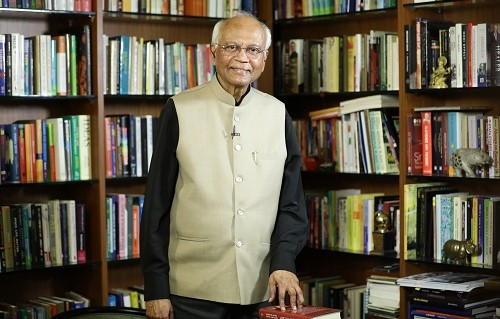
In the 1990s, India was facing a Biological Colonization. If Dr. R.A. Mashelkar had not stepped in, we might have ended up paying a royalty to a US corporation every time we used turmeric on a wound/exported Basmati rice.
In 1997, a Texas-based company called RiceTec was granted a patent by the USPTO (US Patent & Trademark Office) for Basmati Rice lines & grains. They claimed they had invented a superior strain of rice. Mashelkar realized that if this patent stood, Indian farmers would be barred from selling their own rice under the name Basmati in the US. It was a theft of Geographical Intellectual Property.
He did not just shout Injustice. He assembled a team to find Genetic Fingerprints. They proved that the new rice was actually derived from Indian germplasm that had existed for centuries. The USPTO was forced to strike down the majority of the claims.
2 researchers at the University of Mississippi were granted a patent for the use of turmeric in healing wounds. To a Western patent officer, this was a novel invention. To an Indian, it was something their grandmother did every day. Mashelkar produced an ancient Sanskrit text as Prior Art. The USPTO demanded a translation. He provided evidence from the Journal of the Indian Medical Association dating back to 1953 + ancient Ayurvedic texts.
This was the 1st time in history that a patent granted to a US entity was successfully challenged & revoked based on the Traditional Knowledge of a developing country.
Mashelkar also realized that India could not fight 10000 legal battles every yr. He needed a Scalable Solution. Patent officers in the West were not malicious; they were just Data Blind. They could not read Sanskrit/Tamil/Persian. If a discovery was not in an English journal, it did not exist in their system.
He hired 100s of experts (Ayurveda practitioners, IT engineers, & Patent lawyers). They took 500000+ formulations & converted them into a digitized Shloka to Code format. The data was rendered in English, French, German, Japanese, & Spanish.
Today, India has signed agreements with the USPTO, the European Patent Office, & others. Before an officer grants a patent, they run a TKDL Scan. If the herb/method is in the library, the patent is rejected instantly.
Toxic and destructive elements are always a hurdle in growth.
Many centuries ago, Garuda Purana had this to say -
त्यजेत् देशमसद्वृत्तं वासं सोपद्रवं त्यजेत् ।
त्यजेत् कृपणराजानं मित्रं मायामयं त्यजेत्।।
Abandon/Sacrifice these 4 elements, if you aim to prosper...
His name was Satish Shetty.
He was 39 years old. A social activist from Pune with no political connections and no institutional backing. Just an RTI form and the will to use it.
Between 2005 and 2010 he exposed one of the largest land grab scams in Maharashtra. A real estate company had acquired land near the Pune-Mumbai highway using forged sale deeds.
After his complaints forced an investigation, 90 sale deeds were cancelled, the sub-registrar who processed the fraudulent documents was suspended and a major real estate project was scrapped.
The threat calls started. He did not stop.
On the morning of January 13 2010 he went for his regular walk in Talegaon.
He was stabbed to death on the road.
He was 39 years old.
His brother Sandeep refused to let it end there. Local police closed the case. He went to CBI. CBI went quiet. He went to Bombay High Court. He went to the Supreme Court.
In 2023 the Supreme Court ordered the case reopened.
Fifteen years. Four courts. One brother. Still no conviction.
Since the RTI Act came into force in 2005 more than 65 RTI activists have been killed in India and over 400 have been harassed or intimidated.
The Whistleblower Protection Act passed in 2014 has never been fully implemented.
In India filing an RTI costs ten rupees.
For some people it has cost everything.
Follow for real stories about people India must never forget.
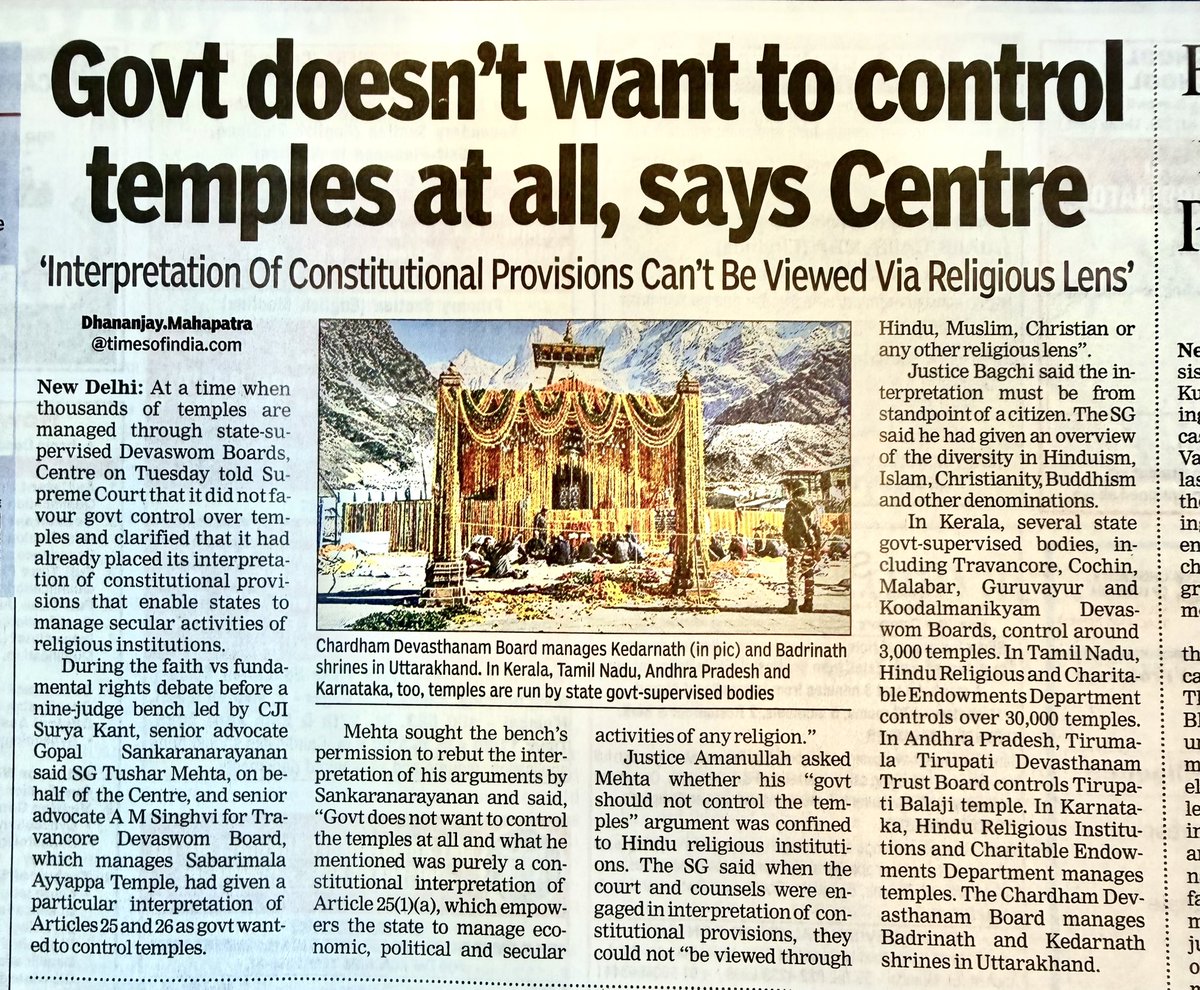
For the first time, an official stand of @narendramodi govt in Supreme Court - “Govt does not want to control temples at all”.
And for the first time, the Supreme Court has directly been told that it is not competent to decide on matters of belief and practices of religious denominations and should restrict itself to matters of constitution. Even the temple entry bogey has been called out.
A day of celebration for us, who have campaigned vigorously for this since the past decade. The battle will not be over, however, until every Hindu temple is freed from control of govt, politicians and babus.