Our pals visiting for the World Cup are single-handedly rewiring X.
I can’t remember the last time we’ve seen so much joy, positivity, and light on this platform.
Thank you. From the bottom of my heart, thank you.
@Superdian Es innegable que nuestras respectivas madres ven siempre lo mejor en cada uno de nosotros y proyectan ese ánimo de que todo vaya bien. Aplauso para tu mamá Diana :)
I'm so proud of the many teams across Apple developing powerful technologies that are improving people’s lives. The Hearing Aid feature on AirPods Pro 2 uses your personalized sound profile so you can hear the moments that matter.
Para quien sea que necesite leerlo:
¡Ánimo, chingada madre, todavía puedes otro round!
Que DIOS me los bendiga y que lo que sea que necesiten en el alma, lo consigan pronto
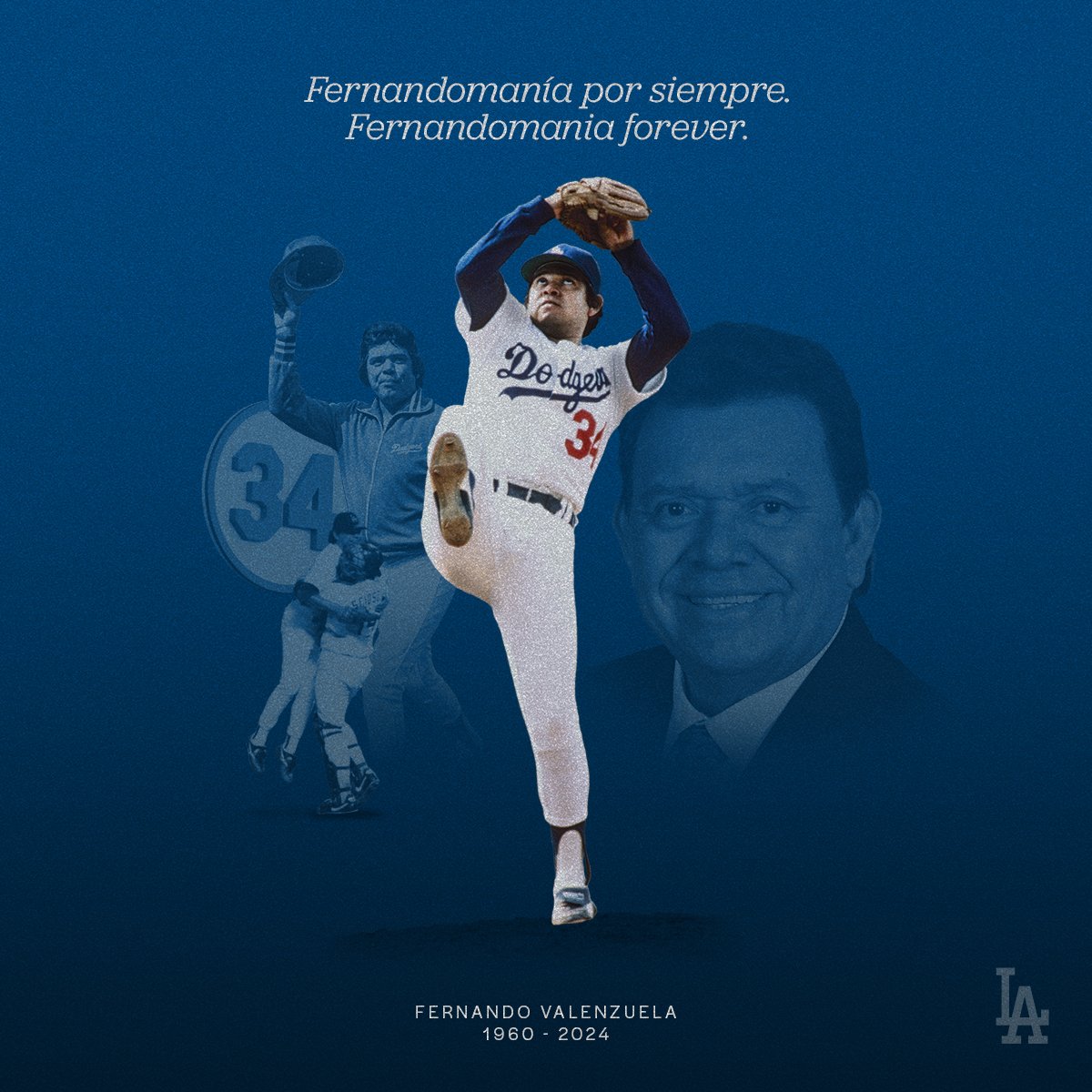
He was born the youngest of 12 children, in a house made of dirt and adobe, without running water, in the tiny village of Etchohuaquila, Sonora, with a population of 140. The youngest son of a farmer. That’s where the story of Fernando Valenzuela begins: Not in Los Angeles or on the fields of Dodger Stadium, but in the hard, dry earth of Mexico. And when Valenzuela took that mound as a starting pitcher for the first time, some 20 years later, replacing Jerry Reuss as the Dodgers’ Opening Day starter as a surprise to begin 1981, that very dirt clung to him. The weight of his beginnings, the long, unlikely path from Etchohuaquila to the gleaming lights of Los Angeles, defined everything about Fernando. Yet the world was about to find out that he carried it with a grace and joy that no one saw coming.
They say you can hear the earth sing, in the way it moves beneath your feet, in the wind as it rushes through the canyons. And when Fernando Valenzuela pitched, he embodied that song—one sung in Spanish, with the rhythm of a screwball that danced like a wisp of Sonoran air. Taught to him by a teammate, Bobby Castillo, that screwball—heavy, devastating, elegant—became the heart of a phenomenon.
In the spring and into the summer of 1981, that phenomenon exploded: Fernandomania. Valenzuela, just 20 years old, burst into the season with an 8-0 record and a 0.50 ERA, his ERA microscopic, his smile infectious. In a city yearning for magic, he gave them something to believe in.
It wasn’t just his numbers that captivated the world. It was his spirit. His charisma was so tangible that even from the nosebleeds of Chavez Ravine, you could feel it radiating off El Toro, they belovingly called him. The Bull. How the crowd adored him. They loved him not only for his brilliant left arm, but for the way he looked skyward at the apex of his windup—a kid searching for answers in the heavens, just before unleashing fury. ABBA’s “Fernando” would play as he warmed up, the crowd swelling with anticipation.
And then there was the windup—oh, that windup! It was more than a mechanic; it was poetry. A slow, deliberate motion, eyes turned skyward at the apex, as if seeking some celestial guidance, before unleashing his arsenal with the quiet ferocity of a man who knew he was exactly where he belonged and wasn't afraid to show it.
Valenzuela had charisma, Dodger announcer Jaime Jarrín said. "Unbelievable charisma." Jarrín, who served as Fernando’s interpreter in those early days, described how people fell in love with the young, chubby, long-haired pitcher with Yaqui Indian features. “It happened in a matter of weeks,” he said. They saw themselves in him—the underdog, the immigrant, the dreamer.
In 1981, the Dodgers gave him the ball, and Valenzuela did not disappoint. He threw 192.1 innings, led the National League in strikeouts, hurled 11 complete games, and won 13. And in doing so, he became the first—and still only—player to win both the Rookie of the Year and the Cy Young Award in the same season. That year, the Dodgers won the World Series. That year, El Toro captured Los Angeles.
But Fernandomania was more than just baseball. It was a cultural moment. Valenzuela united Los Angeles, a city often divided. He was a bridge between communities, a Mexican pitcher who became a hero to millions. At Dodger Stadium, you’d see sombreros, banners in Spanish, and families coming to games who might never have come before. He was a symbol—of hope, of pride, of what could be.
Over the next decade, Fernando’s magic continued. Six straight All-Star appearances. A Silver Slugger Award in both 1981 and 1983, World Series titles in 1981 and 1988. His screwball continued to baffle hitters for years, his presence on the mound steady and unshakable. He threw a no-hitter on June 29, 1990, against the St. Louis Cardinals, a moment forever immortalized by Vin Scully’s call: “If you have a sombrero, throw it to the sky!” He made 255 consecutive starts, a streak of durability that in today's game grows more mythical by the day.
Fernando’s impact on the game of baseball transcended statistics. As Dodgers CEO Stan Kasten said, “He belongs on the Mount Rushmore of franchise heroes.” He influenced a generation of Latino players, showing that their dreams could come true. His No. 34, retired by the Dodgers in 2023, is now part of the eternal fabric of the team, the city, the game itself.
From a small village in Mexico to the mound at Dodger Stadium, Fernando Valenzuela embodied the improbable, the impossible, the beautiful dream of baseball.
And now, as we remember him, we throw our sombreros to the sky one last time for El Toro. We remember the joy he brought to us, the unity he inspired, the earth beneath his feet, and the wind at his back. Fernando Valenzuela, forever immortal, has left us, but the song of his pitching, the magic of Fernandomania, will always echo in our hearts.
@Superdian La aversión a algo también es un motor de cambio. No es el motor óptimo, pero mientras como sociedad llegamos al punto de saber elegir con bases sólidas lo que sí queremos, tendremos que atravesar ese camino 🤞🏽
TODO LLEGA ¿Te acuerdas cuando me decías que me iba a llegar?
Sí, todo llega.
Llega el amor después del amor.
Y llega el tiempo de conectarse con uno mismo.
Llega el viaje que venías soñando desde los 15, y por el que habías empapelado el cuarto con fotos del lugar.
Llega la persona que estabas esperando, y llega el momento en que se va alguien de tu vida.
Pero también llega el día en que no duele más la herida.
No importa cuál sea.
Llega el fin de semana, y las vacaciones, y llega la casita que soñaste frente al mar.
Llega lo que esperabas y a veces llega más.
Llegan las sorpresas, y llega el día que te despiertas y no lo extrañas más.
Llega el amigo que estabas esperando desde el otro lado del mundo, y a veces llega una revolución que se lleva todo lo que tenías para amarte de nuevo, en otros abrazos, otra casa, y otra familia.
Llega.
El amor llega.
Llega el día de tu cumpleaños, y llega la tesis, y llega el título.
Llega el beso que soñaste tanto tiempo, y llega el sol después de un par de días de tormenta.
Todo llega.
No pases noches sin dormir pensando que no se termina más la oscuridad, ni tengas tanto miedo a que no pasen.
Relájate mirando al cielo y confía.
No importa cuándo, ni cómo... tú sabes que va a llegar.
Y hoy, permítete disfrutar de lo que está.
Ni más, ni menos.
El universo no está buscando un ejército de ansiosos.
Así que aprovecha la vida, que todo llega cuando tiene que llegar.
#resiliencia #familiacosmica
@KenobiMarlene Es noble reconocer a esos espíritus que como en tu caso, y en lo que has compartido últimamente nos permiten entender que las situaciones por las que pasamos tienen un propósito mayor, de acuerdo a nuestros grados de evolución y conexión con el Cosmos 🌟. Lo agradezco mucho :)