What happens when the cryptography protecting your data today becomes vulnerable tomorrow?
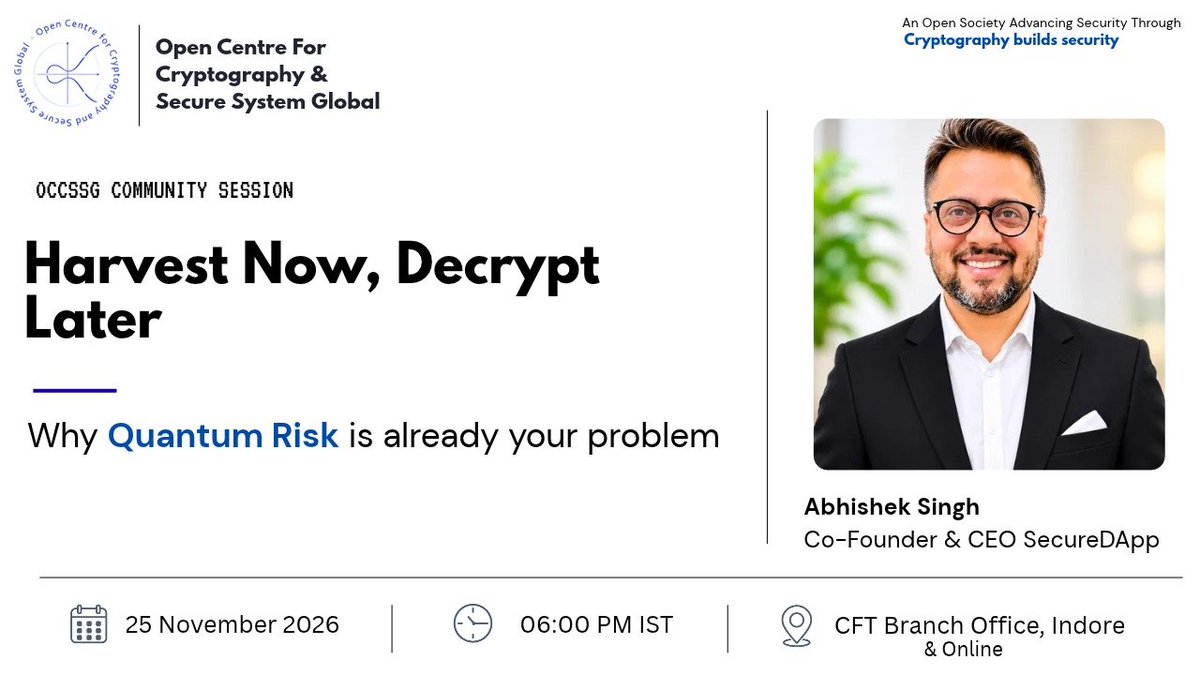
Join us for a live for Harvest Now, Decrypt Later and why quantum risk is already a problem, with Abhishek Singh, (@A_bhisheks ) Co-Founder & CEO, @Secure_DApp.
📅 25 Nov | 6:00 PM IST
ZK scaling isn't just a crypto problem, it's a compiler problem.
As circuits and proving systems evolve, clean intermediate representations and flexible pipelines are key.
Why MLIR and compiler architecture matter for modern ZK systems 👇
Would love to hear from someone at @canton_loop team on the following points -
1. If it's not DKG, then what is the meaning of Multi-Party Hosted Infrastructure?
2. How can we call it self-custodial if it's not DKG.
3. I would love to know about OAuth and Password Usability during account access.
4. If it's self-custodial, after login, does it give my private keys back to me on browser to sign the transaction? (Referring to https://t.co/j69hJiYp9u) How is the security structured to prevent hacks from browser extensions which may access the storage?
Why compiling high-level smart contracts straight to EVM bytecode is a major performance bottleneck.
By leveraging MLIR (Multi-Level Intermediate Representation) and custom lowering passes, protocol engineers can optimize execution paths across multiple abstraction layers—from high-level Solidity/Rust syntax down to optimized WebAssembly or zk-VM bytecode.
Cleaner IR pipelines mean fewer gas inefficiencies and better multi-chain portability.
@CFT_Tweets@TheMonkman
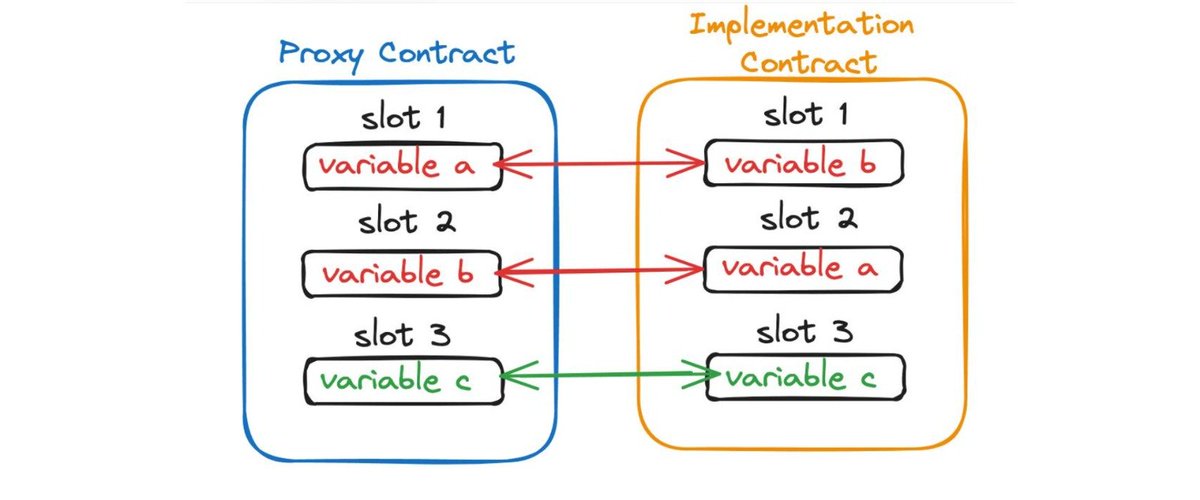
Upgradeable proxy bugs often stem from silent storage slot shifts rather than complex logic error.
Use explicit initializer modifiers and reserve strict storage gaps in base contracts to keep proxy state intact. 🛠️
State bloat isn't just about disk space,
it's an I/O bottleneck. Random reads on massive state tries during execution can stall validators faster than raw storage limits.
How are you tuning client compaction and snapshot strategies for peak loads?
If Considering Eth as store of value, the most important aspect would be cross chain native communication.
Agreed on the intent-based UX shift, but until cross-chain communication moves away from relying solely on trusted off-chain solvers and bridge relays toward trustless, native state-proof verification, we are just trading L1 fragmentation for off-chain centralization risks.
Need an EIP standard focusing strictly on native, trust-minimized cryptographic settlement for cross-chain intents.
@VitalikButerin@ethereumfndn@binji_x
Proxy upgrades hide silent storage collision vectors if you only test isolated versions.
Set up Echidna stateful fuzzing to run deploy, initialize, mutate, and upgrade sequences in one continuous test run.
@KWebbuddy ur say?
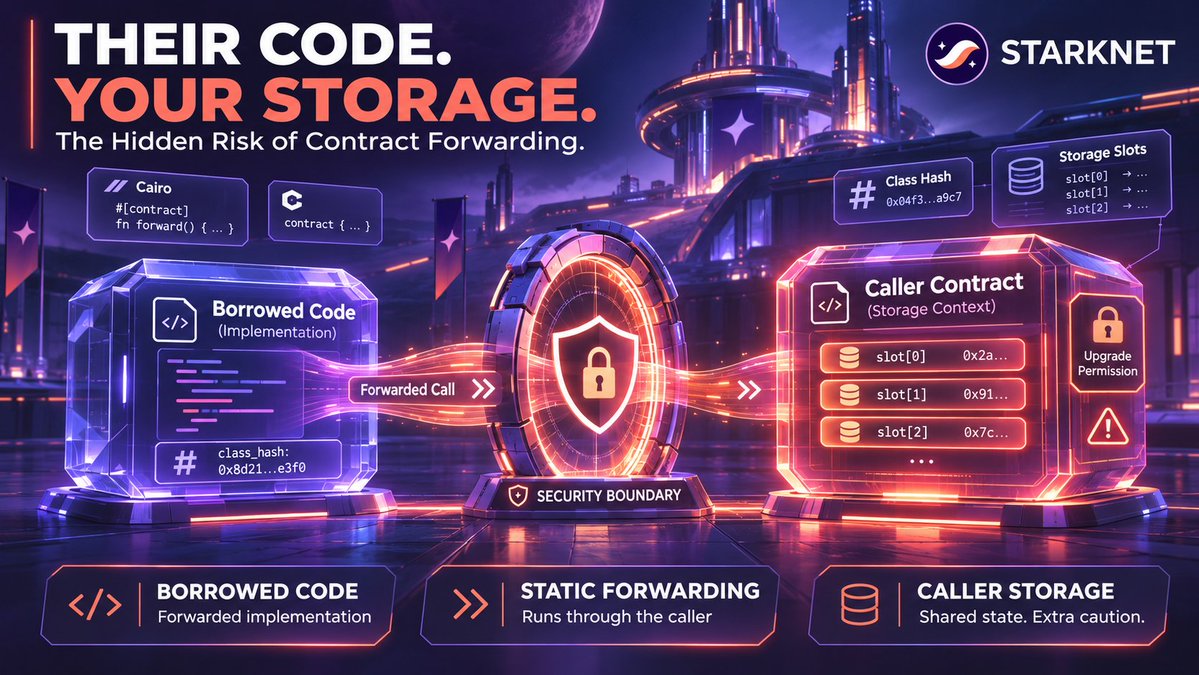
A smart contract can borrow code and accidentally hand it the keys to the house.
Scarb 2.21, released on October 12, introduced static contract forwarding for Cairo. It lets one @Starknet contract expose another class's functions without copying the implementation.
Clean. But here's the trap: forwarded calls run against the caller's storage, not the target's deployed storage.
If both classes use an owner slot, they may touch the same storage location. A forwarded upgrade function could even replace the caller's class if permissions allow it.
And because the target class hash is fixed at compile time, upgrading the original deployment won't automatically patch the forwarder.
I like the simplicity. But I'd check storage layouts, initialization and upgrade permissions before shipping anything.
Then test the exact build on Sepolia.
In smart contracts, less code doesn't automatically mean less risk.
Monolithic on-chain registries break fast when mixing ownership, immutable fee shares, and subscription logic.
Separate core state from payment routing using clean modular patterns to keep your Solidity codebase audit-ready.
The engineering question is simple: which properties protect the protocol’s users and assets, and how will the team keep those properties checked as the code evolves?
Open-sourcing the Certora Prover is worth more than a tooling headline. It brings greater visibility and a contribution path to a formal-verification engine used for smart contract analysis.
Read the full article here : https://t.co/mfTHfmyMYB
Formal verification works best alongside testing, fuzzing, static analysis, manual review and operational controls. It is part of a security programme, not a replacement for one.