We aim to drive science, innovation, and collaboration to transform food, land, and water systems for a climate-resilient, net-zero, and equitable future.
Restoring degraded land does more than store carbon. It can protect water, support biodiversity and boost incomes.
@CGIAR's Petra Schmitter explains how valuing these benefits could unlock more adaptation finance and why public funding remains essential.
#RoadtoCOP31
Adaptation projects are often judged by external evaluators against preset goals. But communities know earlier when a project helps or causes harm.
A @CGIAR case study from Nigeria shows why those living with the impacts should have the power to stop projects that aren't working
Resilience is built before the next shock. 🌍
Ahead of #COP31, join @CGIARClimate to explore how evidence, finance and country-led partnerships can turn climate ambition into action.
📅 28 Oct | 3pm Nairobi / 1pm CET
⏩ https://t.co/z24hc5SBlm
#RoadtoCOP31
In Guatemala, government-led local committees turn seasonal forecasts into advice for 55,000 farmers, using an approach @CGIAR co-developed with Guatemalan partners.
#WorldFoodDay
⏩ https://t.co/G5X6lPinMq
When communities choose their own adaptation, what keeps it going?
In 2025, @CGIAR research linked community choices to local institutions and services, from community water systems to farmer handbooks used by government extension.
#CGIARRoadToCOP31
⏩ https://t.co/rFqBI5FpEF
How can low-emission farming targets become measurable action?
In 2025, @CGIAR developed lower-cost emissions monitoring, found feeds that reduce methane without lowering output, and saw its tools adopted by government and industry.
#CGIARRoadToCOP31
⏩ https://t.co/rFqBI5FpEF
Farmers are already facing droughts, floods and shifting seasons. Is it fair to ask them to cut emissions too?
With food, land and water systems behind a third of global emissions, Lini Wollenberg explains why agriculture can’t wait its turn.
@CGIAR#RoadtoCOP31
Forecasts keep improving, so why do farmers' risks so often stay the same?
@CGIAR research shows forecasts can lower risk when they come with advice, early warnings and insurance. In 2025, around 700,000 people used these services.
⏩ https://t.co/G5X6lPinMq
#CGIARRoadToCOP31
the Smart Valleys approach puts local users at the centre of water planning, design and maintenance.
@CGIAR and @AfricaRice share a new 12-step framework that formalises the approach across Mali, Niger and Nigeria.
Read more: https://t.co/BmX8d1hAPO
The window to act on El Niño is limited.
The challenge is not just forecasting what may happen, but turning global climate information into local advice, and acting on it early enough to make a difference. @CGIAR
What if climate change makes a key adaptation technology more expensive?
New @CGIAR research finds solar-powered irrigation systems in Sub-Saharan Africa could require up to 30% more solar capacity under future climate conditions.
⏩ Read more: https://t.co/p5KW7zliD6
A farmer deciding how to water rice, feed livestock or use fertilizer is making adaptation and emissions decisions at once. Yet climate finance still treats them separately.
With food, land and water receiving just 2.5% of public climate finance, that split is costly. @CGIAR
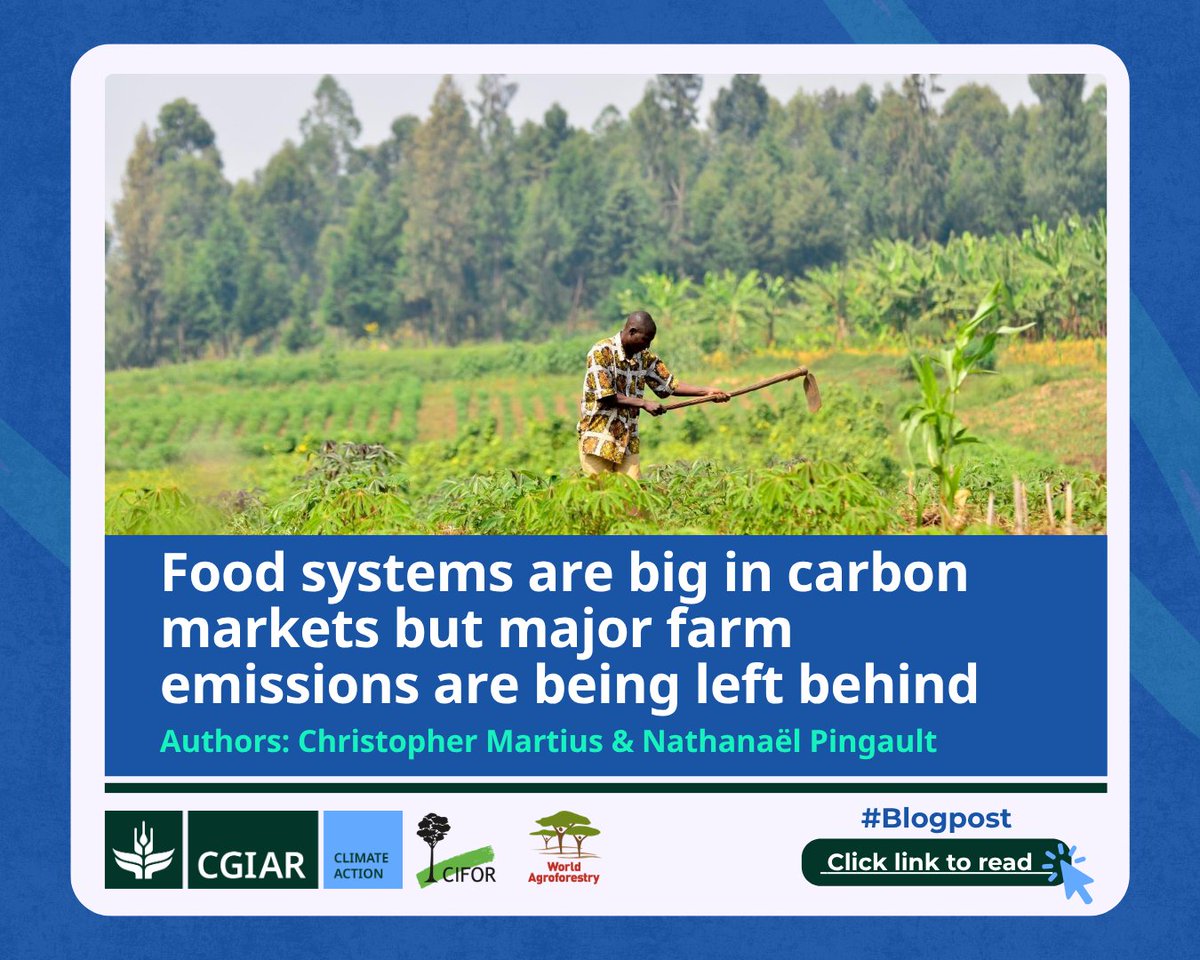
Livestock methane. Manure. Rice cultivation.
These are major sources of agricultural emissions yet they remain lightly represented in carbon markets compared with other parts of the food system due to incentives. Analysis by @CGIAR
⏩ Learn more: https://t.co/jUKdYb3iAJ
In Senegal, residents reported better harvests, diverse incomes & stronger social ties.
Yet information and opportunities did not reach everyone equally.
@CGIAR research proposes CSV+ safeguards to build on the Climate-Smart Village’s gains.
⏩ https://t.co/aFRi8hNUKZ
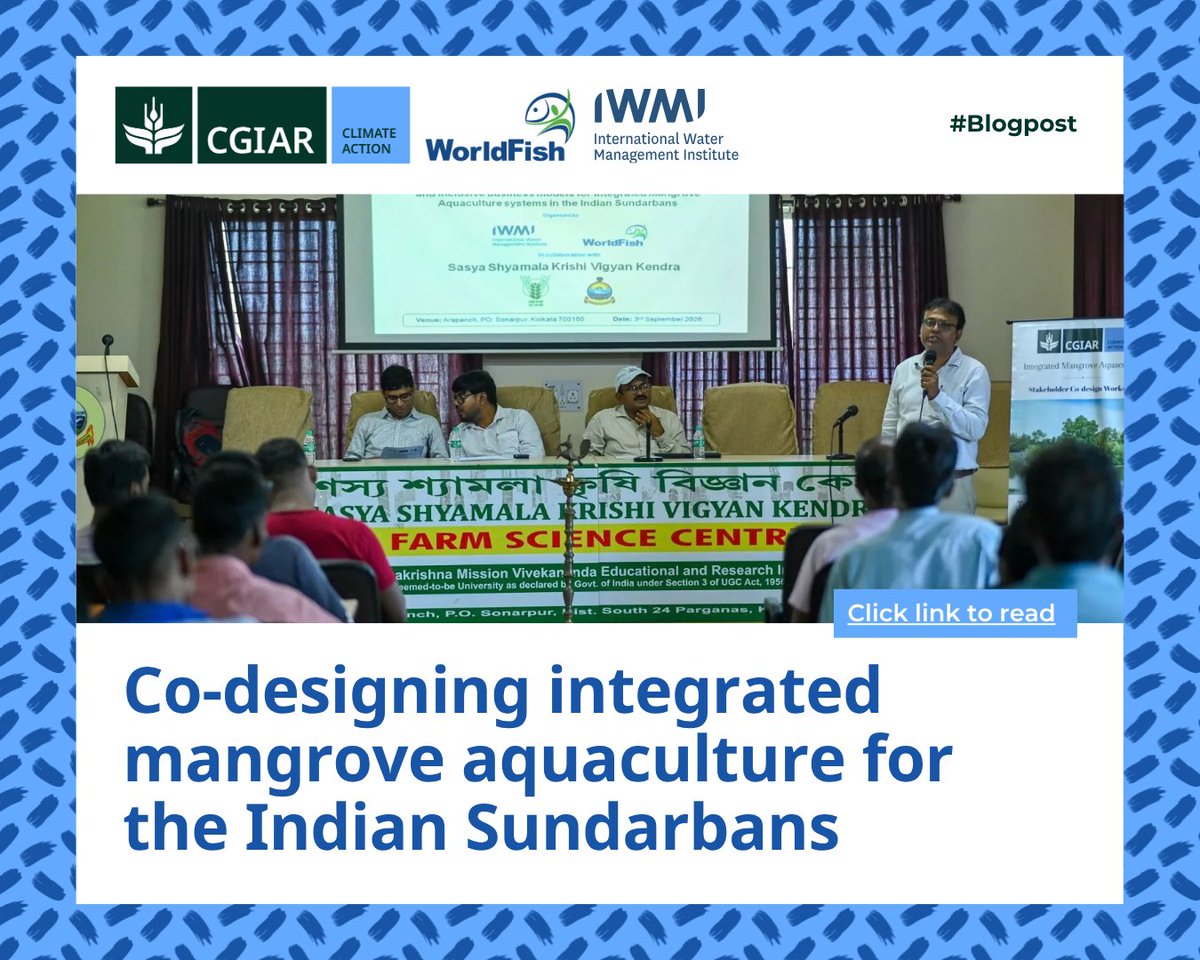
Mangrove aquaculture can support livelihoods and coastal ecosystems, but only if it works for farmers.
In West Bengal, ~50 farmers worked with @CGIAR@WorldFish, @IWMI_ and partners to test practical guidelines grounded in local realities.
⏩ https://t.co/Q9M8bIcNy7
Climate shocks don’t stay in one lane. They can quickly become food, water, livelihood and economic shocks.
At #ClimateWeekNYC, @CGIAR is bringing a systems lens to climate action, connecting research, data and AI to better decisions and practical solutions.
Adaptation programmes can improve incomes, food security and resilience. How might they also affect peace and conflict?
In Jirapa, Ghana, @CGIAR researchers used the CSST to assess a Climate-Smart Village against local conflict risks.
⏩ Learn more: https://t.co/1meycjALc5
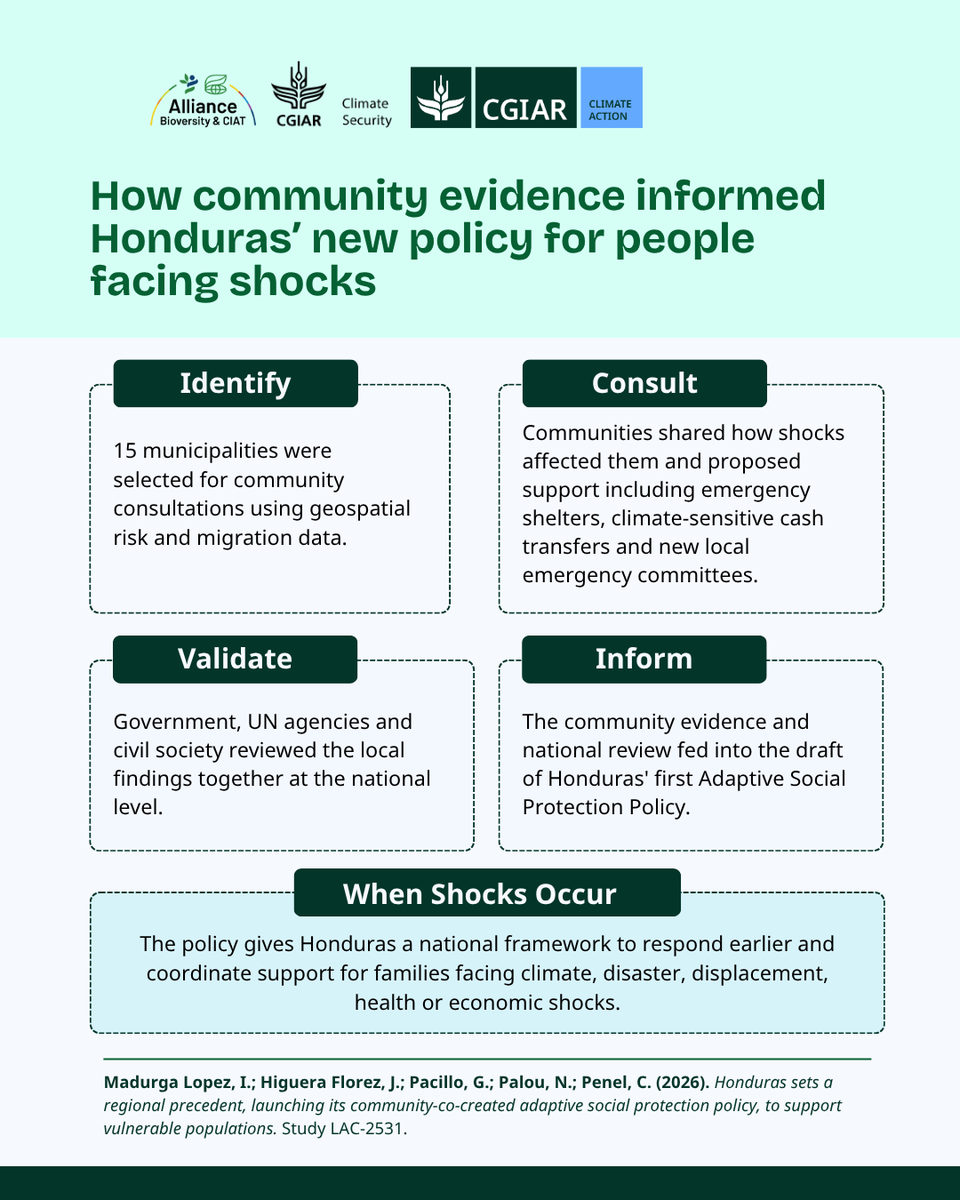
What changes when communities help shape policy before it is finalised?
In Honduras, local consultations across 15 high-vulnerability municipalities helped inform the country’s first Adaptive Social Protection Policy.
Read the report: https://t.co/UPLD5x0lsC
@CGIAR research has helped inform 3 provisions of Colombia’s new Ley 2585 de 2026, strengthening livestock traceability & action on deforestation.
The law links traceability, environmental standards, forest monitoring & public financing.
⏩ Learn more: https://t.co/eLHuoQk4zP
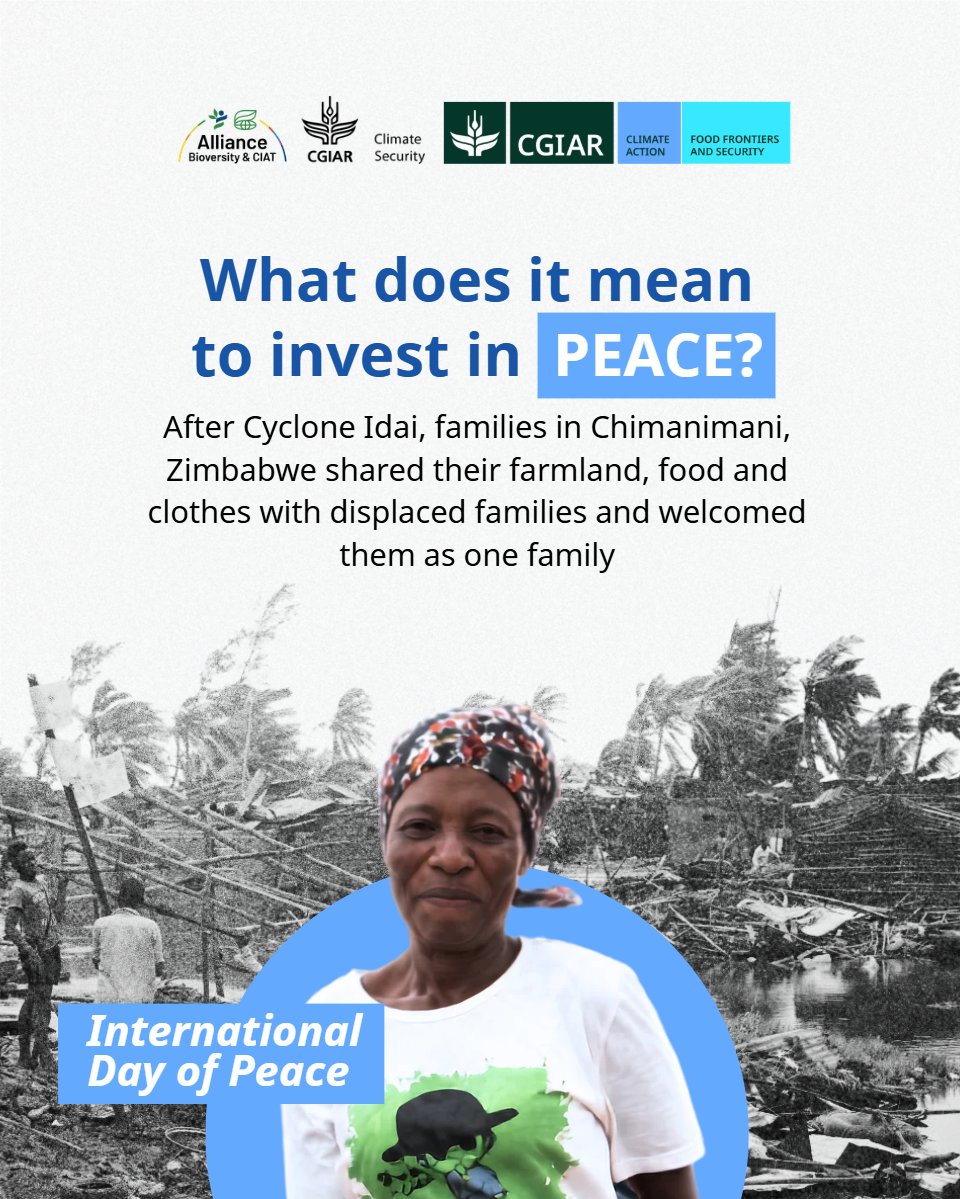
Investing in peace means investing in what held Chimanimani together after Cyclone Idai.
Leaders allocating resources, host families sharing what they had and displaced families sharing food from their first harvest in return.
@CGIAR#ClimateSecurity#Investinpeace