Ok hear me out: instead of all of us having to become extremely knowledgeable on a new infectious disease every 3-6 months, what if we got a large group of experts together and just put them in charge of giving us easy to understand health recommendations. They could also do things like track outbreaks and predict future concerns.
Medical alert cat: *comes to yell at me*
Me to wife in other room: “You feeling okay?”
Wife: “Yeah I feel fine, just a bit tired?”
MAC: *visibly panicking, yowling, running back and forth between us*
Me: “Do you want to sit down?”
Wife: “Yeah okay I trust her”
MAC: *immediately goes on lap*
Five minutes pass
I go check on wife, wife is slumped over fast asleep from narcolepsy attack. MAC looks very pleased with herself. Treats have been given.
🚨 Zlatan Ibrahimović on Japan crashing out of the 2026 FIFA World Cup after their heartbreaking defeat to Brazil:
“Football can be very cruel. Today Japan leave the World Cup, but they leave with their heads held high. They pushed Brazil to the edge, made them suffer and forced one of the greatest football nations in history to fight until the very end. That’s something no one can take away from them.”
“I don’t want to hear anyone calling this a failure. Failure is not giving everything. These players gave everything. They ran, they fought, they believed and they represented their country with incredible pride. Sometimes football rewards you, sometimes it breaks your heart. Today it broke Japan’s heart.”
“I saw the tears after the final whistle, and those tears tell you everything. They cared. They believed they could make history, and for a long time they looked capable of doing exactly that. The result hurts, but the performance deserves respect from the entire football world.”
“If Japan continue producing players with this mentality, this won’t be the last time they surprise the biggest nations. They have shown courage, discipline and personality throughout this tournament. Today they lost the match, but they won the respect of millions of football fans around the world.”
{@FoxNews }
formal apology to my parents for my behavior during the 2008 recession. if someone asked me to buy them a nintendo ds and an annual roblox membership rn i'd actually blow up
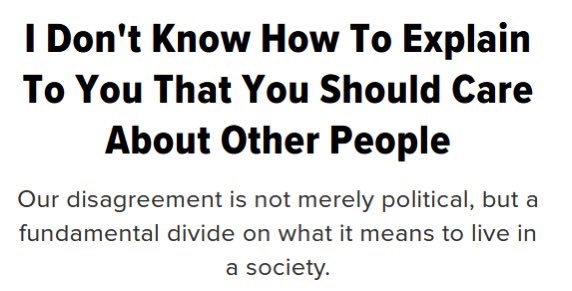
“The students who cannot read a 20-page article today are the voters who will not be able to read a bill, or the jurors who cannot follow a closing argument, tomorrow.”
did your team use a real life animal as your mascot, accidentally give it pneumonia and kill it by keeping its artificial habitat too warm, and then display it's taxidermied body in your arena?
Can't overstate how important it is to celebrate and publicize these historic wins in the face of huge rightwing ideological & political apparatuses.
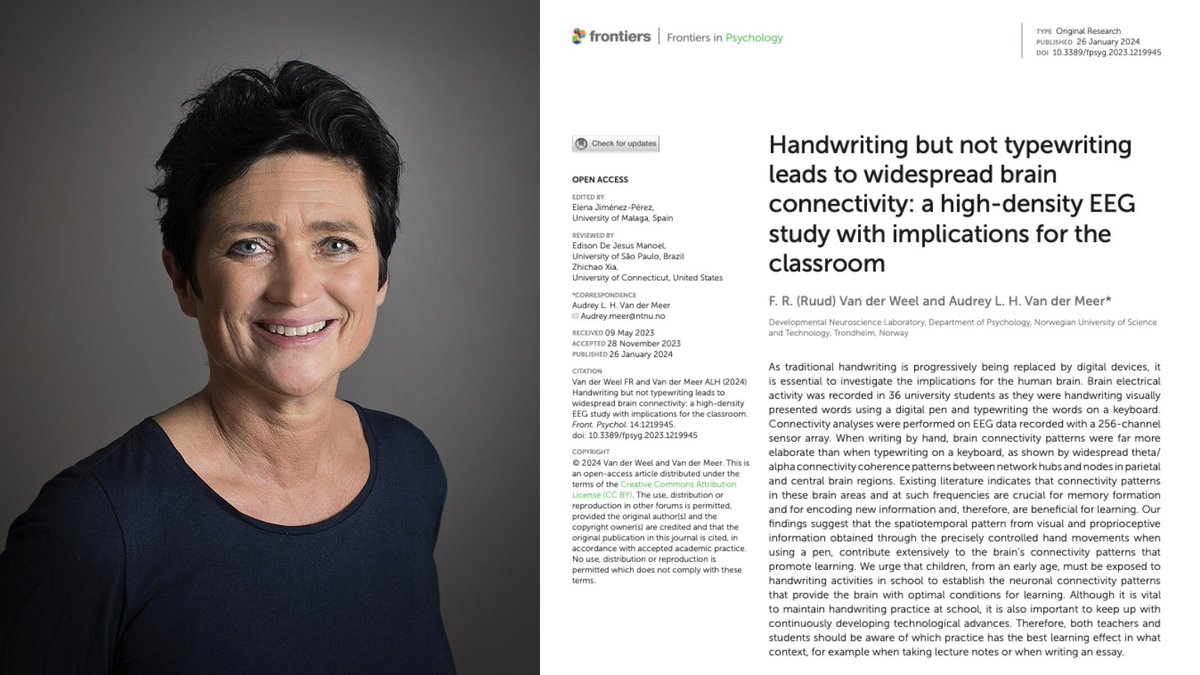
A Norwegian neuroscientist spent 20 years proving that the act of writing by hand changes the human brain in ways typing physically cannot, and almost nobody outside her field has read the paper.
Her name is Audrey van der Meer.
She runs a brain research lab in Trondheim, and the paper that closed the argument was published in 2024 in a journal called Frontiers in Psychology. The finding is brutal enough that it should have changed every classroom on Earth.
The experiment was simple. She recruited 36 university students and put each one in a cap with 256 sensors pressed against their scalp to record brain activity. Words flashed on a screen one at a time.
Sometimes the students wrote the word by hand on a touchscreen using a digital pen, and sometimes they typed the same word on a keyboard. Every neural response was recorded for the full five seconds the word stayed on screen.
Then her team looked at the part of the data most researchers had ignored for years, which is how different parts of the brain were communicating with each other during the task.
When the students wrote by hand, the brain lit up everywhere at once.
The regions responsible for memory, sensory integration, and the encoding of new information were all firing together in a coordinated pattern that spread across the entire cortex. The whole network was awake and connected.
When the same students typed the same word, that pattern collapsed almost completely.
Most of the brain went quiet, and the connections between regions that had been alive seconds earlier were nowhere to be found on the EEG.
Same word, same brain, same person, and two completely different neurological events.
The reason turned out to be something nobody had really paid attention to before her work. Writing by hand is not one motion but a sequence of thousands of tiny micro-movements coordinated with your eyes in real time, where each letter is a different shape that requires the brain to solve a slightly different spatial problem.
Your fingers, wrist, vision, and the parts of your brain that track position in space are all working together to produce one letter, then the next, then the next.
Typing throws all of that away. Every key on a keyboard requires the exact same finger motion regardless of which letter you are pressing, which means the brain has almost nothing to integrate and almost no problem to solve.
Van der Meer said it plainly in her interviews.
Pressing the same key with the same finger over and over does not stimulate the brain in any meaningful way, and she pointed out something that should scare every parent who handed their kid an iPad.
Children who learn to read and write on tablets often cannot tell letters like b and d apart, because they have never physically felt with their bodies what it takes to actually produce those letters on a page.
A decade before her, two researchers at Princeton ran the same fight using a completely different method and ended up at the same answer. Pam Mueller and Daniel Oppenheimer tested 327 students across three experiments, where half took notes on laptops with the internet disabled and half took notes by hand, before testing everyone on what they actually understood from the lectures they had watched.
The handwriting group won by a wide margin on every question that required real understanding rather than surface recall.
The reason was hiding in the transcripts of what the two groups had actually written down.
The laptop students typed almost word for word, capturing more total content but processing almost none of it as they went, while the handwriting students physically could not write fast enough to transcribe a lecture in real time, which forced them to listen carefully, decide what actually mattered, and put it in their own words on the page.
That single act of choosing what to keep was the learning itself, and the keyboard had quietly skipped the choosing and skipped the learning along with it.
Two studies. Two countries. Same answer.
Handwriting makes the brain work. Typing lets it coast.
Every note you have ever typed instead of written went into your brain through a thinner pipe. Every meeting, every book highlight, every idea you captured on your phone instead of on paper was processed at half depth.
You did not forget those things because your memory is bad. You forgot them because typing never woke the part of the brain that would have made them stick.
The fix is the thing your grandmother already knew.
Pick up a pen. Write the thing down. The slower road is the faster one.
"Se débarrasser des archives papier et les remplacer par des archives numériques leur permet de supprimer l’histoire. Un jour, vous trouverez le message « la page n’existe pas », et le lendemain, vous les verrez nier que cela ait réellement eu lieu".
Julian Assange
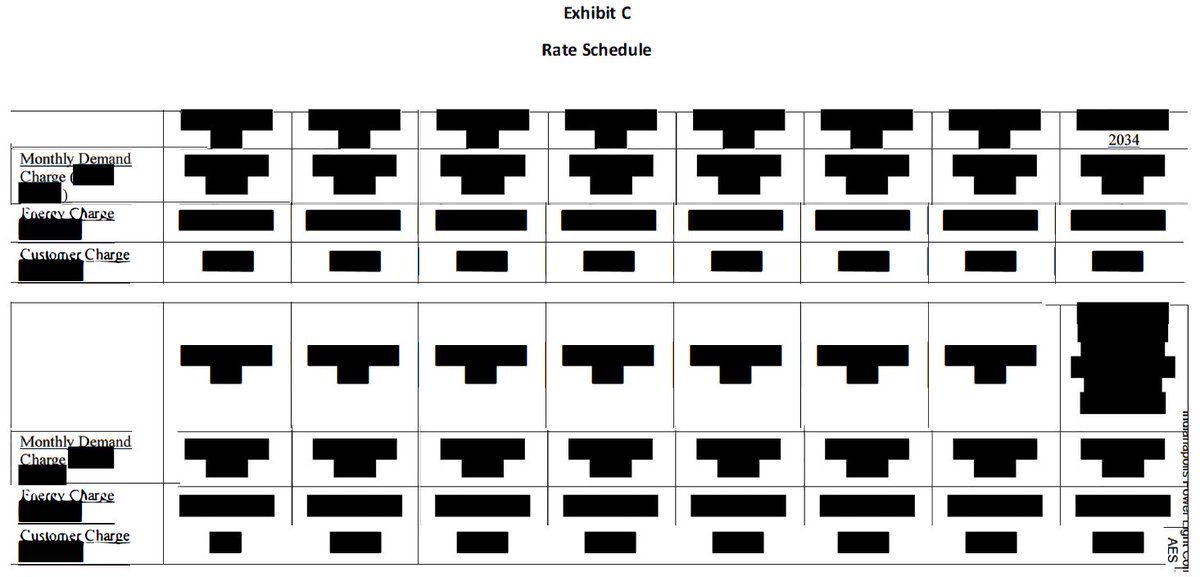
I don't understand why people don't trust data centers.
You can clearly see that these AES Indiana rates for Google's data center in Monrovia, IN are fair and reasonable.