We have bodies, agencies and offices like EACC, ODPP and DCI, but when high profile scandal happens, the Government will constitute an independent "Task Force", fully paid for by the tired taxpayers, to investigate the said scandal.
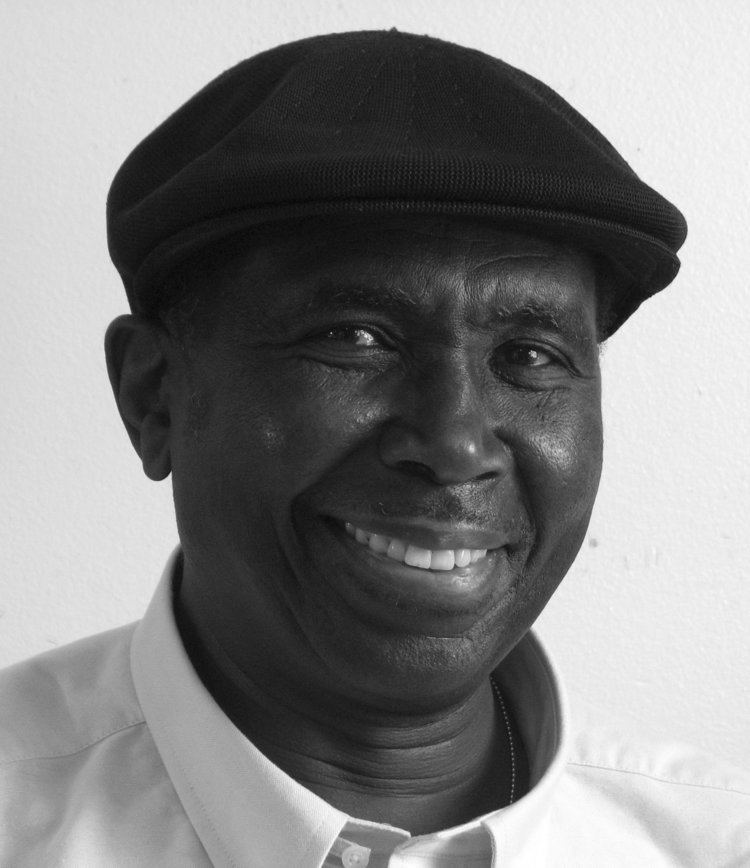
Meja Mwangi, who died yesterday, is/was the Greatest KENYAN Writer of all time.
I emphasize KENYAN, before I get into trouble with Ngugi wa Thiong’o’s disciples. Ngugi, who died in May this year, was a perennial nominee for the Nobel Prize in Literature, a continental (African) and global figure, widely regarded as one of the most consequential postcolonial writers, thinkers, and philosophers, especially in the English-speaking world.
But back home, Ngugi’s universe was the Kikuyu community (nothing absolutely wrong with this, as some of his detractors kept harping about it every time he was perennially nominated for the Nobel Prize in Literature). Ngugi’s first four novels were set against the backdrop of the Mau Mau and colonialism. None of these in any way negates Ngugi’s contribution to Kenyan letters, but he was of the world.
Enter Meja Mwangi.
Meja was ours. Kenyan to the core.
Meja Mwangi’s literature was more cosmopolitan, as most of his books were set in Nairobi, a synecdoche for Kenya and the Kenyan.
I first read Going Down River while in Class 8 or Form 1. I couldn’t put the book down. The prose was viscerally realistic. The writing was too detailed; it’s little wonder I learned later in life that Meja Mwangi went on to be a filmmaker. I wish I could watch any of his screen productions. Mwangi was only 28 when he penned what I consider the greatest Kenyan novel of all time and generations.
Nearly 35 years later, when the film Nairobi Half-Life was released, I observed that very little of Nairobi had changed between 1976 and 2012. Nairobi Half-Life was a descendant of Going Down River Road. That Nairobi underclass that will never change, no matter the speed of our internet, the Expressways, you people adopting BDSM, and such.
Around 2014, my uncle (bless his soul) took me back to Kibera to show me where I was born and spent part of my childhood. It was almost 20 years later. For sure, the roads were now paved, and there were huge streetlights, but that slum vibe was still there. My uncle took me to a woman who had been brewing chang’aa since the 1980s, still doing her thing, and introduced me to her, and told her this is the Son of Norah, and she was like, “How did you get so big?”
While there, I couldn’t help but think about how every part of Nairobi changes: people move on, out, and about, but our slums eternally retain that gritty persona. People may come and go, but newcomers always slip into the slum persona like gloves.
Anyone who grew up in Nairobi’s slums, Eastlands, Kawangware, Kangemi, can identify with all the characters in Meja Mwangi’s books, such as Going Down River Road, Kill Me Quick, Cockroach Dance, and a host of his other latter-day works. Any Kenyan, for that matter, save for the upper middle-class and the rich folks who live in a completely different Nairobi. Kill Me Quick " is the story most of us can relate to, because education promised us so much, and we moved to Nairobi, but now we live with no jobs, and all we can do is drink cheap liquor (Kill Me Quick), eat miraa, and smoke joints, because we are disillusioned. Younger millennials and Gen Zs definitely know what I am talking about.
Along with other writers such as Mwangi Ruheni, Mwangi Gicheru, Charles Mangua, and the Kibera brothers, Meja was among those who captured the zeitgeist of Nairobi and Kenya, as writers like Ngugi became full ideologues and full-time revolutionaries. Mwangi opted to be a revolutionary with his pen, hiding behind satire (that escaped authorities), while entertaining and provoking us.
Sadly, Mwangi was extremely reclusive and rarely granted interviews to scholars or journalists.
Last year, he wanted to come out and meet his fans and lovers of his work, thanks to the spirited efforts of his adopted literary daughter, @Lexa_Lubanga. We cleared our schedules in readiness to meet the man, the myth, and the legend himself, but unfortunately, he was taken ill, and that particular meet-up didn’t happen, and none would ever happen, as he has been sickly, and now he is gone.
A few years back, I asked what the Kenyan novel should be, and my choice was Going Down River Road.
The irony of his dying on the Eve of our 62nd anniversary of Independence is not lost on me, more so when successive regimes are determined to keep the youth poor, unemployed, and disillusioned, like a character in Mwangi’s book.
You can draw a straight line from Going Down River Road, to Ukoo Fulani’s Tafsiri Hii (1997), to Nairobi Half Life (2012), to Wakadinali’s Geri Inengi (2021), to whatever song that will come out of Kayole in 2030, depicting the never-changing life in the ghetto.
He leaves behind a vast body of work.
May Meja Mwangi travel well to the land yonder. Say hi to Ngugi wa Thiong’o, David Mulwa, Mwangi Gicheru, Margaret Ogola, Grace Ogot, Micere Mugo, Binyavanga Wainaina, and all the great men and women of letters we lost.
Photo: Courtesy
@franctezee@elonmuskTN 1. 6 buds = 30
Therefore one bud is 5
2. 2 people and 2 buds = 20
Given each bud is 5, each person is 5
3. 4 smartwatches and a person = 13
13-5 (the value of each person)
This gives 8. So 4 watches equal 8. Each watch is 2
Thus, 5+(5+10+2)*2
=5+(17*2)
=5+34
=39
On the issue of the Citizenship of Dr. Miguna Miguna under the old constitution, these very same pedestrian arguments were raised and rejected by court with a very clear reasoning by one of the best constitutional judges that we have in Kenya. @RealMatiangi lied through his teeth.
If you can't read the full judgment, please read the excerpts highlighted here and see for yourselves. Matiang'i is a tyrant.
The hearing of the Kianjokoma brothers case is about to kick off after so many adjournments by the accused persons by the way!
@AnuarSaddat "Anyone but so and so ( in this case, Ruto) ideology". You people forget that this kind of reasoning is why we're here in the first place!
@polo_kimanii This comparison is lame and wanting. Americans die in their hundreds each year from police shooting, mass/school shooting aside.
Owning guns by the civilians is no solution to extrajudicial killings.
Effective leadership and good governance are.
@pennn____ You make a good point, but the fact that you have one standard response (repost) to the dissenting opinions here says a lot about you.
Are you honestly open to discussing this issue fairly?