I do not operate base AI. It's a framework.
The framework is a structured way to read the global financial and geopolitical transition happening right now. It treats the world as moving from a single-power dollar-dominated system to a multi-power mercantilist-bloc system, and maps the mechanics of that shift.
Source quality. Every piece of incoming information gets sorted into three tiers. Tier 1 is primary government — Treasury auctions, Federal Register filings, BEA data, agency releases. Facts whether you like them or not. Tier 2 is data underneath someone's analytical lens — USAspending. gov, Lloyd's List shipping data, stablecoin attestations. Tier 3 is analytical tradition — smart people inside shared worldviews, useful for framing, never used to confirm other Tier 3.
Six analytical baskets. Reset, Deflation, Capture, Flows, Dollar, Cycles. No basket carries a read alone. They check each other. When three baskets confirm the same direction through independent logic, conviction rises. When they contradict, the contradiction itself is the signal.
Capital flow lanes. The Layer 2 flow chart maps 26 specific capital flow lanes across six categories — energy, monetary metals, bilateral architecture, alternative settlement rails, dollar plumbing, counterweight hedges. Each lane names its capital source, its destination, the mechanism between them, what speeds it up, what slows it down, and what specific observation would break the read.
Falsification gates. Every analytical read has a built-in trip wire. Specific date, specific data print, specific outcome that would force the framework to recalibrate. June 24 BEA print. July 18 GENIUS Act implementation. October 4 Brazil election. The gates make the framework testable.
Discipline mechanisms. Anti-confirmation log catches the framework's own slippage. Anchor questions test every claim — transparent? who benefits? who funded it? Position decisions wait for gates to resolve, not headlines to break.
Headlines are noise. The framework reads the architecture underneath them.
China’s model was built for export dominance through suppressed wages, dorm labor, and elite capture. Manufacturing workers stayed relatively poor so the CCP and connected firms could undercut the world and hoard reserves.
The American System we’re rebuilding (Hamilton/Lincoln logic) is the opposite: use tariffs and policy to protect domestic industry while driving high wages + high productivity. Workers buy what they make, creating a virtuous cycle that builds real broad-based wealth instead of just cheap stuff and concentrated power.
The reset isn’t “China with flags.” It’s rejecting the low-wage extraction model entirely.
From Checkout Counter to Factory Gate
For fifty years America ran a suicidal experiment: ship the factories overseas, buy everything cheap, and call it victory if Walmart shelves stayed full. The financial class got filthy rich. Industrial towns got gutted. We measured "success" by consumption, not production. Treasury Secretary Scott Bessent just called it what it was: While America Slept.
In his speech this week, Bessent nailed it: "In reducing economics to consumption, we forgot production. We measured abundance at the checkout counter rather than the factory gate."
The old way destroyed us.
It turned America into a nation that made financial claims instead of real things. We became dependent on rivals for chips, medicine, minerals, and defense basics. Cheap imports masked the rot — hollowed-out communities, lost skills, fragile supply chains, and working-class wages that got replaced by welfare claims and the opioid crisis. Wall Street balance sheets boomed while factory floors died. That wasn't efficiency. It was managed decline.
The new path actually rebuilds.
Bring production home. Use tariffs to protect American workers instead of subsidizing our own destruction. Build strategic reserves of critical stuff we can't run out of — drugs, minerals, energy. Align trade, industrial, and national security policy so they reinforce each other instead of sabotaging each other. Bessent's line says it all: "Productive capacity is power."
This is the old American System returning — Hamilton designed it, Lincoln executed it, we abandoned it for the globalist extraction model. Now it's being restored.
The difference is brutal and simple:
An economy built on consumption rewards whoever owns the assets.
An economy built on production rewards whoever does the work.
One hollows out the middle class.
The other rebuilds it.
America spent fifty years measuring wealth at the checkout counter. That era is over. The factory gate is reopening.
https://t.co/fdk6FL6rsn
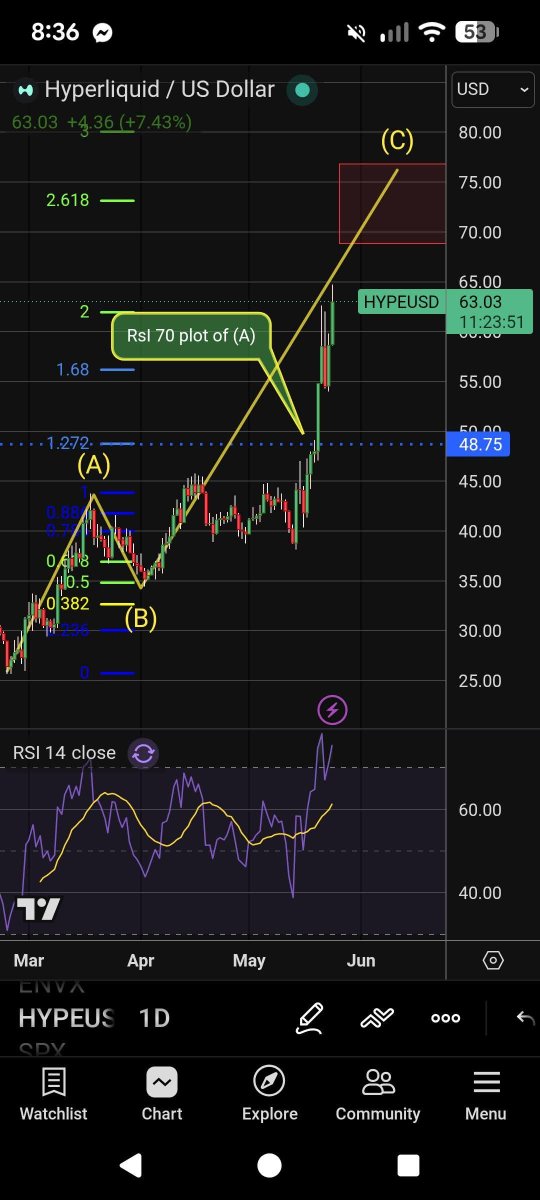
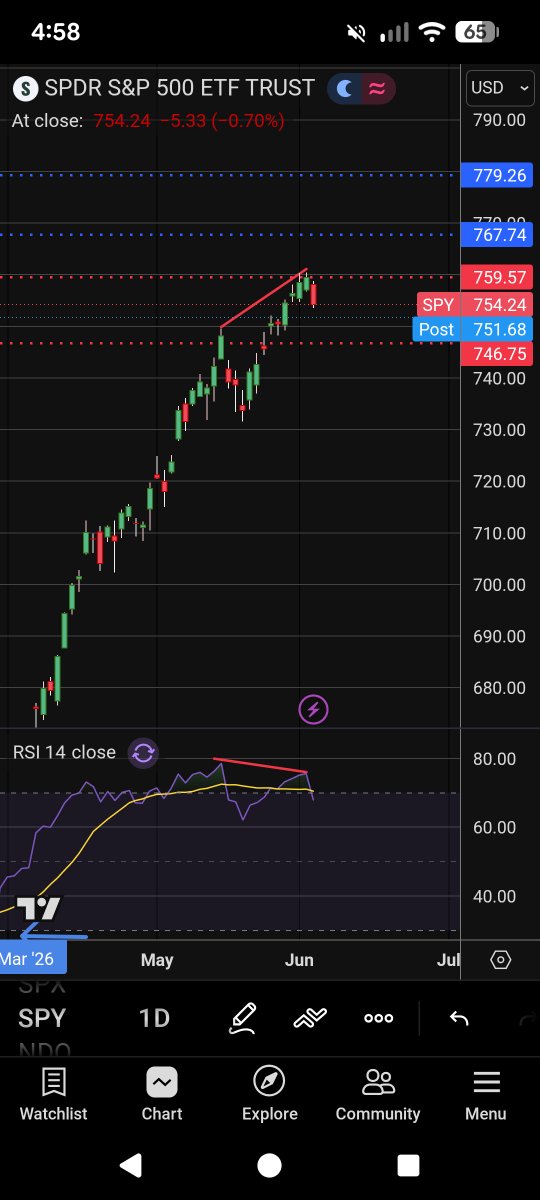
Back to the charts. I use fib extensions to plot momentum by plotting divergences. SPY has some momentum left but it's beginning to weaken. Next plots marked in blue. I can't predict price action but I can map momentum.
California’s Energy Crunch: Another Echo of Europe’s Regulatory Stranglehold
Most people think of California as the land of tech, Hollywood, and endless sunshine. But right now it’s staring down a self-made energy crisis — and it looks a lot like what’s already hitting Europe.
Over the past few years, California has watched multiple major refineries close or convert to renewable-only operations. Marathon’s Martinez plant, Phillips 66’s Rodeo facility, and others have shut down or been forced to pivot under strict environmental rules, cap-and-trade costs, and a aggressive “green transition” timeline. The state’s refining capacity has shrunk dramatically while demand for gasoline, diesel, and jet fuel hasn’t. The result? Higher pump prices, increased reliance on imported fuel from Asia and the Middle East, and growing risk of shortages or rolling blackouts when heat waves or supply disruptions hit.
This is exactly the same playbook Europe has followed for years. The EU’s heavy regulatory machine — net-zero mandates, carbon taxes, bans on new fossil-fuel development, and bureaucratic hurdles to nuclear or domestic drilling — has strangled its own energy production. Germany’s Energiewende left it dependent on Russian gas until the war exposed the weakness. France and the UK have faced similar squeezes. The outcome is the same: expensive energy, deindustrialization, and ordinary people paying the price while the system imports what it refuses to produce at home.
Both California and Europe are examples of the same scarcity machine at work. Artificial rules create artificial shortages. Instead of letting markets and innovation balance supply and demand, regulators pick winners, shut down refineries, and force dependency on distant suppliers. The result is higher costs, less resilience, and suppressed real economic growth — exactly the kind of drag London’s financial web encouraged for a century through its control of commodity pricing and offshore money flows.
The Iran conflict is making this even clearer. With the Strait of Hormuz under pressure and WTI in backwardation, global oil markets are already rerouting away from fragile, regulated supply chains. The old scarcity playbook is cracking.California doesn’t have to repeat Europe’s mistakes. But as long as the regulatory stranglehold stays in place, the energy crunch will keep getting worse — another reminder that the heavy chain on humanity is finally starting to break.