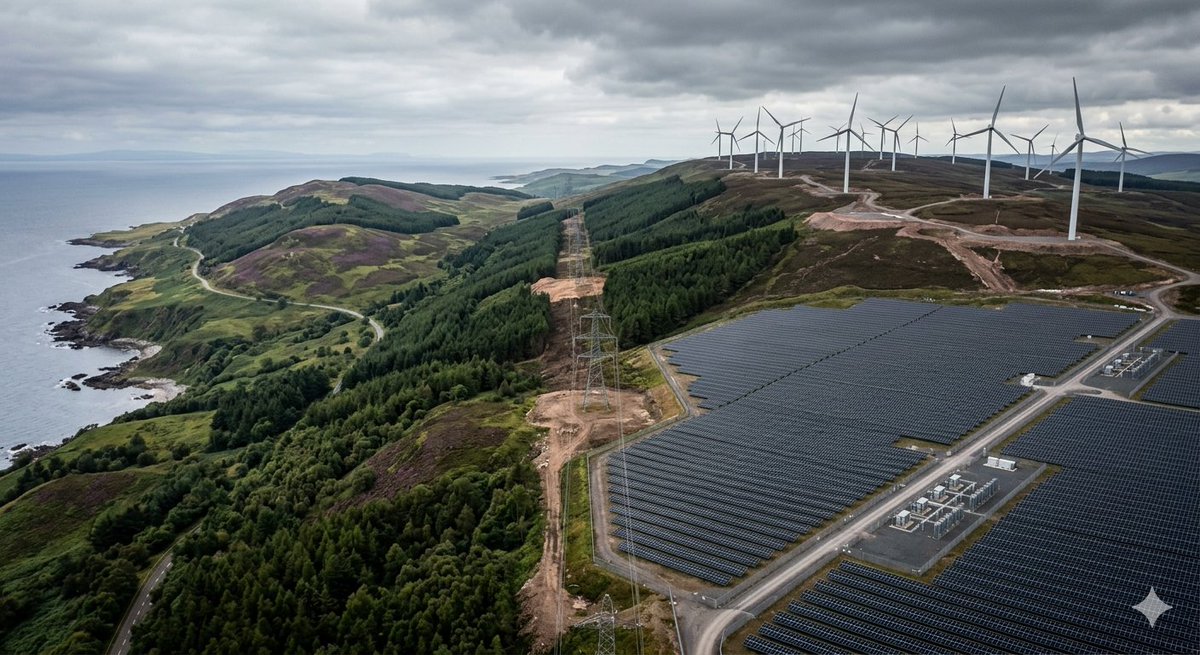
A staggering 7 to 8 billion solar panels have been deployed globally—but up to 90% of them are currently on a direct trajectory toward disposal.
While modern solar panels are technically made of roughly 95% recyclable materials (glass, aluminum, copper, and silicon), recycling currently runs at a steep economic loss.
* The cost: Processing runs $500–$1,000 per tonne ($10 to $40 per panel).
* The yield: The value of recovered materials doesn't even cover the transport fees.
Compared with minimal landfill fees, economics dictate that burial is the default option. But the world is rapidly running out of room, and governments are beginning to panic.
We are already seeing a preview of this crisis in the wind sector, where an expected 43 million tonnes of turbine blade waste by 2050 has led several European nations—including Austria, Germany, Finland, and the Netherlands—to actively ban decommissioned blades from landfills.
Solar is hitting the same wall. Panels built over two decades ago are reaching the end of their 20-to-24-year lifespans, while many more become economically obsolete and are replaced long before that.
This has created a massive regulatory catch-22: To prevent heavy metals like lead and cadmium from potentially leaching into groundwater, jurisdictions like Victoria, Australia, have implemented strict bans on putting solar panels into landfills, classifying them as hazardous e-waste.
Yet, with recycling remaining economically non-viable, we are creating an impossible bottleneck. While industry bodies like the IEA maintain that leaching risks from broken panels are negligible and within safety limits, the sheer volume of impending waste tells a different story.
If it costs too much to recycle, and it is illegal to landfill, where do several billions of panels go?
The 'clean energy' solution is rapidly staring down the barrel of a multi-generational hazardous waste problem.
Image: Last year, the world built more new solar capacity than every other power source combined - Shutterstock.
With atmospheric CO₂ hovering around 426 ppm, nature is thriving in arid regions once considered inhospitable.
The vegetation is marching back into the some of the world’s harshest desert environments. Earth's biosphere is quietly demonstrating a profound, measurable benefit from higher CO₂. These fringe areas are more resilient and greener, in a world that is also more water-efficient. Fresh green cover is actively reclaiming the fringes of the Sahel (the Sahara’s southern edge), the Middle East and the Australian Outback.
An 8% reduction in the Sahel (the Sahara’s southern edge) since the 1980s means 700,000 square kilometres of formerly barren sand wastes have turned green. This is an exciting real-world reincarnation of James Algar's 1963 epic documentary, 'The Living Desert', filmed in the Sonoran Desert near Tuscon, Arizona.
This is the natural world fighting back. Since 1960, global food production has increased by over 250% to 390% (depending on the index). Most of this is from the Green Revolution—the arrival of fertilisers, tractors and genetics. But atmospheric CO₂ - rising from 315 ppm to 426 ppm - is a silent yet profound tailwind behind every new hectare being harvested.
It's the ultimate irony: that a climate change agenda treated CO₂ as an agent of starvation. Instead, the fundamental biology shows it is still the primary engine of agricultural abundance and drought resilience.
When you break down the plant science, the results are stunning:
* C3 plants (95% of all plant species): Rice, wheat, soybeans and potatoes have increased yields by 30% to over 50%. Their photosynthetic mechanisms are structurally starved at lower baseline levels; extra CO₂ accelerates their growth directly.
* C4 plants: Maize (corn), sorghum and sugarcane have increased yields by up to 10%, alongside massive efficiency gains during dry spells.
* Root and tuber crops: Potatoes and sweet potatoes show explosive underground growth, as their large sinks efficiently store the excess carbohydrates produced by accelerated photosynthesis.
Studies compiled by organisations like the USDA Agricultural Research Service show potato yields increasing by 50% to over 100% under elevated CO₂ when water is abundant. Crucially, this atmospheric enrichment also triggers a 10% to 40% reduction in plant water loss because leaf stomata don't need to open as wide to take in carbon.
CO₂ isn't the code red disaster they warned about - but it is a massive insurance policy for the future of global food security.
Image: Global greening trends captured by satellite observations - NASA science.
@DerrickEvans4WV@LarryGreer20 My mom and grandpa, both farmers, never touched a drop of sunscreen. Both had cancers on the arms and face, all lesions successfully treated.
I hike a lot and use a big sun hat, mineral sunscreen, and sometimes spf clothing.
The world's green leaf area—visible from space—has increased by around 5.5 million square kilometres in just over two decades.
This is a 5% global increase, equivalent to adding an entire Amazon Rainforest to the planet since 2000. NASA satellite research reveals this extra leaf cover also acts as its own natural air conditioner. At least 30% of the greened areas are experiencing measurable cooling due to the way plants manage water vapor and air turbulence.
Some early models predicted the growth might slow, but even in intensively farmed lands, food production (grains, vegetables and fruits) jumped by 35-40%. Around 70% of this regeneration is attributed to increasing levels of atmospheric carbon dioxide (CO₂), rising from 370 ppm to 426 ppm between 2000 and 2026.
As this expanding patina of green leaf cover and real-world cooling data forced their way into the climate equation, the extreme high-end models have begun to unravel. Mainstream projections have steadily downgraded the narrative, shifting away from catastrophic 5-degree predictions toward a far lower ceiling.
The planet is fighting back with its own biological feedback loop.
@MattMahanSJ It's clear California is ready for a change. Democrats had years and have driven California into the ground. Let's get Hilton elected and start cleaning up the Democrat's mess.
It's a new chance for California, Let's go Hilton!
Compared with conventional technologies, wind power requires vastly more raw materials for the same installed capacity.
Up to 15 times more concrete, 90 times more aluminum, and around 50 times more iron, copper and glass.
Each 2 megawatt turbine uses about 1700 tons of material, around 1300 tons of concrete, nearly 300 tons of steel, plus iron, fiberglass and copper.
The foundation alone uses hundreds of tons of concrete. Concrete is one of the world's largest CO2 sources, responsible for 8% of global emissions.
Then there are the rare earths. Just one ton of rare earth elements generates 2000 tons of toxic waste.
Worse still, all of this ends up in landfill every 15 to 20 years, with the entire process repeated.
Wind is not the clean energy it is sold to be.
@naomirwolf I hike a lot, and it isn't just the ticks. For a long time now, the geoengineered weather is so nasty, and you can see the particulate layer in the air. I still hike, but who knows what I'm breathing in...
@AndarianP@Supersonic_Red I like the concept but hate the name too. Can we come up with something better and just start using it? It will catch on. Generation Jones for a name is cringe.
Hope about Gen V?
Not 1°C of warming has been reduced. Not one life was saved. Not 1 ppm of CO₂ has been avoided.
The total climate price tag by 2050 will be $275 trillion—amounting to $9.2 trillion every single year (McKinsey, 2022). That staggering total is roughly 2.5 times the entire annual GDP of the world.
Not one life has been saved from a changing climate that could have been better protected by leaving cheap, reliable, traditional energy in place. This is the ultimate belief gap, and it's staggering.
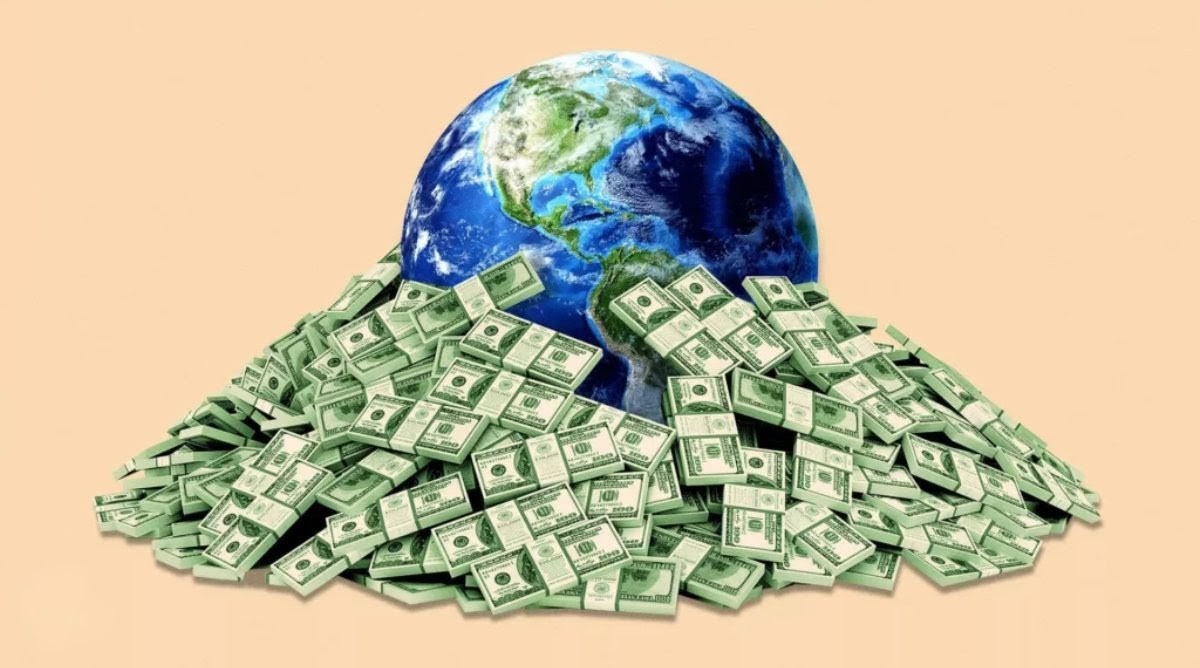
While the UN chased a global wealth redistribution bonanza, the cost to our future has been colossal. Imagine a world we could have built if that capital hadn't been poured into a failed ideology. The UN wealth redistribution scheme didn't save the planet, it funded a new, fabulously wealthy, bureaucratic class.
Reality is finally calling in the debt.
The world is more than 1 degree warmer and CO₂ has reached 427 ppm - yet our planet is becoming a green paradise.
Global greening from higher CO₂ has delivered an unexpected windfall; 5.5 million km² of new greenery springing up across the world since 2,000 (NASA studies). This isn't just extra leaves. Green growth is equal to twice the area of the Amazon Rainforest and the Sahara Desert has lost 8% desert to new plant growth.
Across the Arctic, vegetation increased by 38% between 1985 and 2016. Between 2000 and 2017 satellites identified a 25% to 50% increase in vegetated lands turning green. Food production has been boosted by 35-40%.
This is the Earth’s way of self-correcting and 30% of these areas already have a natural cooling effect through water-vapor management. The planet isn't a passive victim, it's an active participant.
The UN climate ideology was about fear and control.
Climate has been weaponized to drive a global agenda—orchestrated by the United Nations and backed by a projected $147 trillion in forced structural reinvestment (McKinsey Global, 2022).
The physical reality of this shift involves up to 1.3 million wind turbines and eight billion solar panels (so far). They are darkening our most iconic land and seascapes, blighting rural farmlands, and cutting massive corridors through pristine native forests.
By definition, climate is simply the study of regional weather patterns over a standard 30-year period. Over time, however, it has transformed into a convenient metaphor for a broader ideological struggle. The underlying reality is that no one can accurately predict a climate crisis decades into the future, when meteorologists struggle with a three-day forecast. Yet, a computer-model 'scenario' has been elevated into the defining crisis of our time.
The evidence for this doomsday narrative is threadbare. While global temperatures have risen by roughly 1.4 degrees since the dawn of the Industrial Revolution in 1769 - when the world’s population was just one billion - that modest warming has already occurred, and humanity has thrived alongside it.
Even the IPCC has quietly backed away from its extreme five-degree doomsday scenarios. To claim a degree or two represents an existential threat ignores human history; we are an adaptable species that thrives from the equator to the Arctic. Yet this erratic metric now underpins a multi-decade campaign that is actively dismantling Western economies.
The consequences are no longer theoretical. The real-world cost is arriving daily—leaving Western society to face its highest electricity prices in history.
@carldemaio How is this legal? Have you started a lawsuit? It's pathetic that tax payer's dollars have to be wasted on fighting nonsense like this, but it must be stopped.
@PeterDClack In Wyoming, I see trucks with these defunct wind turbines taking them to landfills where a bulldozer pushes a shallow layer of dirt over them. What could go wrong? Towns agreeing to this for money are creating toxic sites that destroy wildlife and will poison the soil and water.
@SenJohnBarrasso There are no mass deportations happening. At the current rate, only about 8 million will be deported by the end of Trump's term, including self deportations.
This is pathetic and not what we voted for.
@HeroDividend What's wrong with old people shopping?
I'd rather shop in a store full of boomers than any other demographic because most of them have manners.
@Shilohmarx We've seen evidence of fraud and potential fraud for years, and nothing is done about it. We, the people, are told to vote them out, but the fraud machine protects them.