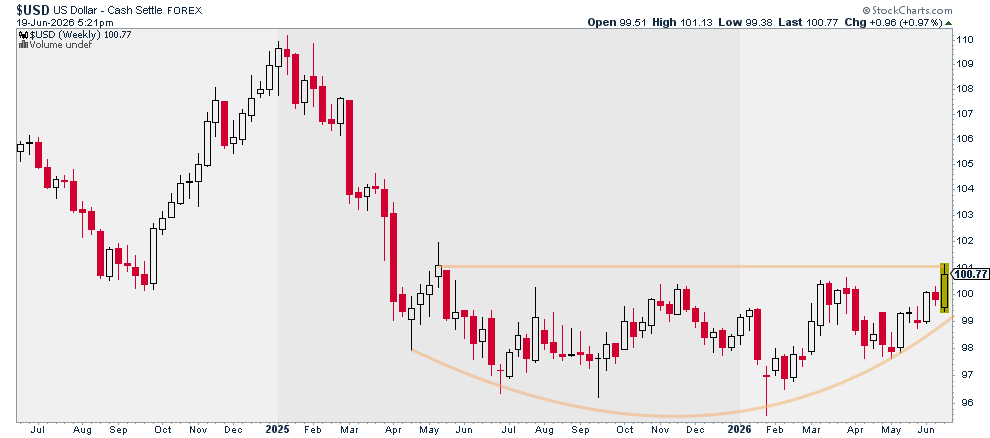
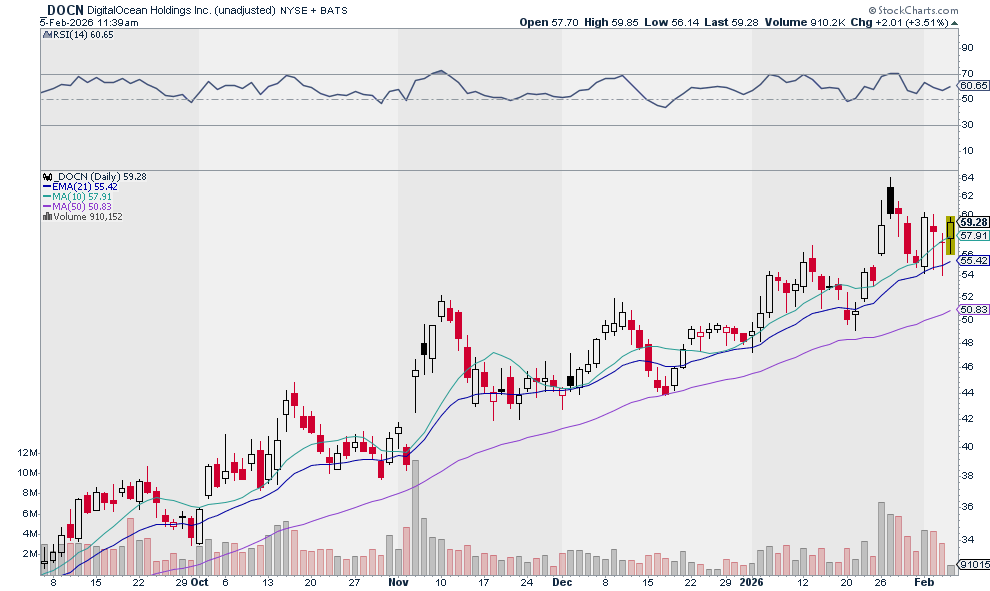
The U.S. Dollar Index $USD looks like it wants to climb out of this base.
The dollar was a wrecking ball in 2022.
It rallied alongside interest rates for much of that year, while risk assets got hosed.
Will this time be different?
Maybe. Maybe not.
I'm going to wait until I see weakness in stocks before I get too cautious.
Leaders are still acting great. New themes are emerging. And we've got setups galore.
So far price action today is supporting rotation thesis where Payments, healthcare, and/or software will catch a bid. Some names lik $PGY, $RDDT, $TGTX AND $IGV
Sold $MRVL today at 215 from $89. Holding half position in long term account, but expect back test of 145 before next leg. Will decide to add or reduce after earnings
This is an email I sent earlier today to all employees at Coinbase:
Team,
Today I’ve made the difficult decision to reduce the size of Coinbase by ~14%. I want to walk you through why we're doing this now, what it means for those affected, and how this positions us for the future.
Why now
Two forces are converging at the same time. We need to be front footed to respond to both.
First, the market. Coinbase is well-capitalized, has diversified revenue streams, and is well-positioned to weather any storm. Crypto is also on the verge of the next wave of adoption, with stablecoins, prediction markets, tokenization, and more taking off. However, our business is still volatile from quarter to quarter. While we've managed through that cyclicality many times before and come out stronger on the other side, we’re currently in a down market and need to adjust our cost structure now so that we emerge from this period leaner, faster, and more efficient for our next phase of growth.
Second, AI is changing how we work. Over the past year, I’ve watched engineers use AI to ship in days what used to take a team weeks. Non-technical teams are now shipping production code and many of our workflows are being automated. The pace of what's possible with a small, focused team has changed dramatically, and it's accelerating every day.
All of this has led us to an inflection point, not just for Coinbase, but for every company. The biggest risk now is not taking action. We are adjusting early and deliberately to rebuild Coinbase to be lean, fast, and AI-native. We need to return to the speed and focus of our startup founding, with AI at our core.
What this means
To get there, we are not just reducing headcount and cutting costs, we’re fundamentally changing how we operate: rebuilding Coinbase as an intelligence, with humans around the edge aligning it. What does this mean in practice?
- Fewer layers, faster decisions: We are flattening our org structure to 5 layers max below CEO/COO. Layers slow things down and create coordination tax. The future is small, high context teams that can move quickly. Leaders will own much more, with as many as 15+ direct reports. Fewer layers also means a leaner cost structure that is built to perform through all market cycles.
- No pure managers: Every leader at Coinbase must also be a strong and active individual contributor. Managers should be like player-coaches, getting their hands dirty alongside their teams.
- AI-native pods: We’ll be concentrating around AI-native talent who can manage fleets of agents to drive outsized impact. We’ll also be experimenting with reduced pod sizes, including “one person teams” with engineers, designers, and product managers all in one role.
In short: AI is bringing a profound shift in how companies operate, and we’re reshaping Coinbase to lead in this new era. This is a new way of working, and we need to leverage AI across every facet of our jobs.
To those who are affected
I know there are real people behind these decisions — talented colleagues who have poured themselves into this company and our mission. To those of you who will be leaving: thank you. You’ve helped build Coinbase into what it is today, and I am sincerely grateful for everything you've done.
All impacted team members will receive an email to their personal account in the next hour with more information, and an invitation to meet with an HRBP and a senior leader in your organization. Coinbase system access has been removed today. I know this feels sudden and harsh, but it is the only responsible choice given our duty to protect customer information.
To those affected, we will be providing a comprehensive package to support you through this transition. US employees will receive a minimum of 16 weeks base pay (plus 2 weeks per year worked), their next equity vest, and 6 months of COBRA. Employees on a work visa will get extra transition support. Those outside of the US will receive similar support, based on local factors and subject to any consultation requirements.
Coinbase prides itself on talent density. Our employees are among the most talented people in the world, and I have no doubt that your skills and experience will be highly sought after as you pursue your next chapters.
How we move forward
To the team that is staying, I know this is a difficult day. We’re saying goodbye to colleagues and friends you've been in the trenches with. But here’s what I want you to know as we move forward together:
Over the past 13 years, we have weathered four crypto winters, gone public, and built the most trusted platform in our industry. We’ve made it this far by making hard decisions and by always staying focused on our mission. This time will be no different – nothing has changed about the long term outlook of our company or industry. And most importantly, our mission has never been more important for the world. Increasing economic freedom requires a new financial system, and we’re building it.
The Coinbase that emerges from this will be more capable than ever to achieve our mission.
Brian
𝗝𝗢𝗡 𝗦𝗧𝗘𝗪𝗔𝗥𝗧 𝗝𝗨𝗦𝗧 𝗦𝗔𝗜𝗗 𝗪𝗛𝗔𝗧 𝗖𝗢𝗡𝗦𝗘𝗥𝗩𝗔𝗧𝗜𝗩𝗘𝗦 𝗛𝗔𝗩𝗘 𝗕𝗘𝗘𝗡 𝗦𝗔𝗬𝗜𝗡𝗚 𝗙𝗢𝗥 𝟮𝟬 𝗬𝗘𝗔𝗥𝗦
Give credit where it's due. Jon Stewart — not a conservative — said something more economically honest to Bernie Sanders' face than most Democrats have managed in a decade.
His exact words: 𝘞𝘩𝘦𝘯 𝘵𝘩𝘦 𝘨𝘰𝘷𝘦𝘳𝘯𝘮𝘦𝘯𝘵 𝘱𝘳𝘰𝘮𝘪𝘴𝘦𝘴 𝘦𝘯𝘥𝘭𝘦𝘴𝘴 𝘧𝘶𝘯𝘥𝘴 𝘵𝘰 𝘪𝘯𝘴𝘶𝘳𝘢𝘯𝘤𝘦 𝘤𝘰𝘮𝘱𝘢𝘯𝘪𝘦𝘴 𝘰𝘳 𝘱𝘳𝘪𝘷𝘢𝘵𝘦 𝘶𝘯𝘪𝘷𝘦𝘳𝘴𝘪𝘵𝘪𝘦𝘴 𝘸𝘪𝘵𝘩𝘰𝘶𝘵 𝘢𝘯𝘺 𝘤𝘰𝘴𝘵 𝘤𝘰𝘯𝘵𝘳𝘰𝘭𝘴, 𝘱𝘳𝘪𝘤𝘦𝘴 𝘳𝘪𝘴𝘦 𝘧𝘢���� 𝘣𝘦𝘺𝘰𝘯𝘥 𝘵𝘩𝘦 𝘳𝘢𝘵𝘦 𝘰𝘧 𝘪𝘯𝘧𝘭𝘢𝘵𝘪𝘰𝘯. 𝘞𝘦'𝘷𝘦 𝘴𝘦𝘦𝘯 𝘪𝘵 𝘪𝘯 𝘵𝘶𝘪𝘵𝘪𝘰𝘯, 𝘢𝘯𝘥 𝘸𝘦'𝘷𝘦 𝘴𝘦𝘦𝘯 𝘪𝘵 𝘪𝘯 𝘱𝘩𝘢𝘳𝘮𝘢𝘤𝘦𝘶𝘵𝘪𝘤𝘢𝗹𝘴, 𝘢𝘯𝘥 𝘸𝘦'𝘷𝘦 𝘴𝘦𝘦𝘯 𝘪𝘵 𝘪𝘯 𝘩𝘦𝘢𝘭𝘵𝘩 𝘤𝘢𝘳𝘦.
He even noted that Trump seems to understand this — that the Democratic model has never been to directly provide anything. It has always been a subsidy to a middleman. Subsidize the insurance company. Subsidize the university. Subsidize the hospital system. Then express outrage when the insurance company, the university, and the hospital use that guaranteed government money to raise prices without limit.
This is not a new observation. It is the core conservative critique of government intervention in markets — going back decades. When you remove price signals by guaranteeing payment, producers have no incentive to compete on cost. College tuition has risen over 1,400% since 1980 — the same period during which federal student loan money flooded the system. Healthcare costs have done the same since Medicare and Medicaid expanded coverage without controlling what providers could charge.
Stewart asked Bernie the right question: will Democrats recognize the poison pill they've placed inside their own well-intentioned policies?
Bernie's response was to repeat the slogan. Healthcare should be a human right. Education should be a human right. Right, right, right — says Stewart. But how do we actually get there without making everything more expensive? Bernie's answer: let's get there.
That is not an answer. That is a bumper sticker.
Stewart deserves credit for pressing it. The Democratic Party has spent 60 years creating the very cost crises they now propose to solve with more of the same medicine.
𝗜𝗻𝗳𝗶𝗻𝗶𝘁𝗲 𝗴𝗼𝘃𝗲𝗿𝗻𝗺𝗲𝗻𝘁 𝗺𝗼𝗻𝗲𝘆 + 𝗻𝗼 𝗰𝗼𝘀𝘁 𝗰𝗼𝗻𝘁𝗿𝗼𝗹𝘀 = 𝗶𝗻𝗳𝗶𝗻𝗶𝘁𝗲 𝗽𝗿𝗶𝗰𝗲𝘀. 𝗧𝗵𝗮𝘁'𝘀 𝗻𝗼𝘁 𝗰𝗼𝗻𝘀𝗲𝗿𝘃𝗮𝘁𝗶𝘀𝗺. 𝗧𝗵𝗮𝘁'𝘀 𝗺𝗮𝘁𝗵.
Today's action was very disappointing as Trump floats the idea of a 30 day cease fire. This is feeling more and more like the boy who cried wolf as Trump tweets seemingly every time the market is on the cusp of waterfalling. How much longer he can get away with it will be telling. We are in the camp that the odds favor a waterfall washout and capitulation moment sooner than later. We are watching and are focused on our screens closely as we want to be there for that capitulation moment on the downside or a follow through day on the upside. In moments like this if your tactics are right, you can make your year. We intend on being there and doing so.
@TedHZhang I have dreamt of doing this, just don't have the kind of process, discipline and focus yet. You and connar definitely are Trailblazers more power to you.
I have tried many generative AI models, but @grok is one of the most underrated... Under the radar, and underappreciated models out there. The whole ecosystem is stacked against @elonmusk yet he continues to come up with these brilliant products. Kudos 👏
Action since this post is supporting my view, so I am going to what ought to be done, which is to find leaders and add exposure in those themes. Alt energy, biotech, fintech will pullback and set up new pivots for breakouts on the weekly basis.
Current market structure should be seen in the Jan 2025 price levels, as all the whipsaw since was tariffs driven, macro data doesn't support too much of downside as yet. Could it happen in 2026 nobody knows. But...
But until then, with rates on downtrend, sectors with secular trends like biotech, Alt energy, Fintech etc should benefit and find buyers. $TOST, $AFRM, $TEM, $SOFI should continue to do well. And don't count Software yet. $CRM, $ADBE could triple from here and join T-Club
Current market structure should be seen in the Jan 2025 price levels, as all the whipsaw since was tariffs driven, macro data doesn't support too much of downside as yet. Could it happen in 2026 nobody knows. But...
Current market structure should be seen in the Jan 2025 price levels, as all the whipsaw since was tariffs driven, macro data doesn't support too much of downside as yet. Could it happen in 2026 nobody knows. But...
This is not 1999:
Top 10 $SPX names trade at 31x, far below 1999’s 44x.
Operating margins are >20% higher than 1999 levels.
Market free-cash-flow yield is nearly 3x higher than tech-bubble era.
S&P 500 in gold terms trades 70% below the 2000 peak.