Columbus pitched this exact trip to Spain in 1492. He said it was a 3,500-mile journey. The real distance is more than 8,000 miles. He survived only because two entire continents nobody in Europe knew existed happened to be sitting in his path.
The first mistake was a translation problem. Columbus was working off a calculation by a 9th-century Persian geographer named Al-Farghani, who said one degree around the Earth was about 57 miles. That was correct, but Al-Farghani measured in Arabic miles. Columbus assumed Roman miles. Same number, different ruler. Roman miles were shorter, so his version of Earth came out 25% smaller than the real one.
Then he made it worse. He read Marco Polo and decided Asia ran way further east than anyone else thought. So he redrew his maps to match. Japan ended up sitting right next to the Azores, the Portuguese islands in the middle of the Atlantic. The actual Japan is on the other side of the entire Pacific Ocean. He moved a whole country 8,000 miles to make his pitch work.
Spain’s royal experts ran his numbers in 1486 and rejected him. They were right. They told Ferdinand and Isabella that Columbus had badly underestimated the size of the planet. He got funded six years later anyway, but not because his math improved. Spain’s long war at home had just ended, and they wanted in on the Asia trade before Portugal locked it up.
A Greek librarian had already figured out the actual size of Earth in 240 BC. That puts him 1,700 years ahead of Columbus. The librarian was named Eratosthenes. He used a stick, a deep well in southern Egypt, and the angle of the noon sun on the longest day of the year. His answer: about 25,000 miles around. The real number is 24,901. He was off by maybe 1 to 2%, depending on the Greek length unit he was using. He did this with hand tools, almost 2,000 years before anyone built the first telescope.
Columbus knew about that calculation. He just didn’t like it. The bigger number meant the trip was impossible. No 15th-century ship could carry enough food and water to sail 8,000 miles nonstop, let alone the 15,000-plus to actual eastern China. So he picked a smaller number that fit the boat. He got lucky. The Americas were in the way.
The map in this post does work in a literal sense, but it cheats. Flat maps stretch everything sideways. Any east-west line looks straight on them, even when it actually curves on a globe. If you’ve ever flown to Tokyo, you’ve seen the flight path arc up over Russia on the seatback screen. The arc is the actual shortest route. Columbus’s plan was wrong. The map that makes it look possible is wrong in a different way.
Watched an Alex Mwakideu interview the other day he was talking to the legendary judge from Vioja Mahakamani. Millennials, you know her ~That no-nonsense mama who took zero nonsense in that courtroom.
Now here’s the wild part they never had scripts. Not a single one. They’d just show up, pick roles, agree on the case, and go. Cameras rolling, take one, done.
So every punchline Alphonse Makacha and Dot Makokha ever dropped? Pure improvisation. No rehearsal. Nothing prepared. Just talent doing its thing in real time.
Kenya really had something special with that crew.
And here’s the part that gets me AG Amos Wako was fully behind the show. He’d supply them with real court cases and actual judgments from Kenyan courts. So when the judge passed her verdict on screen, it wasn’t made up. It was legally accurate, straight from the constitution.
Comedy on the surface. Civic education underneath.
That’s a level of craft most productions today can’t touch.
Golden era. Salute to those legends. 🫡
My sister gave birth two seconds after being chased by a monkey 😂😂
On this fateful day, she said she already knew her baby was coming. Being her second baby, she felt she was now a professional.
While she was dilating, madam was busy doing house chores like nothing was happening — she cleaned the house, washed clothes, and even cooked food sef.
After all that, she still did makeup, wore a flowing gown, told the neighbours “I’m going to the hospital,” and left like someone going for a wedding. 😂
When she got to the hospital, she told the doctor she was ready.
The doctor looked at her makeup and said,
“With this makeup? You’re not ready yet.” 😭
She started laughing and insisted she was ready, but nobody believed her. So the doctor told the nurses to take her outside for exercise since it was a private hospital.
She said the only exercise she could do was to walk around. Doctor said, “No problem.”
While they were walking around the hospital premises, she looked up and saw a monkey in the next compound. Immediately their eyes met… the monkey started running towards her and the nurse. 😭
She said as she turned to hold the nurse… she saw the nurse already running for her life.
My sister too no dull… she gathered her flowing gown and started running towards the hospital door, with the monkey behind her. 😂😂
By the time she got to the door and stopped…
The next thing she felt was her baby’s head between her legs.
They quickly carried her and the baby’s head together into the labour room. 😭😂
Till today, we still don’t know why that monkey ran towards her…
But one thing is sure that monkey helped speed up labour. 😂😂
The virus is called "covert mortality nodavirus" because it kills shrimp without any visible symptoms. The shrimp look fine. Then they're dead. It earned that name in aquaculture farms where entire populations would collapse overnight with zero external warning signs.
Now it's doing something similar in human eyes.
CMNV targets the anterior uveal tract, the middle layer of the eye. It triggers inflammation and sends intraocular pressure through the roof, mimicking glaucoma. Standard antivirals don't work because nobody was testing for an aquatic nodavirus in human eye tissue. Every patient in the study tested negative for herpes, shingles, and every other known ocular virus. Doctors were diagnosing it as idiopathic for years.
The research team in China sequenced fluid directly from patients' eyes and found a 98.96% genetic match to the CMNV strains circulating in farmed shrimp. 70 out of 70 patients tested positive for CMNV antibodies. They infected mice with it and got the same eye symptoms.
71.4% of cases traced back to handling or eating raw seafood. But some cases had no clear seafood exposure at all, which raises the question nobody wants to ask about human-to-human transmission.
The part that should concern everyone outside China: CMNV has been detected in 49 aquatic species across waters in the Americas, Europe, and Asia. The virus is already global. The diagnosis isn't.
I was flying home from my honeymoon, alone. My husband didn't make it. A heart attack, three days after the wedding, right there in the hotel room in Cancun. I was 26. I was wearing black yoga pants and a hoodie because I couldn't bear to look at the "Just Married" t-shirts in my suitcase.
I sat in 14B, sobbing quietly into a cocktail napkin. The plane was full. Noisy. Happy vacationers coming home. The man in 14A was a large guy, wearing headphones and a baseball cap. He looked like he didn't want to be bothered. I tried to stop shaking. I tried to be quiet. But when the turbulence hit, I let out a whimper I couldn't control.
He took off his headphones. I expected him to ask to move seats. Instead, he reached into his bag and pulled out a beaten-up paperback book. Harry Potter. "I read this when I'm scared," he said softly. "Do you want me to read to you?"
I nodded, unable to speak. For three hours, this stranger—a grown man who looked like a linebacker—read about wizards and magic in a low, steady voice. He didn't ask why I was crying. He didn't ask where my ring was. He just built a wall of words around me to keep the world out.
When the flight attendant came by with drinks, he ordered two ginger ales. "She's okay," he told the attendant, blocking the aisle so no one would bump into me. "We're just reading."
When we landed, everyone rushed to get their bags. I couldn't move. The grief was pinning me to the seat. He waited. He grabbed my carry-on. He walked me off the plane. At the gate, my mom was waiting, dissolving into tears when she saw me. The man handed my bag to my mother. "She did great," he told my mom. "She's incredibly brave."
He turned to walk away, and I realized I didn't know his name. "Wait!" I choked out. "Why?" He turned back, offering a sad, small smile. "I lost my daughter two years ago," he said. "Someone sat with me on the flight home. I'm just passing it on."
He disappeared into the crowd. I never saw him again. But whenever I fly now, I bring a copy of Harry Potter. Just in case someone in 14B needs a little magic to survive the flight.
Credit: Emilie Paul
Kenya's first black Chief Justice, Kitili Mwendwa, spent a good portion of his time as CJ, running a bus service between Nairobi and Uganda in partnership with Milton Obote's wife. He'd often adjourn cases when his buses had broken down 💀😂
Yes. one drug killed them in such a huge number is Diclofenac.
Diclofenac used to be administered to cattle and then leading to eating of dead cattle by the vultures. Vultures die of kidney failure (I am explaining in way simple manner) within some time. Crystal formation in kidney.
This took a decade of research by people like Dr Vibhu Prakash to find out the exact reason behind their mortality. Because it was so difficult to find exact reason behind deaths, as vultures used to fly for kilometres once they had food.
You see how one thing has a direct and life threatening impact on other species !! By the time we knew the cause it was already too late. The base became small.
Cattle grade diclofenac was banned from India and an alternative was proposed called as Meloxicam. But still diclofenac is used in many parts of India, which is a matter of worry.
I worked as director of one of the captive breeding programme for some time. So had first hand knowledge about these things.
I explained in simple terms, but things were more complex than this.
Anonymous
I teach piano out of my living room. Small studio. Mostly kids. This boy showed up for a trial lesson. Nine years old. Foster kid. Social worker brought him. “He’s obsessed with piano but the family can’t afford lessons. Can you help?” Looked at his face. Pure hope in his eyes. “Let’s see what you’ve got.” Kid was gifted. Natural talent. Took him on. Told the social worker I had a scholarship fund. Didn’t. Was teaching him free.
Taught him twice a week for three years. Never charged a dime. He progressed fast. Really fast. Then he got moved. New foster home. Different town. Forty minutes away. Tuesday he didn’t show up. Called the social worker. “He’s too far now. No way to get him there.” Started driving to him instead. Every Tuesday and Thursday. Eighty-minute round trip. His new foster mom was shocked. “You’re doing this for free and driving here?” “He’s got a gift. I’m just helping him find it.” Two years later he got a full scholarship to a music conservatory. At his acceptance ceremony he played a piece he’d written. Called it “Tuesday.” Dedicated it to me. “For the teacher who drove forty minutes each way because she believed in me.” He’s nineteen now. Teaches piano to foster kids every weekend. Fourteen students. All free. Came to visit last month. Brought one of his students. Shy girl. Eight years old. “This is Mrs. Anderson. She taught me that talent matters more than money.” The girl sat at my piano. Played a scale. Perfect. Sometimes Tuesday nights change everything....
there’s actually a fun backstory to this: the owner of this cat, a physicist, had written a paper using “we,” but the journal wouldn’t allow plural pronouns for a single author, so rather than retyping the whole manuscript (on a typewriter), he just added his cat as a co-author
The actual research is wild. Every time you push down a feeling, your brain has to choose between suppressing that emotion and recording what’s happening around you. It picks the suppression. The memory doesn’t get saved.
A 2000 Stanford study confirmed this: people told to hide their emotions while watching a film remembered far fewer details than people who just reacted naturally. Suppressing emotions uses up mental energy, and that leaves less brain power for saving new memories.
Brain scans show why. A 2012 study found that suppression quiets the hippocampus (your brain’s memory-recording center) right when it should be saving information. The two brain regions that normally team up to lock in memories stop talking to each other.
Over time it gets worse. Suppression keeps cortisol (the stress hormone) elevated, and cortisol shrinks the hippocampus. Chronically stressed people can lose 10 to 15% of its volume. Just three weeks of high cortisol can shrink the tiny connection points between brain cells by about 20%. The good news: studies show this shrinkage can partially reverse once stress levels drop. Not necessarily permanent.
A Finnish study of 1,137 older adults tracked over roughly a decade found that habitual emotion suppressors had nearly 5x the risk of developing dementia, even after controlling for genetics, smoking, obesity, and education.
There’s a better way to handle emotions that doesn’t cost you your memory. It’s called cognitive reappraisal: instead of bottling the feeling, you reframe what’s causing it. (“This meeting isn’t a threat, it’s practice.”) A 2003 Stanford/UC Berkeley study found reappraisers had more positive emotion, better relationships, and higher wellbeing. Suppressors got the opposite on every measure. And reappraisal carries zero memory cost.
The difference comes down to timing. Suppression kicks in after the emotion has already fired, so your brain is fighting its own response while simultaneously trying to record the moment. Reappraisal changes how you interpret the situation before the emotion fully activates. Same event, same person, but your hippocampus stays free to do its actual job: recording your life.
Every time Nairobi floods, the blame goes to “blocked drains.”
But look at the hydrology map.
Entire estates sit on natural drainage paths and floodplains.
The uncomfortable truth:
Some parts of Nairobi were never meant to be built on.
Well, when a child is conceived, the DNA split is 50/50 from both parents. Except for one small detail: mitochondrial DNA. It’s passed down only through the mother and never through sperm.
Which means something interesting: all living humans can trace their mitochondrial line back to one woman, not one man.
And every daughter born continues passing that same line forward.
Happy Women’s Day 💐
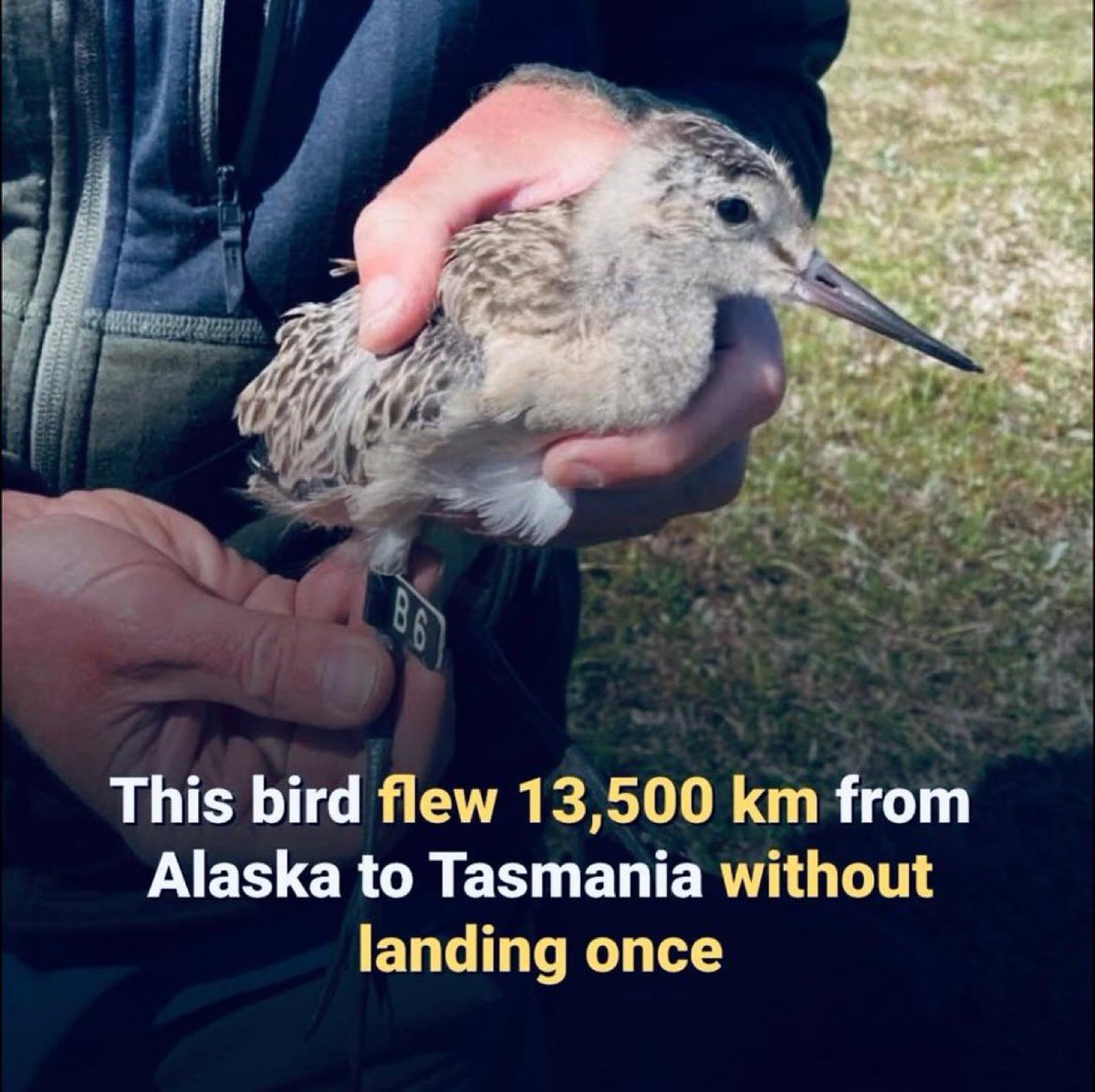
🚨 JUST IN: A migratory bird just shattered world records — flying 8,425 miles (13,560 km) NON-STOP across the Pacific without landing once.
The bar-tailed godwit doesn’t stop to eat, drink, or sleep during its migration across the Pacific Ocean. Its journey from Alaska to Australia takes roughly 11 days of continuous flight, covering over 13,000 kilometers through storms, headwinds, and open ocean with zero land beneath it the entire time.
Before departure, it does something almost surgical to its own body. It shrinks its digestive organs down to almost nothing, converting the stomach, intestines, and liver into raw fuel. The bird essentially eats its own gut to make room for fat reserves that will power its wings for nearly two weeks straight.
The brain doesn’t fully sleep either. Half of it stays active while the other half rests, alternating in shifts mid-flight at altitude over the open Pacific. The godwit is simultaneously unconscious and navigating with magnetic field sensitivity that no human instrument in the 18th century could replicate.
What makes this genuinely staggering beyond the physical record is the navigational precision involved. The bird leaves Alaska and arrives in New Zealand with accuracy that would embarrass early GPS systems. It reads Earth’s magnetic field, atmospheric pressure gradients, star positions, and potentially quantum-level compass mechanisms inside its eye that literally let it see magnetic field lines overlaid on its visual field.
Evolution spent millions of years building an aerospace navigation system inside a 300 gram animal.
We spend billions engineering machines that do what this bird does on instinct, fat reserves, and half a sleeping brain.
The longest recorded non-stop flight by a commercial aircraft is around 20 hours.
This bird does 11 days.
Without a runway.
If we used our local materials correctly, apartments would look this good. Brick architecture is so underrated… not because it can’t compete, but because people have been conditioned to see local materials as inferior.
I always love seeing Jason Weaver cause every time I do I remember that his mama (who was his manager) turned down Disney’s $2M upfront offer for him to be Simba and instead negotiated $100,000 upfront and a percentage of ALL ROYALTIES
Meaning ANY TIME the soundtrack is streamed or sold, DVD rights, Blu-Ray or stream happens, he is paid. He is also paid on ALL merch.