9/ Full Paper: “Combining four patient-reported outcome measurement instruments to develop a common metric computerized adaptive test to measure outcome after total knee arthroplasty”
📄 https://t.co/diE4EnTVda
🧵1/ New @BoneJointJ: Combining four PROM instruments into a common metric CAT.
In this paper, we combined 4 common PROMs:
* Oxford Knee Score (OKS)
* OKS Activity & Participation Questionnaire (OKS-APQ)
* Forgotten Joint Score (FJS)
* High Activity Arthroplasty Score (HAAS)
8/ Take-home:
* OKS, OKS-APQ, FJS, & HAAS can be linked to a common “knee health” metric.
* CAT cuts item burden while preserving precision.
* Opens the door for harmonised PROM reporting in TKA trials & registries.
❓Do you use Oxford Knee Score to evaluate TKR? In clinical practice or research: this is for you!
📰 New article in J Clinic Epidemiology, part of my PhD, looks at modern test theory adaption of the OKS
🧵..
https://t.co/LwxDMKd5CL
❓What’s exciting here
OKS and OKS-APQ measure one latent trait, coined as ‘knee health’
Therefore, scores can be combined, potentially overcoming floor and ceiling effects.
To find out how to do – watch this space!
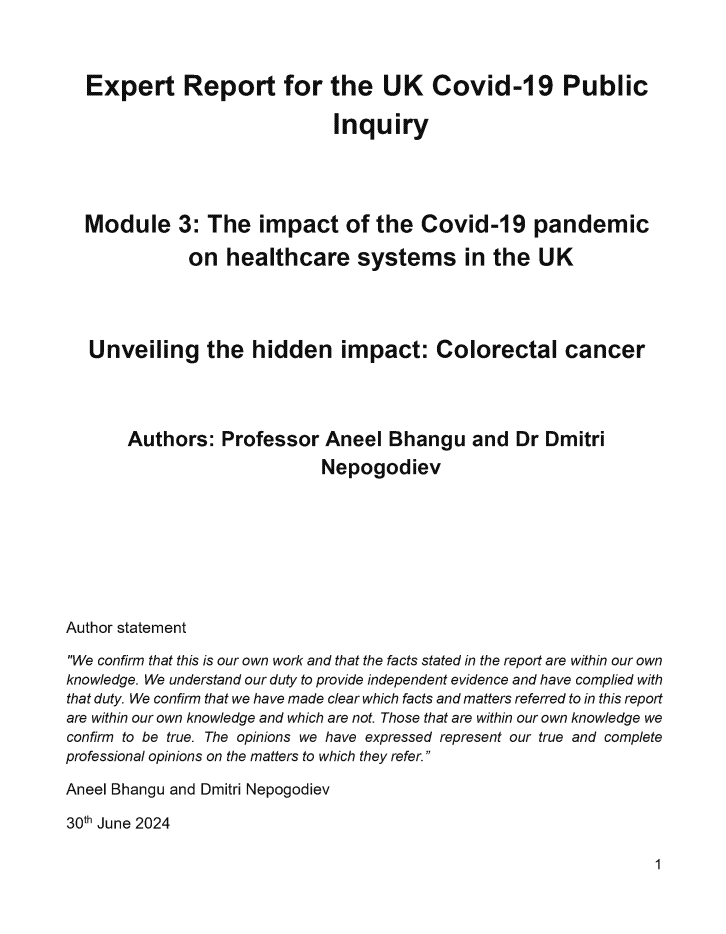
**Our Expert Report for the UK Covid-19 Public Inquiry**
Unveiling the hidden impact: Colorectal cancer
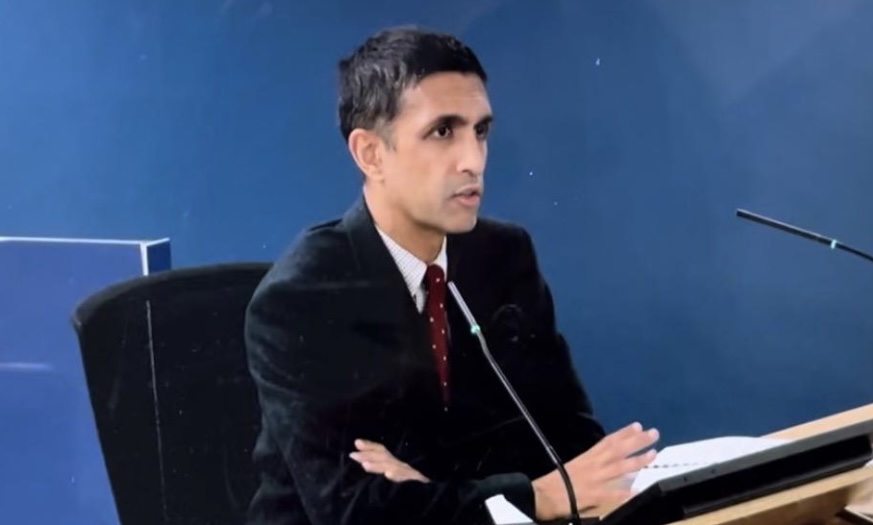
It was a humbling privilege to present evidence to the UK COVID Public Inquiry yesterday. @dnepo and I wrote the report for colorectal cancer in module 3 (alongside hip replacement and ischaemic heart disease). We took a data driven, health systems approach to highlight how we should prepare for a next pandemic.
TWO KEY FINDINGS:
We recognise the dedication and professionalism of health service staff who continued to deliver cancer care despite many challenges and uncertainties, including fears around their personal safety relating to the possible risks of Covid-1 9 infection in the workplace.
Around 4,725 patients went undiagnosed in 2020, but services seem to have caught up by the end of 2021, due to the hard work of frontline teams who kept services open.
THREE KEY RECOMMENDATIONS:
1. Continue and stay accountable to cancer targets (28 day Faster Diagnosis and 62 day Referral to Treatment). These hold systems accountable, report back to Government, and are supported by a whole admin infrastructure (booking clerks, MDT coordinators etc), all of which are vital to keep patients moving quickly.
2. Strengthen diagnostic centres and elective surgical hubs – these provide the ring-fenced capacity the whole system needs.
3. In a next pandemic, every effort should be made to communicate with the public that GPs and hospitals will remain open to patients with red flag cancer symptoms, especially when stratified through stool tests.
The full report is here: https://t.co/PMpa8WpyQn
And the YouTube link to the evidence here: https://t.co/iDnrgAJVRJ
Super proud of @AndyMetOrtho for delivering his excellent inaugural professor lecture today on his journey so far in orthopaedics and clinical trials! We’ll try not to break the lovely glass ornament, too.
@WarwickCTU@warwickmed
Looking forward to presenting parts of my PhD alongside my examiner Jon Evans @jon_evans_uk
Come along to find out all about current concepts of using PROMs to measure outcome.
Might be a bit geeky!