Happy International Men’s Day from TakeBackNaija! 🇳🇬
Today is the one day we can proudly say:
MEN DEY! 😂🍾
The ones paying bills, solving problems, carrying responsibilities, keeping quiet when things are tough, and saying “I’m fine” when absolutely nothing is fine. 😂
@WillieMObiano You failed Anambra as a governor, you failed yourself to make these requisite phretorics a reality. We have mourned your time in office, so drink your champagne with the looted state resources in peace. Nobody takes you serious anyway.
make yearly LGA budgets and approve financial obligations.
In conclusion, the Governors are using the state houses of assemblies to make laws on transferring more than 80% of each LGA fund back to the state account as the case in Anambra and others.
Firstly, the process of election of LGA Chairmen need to be democratized in a way that state electoral commission are either truly independent or INEC steps in to conduct LGA elections.
Dear @atiku
My single most important question to be answered by you in this election cycle is how you will stop State Governors from stealing our Local Government funds
How will you make our LGA truly independent sir?
I ask this question because I want to go back to my state and get involved in local government administration but with this current settings? It is almost impossible to do anything substantial even if I win the election as my state Gov will not allow the LG Chairmen access to the LG funds
Please how do you intend to fix this sir??
#AtikuIsComing
#BetterDaysAreComing
#NigeriaIsReady
Secondly, LGAs be truly administered as the 3rd tier of govt with their funds being sent directly into their account while the state houses of assemblies will lack powers to make laws as it concerns finances of LGAs.
Thirdly, the LG elected councillors will be empowered to
@winexviv Provision of affordable housing, general family health insurance, car loan and etc can cushion the effect. The situation is pitiable. The working class are the less privileged of the society today.
I have been thinking about something lately, and the more I think about it, the more disturbing it becomes.
A lot of Nigerians became poor without doing anything wrong.
They didn’t stop working. They didn’t become lazy. They didn’t suddenly become irresponsible.
They simply woke up one day and realised that the money they had worked for could no longer buy the things it used to buy.
Think about someone earning ₦100,000 a month.
The person still wakes up early every morning, goes to work, puts in the same hours, probably works even harder, gets promoted occasionally and does everything society says a responsible person should do.
Yet every year, that person seems to be able to afford less.
At some point, ₦50,000 could buy a reasonable amount of food for the house. Today, you can enter the market with the same ₦50,000 and genuinely wonder where the money went.
Nothing happened to you.
The economy happened to you.
And I think this is something we don’t talk about enough.
Imagine working hard for years, only for circumstances completely outside your control to quietly reduce the value of everything you have worked for.
You didn’t lose your job.
You didn’t lose your salary.
But somehow, you lost your standard of living.
That is poverty too.
And this is why I struggle with the way we sometimes discuss palliatives.
Of course, when people are hungry, you must find ways to help them immediately. There is nothing wrong with providing temporary relief.
But surely, the bigger question should be:
Why did millions of working Nigerians suddenly need palliatives in the first place?
If a man could comfortably buy a bag of rice from his salary a few years ago and today he needs government assistance to buy that same bag of rice, giving him rice may solve today’s hunger.
But it has not solved the actual problem.
The real problem is that his labour has lost value.
And perhaps that is what we should be obsessed with fixing.
How do we make the Nigerian worker’s income valuable again?
How do we make ₦100,000 buy more next year, rather than less?
How do we make food cheaper by producing more?
How do we reduce the cost of energy and transportation?
How do we build an economy where salaries can actually keep up with the cost of living?
Because when I think deeply about it, perhaps one of the greatest things a government can do for its people is not to keep giving them money.
It is to build an economy where the money they earn has value.
There is dignity in being able to take care of yourself from the product of your own labour.
There is dignity in a teacher being able to feed a family from teaching.
There is dignity in a nurse being able to pay rent from nursing.
There is dignity in a young person working an honest job and gradually seeing life improve.
People should be able to look back after five years of hard work and say, “My life has become better.”
Not, “I earn more money today, but somehow I can afford less.”
That is the part that keeps bothering me.
Millions of Nigerians are not asking to become millionaires overnight.
They just want hard work to make sense again.
And maybe that should be one of the simplest ways we measure whether our economy is actually working:
Is the ordinary Nigerian who works hard becoming progressively better off, or progressively poorer?
Everything else is secondary.
"The condition of our nation and the urgent need to rescue Nigeria, informed my decision to leave ADC for NDC."
Yesterday, I formally joined the Nigerian Democratic Congress (NDC), alongside my dear brother, Engr. Dr Rabiu Musa Kwankwaso, with one clear purpose: to continue the struggle for a new Nigeria built on justice, competence, accountability, and compassion for the ordinary Nigerian.
As I stated yesterday, this decision was not made out of anger, personal ambition, or convenience. It came after deep reflection on the present condition of our nation and the urgent need to rescue Nigeria from the dangerous path it is currently heading.
Over the years, I have remained steadfast in my conviction that politics should never be about individuals, positions, or personal gain. It must be about the people, especially the millions of Nigerians who today can no longer afford necessities, whose businesses are collapsing, whose children are losing hope, and whose future is becoming increasingly uncertain.
I left the ADC for the same reason I left the Labour Party: the severe, orchestrated litigation and internal crises deliberately designed to ensure that I, alongside many other notable individuals, do not effectively participate in the electoral process. I sincerely appreciate and remain deeply grateful to the Leadership of ADC for the opportunity to work together in pursuit of a better Nigeria. I am particularly grateful to ADC Chairman Senator David Mark for his exceptional Leadership. I also deeply appreciate my Leader and elder brother YE, Atiku Abubakar, as well as other respected leaders within the party.
As we join the NDC, I sincerely appeal to the Nigerian Government against the encouragement of unresolved litigations and the infusion of crises within political parties. Democracy must never become a weapon against the people. A healthy democracy thrives on strong institutions, credible alternatives, and the freedom of citizens to make choices without intimidation, manipulation, or fear. Opposition parties must not be weakened or destroyed, because when democracy loses balance, the people ultimately suffer.
Nigeria today is passing through one of the most difficult periods in its history. Poverty is rising. Hunger is widespread. Insecurity continues to threaten lives and livelihoods. Businesses are shutting down daily. Our young people are becoming discouraged, and many citizens have lost faith in the system. At a time like this, leadership must be driven not by propaganda or division, but by competence, capacity, character, and compassion.
Our decision to join the NDC is therefore not an abandonment of values, but a continuation of the same mission we have always stood for: building a Nigeria where leadership is about service, where public resources are managed responsibly, where institutions function independently, and where every Nigerian, regardless of tribe, religion, region, or social status, can live with dignity, security, and hope.
I remain committed to working with all Nigerians of goodwill across political, ethnic, and religious lines. The task before us is bigger than any individual or political party. It is about the future of our children and the survival of our dear nation.
I thank Nigerians, especially our youths and women, for remaining peaceful, resilient, and hopeful despite the enormous challenges confronting the country. I urge you not to lose faith in Nigeria. Nations do not change because people surrender to hopelessness; they change because people continue to believe, continue to sacrifice, and continue to stand for what is right.
A new Nigeria is still POssible. -PO
Imagine a day when Nigerians will be confronted with choices like this for the Presidential positions:
Peter OBI, Former Governor of Anambra and formers investment Banker ———— ADC.
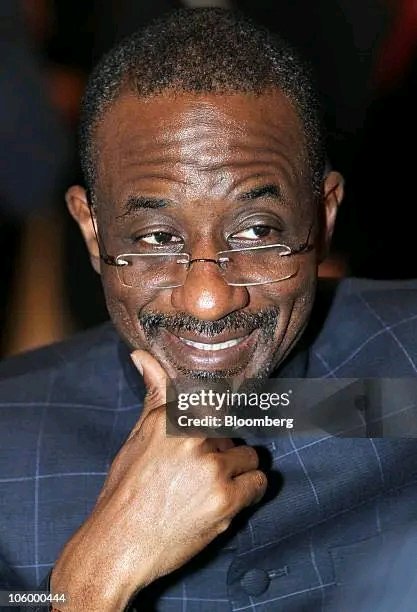
Lamido Sanusi Former CBN Governor and Former banker ——— APC.
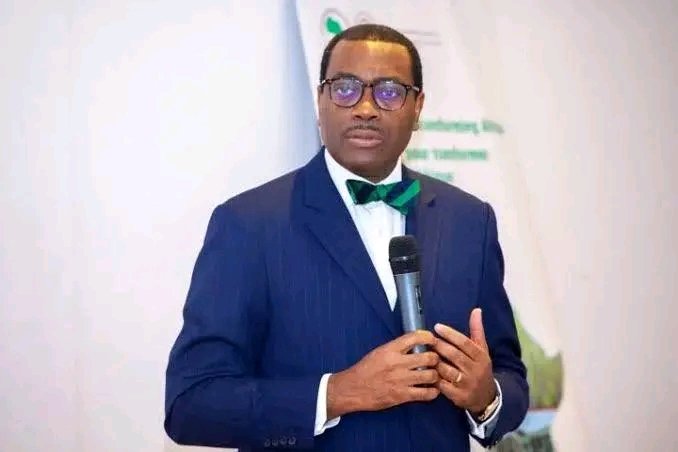
Akinumi Adesina For president Africian Development bank and Minister of Agriculture under Goodluck Jonathan ———- PDP.
That day tribe will be forgotten, and religion will take back a seat. It will be a contest of who is more competent.
@GodfreyMedia
@peculiarpat1@equitysociety_ The problem is that the ADC party leadership at the LG & ward levels are not doing their primary responsibility. The State leadership are mostly engaged with power tussle without providing the necessary logistics for registration.
Politics of Zero Humanity
It is profoundly disturbing that while we, the politicians, continue to obsess over the 2027 elections—spending our energy scheming about how to capture, grab, and run the next election���the first two months of 2026 have reportedly seen the killing of over 1,000 Nigerians and the abduction of several thousand others.
This is the painful reality confronting our nation. From Zamfara State to Kwara, Ondo, Kebbi, Edo, Benue, Adamawa, Plateau, and many other states, families have buried loved ones, and communities have been emptied by gunshots and fear.
In over 25 states across all geopolitical zones this year alone, there have been major violent attacks on innocent citizens, kidnappings by armed bandits, mass shootings, village invasions, and brazen assaults on worshippers and travellers. The scale of bloodshed and the number of deaths in just two months in Nigeria are even worse than what we see in countries officially at war. Yet the urgency with which we discuss these tragedies does not match the urgency of our discussions surrounding zoning formulas, party structures, and campaign strategies.
This is the tragedy of our politics.
We debate power sharing while citizens are sharing funeral programs. I watched in tears yesterday as families in the Doruwa Babuje community in Plateau State buried their dead after attacks by armed terrorists, but our media and leaders were focused on discussions about party issues and the 2027 elections, when we aren't even sure we will be alive to see it, given all the deaths happening in our country today. We strategise about 2027 while Nigerians struggle to survive 2026. This is inhumane.
We must elevate human life to a sacred status in our national priorities. Leadership is not about winning elections; it is about saving lives. We can, and we must, aspire to a Nigeria devoid of bloodshed—a Nigeria where governance is measured not by political dominance but by the safety and dignity of its people.
History will not remember how many strategies we perfected for 2027; it will remember whether we acted when Nigerians were dying. We must choose Nigerian lives over politics. We must put Nigerians first.
A New Nigeria is POssible. -PO
JAMB: Students Must Not Pay for System Failures
Last year, concerns were raised about the hardship students faced at various centres across the country, particularly at the Amawbia, Anambra State, office of the Joint Admissions and Matriculation Board, following the proscription of several CBT centres over alleged infractions. The expectation was that corrective measures would follow. Sadly, as I passed there again last Friday, I met the same crowd and confusion. Upon further inquiry, I was informed that similar situations exist in some other states across Nigeria.
While authorities may have valid reasons for sanctioning centres, a more balanced and humane approach is possible. Centres under investigation could be allowed to continue offering limited services under strict monitoring to prevent further lapses. If it is difficult to approve new centres quickly, the authorities could still make temporary use of previously approved centres under close supervision to ease the pressure on state offices.
With registration ending on the 26th, the consequences are serious. Many candidates travel from distant villages, some even sleeping in Awka to secure access. If nothing urgent is done, some will miss the examination — not for lack of preparation, but because the system failed them.
Students cannot be made to suffer the failings of a system to which we have all, in one way or another, contributed. What is required now is not blame, but swift and compassionate intervention to ensure that no young person’s future is jeopardised by avoidable administrative bottlenecks. -PO
@DavidHundeyin We are not yet done. Tinubu Government shall continue the cooking until we are ready to turn off the cooking stove together. Nigeria is wild and for only the fittest to survive. Kudos Dave.
@Jack_ng01 collections across motor parks with exception of government parks managed by LGAs. You must be a hard man to collect money at the park and the sure way for a youth is to belong, show workings and earn a position in the park business.
@Jack_ng01 Just cut the main source of their funding. Ex Gov. willy obiano of Anambra State energised establishment of motor parks across various communities being managed by political loyalists who now employ cult groups to exercise control and funding. Government should abolish
Honestly… it’s scary out here.
A young person finishes school, gets posted, serves, comes back, and suddenly Lagos is asking for almost ₦10 million just to start breathing.
Rent alone can wipe out ₦3–₦5m once you add agent, caution, and advance.
Basic furniture, small fridge, gas, mattress, another ₦2m is gone.
Laptop, phone, data, power, you’re pushing ₦1m.
Then food, transport, random emergencies… life keeps happening.
And after all this, the same system offers you ₦150k–₦250k salary and says be patient.
Patient for what, exactly?
An economy where graduates can’t afford adulthood is not a healthy one.
The truth is simple: the cost of life has completely divorced income.
The future doesn’t feel exciting to many young people anymore.
And until we stop pretending everything is fine, this problem will only get worse.
Marginalisation of Igbos is evident in this act by the federal government. We can not accept this act and government must show responsibility in this regard. @officialABAT