Bhutan Prime Minister Tobgay calls on Chief Adviser
Dhaka, February 17, 2024:
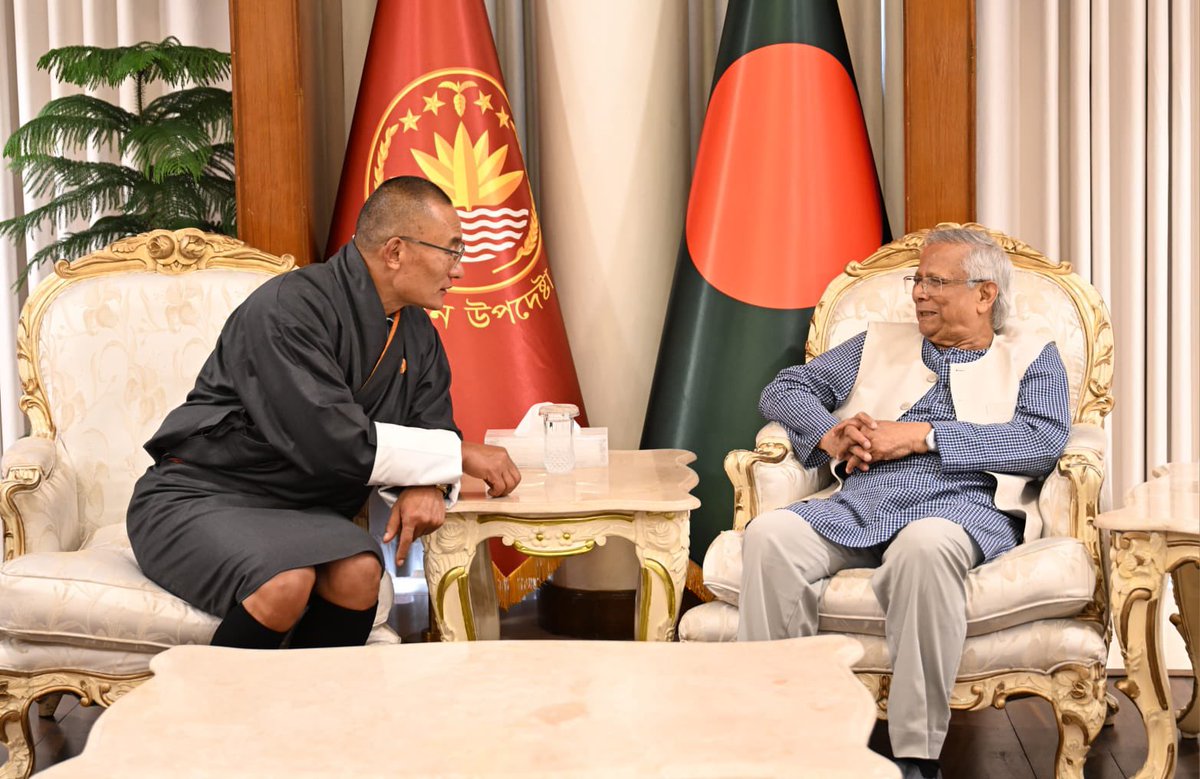
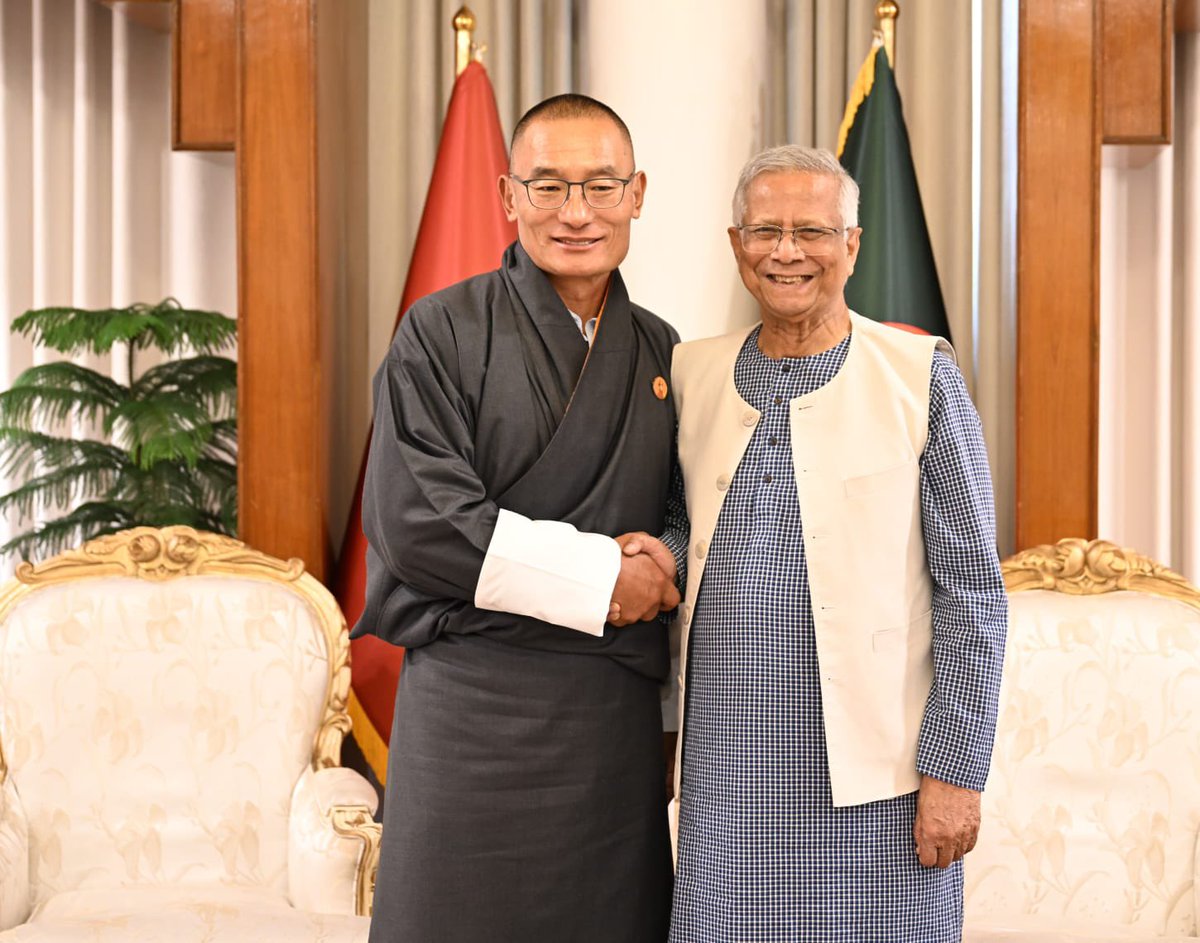
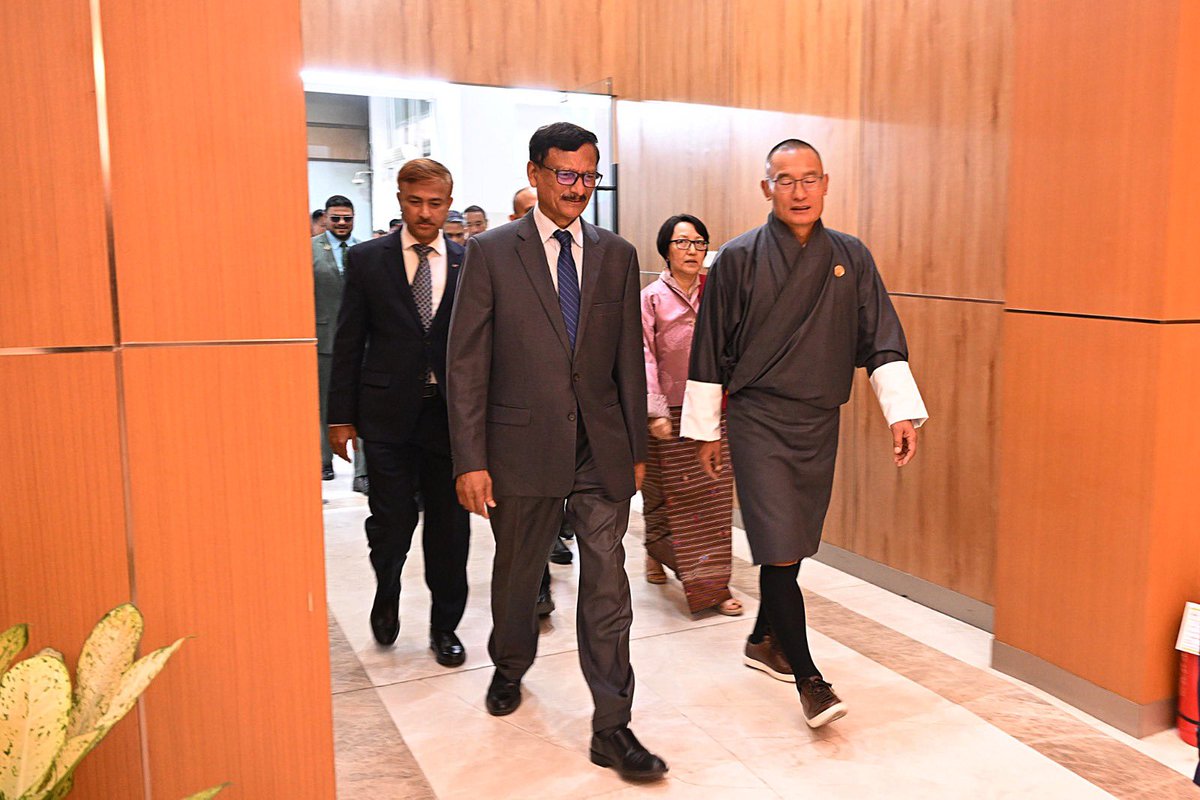
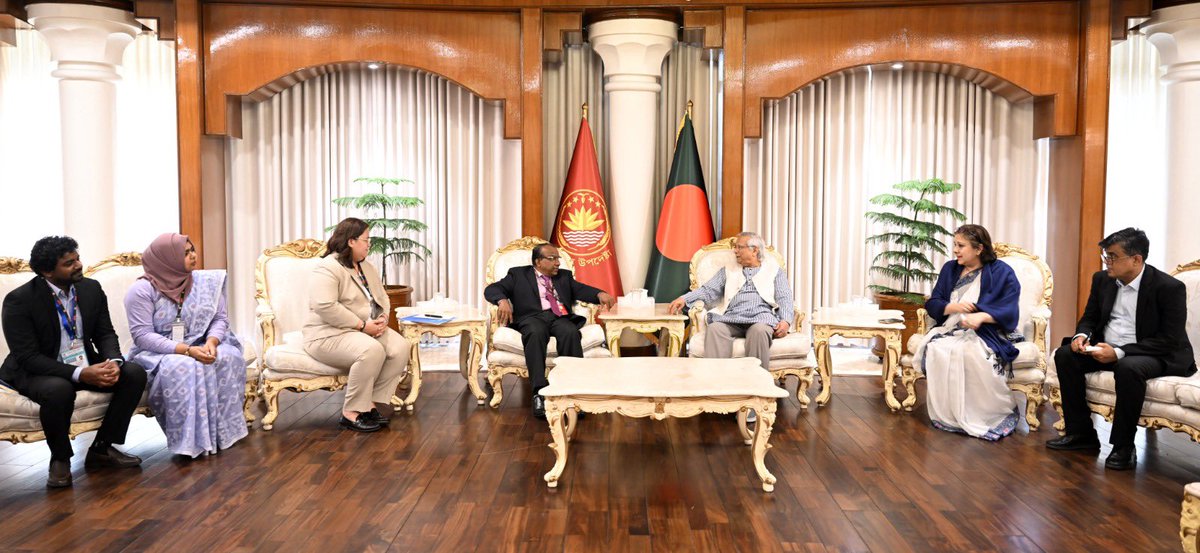
Bhutan Prime Minister Tshering Tobgay paid a courtesy call on Chief Adviser Professor Muhammad Yunus at the State Guest House Jamuna on Tuesday.
During the meeting, Tobgay thanked the Chief Adviser for holding a free, fair, peaceful and credible election at a critical time.
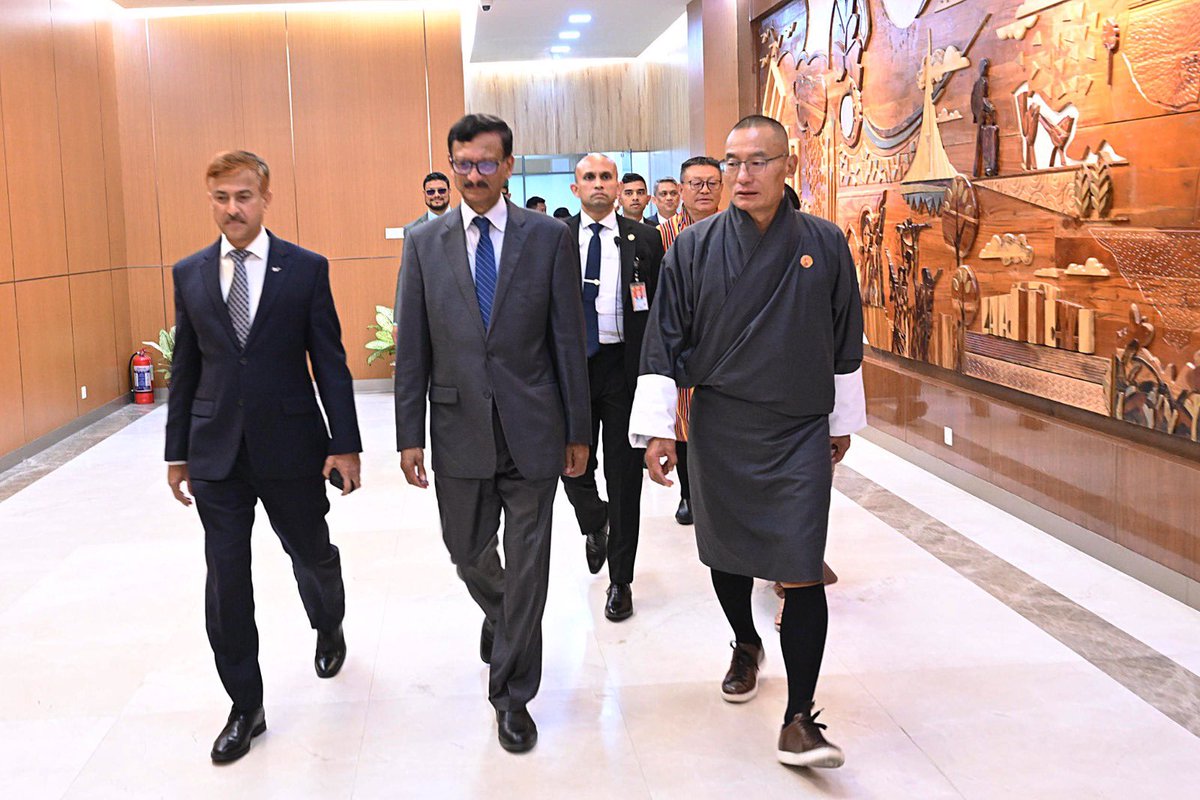
Tobgay arrived in Dhaka earlier in the afternoon to attend the swearing-in ceremony of the new cabinet.
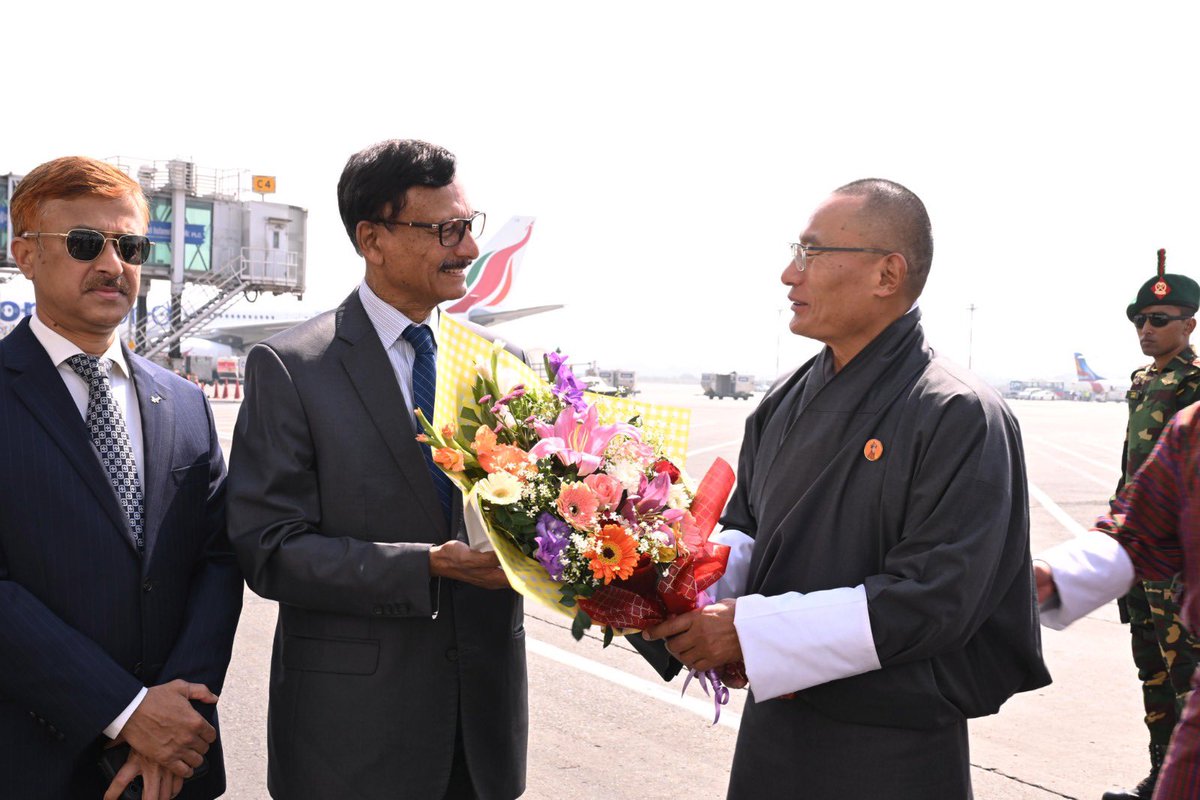
Foreign Adviser M. Touhid Hossain received him at Hazrat Shahjalal International Airport.
Bhutan Prime Minister Tshering Tobgay arrives in Dhaka today to attend the swearing-in ceremony of the new cabinet. Foreign Adviser M. Touhid Hossain receive him at Hazrat Shahjalal International Airport in Dhaka.
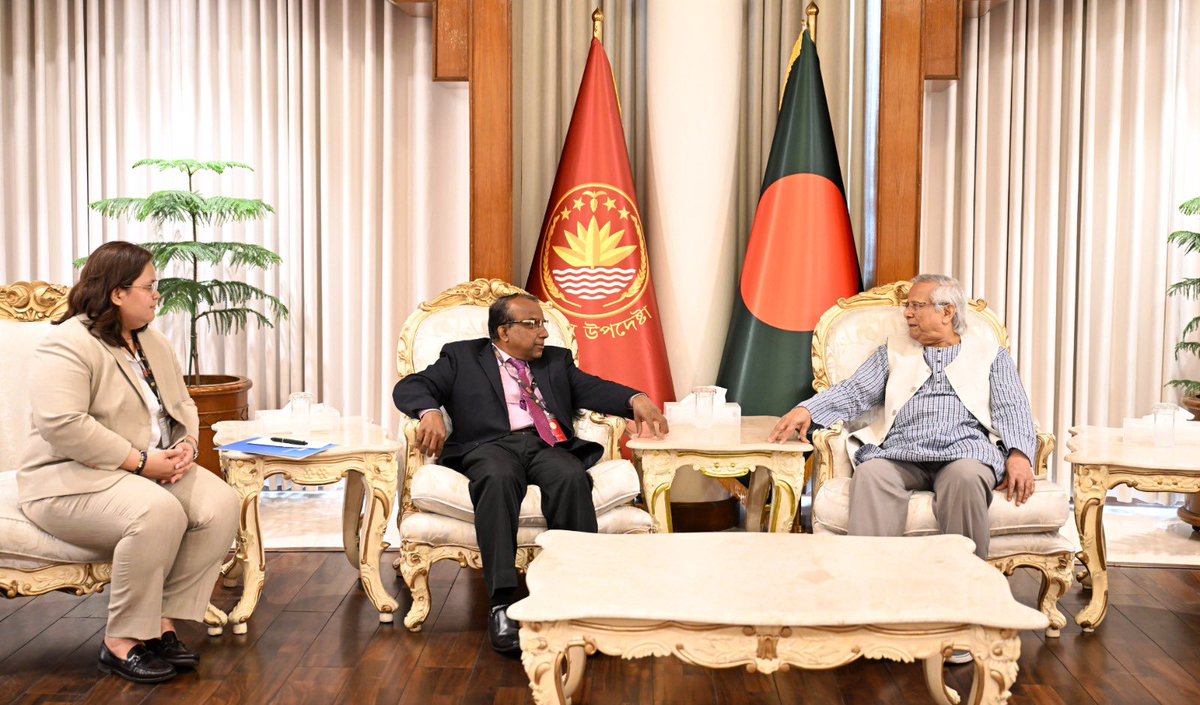
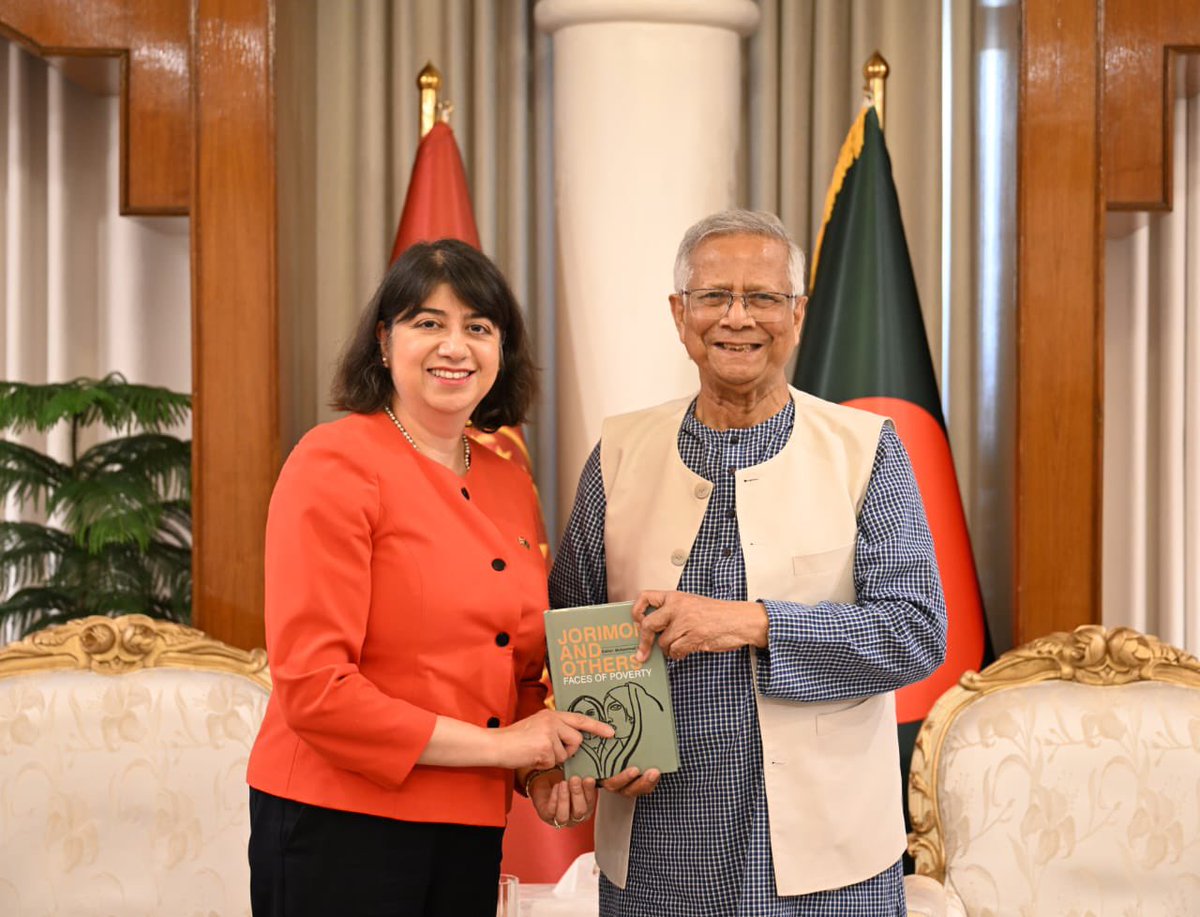
UK Under-Secretary Seema Malhotra paid a courtesy call on Chief Adviser Professor Muhammad Yunus at the State Guest House Jamuna on Tuesday. British High Commissioner to Bangladesh Sarah Cooke and Senior Secretary for SDG Affairs Lamiya Morshed were present, among others, on the occasion.
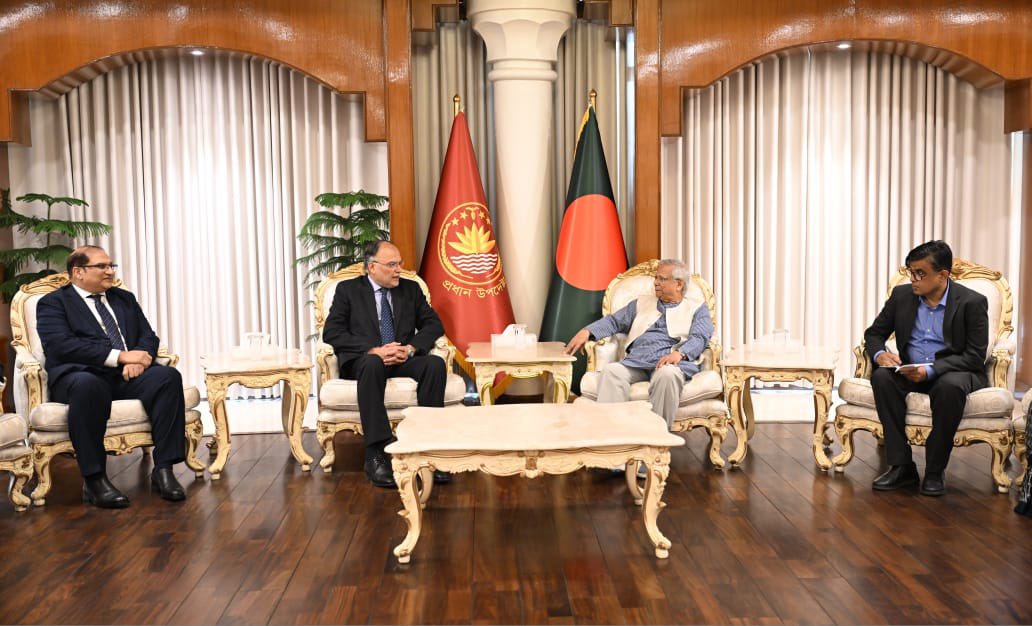
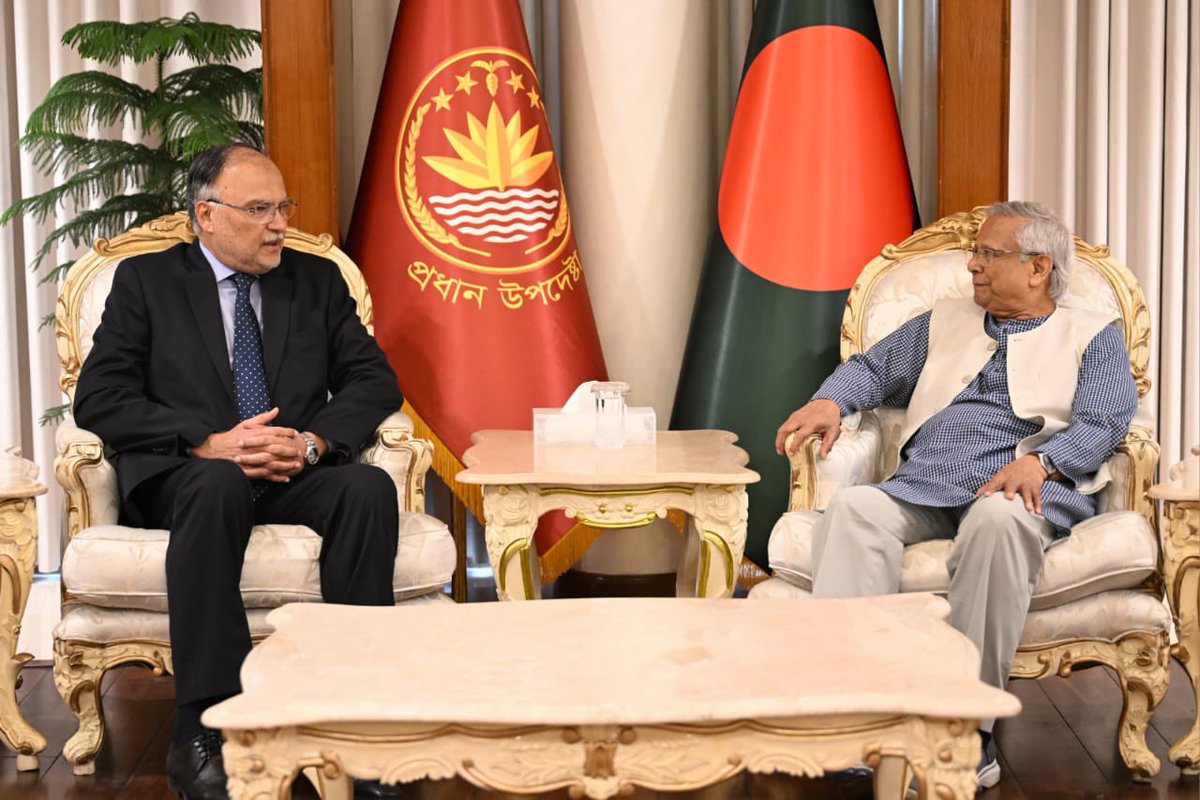
Ahsan Iqbal Chaudhary, Pakistan’s Minister for Planning, Development and Special Initiatives, paid a courtesy call on Chief Adviser Professor Muhammad Yunus at the State Guest House Jamuna on Tuesday.
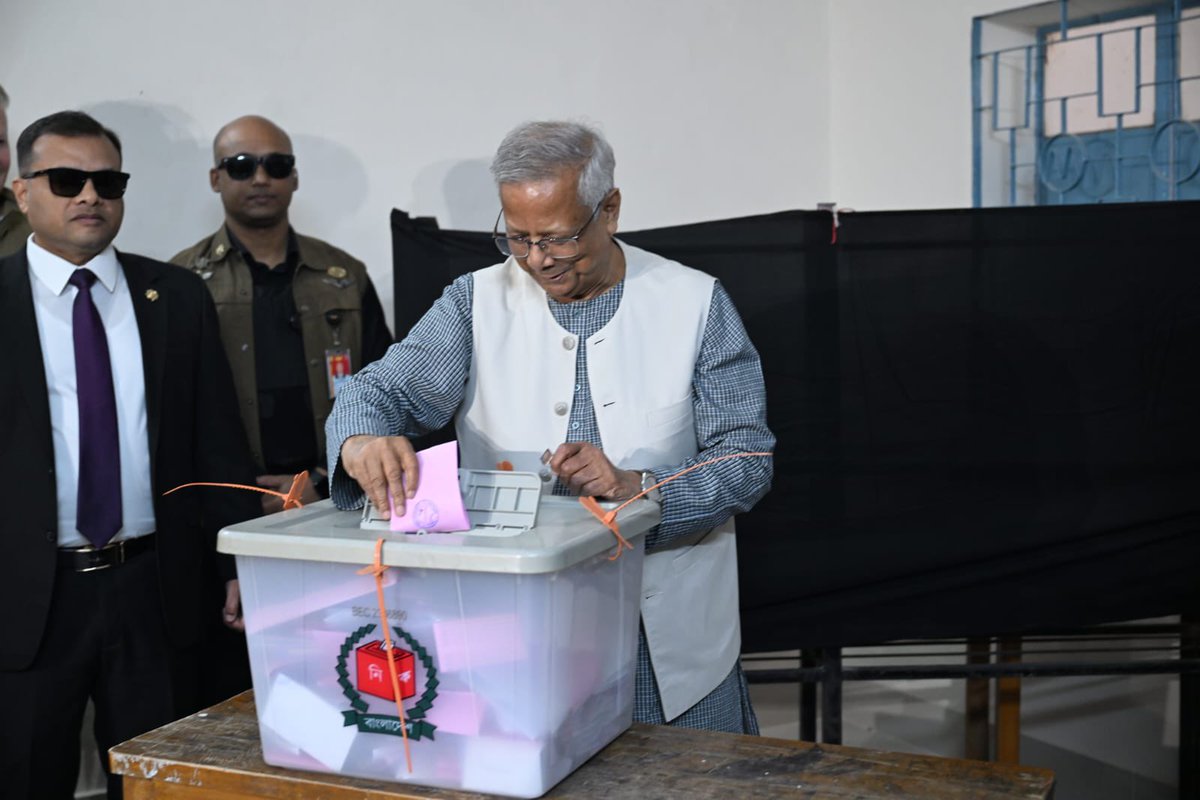
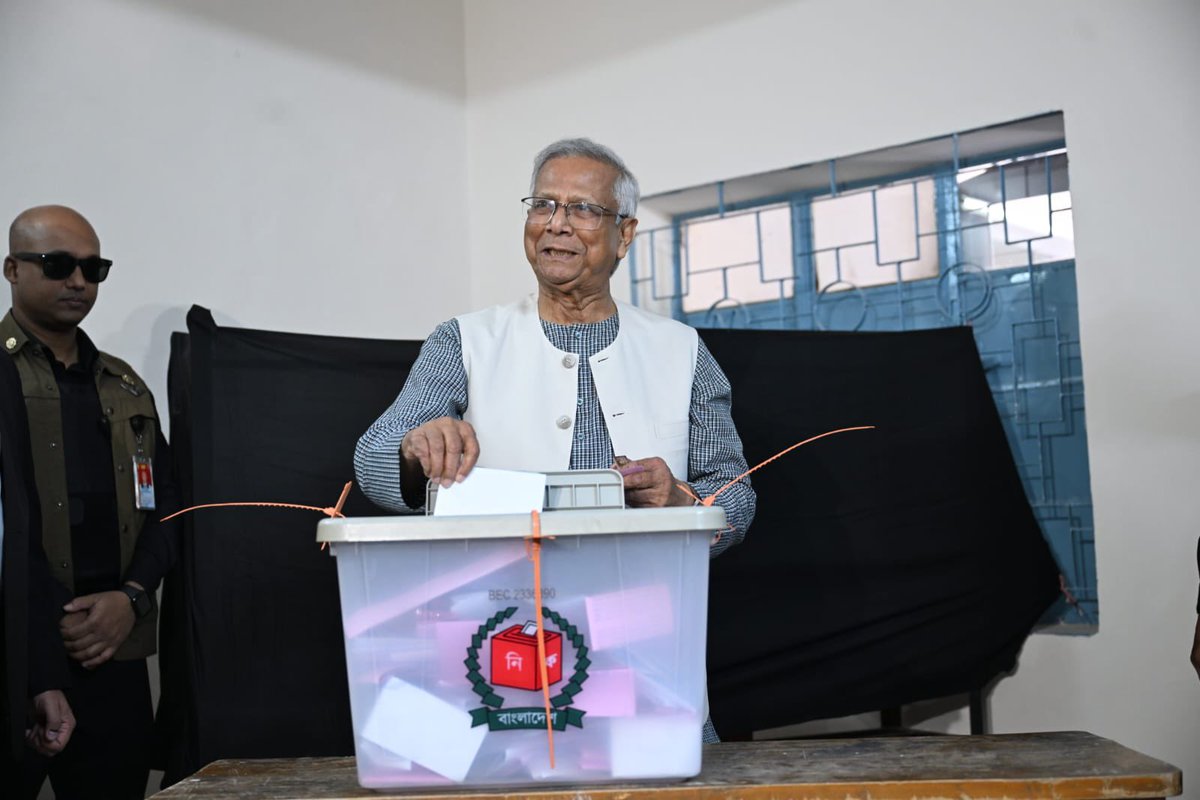
Chief Adviser Professor Muhammad Yunus cast his ballot in the 13th general election and referendum on the July National Charter at the Gulshan Model School and College centre in Dhaka at 10:25am on Thursday.
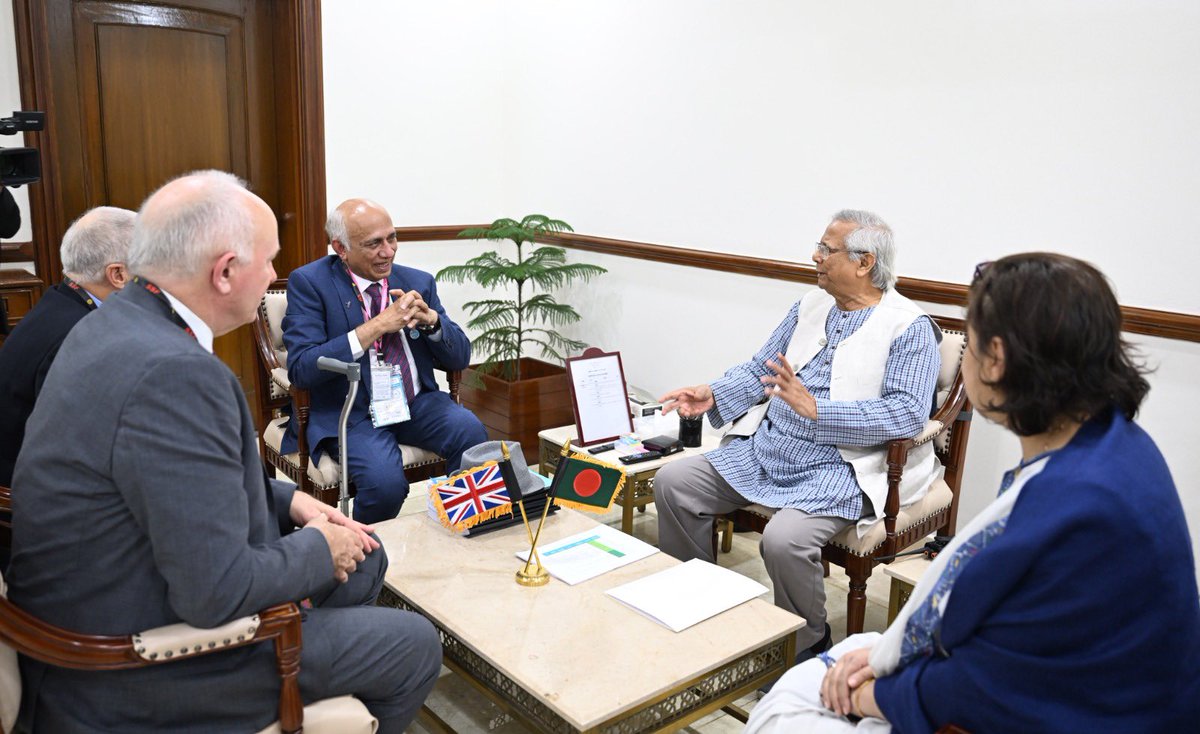
Voice For Justice Observers' team Meets Chief Adviser
Dhaka, 11 February 2026: An election observation delegation from the Voice For Justice Observers' team paid a courtesy call on Chief Adviser Professor Muhammad Yunus.
The four-member delegation, led by Prof. Hasanat M Husain MBE, Convenor, Voice for Justice World Forum and Consultant, UK Ministry of Education, met with the Chief Adviser on Tuesday at the State Guest House Jamuna.
Lamiya Morshed, Principal Coordinator for the Sustainable Development Goals (SDGs) at the Chief Adviser’s Office, along with senior officials from the Ministry of Foreign Affairs, were also present at the meeting.
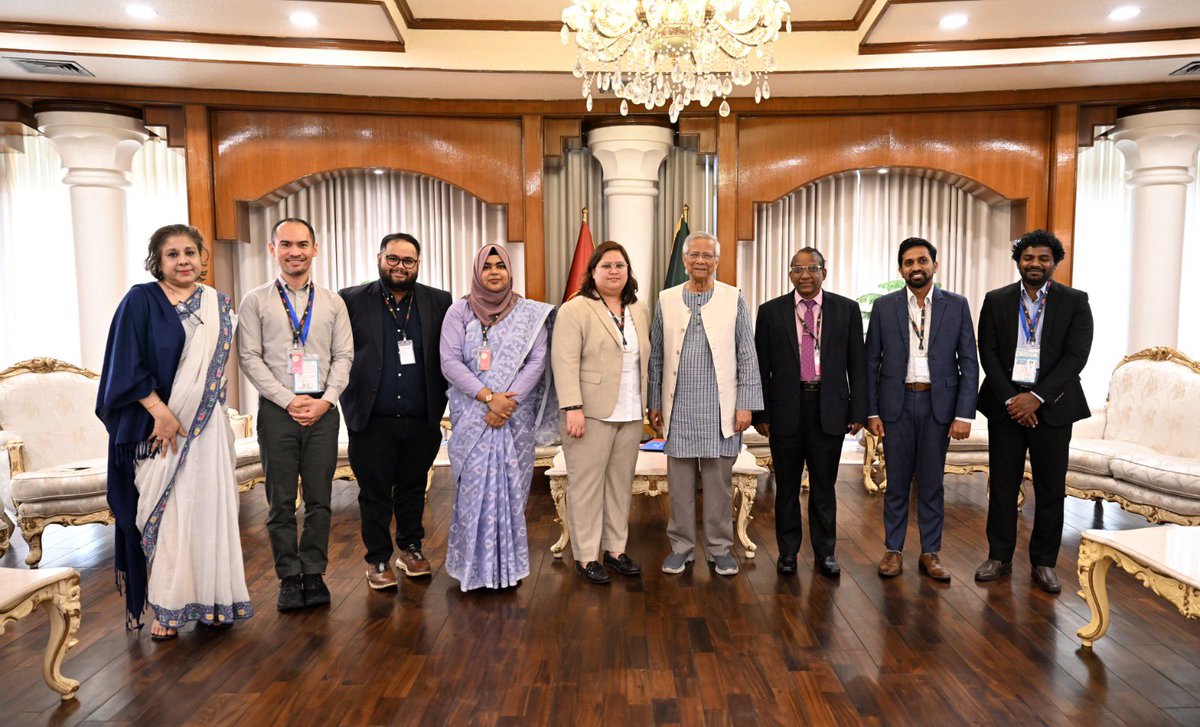
ANFREL Election Observation Delegation Mets Chief Adviser
Dhaka, 11 February 2026: An election observation delegation from the Asian Network for Free Elections (ANFREL) paid a courtesy call on Chief Adviser Professor Muhammad Yunus.
The seven-member delegation, led by ANFFREL Chairperson Rohana Hettiarachchi, met with the Chief Adviser on Wednesday at the State Guest House Jamuna.
Lamiya Morshed, Principal Coordinator for the Sustainable Development Goals (SDGs) at the Chief Adviser’s Office, along with senior officials from the Ministry of Foreign Affairs, were also present at the meeting.
IRI Election Observation Delegation Mets Chief Adviser
Dhaka, 10 February 2026: An election observation delegation from the International Republican Institute (IRI) paid a courtesy call on Chief Adviser Professor Muhammad Yunus.
The five-member delegation, led by former Congressman David Dreirer, met with the Chief Adviser on Tuesday at the State Guest House Jamuna.
Lamiya Morshed, Principal Coordinator for the Sustainable Development Goals (SDGs) at the Chief Adviser’s Office, along with senior officials from the Ministry of Foreign Affairs, were also present at the meeting.
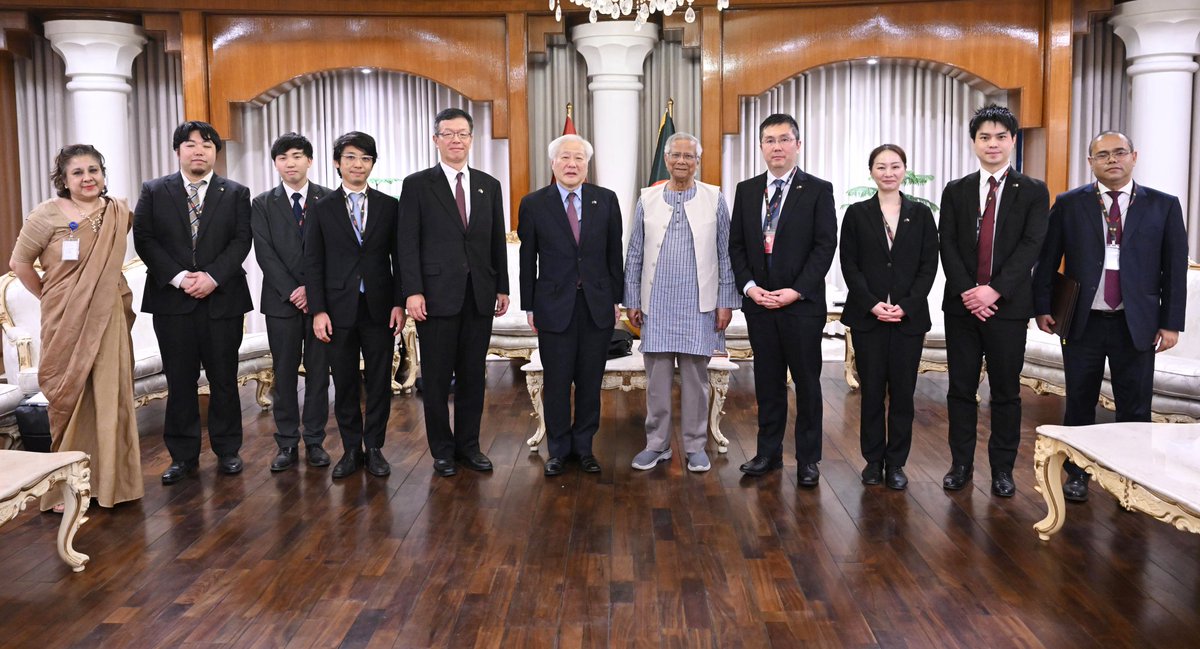
The Japanese Election Observation Mission paid a courtesy call on Chief Adviser Professor Muhammad Yunus at the State Guest House Jamuna.
The delegation was led by Masato Watanabe, Ambassador and Leader of the Japanese Election Observation Mission. Other members included Naonori Kusakabe, Associate Professor at the College of Intercultural Communication, Rikkyo University; Sonoko Ichimura, Principal Deputy Director, Southwest Asia Division, Ministry of Foreign Affairs of Japan; Yoshiaki Kobayashi, Assistant Director, Southwest Asia Division, Ministry of Foreign Affairs of Japan; SAIDA Shinichi, Ambassador of Japan to Bangladesh; KOMINE Ken, First Secretary and Head of Political Section, Embassy of Japan in Bangladesh; NISHI Yuki, Second Secretary, Political Section; and SONE Keita, Adviser, Political Section, Embassy of Japan in Bangladesh.
Lamiya Morshed, Senior Secretary and SDG Coordinator and Mohammed Nore Alam, Director Genaral of East Asia & Pacific of Ministry of Foreign Affairs were also present at the meeting.
The EU Election Observer Mission (EU-EOM) paid a courtesy call on Chief Adviser Professor Muhammad Yunus at the State Guest House Jamuna.
The delegation was led by Tomáš Zdechovský, Member of the European Parliament and Head of Delegation. Other members included Ivars Ijabs, Chief Observer, Lukas Mandl, Loránt Vincze, Leire Pajín, Şerban Dimitrie Sturdza, Michael McNamara, Catarina Vieira, Martin Bille Hermann, Inta Lase, Reginald Soenen, Nikos Salliarelis, Filipe Alcobia de Moraes, Benjamin Oppermann, Liviu-Adrian Natea, Tessel Giele, Riccardo Chelleri, Frederik Schumann, Marina Graser Lasic, and H.E. Michael Miller, Ambassador and Head of the EU Delegation to Bangladesh.
Lamiya Morshed, Senior Secretary and SDG Coordinator and Md Mosharaf Hossain, Director General, West Europe & European Union Wing, Ministry of Foreign Affairs, were also present at the meeting were
Bangladesh, US sign reciprocal tariff agreement
WASHINGTON DC, February 9: The Agreement on Reciprocal Tariff between Bangladesh and the United States was signed on Monday. On the Bangladesh side, the signatories were Commerce Adviser Sheikh Bashir Uddin and National Security Adviser Khalilur Rahman, and on US side Ambassador Jamieson Greer, US Trade Representative. Negotiations on the agreement spanned over nine months since April last year.
Ambassador Greer lauded Chief Adviser Muhammad Yunus for his overarching leadership of the negotiations process and praised the Bangladesh negotiating team for its "incredible efforts." "This agreement will fit Bangladesh on US trade policy", he said.
After the signing, Commerce Adviser Sheikh Bashir Uddin, who led the Bangladesh side in negotiations, said that the agreement marked a historically new level in our bilateral economic and trade relations. "It will provide substantially enhanced access of Bangladesh and the US to each other's respective markets", he said.
The US will further reduce reciprocal tariff to 19%, which was originally set at 37% and later reduced to 20% in August last year. In addition, the US committed to establishing a mechanism for certain textile and apparel goods from Bangladesh using US produced cotton and man-made fiber to receive zero reciprocal tariff in US market.
"The reduction of reciprocal tariff will grant further advantage to our exporters, while zero reciprocal tariff on specific textile and apparel exports from Bangladesh using US inputs will give substantial added impetus to our garments sector", said NSA Rahman who was Bangladesh's chief negotiator.
The agreement was approved by the Council of Advisers on Monday and will be operational once notifications are issued by the two sides.
Present during the signing were Commerce Secretary of Bangladesh Mahbubur Rahman and Assistant US trade Representative Mr. Brendan Lynch.
End
(UPDATED VERSION: Updated with new details)
On August 5, 2024, driven by the courage of millions of Bangladeshis led by young boys and girls who took to the streets to say “Enough is enough” to authoritarian rule, Bangladesh began to emerge from nearly sixteen years of fascist-style repression under Sheikh Hasina. This led to the July Uprising, leading to the creation of an Interim Government headed by Professor Muhammad Yunus at a time when the nation found itself in deep crisis. The Interim Government inherited profound economic, institutional, and democratic breakdown.
Years of corruption and misrule had hollowed out the state. Hundreds of billions of dollars were siphoned from public institutions, the banking sector was crippled by massive non-performing loans, and core regulatory bodies—including the central bank—had been subordinated to private and political interests. Law enforcement agencies were used for political repression, the judiciary was filled with corruption and political manipulations resulting in the loss of its independence, voter-less elections became the fate of the nation, and media freedom and vibrance of the civil society disappeared.
From this wreckage, the Interim Government—working alongside millions of citizens across sectors—has initiated a process of transformation. Immediately after taking charge, it set up Reform Commissions consisting of experts from the relevant fields, and sought recommendations for sector-specific reforms. On the basis of the reports furnished by these Commissions, and also on its own initiative, the Interim Government rolled out widespread legal and institutional reforms that would be feasible within its tenure.
In the eighteen months since assuming responsibility, it has enacted approximately 130 laws (comprising new laws and mending laws) and taken over 600 executive decisions, reflecting the urgency of institutional reform and reconstruction. Roughly 84% of these measures have already been implemented, reflecting genuine and tangible reform, rather than rhetorical and cosmetic change.
Major progress has been achieved across the economy and foreign relations. New trade agreements have diversified partnerships and reduced overdependence on single markets, including an Economic Partnership Agreement with Japan granting duty-free access to about 7,400 Bangladeshi products. Strategic cooperation with China has extended loan maturities, supported major healthcare infrastructure, and improved flood forecasting through shared hydrological data. Negotiations with the United States reduced reciprocal tariffs from 37% to 20%, preserving access to the world's richest economy. Diplomatic relations with key partners have been improved, and relations with India have been recalibrated on a more balanced and respectful footing.
Accountability has begun. Anti-corruption cases have been filed against hundreds of politicians and officials that served under the fallen regime, with billions of dollars in assets frozen or confiscated. Banking reforms have introduced real oversight, procurement transparency has been expanded across 42 Ministries, and the Bangladesh Bureau of Statistics has been granted full autonomy to report economic data.
Law enforcement reforms have restored discipline in the system to a substantial degree, with over 1,200 officers being suspended pending investigation, and human rights–centered training being introduced for tens of thousands of personnel. Special commissions have heard testimonies from thousands of victims and families, initiating a long-overdue process of truth and accountability. The Rapid Action Battalion has been restructured so as to achieve a meaningful change in its operations, and has been renamed the “Special Intervention Force”.
Read the full book here:
https://t.co/v7gHl45PwZ
অন্তর্বর্তী সরকারের বিবৃতি
ঢাকা, ০৬ ফেব্রুয়ারি ২০২৬: শহীদ শরীফ ওসমান হাদি হত্যার বিচারের দাবিতে ৫ ফেব্রুয়ারি ২০২৬ বিকেল থেকে ইনকিলাব মঞ্চের ব্যানারে রাষ্ট্রীয় অতি��ি ভবন যমুনার সামনে বিক্ষোভ শুরু হয়। যমুনা ও এর আশপাশের এলাকায় বিক্ষোভ নিষিদ্ধ থাকা সত্ত্বেও আইনশৃঙ্খলা বাহিনী প্র���মে বিক্ষোভকারীদের বিরুদ্ধে কোনো ধরনের বল প্রয়োগ করেনি।
আজ শুক্রবার, ৬ ফেব্রুয়ারি ২০২৬ তারিখে বিক্ষোভকারীরা ব্যারিকেড ভেঙে যমুনার অভিমুখে অগ্রসর হওয়ার চেষ্টা করলে এবং একপর্যায়ে জলকামানের ওপর উঠে গেলে আইনশৃঙ্খলা বাহিনী পরিস্থিতি নিয়ন্ত্রণে আনতে সাউন্ড গ্রেনেড ও জলকামান ব্যবহার করে। সরকার স্পষ্টভাবে জানাচ্ছে যে এ সময় আইনশৃঙ্খলা বাহিনী কোনো ধরনের গুলি ছোড়েনি।
জনশৃঙ্খলা রক্ষা এবং মাননীয় প্রধান উপদেষ্টার নিরাপত্তা নিশ্চিত করার স্বার্থে রাষ্ট্রীয় অতিথি ভবন যমুনা ও সংলগ্ন এলাকায় যেকোনো প্রকার সভা-সমাবেশ, মিছিল, গণজমায়েত ও বিক্ষোভ প্রদর্শন নিষিদ্ধ রয়েছে। এ প্রেক্ষাপটে পুলিশ সম্পূর্ণ নিয়মতান্ত্রিক ও আইনানুগভাবে বিক্ষোভকারীদের ছত্রভঙ্গ করে। এ সময় কোনো ধরনের আগ্নেয়াস্ত্র (lethal weapon) ব্যবহার করা হয়নি বলে ঢাকা মেট্রোপলিটন পুলিশ নিশ্চিত করেছে।
ঢাকা মেডিক্যাল কলেজ হাসপাতালের জরুরি বিভাগে কর্তব্যরত চিকিৎসকদের কাছ থেকে প্রাপ্ত তথ্য অনুযায়ী, এ ঘটনায় আহত হয়ে ইনকিলাব মঞ্চের সদস্য সচিব আব্দুল্লাহ আল জাবেরসহ সর্বমোট ২৩ জন চিকিৎসা গ্রহণ করেছেন। তবে তাঁদের কারও শরীরে গুলির আঘাত নেই বলে কর্তব্যরত চিকিৎসকেরা নিশ্চিত করেছেন।
সরকার স্পষ্টভাবে পুনর্ব্যক্ত করছে যে শহ��দ শরীফ ওসমান হাদি হত্যার বিচারে সরকার বদ্ধপরিকর। জাতিসংঘের অধীনে তদন্ত পরিচালনার আইনগত দিক সরকার গভীরভাবে পর্যালোচনা করছে এবং এ বিষয়ে আগামী রবিবার, ৮ ফেব্রুয়ারি ২০২৬ তারিখে জাতিসংঘের সংশ্লিষ্ট সংস্থার নিকট আনুষ্ঠানিকভাবে চিঠি পাঠানো হবে।
বিভিন্ন মাধ্যমে বিক্ষোভকারীদের ওপর মাত্রাতিরিক্ত বল প্রয়োগের যে অভিযোগ উত্থাপিত হয়েছে, তা সঠিক নয়।
আসন্ন নির���বাচনকে সামনে রেখে এই সংবেদনশীল রাজনৈতিক সময়ে সরকার সকলকে ধৈর্য, সংযম ও দায়িত্বশীলতা বজায় রাখার আহ্বান জানাচ্ছে। দেশের প্রায় ১৮ কোটি মানুষ অধীর আগ্রহে এই নির্বাচনের অপেক্ষায় রয়েছে। একই সঙ্গে আন্তর্জাতিক সম্প্রদায়ের দৃষ্টি বর্তমানে বাংলাদেশের দিকে নিবদ্ধ। বিদেশি বহু সাংবাদিক ও পর্যবেক্ষক ইতোমধ্যে বাংলাদেশে উপস্থিত হয়েছেন।
সরকার দেশের সকল নাগরিকের প্রতি একটি উৎসবমুখর, ���ান্তিপূর্ণ ও অংশগ্রহণমূলক নির্বাচন নিশ্চিত করার লক্ষ্যে সর্বোচ্চ দায়িত্বশীলতা ও সহযোগিতার আহ্বান জানাচ্ছে। আসন্ন নির্বাচন রাষ্ট্রের গণতান্ত্রিক অগ্রযাত্রায় একটি ঐতিহাসিক মাইলফলক। দীর্ঘ সংগ্রাম, আত্মত্যাগ ও রক্তক্ষয়ের বিনিময়ে অর্জিত এই নির্বাচনী সুযোগ জাতির জন্য অত্যন্ত তাৎপর্যপূর্ণ।
দেশের সার্বিক অগ্রগতি, স্থিতিশীলতা ও ভবিষ্যৎ উন্নয়ন নিশ্চিত করতে এই নির্বাচনকে অবশ��য�� সুষ্ঠু, সুন্দর, অবাধ ও নিরপেক্ষভাবে সম্পন্ন করতে হবে। এ লক্ষ্য অর্জনে কোনো ধরনের বিচ্যুতি গ্রহণযোগ্য নয়। সরকার বিশ্বাস করে, দেশের সকল নাগরিকের সম্মিলিত দায়িত্বশীল আচরণ ও সহযোগিতার মাধ্যমেই একটি গ্রহণযোগ্য, মর্যাদাপূর্ণ ও গণতান্ত্রিক নির্বাচন সফলভাবে বাস্তবায়ন করা সম্ভব।
Diplomats Visit July Museum
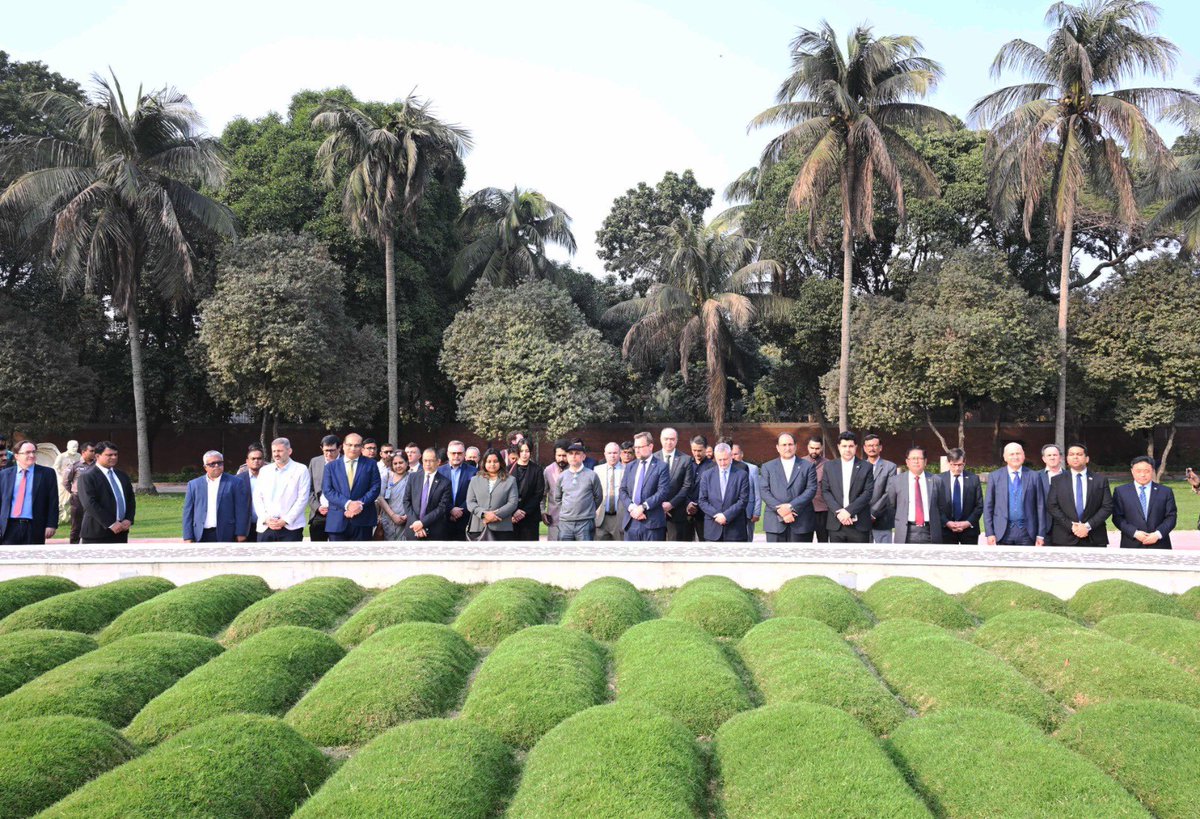
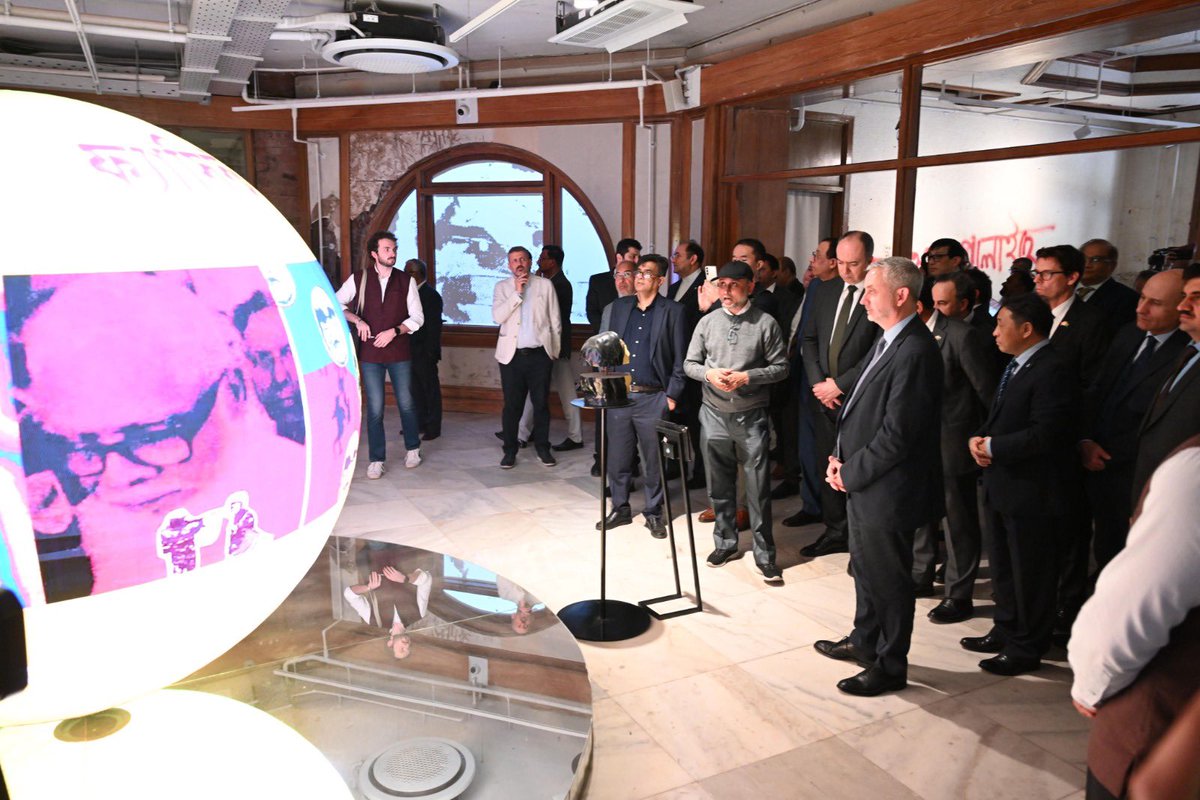
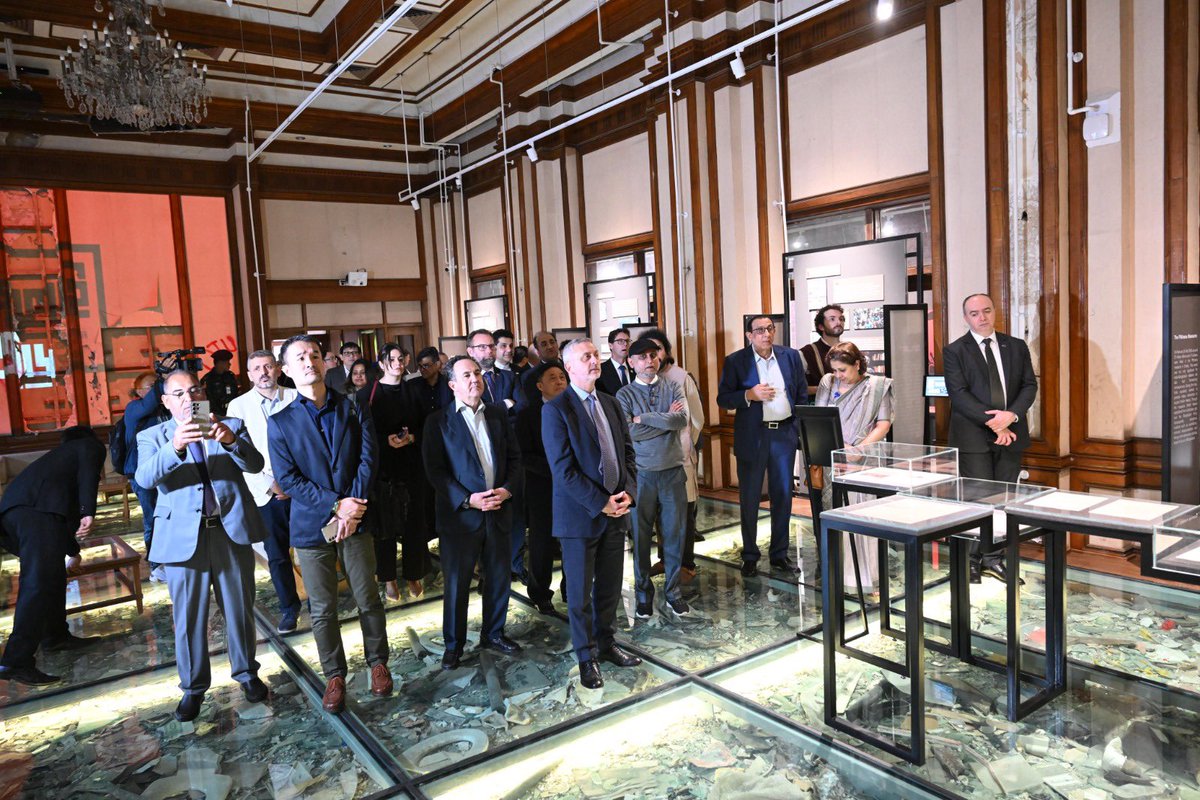
Dhaka, February 3, 2026: Foreign diplomats based in Dhaka visited the July Mass Uprising Memorial Museum on Tuesday, days before it is set to open to the public.
Cultural Affairs Adviser Mostofa Sarwar Farooki briefed the diplomats and guided them through the museum’s key sections. At the start of two-hour long visit, the diplomats observed a minute of silence in memory of the nearly 4000 people who were martyred during the fascist regime Sheikh Hasina.
Farooki said the July Museum would collaborate with similar institutions in other countries. “The idea behind the museum is to prevent the recurrence of such misrule—not only in Bangladesh, but anywhere in the world,” he said.
Foreign Adviser M Touhid Hossain, who was also present, said the museum reflects the people’s struggle against the misrule of Sheikh Hasina. “The museum showcases the climax of the 36 days of the July uprising, but it also highlights the elements of years of misrule,” he said, adding that the true lesson of history is to ensure it is not repeated.
Chief Curator of the July Museum Tanzim Wahab described the various features of the museum to the visiting diplomats and guests.
“I am delighted to have visited the July Museum. It is both inspiring and a powerful reminder of how important it is to understand history, how mass uprisings occur, and the genesis of the 2024 mass uprising in Bangladesh,” said Michael Miller, Ambassador and Head of the Delegation of the European Union to Bangladesh.
Distinguished members of the diplomatic corps present at the event included Dr Abdelouahab Saidani, Ambassador of Algeria; Marcelo Carlos Cesa, Ambassador of Argentina; Dasho Karma Hamu Dorjee, Ambassador of Bhutan; Christian Brix Møller, Ambassador of Denmark; Omar Mohie Eldin Ahmed Fahmy, Ambassador of Egypt; Jean-Marc Séré-Charlet, Ambassador of France; Jalil Rahimi Jahanabadi, Ambassador of Iran; Wisam Hussein Ali Al Ithawi, Chargé d’Affaires of Iraq; Antonio Alessandro, Ambassador of Italy; Lulzim Pllana, Ambassador of Kosovo; Abdulmutalib S. M. Suliman, Ambassador of Libya; Bouchaib Ez Zahri, Chargé d’Affaires of Morocco; Ghanshyam Bhandari, Ambassador of Nepal; Håkon Arald Gulbrandsen, Ambassador of Norway; Imran Haider, High Commissioner of Pakistan; Yousef S. Y. Ramadan, Ambassador of the State of Palestine; Alexander Grigoryevich Khozin, Ambassador of the Russian Federation; Mitchel Lee, Chargé d’Affaires of Singapore; Gabriel María Sistiaga Ochoa de Chinchetru, Ambassador of Spain; Ramis Şen, Ambassador of Türkiye; Monica, Public Diplomacy Counselor, and Scott, Public Diplomacy Officer of the Embassy of the United States of America; Dr Liu Yuyin, Deputy Chief of Mission of the Embassy of the People’s Republic of China; Aoyagi Yu, Second Secretary and Chief of the Cultural Section of the Embassy of Japan; and the Press Attaché of the High Commission of Brunei Darussalam.
Also present were Farouk Adatia, Diplomatic Representative of the Aga Khan Development Network (AKDN); Hoe Yun Jeong, Country Director of the Asian Development Bank (ADB); Indra Mani Pandey, Secretary General of BIMSTEC; P. Chandra Shekara, Director General of CIRDAP; Jiaoqun Shi, FAO Representative in Bangladesh; Muntasir Saqib Khan, Country Director of the International Fertilizer Development Center (IFDC); Lance Bonneau, Chief of Mission of the International Organization for Migration (IOM); Dr Susan Vize, Officer-in-Charge of UNESCO; Syed Iftikhar Ali, Officer-in-Charge of UNHCR; Coco Ushiyama, Resident Representative and Country Director of the World Food Programme (WFP); and Sudhir Muralidharan, Country Manager of UNOPS.
Senior Secretary for SDG Affairs Lamiya Morshed, Foreign Secretary Asad Alam Siam, and Cultural Affairs Secretary Md Mofidur Rahman were also present.
Ganabhaban, the former residence of ousted autocrat Sheikh Hasina, has been converted into the July Museum, which is set for soft opening next week.
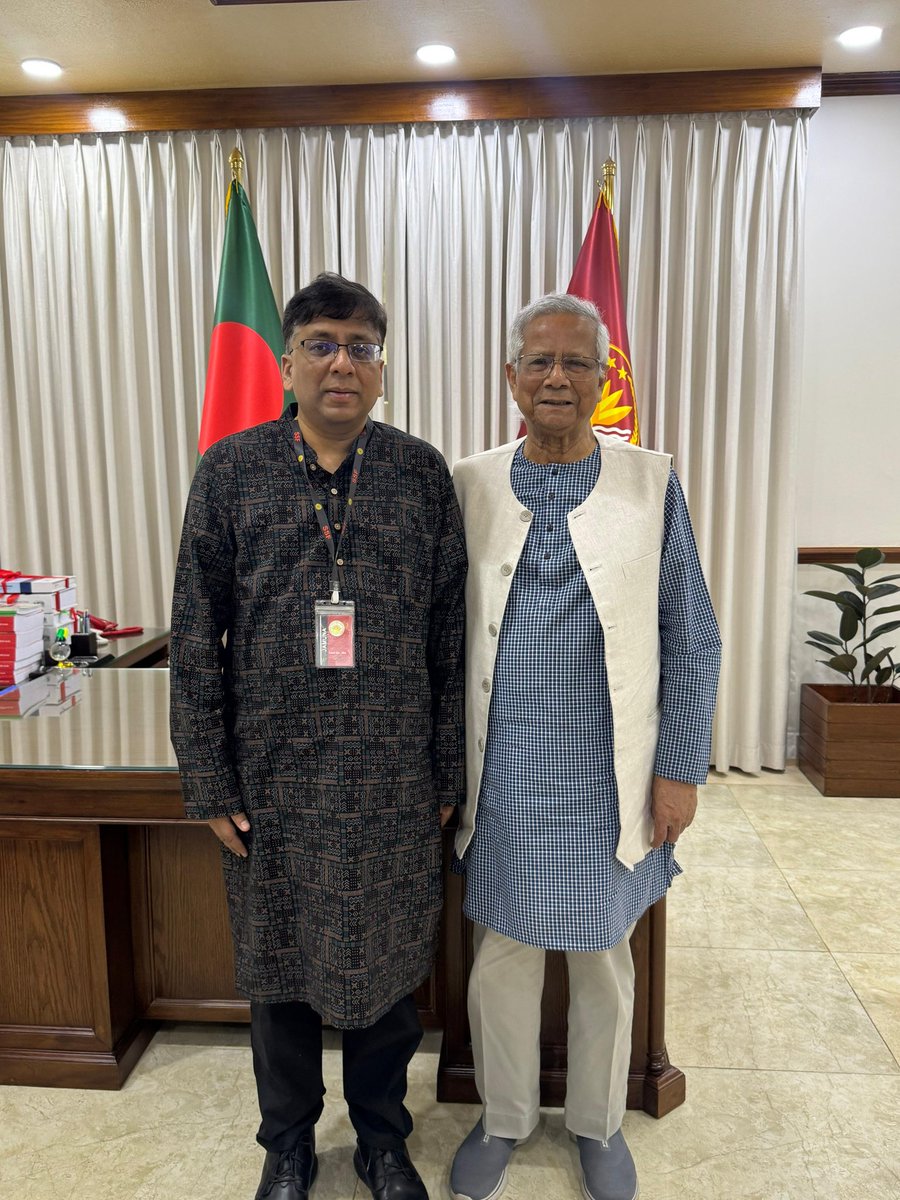
Professor Mahbub Alam Majumdar, who is the Dean of the School of Data and Computational Sciences at BRAC University, called on Chief Adviser Professor Muhammad Yunus on Monday at the state guest house Jamuna.
He has recently been awarded the Spirit of Salam Award 2026 by the Abdus Salam International Centre for Theoretical Physics (ICTP). This prestigious international award honors individuals who exemplify the values and legacy of Nobel Laureate Professor Abdus Salam through exceptional contributions to science, education, and capacity-building in the developing world.
330 International Observers Confirmed for Upcoming Elections
Dhaka, January 31, 2026: Six international organisations, including the Organisation of Islamic Cooperation (OIC), have agreed to deploy at least 63 observers for Bangladesh’s 13th general election and the referendum on the July National Charter, both scheduled for February.
They will join observer missions from the European Union, 16 countries, and 32 individuals affiliated with various global bodies, bringing the total number of confirmed international observers for the dual polls to 330 so far.
The number of international observers confirmed for the upcoming election is more than double that of the controversial general election held on January 7, 2024.
The number of international observers for the 12th, 11th, and 10th general elections stood at 158, 125, and four respectively.
Shakir Mahmood Bandar, Head of the OIC Election Observation Unit, will lead the two-member OIC observer mission.
In addition, 28 observers will arrive from the Asian Network for Free Elections (ANFREL), 25 from the Commonwealth Secretariat, seven from the US-based International Republican Institute (IRI), and one from the National Democratic Institute (NDI), also based in the United States.
Thirty-two observers representing organisations such as Voice for Justice, Democracy International, SNAS Africa, the SAARC Human Rights Foundation, and the Polish Institute of International Affairs will monitor the election in their individual capacities, according to information received from the Ministry of Foreign Affairs and the Election Commission.
“We expect the number of international observers to increase, as several countries invited to send observer missions have yet to confirm the names of their delegates,” said Senior Secretary and SDG Coordinator Lamiya Murshed, who is overseeing coordination of the international observer visits.
Invited countries yet to confirm their delegates include India, Nepal, Australia, Brazil, Canada, Egypt, France, Kuwait, Morocco, Nigeria, and Romania.
Forum of the Election Management Bodies of South Asia (FEMBoSA) is also expected to name its delegates soon.
Nearly 2,000 candidates—representing more than 50 political parties as well as independent contenders—are contesting the 300 parliamentary seats. The general election will be held simultaneously with a referendum on the July National Charter.