For years, I thought software's job was to help us do things faster.
Now I'm starting to think its job is changing.
Maybe the best software doesn't just automate work.
Maybe it quietly brings years of someone else's experience into ours.
(4/4)🧵
I can't remember the last time I planned a route before leaving home.
I open Google Maps. It tells me where to go, how long it'll take and which route to avoid. I trust it without giving it much thought.
The other day, I realised I do this with a lot of software now.
(1/4) 🧵
That's when I realised I wasn't just using better software.
I was relying on years of experience I never had.
A designer's eye.
An editor's judgment.
A recruiter's way of organising information.
None of these products made me an expert.
They simply gave me access to one.
(3/4)
Convenience doesn't stay a competitive advantage for long. It becomes an expectation.
Users won't remember the AI. They'll remember how effortless the experience was.
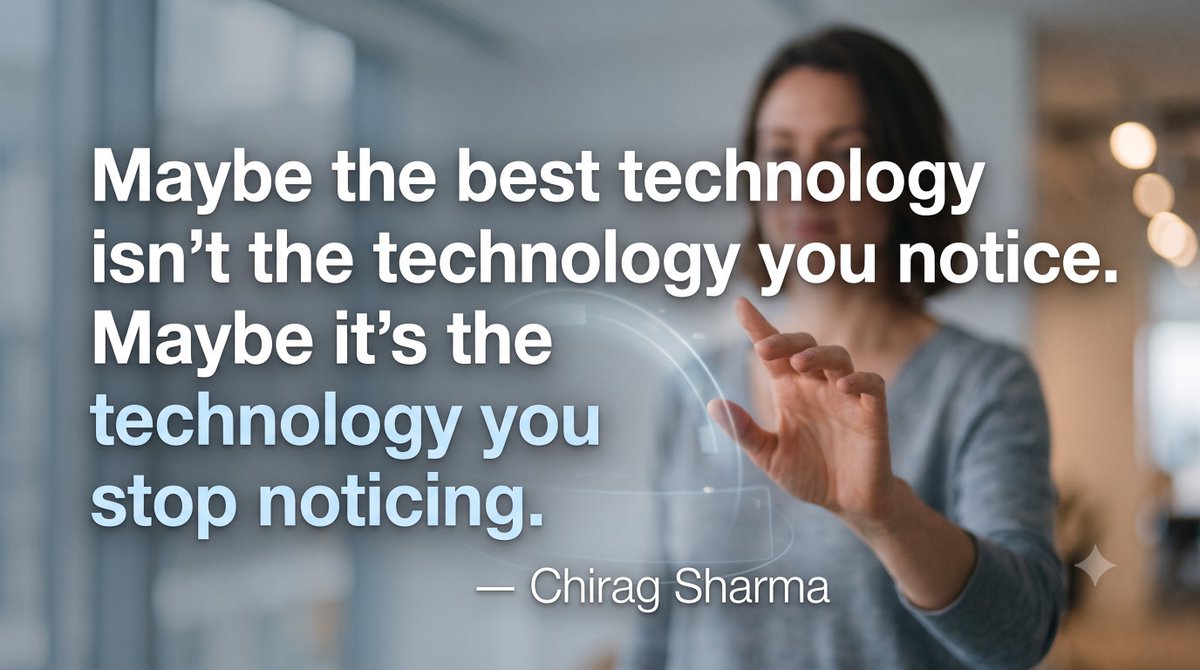
Maybe the best technology isn't the technology you notice.
Maybe it's the technology you stop noticing.
(3/3)
Fast charging is expected.
Until your phone takes 2 hours to charge.
Fingerprint unlock is invisible.
Until it fails 3 times in a row.
The same pattern shows up everywhere.
2-day delivery becomes:
"Why isn't it here yet?"
Instant streaming becomes:
"Why is it buffering?"
(2/3)🧵
Fast charging.
High-speed internet.
Fingerprint unlock.
One-click sign-in.
None of these feel remarkable anymore.
That's the remarkable part.
Maybe we don't adapt to technology; we adapt to less friction.
(1/3)🧵
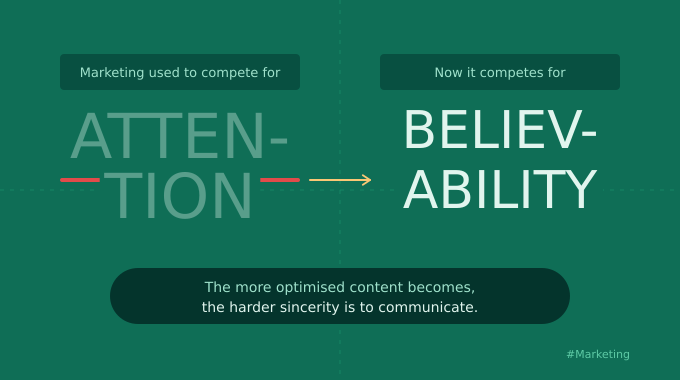
Audiences aren't just consuming content anymore. They're decoding the intent behind it.
Marketing used to compete for attention. Now it competes for believability.
That's a much harder game.
#marketing#digitalmarketing#audience
Gartner's take on 2026: AI agents will handle routine customer engagements end-to-end — from reorders to personalised guidance without a human ever touching it.
Marketers won't run campaigns anymore. They'll supervise the systems that do. Ready for that shift?
#AIAgents#Ads
Zero-click search has quietly broken the old marketing playbook. Users now get answers inside ChatGPT, Perplexity, and Google AI Overviews without ever landing on your site.
Your new SEO goal? Be the source the model cites, not the page that ranks third.
#AI#DigitalMarketing
U.S. advertisers are pushing $57 billion through AI-powered platforms in 2026, a 63% jump year-on-year.
Almost nobody is choosing human control over AI performance when results are on the table. The algorithm is no longer a tool. It's the decision-maker.
#AIMarketing#AdTech
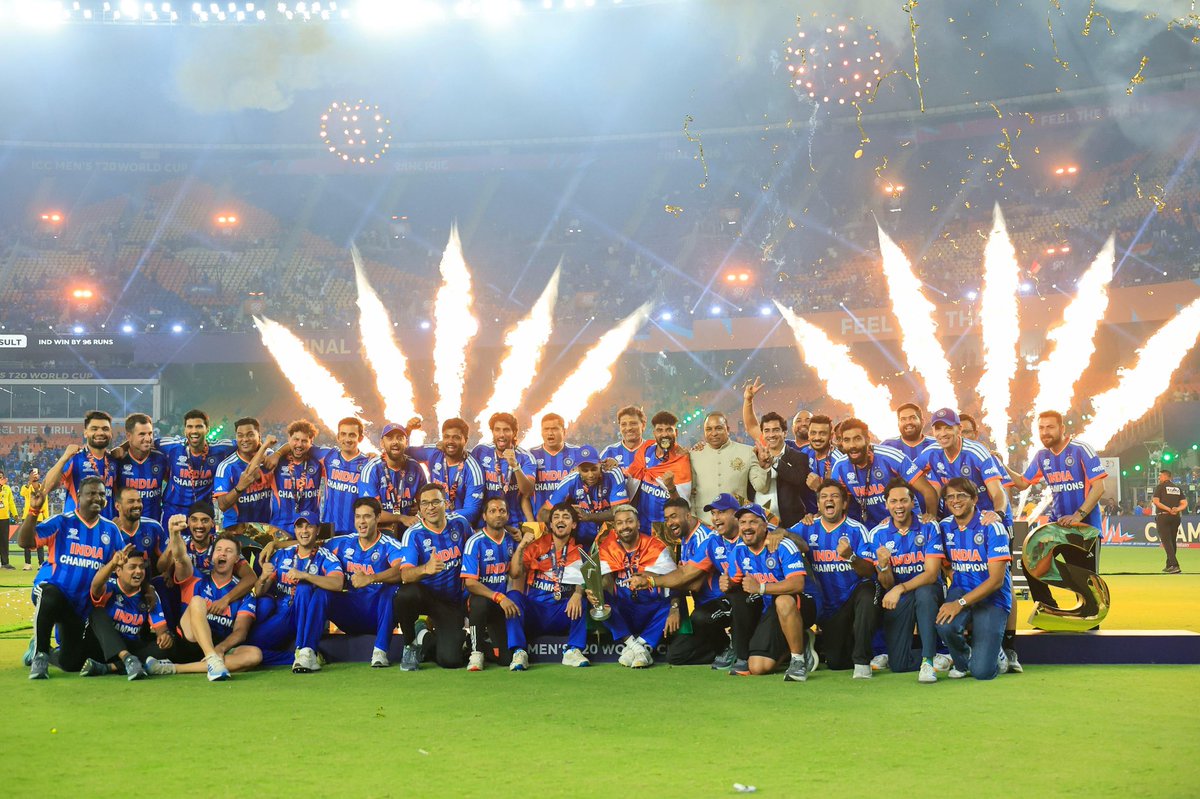
Not just a team. A family.
Not just a trophy. A dream for a billion of us.
PROUD to lead this group, PROUD to represent my India 🇮🇳🏆 A huge thank you to everyone standing beside me. You are the pillars of my strength 💙🙌🏼🫶🏻
He calls this being on-brand.
What it really is: forgettable.
He believes consistency builds trust.
He forgets that trust requires memory.
His campaigns don’t fail.
They quietly disappear.
We’ve all worked with him.
Sometimes, we’ve protected our jobs by becoming him.
(2/2🧵)
🎭 Character 7: The Safe copy Marketer
He writes copy that has never upset anyone.
Including the audience.
Every headline is “clear.”
Every CTA is “safe.”
Every sentence has survived five rounds of approval.
His work never offends.
It also never interrupts.
(1/2)🧵
I’m still figuring this out myself, but one thing feels clear:
The real game is creating ideas people want to pass along privately.
Curious, how often have you experienced Dark Social?
(4/4)🧵
#marketing#socialmedia
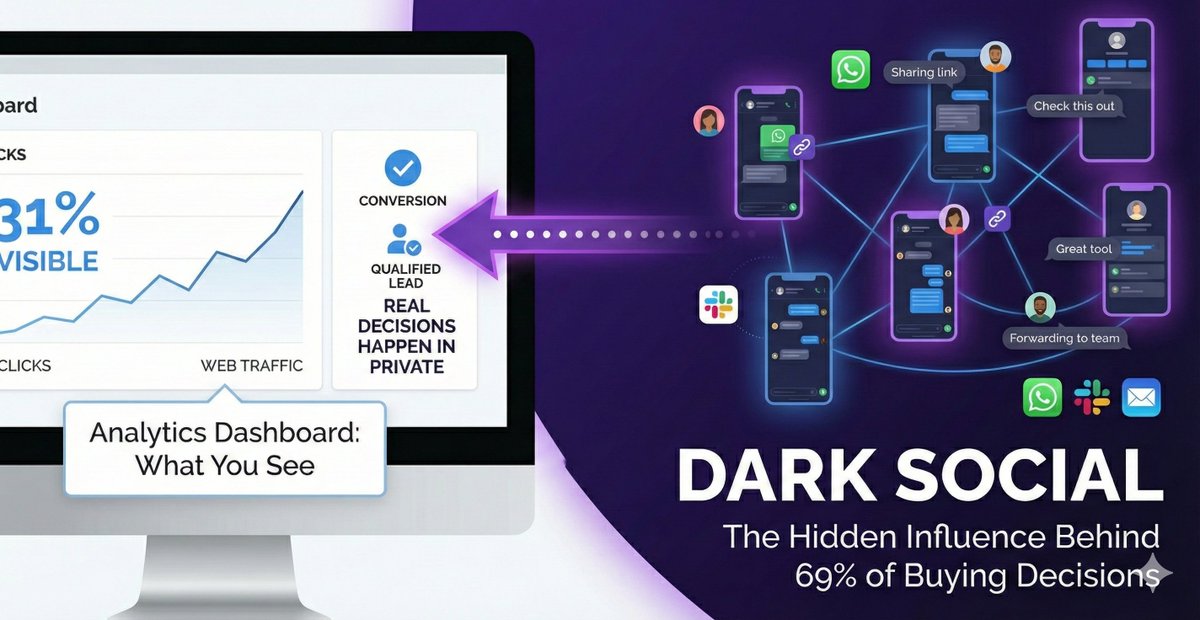
Most buying decisions never show up in analytics in fact, up to ~69% of online sharing happens in dark social channels, where clicks don’t carry referral data.
They happen in:
• a WhatsApp forward
• a Slack DM
• a quick “you should check this out” message
(1/4)🧵