"Africa must now come back and start to look at how we can work together…We have an opportunity for outward trade and also an opportunity for inward investment. "said Erastus Mwencha, former Deputy Chairperson of the African Union Commission. With China's zero tariff treatment taking effect this year, Kenyan products, including coffee, avocado, baobab powder, are more competitive in the Chinese market.
Why is China committed to opening up?
What opportunities does this create for the world?
Find out in Episode 7 of our new video series “Xi Jinping: The Governance of China” : Open Up and Cooperate towards a shared future. 开放合作,命运与共。🤝
As 2026, the China-Africa Year of People-to-People Exchanges, is nearing its end, let's look back at some of the memorable moments of cultural exchange between China and Kenya this year!
Episode 7: China-Africa People-to-People Public Welfare Exchange Forum & Carnival Series of Events⚽️
【China Insight 21】🐼
#Kaifeng, a National Historical and Cultural City, is also known as the "City of Chrysanthemums" and the "City of Calligraphy". As one of China's Eight Ancient Capitals, Kaifeng boasts a history of more than 4,100 years. With its long history and rich cultural heritage, it is renowned as the "Ancient Capital of the Song Dynasty".
Every year, the Qingming Cultural Festival in spring and the Chrysanthemum Cultural Festival in autumn attract numerous visitors from China and abroad.
#ChinaInsight
APEC Connectivity Blueprint📢
We underscore that connectivity facilitates the flow of goods, services, capital, and people across the region. It helps to foster closer economic ties and enable long-term economic growth, towards building an open, dynamic, resilient and peaceful Asia-Pacific community, for the prosperity of all our people and future generations, guided by the APEC Putrajaya Vision 2040.
We recognize the role of the APEC Connectivity Blueprint (2015-2025) in support of cooperation to advance connectivity over the past decade. As emerging trends and evolving demands reshape the region’s connectivity landscape, we encourage economies to continue efforts towards aspirational goal of achieving a seamlessly and comprehensively connected and integrated Asia-Pacific region.
Pillar 1: Physical
Objective: enhance physical connectivity by encouraging economies to develop, maintain and upgrade quality infrastructure, including through innovation and adoption of modern technologies.
● Strengthen land, maritime, and air connectivity with transport links to enhance regional connectivity.
● Advance innovation and digital transformation in the transport sector, and explore safe and secure autonomous and unmanned technologies and emerging mobility solutions, including through voluntary knowledge exchange, and sharing of relevant experiences and best practices to strengthen readiness for emerging technologies.
● Promote safe and efficient operation of maritime, air and intermodal connectivity to facilitate the movement of people and goods.
● Support energy infrastructure interconnectivity where feasible and beneficial, facilitate energy transmission and trade, enhance the reliability, security and resilience of critical energy infrastructure and supply chains, to promote energy security and universal access to high-quality energy, while enabling technological innovation.
● Encourage the development of reliable, scalable, trusted, secure and resilient communication infrastructure; extend accessible networks to rural and remote areas, and improve access to digital services for all; encourage cooperation to support an enabling environment for next-generation connectivity technologies and services including low-earth orbit satellites; upgrade digital infrastructure to meet growing demands with higher energy and resource efficiency; promote digitalization of existing infrastructure to enhance operational efficiency and service delivery.
● Identify and address infrastructure financing gaps through developing a whole-of-ecosystem approach that mobilizes resources from the public sector, the private sector, and multilateral development banks (MDBs).
● Enhance planning and implementing infrastructure projects, incorporating resilience measures, ex-ante investment in disaster risk reduction, and lifecycle cost considerations.
Pillar 2: Institutional
Objective: encourage economies to reduce institutional barriers, in advancement of trade and investment, and contributing to a more connected regional economy.
● Modernize customs procedures through technology and innovation, border agency cooperation, appropriate inspection, automated risk management, and streamlined clearance procedures.
● Undertake structural reforms to stimulate growth, reduce unnecessary regulatory burdens, foster an enabling and competitive business environment, and continue to advance the Strengthened and Enhanced APEC Agenda for Structural Reform (SEAASR) 2026-2030 and APEC’s Fourth Ease of Doing Business (EoDB) Action Plan.
● Encourage deepened exchange and cooperation on technical standards in sectors of mutual interest, and recognize the value of implementing good regulatory practices to foster transparency, predictability and efficiency in the regulatory environment.
● Address behind-the-border barriers to trade and investment, streamline related procedures to enhance efficiency, ease of doing business, productivity, and competitiveness.
● Improve supply chain connectivity by addressing chokepoints, enhancing resilience, boosting operational efficiency, minimizing disruptions, and strengthening value chains, including through leveraging relevant APEC works, such as the APEC Supply Chain Connectivity Framework Action Plan (SCFAP).
● Promote trade digitalization by harnessing digital and other emerging technologies.
● Strengthen the enabling role of data for economic growth and digital innovation, encourage efforts to promote flow of data, including via the APEC Cross-Border Privacy Rules (CBPR) System, while strengthening business and consumer trust in digital transactions, and ensuring respect for data protection, privacy and intellectual property rights.
● Enhance financial connectivity to support the flow of capital across the region, including by promoting capital market development, infrastructure financing and disaster risk finance.
Pillar 3: People-to-people
Objective: facilitate connectivity that benefits all through business mobility, education, tourism, human resource development, and innovation cooperation.
● Facilitate business mobility, including through APEC Business Travel Card (ABTC) and encourage fully participating economies’ uptake and acceptance of the virtual ABTC.
● Recognize the importance of addressing irregular migration flows.
● Strengthen education, vocational training, skills development exchanges, explore academic mobility and support lifelong learning.
● Support participation in the digital economy, enhance digital literacy and make the benefits of digital transformation accessible to all, including through capacity building, policies that build digital literacy and competencies, and opportunities for upskilling and reskilling throughout working life.
● Empower MSMEs and facilitate their participation in value chains, by fostering an enabling business environment, elevating their innovation, capabilities, and expertise, eliminating burdensome and unnecessary regulations, as well as promoting informal MSME��s transition from the informal to the formal and global economies.
● Engage all segments of the labor market, support entrepreneurship, create more economic opportunities, promote access to high-quality, full and productive employment, strengthen lifelong learning and access to upskilling and reskilling opportunities, protect the rights of workers and continue our efforts to promote international labor standards in the changing world of work.
● Prepare the workforce for demographic changes by building resilient employment and education systems, strengthening work-force demand and skills forecasting, modernizing human resources development, and expanding labour market participation including by expanding access to healthcare.
● Promote cultural exchanges and tourism facilitation, leverage digital technologies to enhance the efficiency, capacity, and productivity of the tourism sector.
● Foster a competitive innovation ecosystem; and encourage the voluntary sharing of knowledge on mutually agreed terms to boost the region’s innovation capacity and competitiveness.
Implementation
● Economies are encouraged to further advance connectivity in the region through existing APEC efforts and mechanisms, where appropriate. Cross-fora collaboration with relevant stakeholders is also encouraged.
● Senior Officials will discuss the implementation of this Blueprint during one of the Senior Officials’ Meetings once a year from 2027 to 2030, with a view to further discussing this issue as decided by Senior Officials. The APEC Secretariat is requested to provide updates on the actions and initiatives taken by relevant APEC fora and sub-fora, and economies are encouraged to report their progress during the Senior Officials’ Meetings.
【Me & China】09
Technological advancement is the best way for a country to leap from poverty and indignity to prosperity. This has been true for the People’s Republic of China and it can be true for Kenya!
Very grateful to Chinese Embassy in Kenya for all the support in enabling me to be part of this life changing learning journey.
As 2026, the China-Africa Year of People-to-People Exchanges, is nearing its end, let's look back at some of the memorable moments of cultural exchange between China and Kenya this year!
Episode 6: International Touring Exhibition of Chinese Mythology Themed Art & Special African Exhibition of China's Rural Revitalization Achievements🖼️
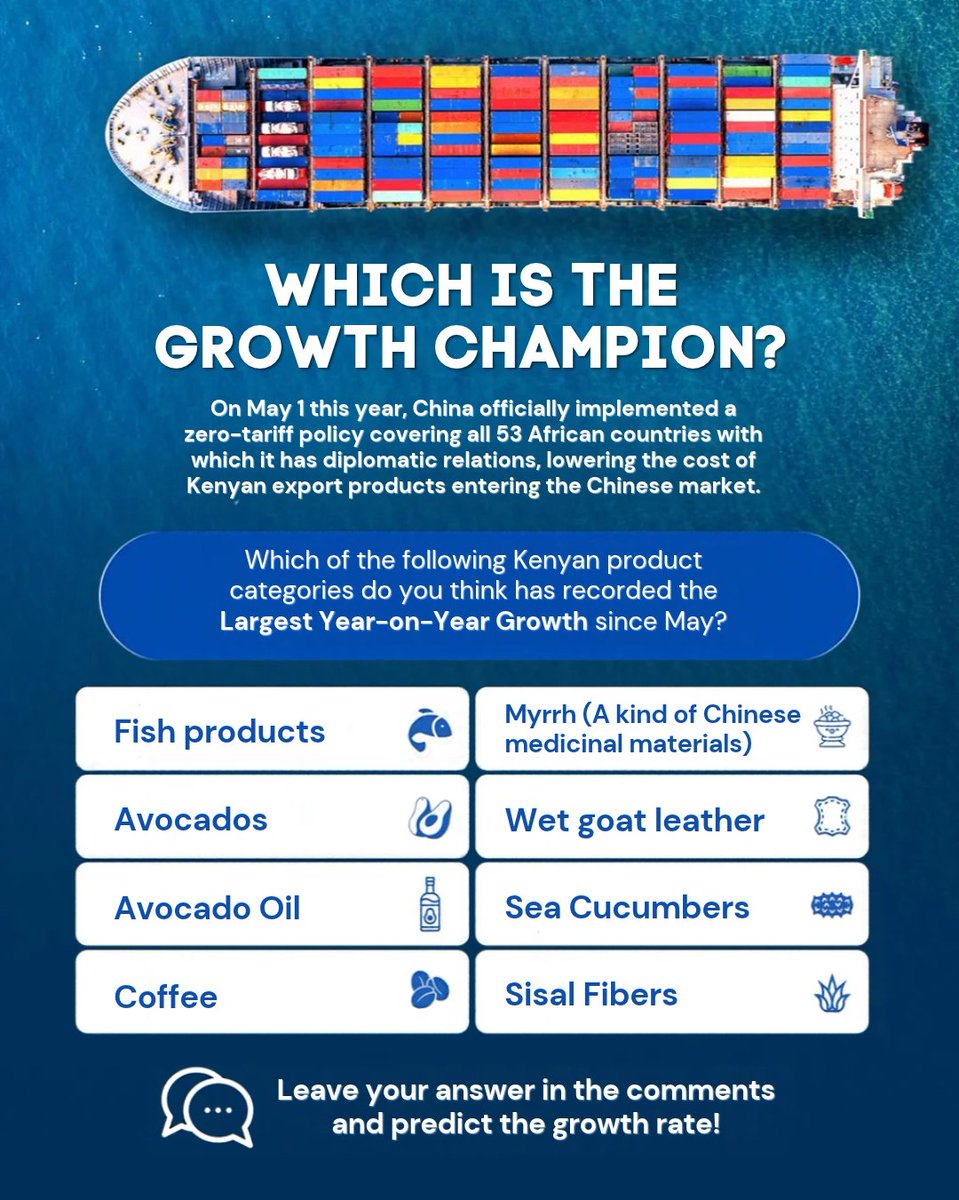
Congratulations to the followers on winning the OSW-814 Smart Watch in the “Which is the Growth Champion” campaign!🎉🎉🎉
Please send your phone number and delivery address to [email protected] by 12:00 noon on November 22.
We will contact you regarding the prize delivery arrangements. Thank you for your participation!🎁🎁🎁
1.E. O Kitiwa @AmbKenya
2.Eng. Kipngeno Bor @brioketer22
3.junior mbiti muthengi @juniormbit7kx
4.Emawk @Emawk30
5.Web3Wiztron� @web3wiztron
6.Sakali Osman @SakaliOsman
7.Nesh @just_neshizzo
8.kingflyover mgeni @Davidngei13
9. Star☆boy, HSC @Starboy3640
10.CsKnow @csknow3
11.Ezekiel maweu @Ezekielmaweu2
12.Rozzie Kim
13.Mutisya Junior
14.Dolly Dolphie
15.Charles KN
16.Stopherz Chris
17.Joseph Muchenduh
18.Ken Rick
19.Filmmaker Atieno
20.Emi Mwa
21. Kipngeno Brian Bor
22.Mogire Machuki
23.Maya Shuu
24.Johnnie Wachiraz
25.Ronny Ronny
Over the decades, Asia-Pacific economies have deepened openness and cooperation, creating the remarkable "Asia-Pacific miracle". China has consistently been an active advocate and a leading force in regional cooperation. Looking ahead, let us set sail anew from Shenzhen and write a new chapter in the "Asia-Pacific miracle" together! #XiJinping #APEC2026
Chinese Foreign Minister Wang Yi met with Djibouti's Minister of Foreign Affairs and International Cooperation Abdoulkader Houssein Omar in Beijing.
The two ministers discussed bilateral relations and issues of common concern, with Wang saying that bilateral relations continue to maintain healthy and stable momentum. He noted that political mutual trust has deepened and that cooperation across various fields has brought benefits to the people of Djibouti. Omar said that Djibouti is willing to further enrich the connotation of the comprehensive strategic partnership between the two countries.
The two sides issued a joint press communiqué on safeguarding peace and stability in the Horn of Africa and the security of shipping lanes in the Red Sea and the Gulf of Aden. Wang said the communiqué aims to send a unified message to the international community, demonstrates a shared commitment to promoting regional stability and reflects the common aspirations of African and Arab countries.
The two sides also signed a memorandum of understanding on jointly advancing cooperation under the Global Security Initiative.
As 2026, the China-Africa Year of People-to-People Exchanges, is nearing its end, let's look back at some of the memorable moments of cultural exchange between China and Kenya this year!
Episode 5: Hunan Film Week&Hubei Media Week��
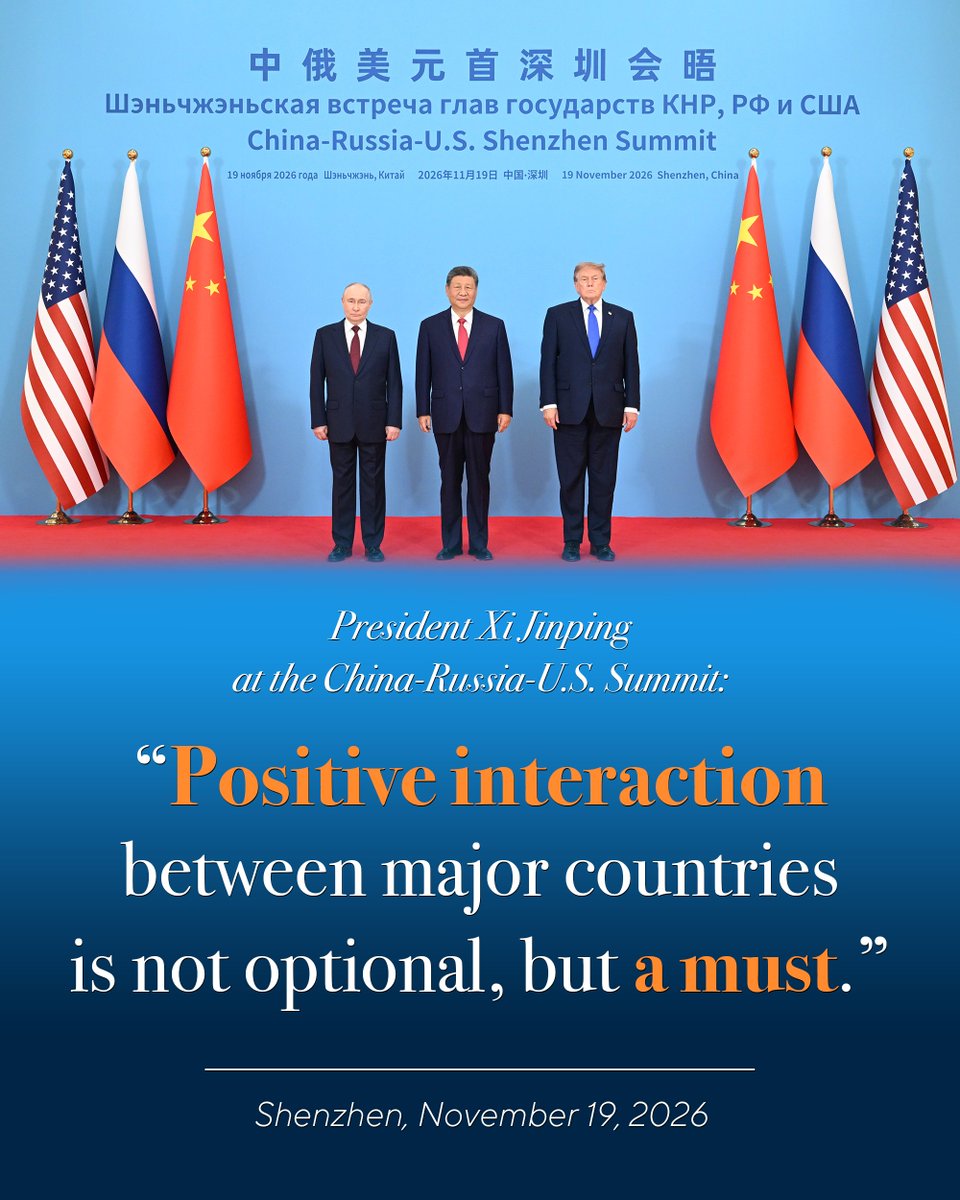
China-Russia-U.S. Heads of State Declaration toward Peace📢
Xi Jinping, President of the People's Republic of China, Vladimir Putin, President of the Russian Federation, and Donald J. Trump, President of the United States of America, met in Shenzhen on November 19, 2026. The Russian and U.S. heads of state expressed appreciation to China for hosting this historic trilateral Summit. The three heads of state had an in-depth exchange of views on the current international situation and committed to maintaining strategic stability and international security.
🔶1. As permanent members of the United Nations Security Council, China, Russia, and the United States committed to reform the U.N. so that the U.N. can respond more effectively to global challenges and conform to its fundamental mission of international peace and security.
🔶2. The three countries plan to increase the production and supply of refined petroleum products for the benefit of all nations. They reaffirmed the importance of stable energy flows.
🔶3. The three heads of state recognized that the principle of state consent and respect for immunities of State officials are of paramount importance, and concurred that the International Criminal Court and other similar bodies must not abuse their jurisdiction.
🔶4. The three heads of state reaffirmed that a nuclear war cannot be won and must never be fought. The three countries will conduct a dialogue on reducing nuclear risks and preventing the proliferation of nuclear weapons.
Pleased to meet H.E. Prof. Peter Anyang’ Nyong’o @AnyangNyongo, Governor of Kisumu County @KisumuCountyKe at the Embassy today.
Guided by the important consensus reached by our two Heads of State, we discussed ways to deepen subnational exchanges and advance practical cooperation in #infrastructure, #culture, sister-city relations, #trade and other areas, so as to achieve more tangible results and better improve the well-being of #Kisumu people.
President Xi Jinping underscored that all parties of the Asia-Pacific need to work together to build the four key pillars of an Asia-Pacific community.
🔸 First, strengthening the pillar of economy and trade. Efforts should be made to align various regional economic and trade agreements, and enhance policy dialogue on the FTAAP, to help the parties build capacity for participating in high-standard economic and trade arrangements.
🔸 Second, upgrading the pillar of connectivity. We should strengthen physical connectivity by improving the infrastructure network, deepen institutional connectivity by harmonizing policies and regulations, and enhancing people-to-people connectivity by promoting cultural exchanges for better mutual understanding and closer ties among our peoples.
🔸 Third, fostering the pillar of innovation. We should strengthen digital infrastructure development, improve data governance and collaboration in the region, build an open ecosystem for innovation, encourage the broad application of AI, and promote the innovation-driven transformation and upgrading of industries.
🔸 Fourth, enhancing the pillar of development. We should promote regional cooperation on energy and food security, deepen anti-corruption governance across borders, and scale up the rational utilization and protection of natural resources, to achieve sustainable economic growth.
🔗Full text:
https://t.co/vgXJMkoaiE
【Past and Present in China】
Xiaogang Village, in Fengyang County, Chuzhou City, Anhui Province, had just 24 households when the People's Republic of China was founded. In 1978, Anhui was hit by a severe drought, one of the worst in a century. Farmland cracked, fields lay barren, and countless farmers left home in search of food. Xiaogang became known as a village dependent on state grain supplies, government relief and loans for survival and production.
On a winter night in 1978, 18 farmers gathered in a rundown thatched cottage and signed a secret agreement, each pressing a red fingerprint onto the document. In a bid to secure their families' survival, they agreed to allocate farmland to individual households for independent farming. The following year, Xiaogang reaped a bumper harvest, producing as much grain as it had in total from 1955 to 1970. Those 18 red fingerprints marked the beginning of the household contract responsibility system, which later became the cornerstone of China's rural agricultural system.
A decade ago, President Xi Jinping expressed his hope that "Xiaogang Village would continue to play an exemplary role in deepening rural reform." His words inspired the village to forge ahead with renewed determination, deepen reform and break new ground.
Today, farmers have become shareholders through the conversion of land management rights into equity. In 2025, Xiaogang Village generated RMB 15.1 million in collective economic revenue, with per capita disposable income reaching RMB 37,300. Over the year, it welcomed 660,000 visitors and generated RMB 168 million in tourism revenue.
Today, Xiaogang Village has once again become a model of rural revitalization in the new era.
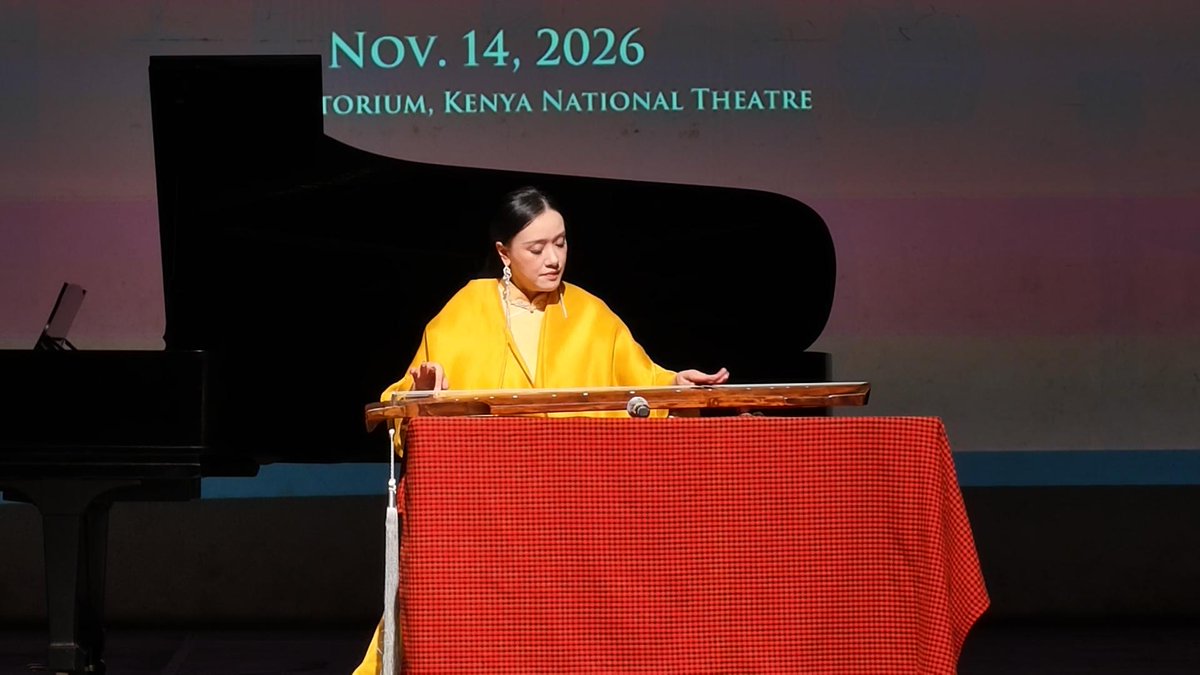
Music knows no borders! From the elegant Guqin and expressive Erhu to the vibrant Suona, these traditional Chinese instruments, some with UNESCO-recognized intangible cultural heritage traditions, enchanted Kenyan audiences. A beautiful reminder of how music connects hearts and brings cultures closer!🎼
As 2026, the China-Africa Year of People-to-People Exchanges, is nearing its end, let's look back at some of the memorable moments of cultural exchange between China and Kenya this year!
Episode 4: The First Kenya National Wushu Competition🤸