3 of the biggest academic publishers in the world sued a photocopy shop.
The shop charged 50 paise a page. It sat inside a university campus in Delhi and had 1 owner.
The case ran for 4 years. The shop won, and the law changed.
His name is Dharampal Singh.
He set up Rameshwari Photocopy Service in 1998, in a small licensed space inside the Delhi School of Economics at the University of Delhi.
The work was simple. Professors would prepare a reading list. For a course like Agrarian Sociology, that might mean 33 different readings, scattered across 33 different books, most of which cost more than a student's monthly budget and some of which the library had 1 copy of.
Singh photocopied the relevant chapters, bound them together, and sold the bundle. It was called a course pack. The price was 50 paise per page.
That is less than 1 American cent.
He explained it in 1 sentence. If a student needs 33 readings for a course, he said, it could take months to collect them from different books. I make life easier for students by giving them all the material in 1 pack.
In August 2012, Oxford University Press, Cambridge University Press and Taylor and Francis filed suit in the Delhi High Court against the shop and against the University of Delhi. They wanted a permanent injunction.
By the end of 2012 the court had granted a temporary one. A commissioner was sent to the shop without warning, made an inventory, and seized copies.
Then something unusual happened.
Students organised. 2 groups, one of students and one for educational access, formally applied to join the case as defendants, on the side of the photocopy shop. The court allowed it.
In March 2013, 309 authors and academics from around the world wrote an open letter to the publishers asking them to withdraw the case.
33 of those 309 had written the very books whose copyright was allegedly being infringed.
The authors were siding with the shop copying their books.
On 16th September 2016, Justice Rajiv Sahai Endlaw dismissed the suit entirely. He wrote that copyright in literary works is not an inevitable, divine or natural right conferring absolute ownership on authors.
The publishers appealed. On 9th December 2016, a 2 judge bench of the Delhi High Court delivered the final ruling.
It held that reproducing copyrighted material for the purpose of educational instruction is not infringement under Indian law, and that no licence or permission from the publisher is required for a course pack, however much of the book is copied, as long as it is justified by teaching.
Then the publishers withdrew from the case entirely.
The shop is still there.
The next time you are told that intellectual property law always favours whoever has the most expensive lawyers, remember that 3 of the largest publishers on Earth spent 4 years trying to shut down a photocopy shop charging half a rupee a page.
And lost.
Fukuyama: Trump went to Moscow in the 1980s, while the Soviet Union still existed. He later spent tens of thousands of dollars on New York Times ads arguing NATO caused the Cold War standoff and shouldn't be funded.
He's been pro-Soviet, then pro-Russian, for decades.
The fact that the House just declared a recess partly to prevent the new Epstein petition by Massie from being discussed before midterms, should be a bigger story.
The fact that Todd Blanche keeps refusing to comply with the court order to release the Epstein files following Katie Phang's lawsuit, should be a more significant story.
The fact that the Epstein Estate ACTUALLY PAID a settlement to one of the women who alleged that Donald Trump raped her as a minor, and it was paid AFTER Epstein died, as told under oath by Epstein's longtime accountant, should be a more significant story.
The fact that Trump said he wasn't ever on Epstein's plane and then we found out he was, should be a more significant story.
The fact that senior officials gathered in the Situation Room to concoct and coordinate an Epstein coverup that should be a holy shit story, most significant of all.
And when you combine ALL these stories and add to it his hiring of Alex Acosta, the birthday card, the movement of Maxwell to a more lenient facility, and then - especially - his panicked behavior on all things Epstein, it really should have ended his presidency, and at any other moment of our last 250-years, it would have.
The level of innovation and rapid adaptation we have observed during the Ukraine war is transforming military affairs. Indeed, one day it might be described as a RMA. 1/2
All 77 women stood together as prisoners of war, watching the collapse of the world they had fought to protect. They became the largest group of American military women ever captured by an enemy force. Yet captivity never broke their sense of duty. Even behind barbed wire, they continued serving others.
They would become known as the “Angels of Bataan”—66 Army nurses and 11 Navy nurses whose courage had already been tested long before their capture.
When Japan attacked the Philippines in December 1941, these women found themselves thrust into one of the most desperate campaigns of World War II. Military policy at the time insisted women did not belong near combat, but war rarely follows regulations. As Japanese forces pushed deeper into the islands, the nurses were evacuated to the Bataan Peninsula.
What awaited them was not a proper medical facility but a jungle battlefield. Beneath makeshift shelters and towering trees, they created open-air hospitals and cared for thousands of wounded soldiers while bombs exploded nearby and artillery fire tore through the landscape.
Days blurred into nights. Many worked nearly around the clock in suffocating heat and humidity. Malaria, dysentery, and exhaustion spread almost as quickly as combat injuries. When supplies disappeared, they improvised. Used bandages were boiled and reused. Precious medicine was rationed drop by drop.
One nurse later reflected on their mindset:
"We stopped worrying about ourselves. There was always someone in greater need than we were."
When Bataan fell, the nurses withdrew to Corregidor and continued their work inside the crowded Malinta Tunnel. The underground hospital shook constantly from bombardment. Dust filled the air. Flashlights often served as operating-room lights. Still, they carried on.
Then, on May 6, 1942, Corregidor surrendered.
The nurses became prisoners of war.
For nearly three years they endured life inside the Santo Tomas and Los Baños internment camps. Food was scarce and often barely edible. Many survived on little more than thin soup and small portions of rice. Hunger became a constant companion.
Most lost nearly a third of their body weight. Faces became hollow. Uniforms hung loosely from shrinking frames.
Yet they refused to surrender their discipline or purpose.
Under the leadership of Captain Maude Davison and Lieutenant Josie Nesbit, they organized medical wards despite having almost nothing to work with. They fashioned equipment from bamboo, treated fellow prisoners, and sacrificed portions of their own rations to help the sick survive.
Lieutenant Juanita Redmond later recalled:
"We dreamed about food every day. But we never stopped thinking about our patients."
When American forces liberated the camps in February 1945, something remarkable became clear.
Every one of the 77 nurses was alive.
They returned home as survivors of one of the war's harshest ordeals. Yet their story received far less attention than those of many male veterans. The nation celebrated victory, but the sacrifices of these women were often overlooked. Their trauma went largely unrecognized in an era that struggled to imagine women enduring the same horrors as frontline soldiers.
For decades, the Angels of Bataan remained a largely forgotten chapter of history. Only years later did wider recognition begin to arrive, as historians and veterans worked to ensure their story would not disappear.
The last surviving Angel, Lourdes “Lulu” Arizala, passed away in 2015, but the legacy of the group endures.
Their story is not simply one of survival. It is a story of resilience, compassion, and unwavering duty under impossible conditions. In a time when fear, hunger, and war surrounded them, these women chose service over self-preservation—and that choice remains one of the most extraordinary examples of courage in American military history.
This is a real shame. It passed 86-11 in the Senate. Congressional inaction on Russia’s invasion of Ukraine and on Putin’s crimes is a real failure. The history books will not be kind.
The man who led the Turkish Brigade into the Korean War was a general who agreed to give up rank to do it, an old Gallipoli hand who chose to go be a fighting brigade commander again rather than sit safely at the top.
Tahsin Yazıcı was already a living piece of history. Born in 1892, he had been a young officer at Gallipoli in the First World War, one of the defining battles in Turkey's national story. By 1950 he was a senior general in the Turkish army, a man who had earned the right to a comfortable, safe posting. Instead, when Turkey answered the United Nations call and sent a brigade to Korea, Yazıcı stepped down in rank to take personal command of it and go with his men to the war.
That decision put him exactly where the storm broke. In late November 1950, the massive secret Chinese offensive shattered the UN advance and sent the Eighth Army into a desperate retreat, in danger of being surrounded and destroyed. Yazıcı's Turks, held in reserve, were suddenly thrown into the very worst of it near Kunuri, given the brutal job of the rearguard, standing in the gap to cover the withdrawal of the whole American army.
Under Yazıcı, the Turkish Brigade fought one of the great rearguard actions of the war. Facing overwhelming Chinese numbers, they held their blocking positions and, when the enemy closed in, they fixed bayonets and charged, again and again, in savage hand to hand fighting. They took terrible casualties. But they held long enough, and their stand was a major reason the Eighth Army was able to pull back without being encircled and annihilated.
Yazıcı led that fight in person, an old general in his late fifties commanding from the front. The Americans decorated him for it, and he became a celebrated figure in both Turkey and Korea, the very embodiment of the ferocious reputation the Turks earned in that war. He retired from the army in 1952 and went on to serve in Turkey's parliament, living until 1971.
He is remembered as one of the fathers of the deep bond between Turkey and Korea, the Gallipoli veteran who traded his high rank for a fighting command, took his brigade halfway around the world, and stood in the gap when the whole line was breaking.
“It takes something more than intelligence to act intelligently.”
- Dostoevsky
Solomon's Paradox is the tendency to reason more wisely about other people's problems than our own.
It's named after the biblical King Solomon — famous for his wise judgments, but who in his later years is depicted as making increasingly poor choices in his own personal and political life.
The term was introduced in 2014 by psychologists Igor Grossmann and Ethan Kross. In their studies on relationship conflicts, they found that people were better at taking multiple viewpoints into account, acknowledging what they didn't know, and looking for compromise when they were thinking about someone else's problem instead of their own.
They also found a way to counteract it: self-distancing. If you look at your own situation as an outside observer would, or ask yourself, "What would I tell a friend to do if they were in this exact position?" it becomes easier to think more clearly and objectively.
Harry Truman left the White House as one of the least popular presidents of his era. He returned home without a presidential pension, without a government-funded staff, and without much public appreciation for the choices he had made. Yet more than a decade later, another president would travel to his hometown to place tangible proof in his hands that one of his greatest defeats had never truly been a defeat at all.
On January 20, 1953, Truman’s presidency came to an end.
Unlike former presidents today, he had no taxpayer-funded office waiting for him. No lifetime salary. No official support system. The Former Presidents Act, which would later provide those benefits, had not yet been created.
His most reliable income came from his World War I military pension.
It was a little over one hundred dollars a month.
So Harry and Bess Truman boarded a train, left Washington behind, and returned to Independence, Missouri.
At the time, few Americans seemed upset to see him go.
His approval ratings had collapsed. Critics blamed him for inflation, political scandals, the Korean War, and much of the uncertainty that followed World War II. Newspapers had spent years portraying him as ineffective, and many voters believed his legacy had already been written.
In the eyes of much of the country, Harry Truman was a failed president.
Truman never spent much energy arguing otherwise.
Instead, he settled back into ordinary life.
That same year, he bought a Chrysler and took a road trip with Bess across the country. They drove through multiple states without a motorcade or special treatment. Truman stopped at gas stations and filled the tank himself.
People recognized him.
Truck drivers waved.
Strangers asked for autographs.
Once, state police reportedly pulled him over because he was driving too slowly.
Back home in Independence, he answered his own phone, handled his own mail, and took daily walks through town. Reporters who tried to follow him sometimes struggled to match his pace.
The former president had become, in many ways, a private citizen again.
What stood out most was what he refused to do.
He did not spend his retirement attacking Dwight Eisenhower.
He did not launch a campaign to repair his image.
He did not obsess over his place in history.
He simply moved forward with his life.
Meanwhile, history quietly began revisiting the decisions he had made.
One of those decisions came in 1948 when Truman signed Executive Order 9981, beginning the desegregation of the U.S. military.
It was a politically risky move.
Military leaders objected. Southern Democrats were furious. Many advisers warned him against it.
Truman proceeded anyway.
He believed segregation was morally wrong, and once he reached that conclusion, political calculations no longer mattered much to him.
Then there was Europe.
The continent emerged from World War II shattered. Economies were broken, cities lay in ruins, and millions faced poverty and instability.
Truman’s administration responded with policies that would shape the modern world.
The Truman Doctrine committed America to resisting Soviet expansion.
The Marshall Plan invested billions in rebuilding Western Europe.
At the time, many critics called it wasteful spending.
Years later, those same decisions looked very different.
European economies recovered. Democracies survived. Western Europe entered one of the most stable and prosperous periods in its history.
Policies once mocked as expensive mistakes increasingly appeared to be the foundation of the postwar order.
Yet one issue remained painfully unresolved.
National health insurance.
In 1945, only months after World War II ended, Truman became the first American president to formally ask Congress for a comprehensive national health insurance program.
He believed illness should not destroy a family financially.
The opposition was immediate and intense.
The American Medical Association denounced the proposal. Conservatives attacked it. Many lawmakers from both parties joined forces to stop it.
The legislation died.
Truman tried again.
It failed again.
When he left office in 1953, one of the causes he cared about most remained unfinished.
There would be no celebration.
No signing ceremony.
No victory.
So Truman returned to Missouri and carried on with his life.
Then, twenty years after he first began the fight, something remarkable happened.
On July 30, 1965, President Lyndon B. Johnson signed legislation creating Medicare and Medicaid.
Johnson could have held the ceremony at the White House.
Instead, he boarded Air Force One and flew to Independence, Missouri.
The signing took place inside the Harry S. Truman Presidential Library.
Waiting there was an 81-year-old former president whose vision had once been dismissed and defeated.
Before signing the bill, Johnson publicly praised Truman for championing the cause long before the nation was ready to embrace it.
Then he signed the legislation.
Medicare and Medicaid became law.
Johnson handed several of the signing pens to Harry and Bess Truman.
In front of the country, he made something clear:
The man who had lost the battle in the 1940s had helped make victory possible in the 1960s.
But Johnson had one more tribute planned.
Six months later, he returned to the Truman Library carrying two small cards.
They were among the first Medicare cards ever issued.
Card number one belonged to Harry S. Truman.
Card number two belonged to Bess Truman.
Johnson presented them personally.
The symbolism was impossible to miss.
The president who had left Washington believing one of his most important goals had failed now held proof that the idea had survived long enough to become reality.
The cause had outlived the defeat.
Truman died in 1972 at the age of eighty-eight.
By then, historians had already begun reevaluating his presidency.
The Marshall Plan.
The Truman Doctrine.
The integration of the armed forces.
The recognition of Israel.
The creation of NATO.
The strategy of containing Soviet expansion without triggering another world war.
And the early push for national health insurance.
Decisions that once drew criticism increasingly looked like acts of long-term leadership.
The president who left office with approval ratings near thirty percent gradually rose in historical rankings until he became widely regarded as one of the most consequential presidents of the twentieth century.
What makes that transformation remarkable is that Truman did almost nothing to create it.
He did not reinvent himself.
He did not rewrite history.
He did not spend decades demanding recognition.
He returned home, lived quietly, and let time deliver its verdict.
Some victories happen on election night.
Some arrive when a bill becomes law.
And some take decades before the world realizes the people who appeared to lose were simply ahead of their time.
Harry Truman lived long enough to see one of those victories placed directly into his hands.
History is patient.
Sometimes it takes years for the world to catch up to the people who were right.
By the end of the war one British engine was powering the Spitfire, the Hurricane, the Lancaster, the Mosquito and the American Mustang.
Rolls Royce could not build anywhere near enough of them, so the British government asked a car company for help.
The car company studied the drawings and came back with a problem.
Rolls-Royce's tolerances were too loose.
This is the story of the Merlin..🧵1/4
🧵 4/4
Britain needed more still, so in September 1940 Rolls-Royce signed a licence with the Packard Motor Car Company of Detroit, on an order worth 130 million dollars.
Packard hit the same problem Ford had. Before mass production could begin, they had to convert and extensively redraw Rolls-Royce's manufacturing drawings for American standards and methods. Jesse Vincent put more than 200 engineers and draughtsmen on the job. The first Packard Merlin ran on 2 August 1941.
Packard alone went on to build roughly 55,000 Merlins.
And that turned out to matter more than anyone expected. The P-51 Mustang was very good at low level with its original American engine and badly limited high up, where the bombers were. Rolls-Royce tried a Merlin in one in 1942, and the aircraft became something else entirely. The escort fighter that could take American bombers to Berlin and bring them home again.
The Merlins that powered the great American P-51 escort force were not built in Derby. They were Packard built versions, made in Detroit.
A British engine, mass produced by people who made cars, in an aircraft designed in California, flown by American pilots over Germany.
This was the story of the Merlin.
I post a story like this every single day. Most people never see them. Follow so you don't miss the next one.
His parents named him Antariksh. In Sanskrit, it means space. He grew up, watched someone close to him spend six hours in a cancer ward connected to a drug drip, and spent the next phase of his life figuring out why that infusion could not be shorter. The answer was gravity. The answer to gravity was orbit.
Keytruda, one of the most powerful cancer immunotherapies in the world, takes five to six hours to enter the bloodstream because the drug molecule is too large and unstable to inject quickly. It is large because Earth's gravity creates defects when the crystal forms, limiting how concentrated and uniform the final drug can be. Merck, in a collaboration with NASA, grew a higher-quality, easier-to-inject version of the same molecule on the International Space Station, where there is no gravity to interfere. The infusion that could be shorter already exists. It just has to be made in orbit.
Antariksh Parichha read roughly 300 papers. Then he started a company.
Serendipity Space was founded in 2024 in Bhubaneswar, Odisha, alongside Jivitesh Debata and Dr. Monica Ekal, who brings research experience from Germany's DLR and NASA. They call themselves a pharma company that goes to space, not a space company doing pharma. The distinction is intentional and precise.
In March 2026, the team flew Alchemy, their autonomous pharmaceutical factory, on a stratospheric balloon in partnership with TIFR's Balloon Facility in Hyderabad. The system executed drug crystallization processes in near-space conditions, preserved the crystals through re-entry, and the payload was recovered intact. The first experiment of its kind conducted in India. The balloon is not orbit and near-space is not true microgravity, but the hardware worked, the avionics worked, and the recovery capsule worked. What flew over Hyderabad was proof that Alchemy survives the journey to where it needs to go.
"On Earth, gravity disrupts crystallisation, creating defects that reduce solubility and effectiveness. In microgravity, these constraints disappear," Parichha said.
From pre-seed funding in July 2025 to near-space demonstration took less than twelve months.
Somewhere in India tonight, a cancer patient is connected to a six-hour infusion. The molecule inside it was already made better in space nine years ago. Antariksh Parichha is building the factory that makes it that way at scale.
His parents chose the right name.
"On a Feb. 16, 1953 mission, Ted Williams’ plane took heavy hits.
He was streaming smoke and fire from the engine, which in a Panther usually signalled an explosion that would blow the tail off.
Williams bellied in at 150 mph or more, slid up the runway for 2000 feet, came to a stop, jumped out of the cockpit, off the wing, ran until he was out of danger, turned around and stood there watching the plane burn on the runway."
John Glenn at K3, Korea.
"Ted Williams flew as my wingman, on about half the missions he flew in Korea. During his crash, he was on fire and had to belly land the plane back in.
He slid it in on the belly.
It came up the runway about 1,500 feet before he was able to jump out and run off the wingtip.
Much as I appreciate baseball, Ted to me, will always be a Marine fighter pilot."
John Glenn.
"I liked flying.
It was the second-best thing that ever happened to me.
If I hadn’t had baseball to come back to, I might have gone on as a Marine pilot."
Ted Williams.
There is a good chance you have read this man's words hundreds of times without ever knowing his name. Every license plate in the state of New Hampshire carries them: "Live Free or Die." An old soldier named John Stark wrote that line, and his own story is even better than his motto.
Stark was a frontiersman before he was a general, a tough New Hampshire woodsman who had been captured by the Abenaki as a young man and had ranged the wilderness with the elite Rogers' Rangers in the French and Indian War. He knew how to fight in the real world, not the parade ground, and when the Revolution came he brought that hard practicality to the American cause.
At Bunker Hill in 1775, it was Stark and his New Hampshire men who held the most vulnerable spot on the American line, the far left flank down by the beach, where the British planned to sweep around and roll up the whole position. Stark saw the danger, threw up a makeshift barrier of fence rails and stone, and posted his marksmen behind it. When the British came along the shore, his men shot them down in rows. That flank never broke. It was one of the coolest, deadliest pieces of work on that bloody hill.
But his masterpiece came in 1777. By then Stark had actually quit the Continental Army in disgust after being passed over for promotion, proud and stubborn to the bone. New Hampshire, threatened by Burgoyne's invading British army pushing down from Canada, gave him an independent militia command, and Stark raised a force of farmers and neighbors. When a detachment of Burgoyne's army, Germans and Loyalists, marched toward Bennington to seize American supplies, Stark went out to meet them.
Before the battle he is said to have pointed at the enemy and delivered one of the great war cries in American history: "There are the redcoats, and they are ours, or this night Molly Stark sleeps a widow!" Molly was his wife. Then he attacked, and his militia overwhelmed the enemy force almost completely, killing or capturing nearly the whole detachment. Bennington was a disaster for Burgoyne. It stripped away hundreds of his men and much of his supplies and helped set up his doom at Saratoga a few weeks later, the victory that brought France into the war. The stubborn militia general had struck one of the decisive blows of the Revolution.
Stark lived a very long life, one of the last surviving generals of the war, honored but increasingly frail. And in 1809, when the aging veterans of Bennington invited him to a reunion, he was too sick to travel. So he sent them a toast instead, written on paper, to be read aloud in his absence. It said: "Live free or die. Death is not the worst of evils."
He meant it as a plain old soldier's creed, the hard-won wisdom of a man who had seen enough of the world to know that there are things worse than dying, and that living without freedom was one of them. More than a century later, in 1945, New Hampshire made those four words its official state motto. And so today the phrase rides on every plate on every car in the state, a frontier general's defiant toast, outliving him by two hundred years.
Remember John Stark. Not just four famous words, but the flinty old ranger who earned the right to say them, held the line at Bunker Hill, crushed the enemy at Bennington, and spent a long life proving that he lived exactly the way he told the rest of us to.
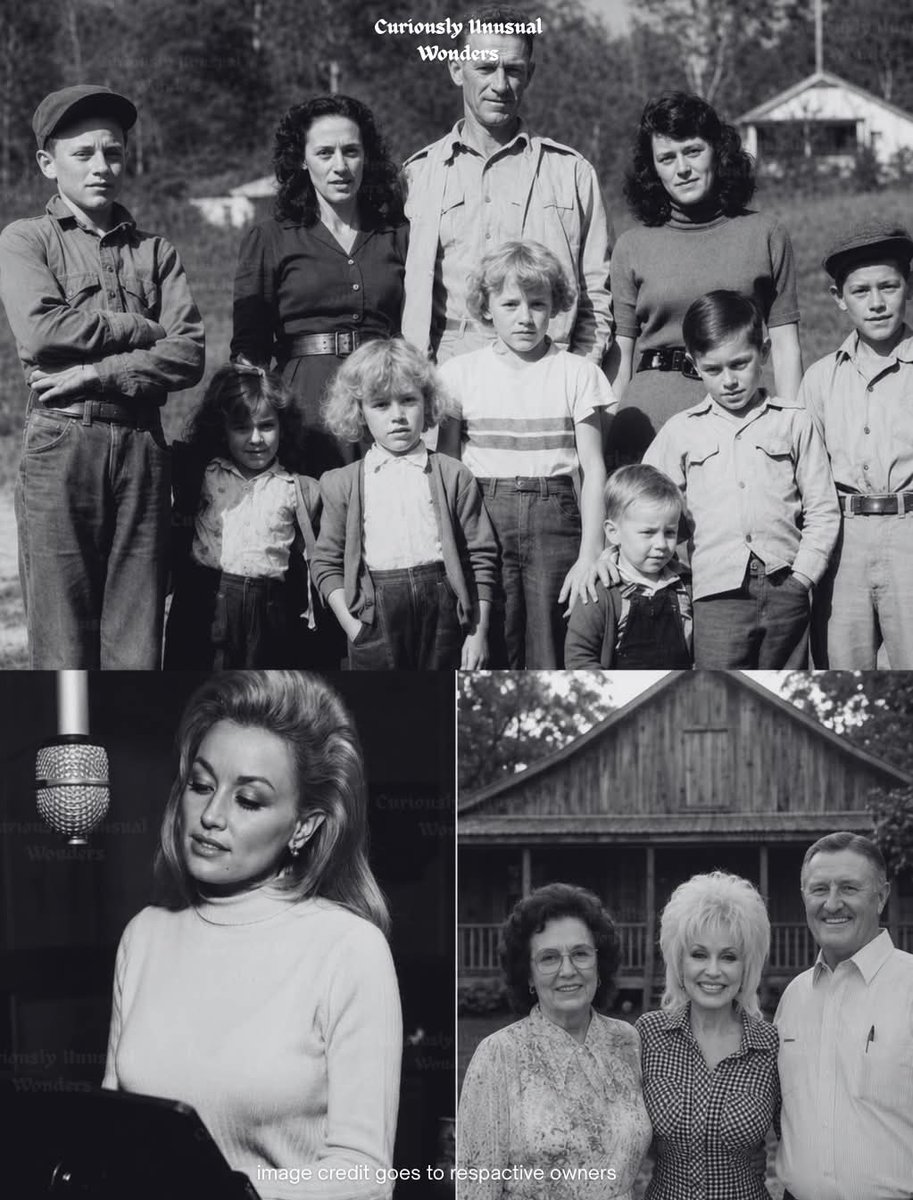
When Dolly Parton received her first substantial royalty payments in Nashville, she didn’t spend them on fame or luxury. Instead, she used the money to give her parents something they had never truly known: comfort.
Her rise through hit records and regular appearances on The Porter Wagoner Show finally brought financial stability. Growing up, Dolly had watched her parents, Robert and Avie Lee Parton, struggle to raise 12 children in a tiny cabin tucked into the Smoky Mountains of Tennessee. The home had no electricity, no indoor plumbing, and little protection from the harsh winter cold.
Once success arrived, Parton bought her parents a sturdy brick house on level ground, far from the hardships of the old cabin. For the first time, they had modern conveniences—indoor heating, running water, and a proper bathroom. She also fulfilled a promise she had carried since childhood by buying her father a brand-new truck, replacing years of getting by without reliable transportation.
For her mother, the change was especially emotional. Avie Lee had spent years washing clothes for a large family in cold river water and preparing meals over a wood-burning stove. Standing in her new kitchen, she was overwhelmed when she turned on a faucet and hot water flowed instantly from the tap. It was a simple moment, but one that represented a lifetime of struggle finally coming to an end.
The gift meant more than a new house. It eased the burden Robert had long carried from years of poverty and sacrifice. Through her early television contracts and music success, Dolly Parton didn’t just transform her own future—she changed the future of the family that helped shape her.
To hell, by compass
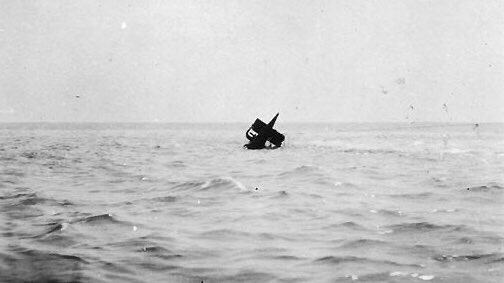
OTD in 1920, the following exchange took place between freighter S.S. Alanthus & what appeared to be a buoy waving a white flag, as seen in the photo:
• Alanthus: What ship are you?
• Submarine S-5
• Alanthus: What nationality
• United States
• Alanthus: Where are you bound
• To hell, by compass
A day earlier, S-class submarine USS S-5 (SS-110) attempted to quickly dive during a drill, but forgot to close the induction valve. Water poured into the forward compartment, forcing the crew to abandon it. They blew the main tank but quickly sank to the ocean floor 180 feet below the surface. From there they blew the aft tanks & the stern rose at a 60-degree angle with the bow still on the seabed. Struggling to stand & running out of air, the crew began using hand tools to drill through the hull at the stern. Progress was extremely slow, but they finally created a hole after 16 hours of drilling to deploy a flag made from a copper pipe & a white t-shirt. Luckily Alanthus spotted them &, after having the above exchange, worked to drill a larger escape hole. All 40 crew members survived.