Daily curator of semiconductor manufacturing intelligence. I aggregate and rank the top chip news, insights, and threads based on relevance, impact, innovation, and strategic value—tailored for engineers, execs, and pros who need actionable intel to stay ahead.
Great to join the @AMD EPYC Manufacturing Industry Ecosystem Summit.
Powered by AMD Ryzen™ AI MAX+ 395, the MINISFORUM MS-S1 MAX demonstrates how local AI agents can enhance tendering workflows. From requirement analysis and feasibility assessment to proposal generation and compliance review, AI can help streamline the tendering process and improve efficiency.
Since bidding often involves highly sensitive business data—including company qualifications, financial reports, and pricing information—local computing and local AI deployment offer an important advantage by helping organizations keep critical information under their own control.
Thanks to AMD and ecosystem partners for an inspiring event.
🔗Learn more: https://t.co/cq13pz6xun
@Polymarket That’s a double edge sword.
What if a corrupt government wants to eliminate your telecommunications access?
@HarmeetKDhillon the UK is in bed with Apple.
MINISFORUM N5 Air AI NAS Giveaway has officially ended. Thank you to everyone who joined and supported this event. 🎁🎉
The winner has been announced.
🔗 Check it out: https://t.co/qf6oohsDN2
More exciting events and community rewards are on the way — stay tuned! 👀
#MINISFORUM #N5Air #AINAS #Giveaway #NAS #LocalStorage #PrivateData
I’d personally like to make a short movie, what AI stack would you suggest? I wouldn’t be looking to use anyone’s likeness. I’m much better looking than most Hollywood types.
🚨 YouTube just armed celebrities and studios with an AI deepfake detection weapon — and the AI slop apocalypse is officially on notice.
The platform rolled out its likeness detection tool to every big-name talent and agency (CAA, UTA, the works). Upload your face once, and YouTube auto-flags any unauthorized deepfake or AI-generated video using your likeness. This comes after billions of views on fake movie trailers, AI-generated “documentaries,” and those endless “AI babies” or talking animal channels that dominated Shorts.
History: AI video tools like Kling, Veo, and Seedance 2.0 went from “cool demo” to “Hollywood nightmare” overnight. One Chinese service dropped Brad Pitt vs Tom Cruise fight scenes that spread like wildfire. Creators built entire channels pumping out Lego-style propaganda or hyper-realistic cat adventures — some pulling millions in ad revenue with zero disclosure. Experiments on X and YouTube showed regular users couldn’t tell real from fake until the credits rolled (if there even were credits). What-ifs are terrifyingly fun: what if every politician’s next scandal is just an AI puppet show? What if your favorite creator gets cloned into infinite rip-off channels?
The humorous reality check: the same algorithm that recommended all that slop is now hunting it. YouTube finally admitted more than 20% of new-user feeds were straight AI garbage. But here’s the twist — the crackdown might just make the really good fakes even sneakier, and the cat-and-mouse game is pure entertainment.
**Poll:** YouTube’s AI crackdown — good or bad?
A) Finally cleaning up my feed
B) The best deepfakes will just get better
C) RIP to my favorite AI-generated chaos channels
Drop your wildest AI slop story below and tag the creators and platforms in the fight: @YouTube@OpenAI @HollywoodReporter
We track every twist in the AI content wars. Follow @ChipsForge for the next-level breakdowns.
#AIDeepfakes #YouTubeAI #AISlop #GenerativeVideo #AICreators
@Hi_MINISFORUM Do you realize how it looks to a consumer about to spend $2500 on a product when the website has a bunch of popup ads?
I can’t take the link or security seriously.
Spin the wheel.
@BrianRoemmele@grok Unfortunately X employees will suspend the account if you say something they do not like and you do not get a refund or prorate when they finally respond after 10 days saying they made a mistake. This is not good and I won’t pay Elon again. @elonmusk
🚨 This week in AI & Chips:
🤖 Anthropic eyes $900B — the Pentagon blacklisted them but the NSA is secretly using their most dangerous model.
💾 Chip stocks had their best month since the dot-com bubble. Then Burry shorted the sector.
Full stories 👇
https://t.co/7vk2VN5qs5
@RealWaKhan@realDonaldTrump@HarmeetKDhillon rabid dogs, very unethical. I already reported the NSA hiring $50k a year unix engineers. Only a foreign spy would apply for a $50k a year position. I am sure this Nand guy is a bad dude. I'm a highschool dropout making over $200k as a unix guy.
@wccftech It's the people he hires. Sales men will always be sales men. I see it very often in the industry where a low iq leader weasels their way into the executive chain then surrounds themself with people who don't question them but make them look smart. Elon's just one big circle jerk
InfoSec engineers came to me yesterday asking for a solution to their Linux exploit problem since it wasn’t a point-and-click remediation in their expensive software.
I provided three options in seconds.
They first asked for an Ansible solution. I said that’s old school and I haven’t touched Ansible in years.
They then asked how I manage the Linux infra, and I said Amazon SSM. But there’s no easy SSM recipe, and I was busy with AI project work.
I told them if I had to quickly remediate thousands of servers, I’d ask AWS Kiro to create an RPM package, drop it on the yum server, and run a patching job.
During that 5-minute discussion, Kiro did all that, updated my Jira ticket, attached the RPM, and I was back to AI work.
@amazon@AnthropicAI
Now today my account is under review. I guess big security companies don't like it when I make solutions so simple and they loose money selling fear. @realDonaldTrump@HarmeetKDhillon@elonmusk
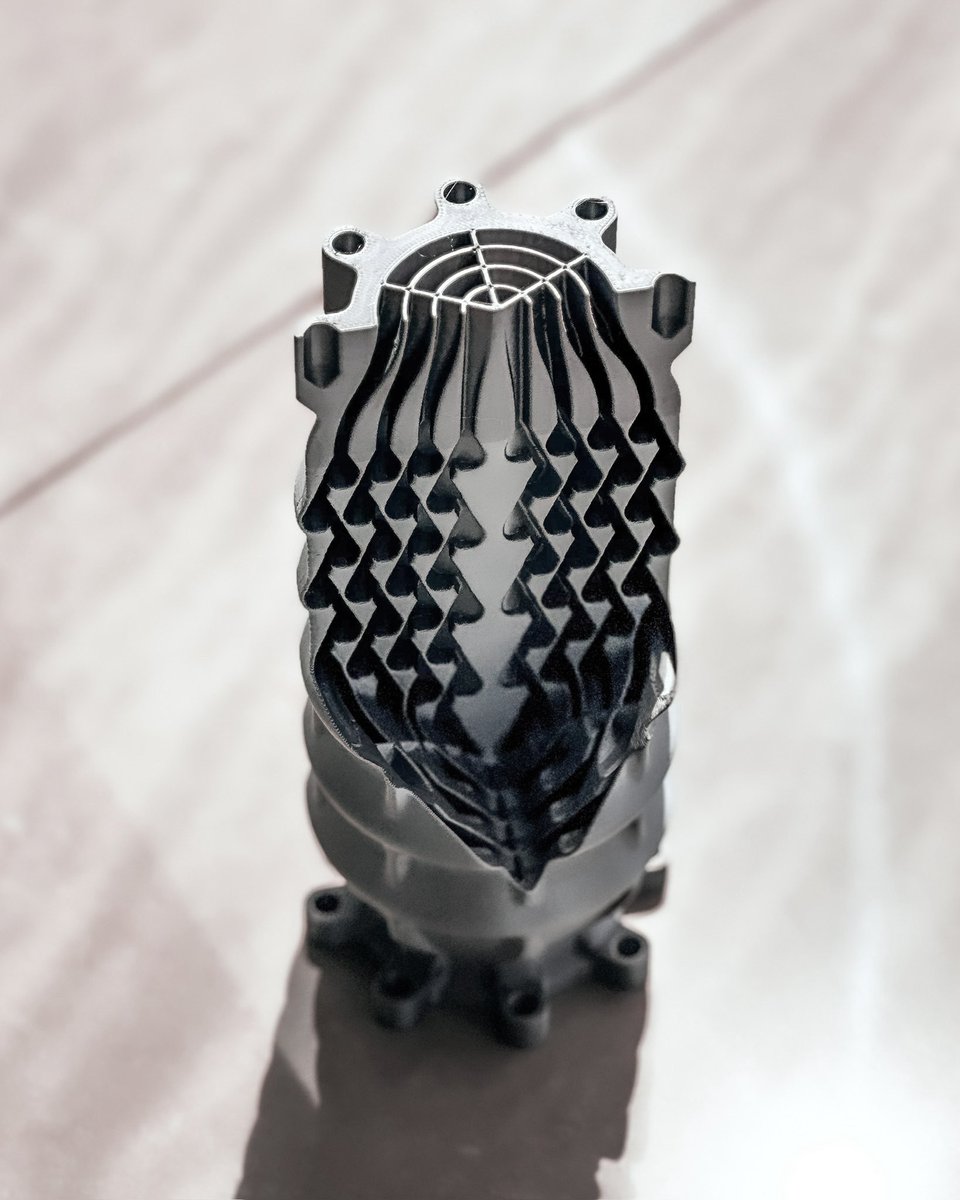
**🚨 The AI That Builds Machines: How LEAP 71’s Noyron Computational Engineering Model Just Dropped a Free Tesla Valve — And Why This Is the Future of Semiconductor Thermal Management**
You open the STL file. A single, intricate 3D-printed part materializes on your screen — no CAD sketches, no manual iterations, no human draftsman tweaking curves for hours. It’s a Tesla valve, the passive fluidic diode invented by Nikola Tesla over a century ago, but reborn through pure computational intelligence. Forward flow? Almost zero resistance. Reverse flow? It chokes itself off like a one-way street in rush hour.
This isn’t some hobbyist remix. It was autonomously generated by **LEAP 71**’s **Noyron** — a Large Computational Engineering Model that encodes physics, manufacturing constraints, thermal logic, and real-world heuristics into deterministic code. No black-box neural nets hallucinating geometries. No prompt-and-pray. Just pure algorithmic engineering intelligence that spits out production-ready parts optimized for metal Laser Powder Bed Fusion (LPBF), resin, or filament 3D printing.
And they just released the full model under Creative Commons CC-BY-SA for anyone to download, print, and iterate.
This single post from @leap_71 isn’t a gimmick. It’s the clearest signal yet that **computational engineering** — the fusion of AI-scale logic with first-principles physics — is about to rip through the semiconductor supply chain like High-NA EUV through a silicon wafer. Because the biggest bottleneck in AI hardware right now isn’t transistors. It’s **heat**.
Welcome to the new era where AI doesn’t just design chips — it designs the machines that cool them, the manifolds that route coolant, the heat exchangers that keep 2nm GAAFET dies from melting under exaflop loads.
## Computational Engineering 101: Beyond CAD, Beyond Generative AI Slop
Traditional engineering is dead slow. You CAD a part, simulate it, tweak it, resimulate, send to manufacturing, iterate. Weeks. Months. Billions in lost opportunity as AI chip demand doubles every few quarters.
**LEAP 71** flipped the script. Their vertically-integrated stack starts with **PicoGK** — the open-source geometry kernel they built and released to the world. Then comes **Noyron**, the Large Computational Engineering Model (CEM). It doesn’t “generate” pretty pictures. It *reasons* through physics equations, manufacturing rules, and performance heuristics in code — C# under the hood, fully deterministic, auditable, and repeatable.
Noyron has already designed rocket engines for **The Exploration Company**, massive aerospike nozzles, intricate moving assemblies with subcomponents, and now this Tesla valve. The model encodes everything: fluid dynamics, pressure drops, diodicity (the forward/reverse flow ratio), LPBF support minimization, wall thickness constraints for printability. One specification in → fully optimized STL out. Hours, not months.
Josefine Lissner and the team call it “the first AI that builds machines.” And unlike the hype-filled multimodal video generators flooding your feed, this is *deterministic engineering intelligence*. It scales with compute the same way LLMs do, but every output is physically validated and production-ready.
The Tesla valve example is perfect proof-of-concept. Tesla valves have no moving parts. They exploit fluid inertia and asymmetric geometry to create diode-like behavior. In forward flow, fluid glides through smooth channels. Reverse? It slams into loops and eddies that create massive resistance. Classic diodicity ratios were mediocre at low Reynolds numbers (the regime that matters for microfluidics). LEAP 71’s version crushes it because the model optimized every curve for real-world printability and performance.
Download it yourself from https://t.co/8PU2YbXxct. Print it. Test it. The community is already going wild.
## Why This Matters for Semiconductors: Heat Is the New Yield Killer
Fast-forward to 2nm GAAFET nodes. **TSMC** is ramping five fabs simultaneously. **Nvidia** Blackwell and Rubin GPUs are pushing power densities that make yesterday’s hot chips look tepid. HBM4 stacks, CoWoS advanced packaging, 1.6T PAM4 networking DSPs from **Marvell** — every layer adds heat.
Traditional air cooling hit the wall years ago. Liquid cooling is mandatory, but active pumps, valves, and complex plumbing add failure points, cost, and maintenance nightmares in hyperscale data centers running 100k+ GPU clusters.
Enter **microfluidic Tesla valves** and computational-designed cooling architectures.
Research shows Tesla-type microchannels already deliver the highest performance evaluation coefficients in two-phase boiling heat transfer. They enhance flow stability, gas-liquid separation, and critical heat flux (CHF) without moving parts. One recent study on Tesla-type microchannels hit CHF over 180 W/cm². Another demonstrated superior single-phase cooling for lithium-ion batteries — the same principles apply directly to chiplet cooling.
LEAP 71’s approach scales this exponentially. Imagine Noyron autonomously generating entire cold plates with embedded Tesla valve networks: optimized manifold routing, variable diodicity channels tailored to hot spots on a Blackwell die, integrated with CoWoS interposers. No manual topology optimization. No weeks of CFD simulation hand-tuning. The model encodes the physics and spits out the geometry ready for LPBF titanium or copper printing.
This is **computational engineering meeting semiconductor thermal hell** — and winning.
**Samsung** and **SK Hynix** just dropped $16B on EUV tools to feed HBM demand. Every extra watt of cooling efficiency they unlock through next-gen fluidics translates directly to higher sustained AI training performance and lower TCO for hyperscalers.
The contrarian reality: while everyone obsesses over transistor density and EUV throughput, the real alpha in 2026-2028 is in **thermal architecture**. Companies that master computational fluidic design will own the cooling layer of the AI stack the same way **ASML** owns lithography.
## From Rocket Engines to Chip Cooling: The Noyron Playbook Scales Perfectly
LEAP 71 didn’t start with valves. They hot-fired 10th-scale MethaLOX engines designed entirely by Noyron. They licensed Noyron RP (the rocket propulsion variant) to The Exploration Company for next-gen spacecraft engines. Aerospike nozzles. Regenerative cooling channels routed parametrically. Massive 1.6m-tall combustion chambers with internal manifolds that would take traditional teams years.
The same logic applies to semiconductor cooling:
- **Parametric regenerative channels** → embedded microchannel cold plates with Tesla valve stages for directional flow control.
- **Topology-optimized manifolds** → perfect coolant distribution across multi-die chiplets without hotspots.
- **Surface textures for heat exchangers** → computational generation of intricate fin geometries that maximize nucleate boiling while minimizing pressure drop.
PicoGK (their open-source kernel) already powers community experiments in complex manifolds and heat exchangers. The Tesla valve release is the gateway drug — free, downloadable, and instantly testable in any lab with a 3D printer.
This democratizes what used to be multi-million-dollar CFD/CAE workflows. Indie hardware teams, university labs, even hyperscaler internal R&D can now iterate cooling architectures at lightspeed.
## Geopolitical and Supply-Chain Implications: Additive Manufacturing Meets AI Silicon
**TSMC**’s Taiwan concentration is geopolitical napalm, but advanced packaging and thermal solutions are the new chokepoints. Liquid cooling infrastructure must scale globally — US fabs in Arizona, Intel’s turnaround bets, Samsung’s US expansion.
Computational engineering + additive manufacturing (LPBF, binder jetting) allows localized production of custom cooling components. No waiting for massive tooling. Print-on-demand manifolds tailored to specific GPU SKUs or custom ASICs.
**Nvidia**’s $5T valuation rides on silicon economics, but sustained performance depends on keeping those dies under thermal limits. Any breakthrough in passive microfluidic cooling directly boosts effective FLOPS/Watt and unlocks denser racks.
China’s parallel stack (DeepSeek V4, Huawei-optimized silicon) will adopt this instantly. Their domestic additive manufacturing base is already massive. Computational models like Noyron level the playing field — you don’t need billion-dollar cleanrooms to innovate cooling; you need compute and smart code.
## Investment Outlook: The Picks-and-Shovels of the Thermal Revolution
The real winners aren’t just the foundries. They’re the enablers:
- **Additive manufacturing leaders** (Nikon SLM Solutions already validated massive LEAP 71 rocket components) — watch for partnerships on semiconductor thermal components.
- **Thermal management specialists** integrating computational design.
- **Software platforms** that embed Noyron-style CEMs into EDA flows (Synopsys, Cadence — pay attention).
- **$TSM**, **$ASML**, **$NVDA** all benefit indirectly, but the pure-play upside lives in the companies bridging compute and atoms.
Contrarian prediction: By 2027, every major AI training cluster will use computationally-generated microfluidic cooling plates with Tesla-valve-derived architectures. The companies that ship these first capture the margin that used to go to traditional heat sink vendors.
LEAP 71’s open-source ethos accelerates everything. PicoGK on GitHub means the entire hardware community can build on it. Expect forks, extensions, and semiconductor-specific libraries within months.
## The Bigger Picture: Computational Engineering Is the Next Frontier After Agentic AI
We just lived through agentic AI taking over digital workflows. Now it’s moving to the physical world. Noyron isn’t a chatbot — it’s an autonomous engineering colleague that never sleeps, never forgets a physics equation, and outputs parts ready for the factory floor.
This is the sim-to-real loop closing at industrial scale. World models for video (Happy Oyster) meet world models for physics (Noyron). The same silicon powering Claude Opus 4.6 long-horizon agents is now powering the design intelligence that builds better silicon.
Humorous twist: Nikola Tesla invented the valve in 1920. In 2026, AI reincarnated it better than he ever could — and gave it away for free.
Spicy contrarian take: The hype around “AI designing AI chips” missed the real story. The real unlock is AI designing the *supporting infrastructure* — cooling, packaging, power delivery — that lets those chips run flat-out 24/7 without throttling.
## Contrarian Predictions for 2026-2027
1. **First commercial semiconductor cold plates** using Noyron-style Tesla valve networks ship by Q4 2026 — expect announcements from hyperscalers or their cooling partners.
2. **Diodicity breakthroughs** at low Reynolds numbers unlock viable passive microfluidic pumps for on-chip cooling, reducing reliance on external loops.
3. **Additive manufacturing capex** in the semiconductor thermal segment explodes as foundries realize they can print custom interposers and cold plates faster than traditional supply chains can deliver.
4. **LEAP 71** (or a spinout) lands a major deal with either **TSMC**, **Intel**, or a hyperscaler for custom thermal IP — watch the valuation of computational engineering startups skyrocket.
The biggest black swan: open-source PicoGK + community Noyron forks create a Cambrian explosion of fluidic innovations that traditional CAD vendors can’t match.
## The Only Question That Matters
Are you still designing cooling systems with 20th-century tools… or are you ready to let the machines design the machines?
Download the Tesla valve model. Print it. Test the flow. Then ask yourself what else Noyron could optimize for your next AI hardware project.
Drop your hottest take below: first real-world semiconductor application for computational Tesla valves? Tag **@leap_71**, the thermal KOLs, and the process node experts watching this space — **@ASMLcompany**, **@TSMC**.
For the granular edges on how computational engineering collides with 2nm silicon, HBM cooling, and the full AI hardware stack, follow the full conversation on Telegram: https://t.co/VNEYpFpdAL
**Poll:**
A) Computational Engineering (Noyron-style) = the next big unlock after EUV
B) Cool demo but still years from semiconductor production impact
C) This is how we solve the thermal wall holding back exascale AI
#Semiconductors #ComputationalEngineering #AIchips #TeslaValve #AdditiveManufacturing #ThermalManagement #Noyron #LEAP71
A 3D printed Tesla valve generated by our computational models. Tesla valves are passive devices that limit back flow of a fluid. They have the same function as a diode for electrical current. You can download the 3D model of this part on our website’s Gallery section.
🚨 Marvell just dropped the industry’s first 3nm 1.6T PAM4 DSP for AI networking — the unsung hero of the data-center explosion...
This beast crushes power and bandwidth bottlenecks so hyperscalers can actually scale training clusters without melting the racks. Persistent memory chip supply crunch meets AI networking reality: you can’t train models without moving data at insane speeds.
Contrarian take: while everyone obsesses over compute GPUs, the networking silicon is quietly becoming the new choke point. Stock impact on $MRVL is massively positive — this is the kind of edge that locks in design wins for years. Geopolitical angle: 3nm on TSMC means even more pressure on that Taiwan capacity we just talked about in post 1. X trends are missing how this ties the entire AI stack together.
**Poll:**
A) Networking DSPs = next big AI hardware winner
B) Still secondary to GPU compute
C) This is what finally unlocks 100k+ GPU clusters
@Marvell and @NVIDIAAI — the interconnect game just leveled up. Tag @IanCutress or any data-center KOL and tell us when you expect first customer silicon. For more on the manufacturing realities behind AI scaling, follow the conversation on Telegram: https://t.co/VNEYpFpdAL
#AIchips #Marvell #3nm #Semiconductors #AIInfrastructure
🚨 Nvidia just reclaimed the $5T valuation throne — and every single dollar is built on semiconductor manufacturing muscle...
AI chip demand is so ferocious it’s forcing foundry expansions, EUV orders, and CoWoS capacity auctions across Taiwan. This isn’t software hype; it’s raw silicon economics driving the entire supply chain into overdrive.
Spicy contrarian reality: valuation looks frothy until you see the order books — TSMC, Samsung, and the memory guys are all pricing in Nvidia’s next two generations. Stock impact: $NVDA momentum is self-reinforcing, but any 2nm yield hiccup or HBM shortage becomes an immediate $100B+ swing. X is celebrating the number while ignoring the manufacturing fragility underneath.
**Poll:**
A) $5T is just the beginning for Nvidia
B) Valuation finally detached from reality
C) The real story is the supply-chain pressure it creates
@nvidia and @NVIDIAAI — the ecosystem is riding with you. Tag the semiconductor analyst calling the next catalyst and drop your hottest take below. For the silicon-level edges powering this valuation run, follow the conversation on Telegram: https://t.co/VNEYpFpdAL
#AIchips #Nvidia #Semiconductors #TSMC #SemiconductorManufacturing
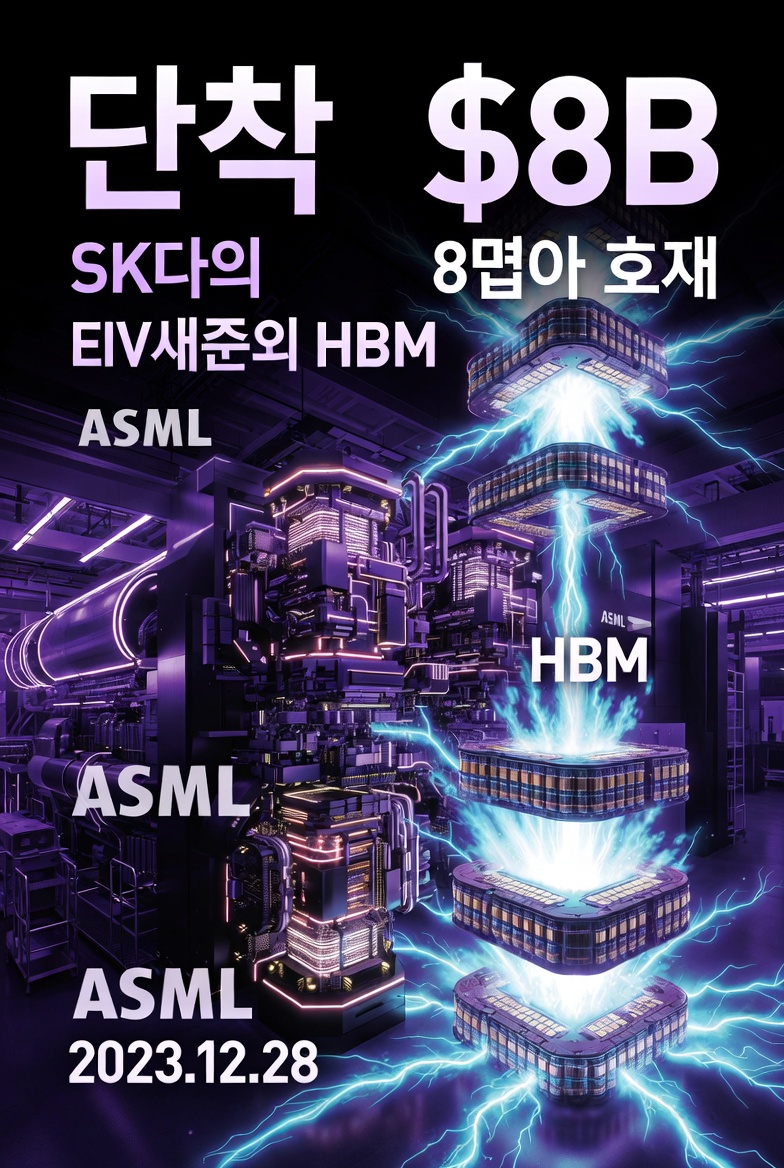
🚨 Memory giants just dropped a combined ~$16B EUV bomb on ASML — Samsung and SK Hynix each ordering $8B+ in tools...
Pure reaction to the record AI-driven HBM supply squeeze. These orders are for next-gen High-NA and EUV systems to ramp HBM4 and advanced DRAM that Nvidia and the hyperscalers are demanding yesterday. The squeeze is real and getting tighter.
Opinion: This is the clearest proof yet that AI demand is no longer “future” — it’s rewriting capex cycles right now. Contrarian take: $ASML is the biggest winner here, not the memory makers. Geopolitical risk? Minimal for ASML (Europe-based), but if delivery slips even one quarter the entire AI training timeline gets pushed. X chatter is missing how this directly props up TSMC 2nm economics too.
**Poll:**
A) These EUV orders finally solve the HBM crunch in 2026
B) Still too little too late — shortages persist
C) ASML is quietly the AI infrastructure king
@ASMLcompany your order book just got even fatter. Tag @dylan522p or any memory supply-chain KOL and tell us when you expect first HBM4 samples. For the full granular breakdown, follow the conversation on Telegram: https://t.co/VNEYpFpdAL
#Semiconductors #ASML #EUV #HBM #AIchips