Most people think using Claude Code is about writing better prompts.
It’s not.
The real unlock is structuring your repository so Claude can think like an engineer.
If your repo is messy, Claude behaves like a chatbot.
If your repo is structured, Claude behaves like a developer living inside your codebase.
Your project only needs 4 things:
• the why → what the system does
• the map → where things live
• the rules → what’s allowed / forbidden
• the workflows → how work gets done
I call this:
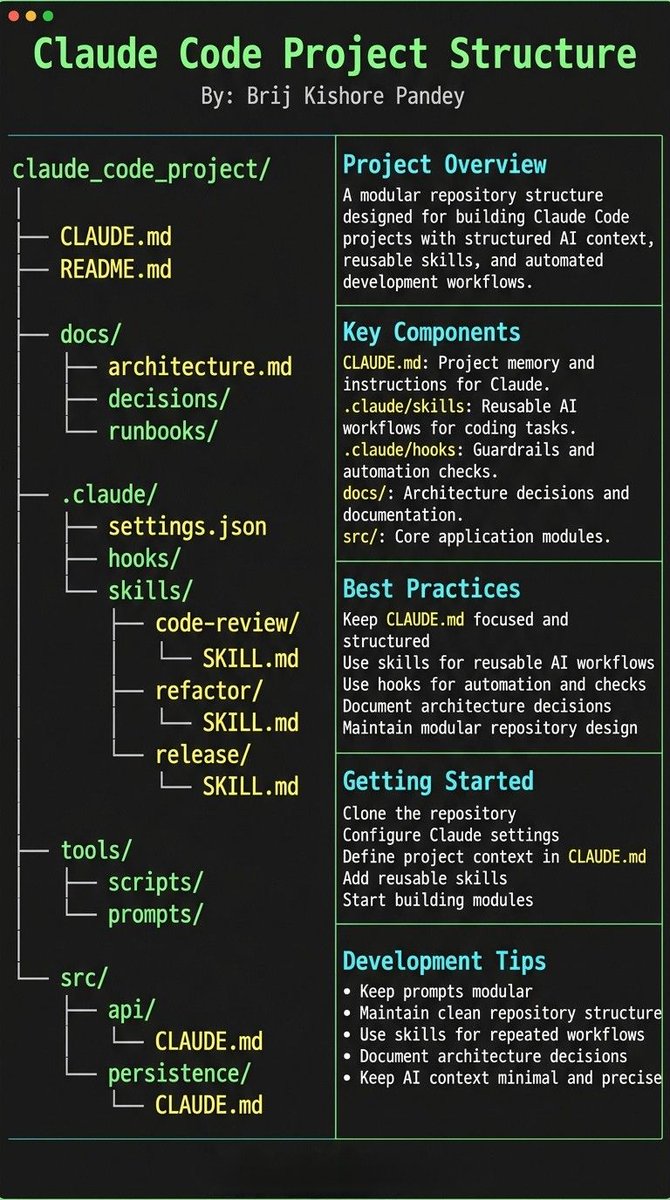
The Anatomy of a Claude Code Project 👇
━━━━━━━━━━━━━━━
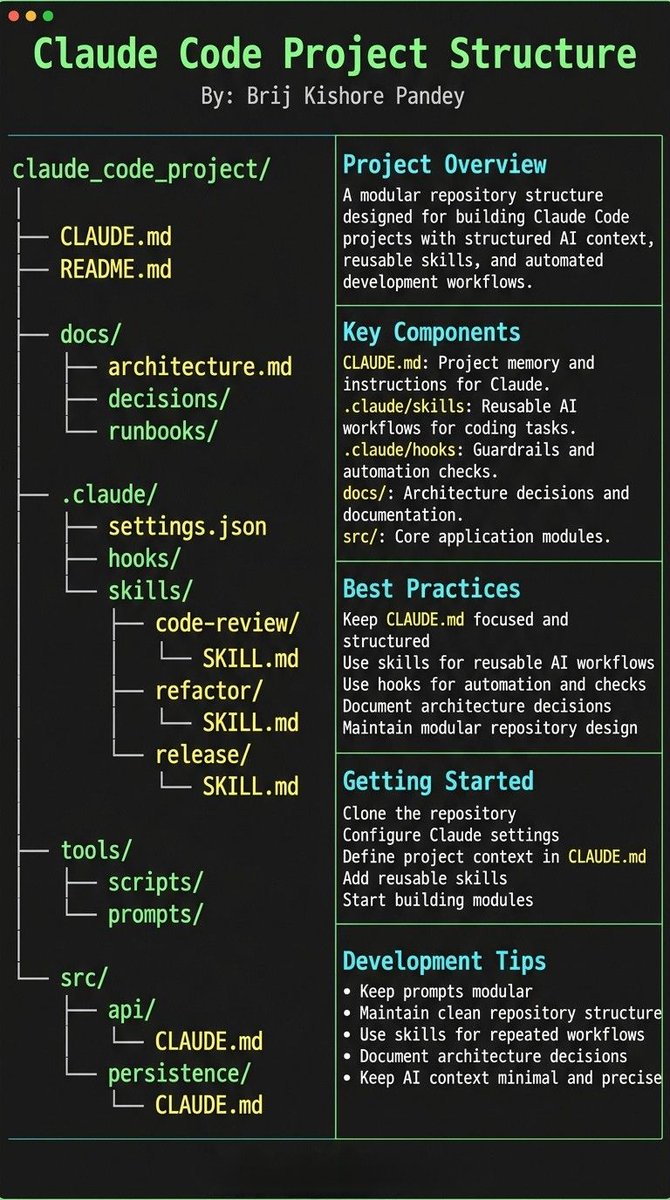
1️⃣ CLAUDE.md = Repo Memory (Keep it Short)
This file is the north star for Claude.
Not a massive document.
Just three things:
• Purpose → why the system exists
• Repo map → how the project is structured
• Rules + commands → how Claude should operate
If CLAUDE.md becomes too long, the model starts missing critical signals.
Clarity beats size.
━━━━━━━━━━━━━━━
2️⃣ .claude/skills/ = Reusable Expert Modes
Stop repeating instructions in prompts.
Turn common workflows into reusable skills.
Examples:
• code review checklist
• refactoring playbook
• debugging workflow
• release procedures
Now Claude can switch into specialized modes instantly.
Result:
More consistent outputs across sessions and teammates.
━━━━━━━━━━━━━━━
3️⃣ .claude/hooks/ = Guardrails
Models forget.
Hooks don’t.
Use hooks for things that must always happen automatically.
Examples:
• run formatters after edits
• trigger tests after core changes
• block sensitive directories (auth, billing, migrations)
Hooks turn AI workflows into reliable engineering systems.
━━━━━━━━━━━━━━━
4️⃣ docs/ = Progressive Context
Don’t overload prompts with information.
Instead, let Claude navigate your documentation.
Examples:
• architecture overview
• ADRs (engineering decisions)
• operational runbooks
Claude doesn’t need everything in memory.
It just needs to know where truth lives.
━━━━━━━━━━━━━━━
5️⃣ Local CLAUDE.md for Critical Modules
Some areas of your system have hidden complexity.
Add local context files there.
Example:
src/auth/CLAUDE.md
src/persistence/CLAUDE.md
infra/CLAUDE.md
Now Claude understands the danger zones exactly when it works in them.
This dramatically reduces mistakes.
━━━━━━━━━━━━━━━
Here’s the shift most people miss:
Prompting is temporary.
Structure is permanent.
Once your repository is designed for AI:
Claude stops acting like a chatbot...
…and starts behaving like a project-native engineer. 🚀
Most people treat CLAUDE.md like a prompt file.
That’s the mistake.
If you want Claude Code to feel like a senior engineer living inside your repo, your project needs structure.
Claude needs 4 things at all times:
• the why → what the system does
• the map → where things live
• the rules → what’s allowed / not allowed
• the workflows → how work gets done
I call this:
The Anatomy of a Claude Code Project 👇
━━━━━━━━━━━━━━━
1️⃣ CLAUDE.md = Repo Memory (keep it short)
This is the north star file.
Not a knowledge dump. Just:
• Purpose (WHY)
• Repo map (WHAT)
• Rules + commands (HOW)
If it gets too long, the model starts missing important context.
━━━━━━━━━━━━━━━
2️⃣ .claude/skills/ = Reusable Expert Modes
Stop rewriting instructions.
Turn common workflows into skills:
• code review checklist
• refactor playbook
• release procedure
• debugging flow
Result:
Consistency across sessions and teammates.
━━━━━━━━━━━━━━━
3️⃣ .claude/hooks/ = Guardrails
Models forget.
Hooks don’t.
Use them for things that must be deterministic:
• run formatter after edits
• run tests on core changes
• block unsafe directories (auth, billing, migrations)
━━━━━━━━━━━━━━━
4️⃣ docs/ = Progressive Context
Don’t bloat prompts.
Claude just needs to know where truth lives:
• architecture overview
• ADRs (engineering decisions)
• operational runbooks
━━━━━━━━━━━━━━━
5️⃣ Local CLAUDE.md for risky modules
Put small files near sharp edges:
src/auth/CLAUDE.md
src/persistence/CLAUDE.md
infra/CLAUDE.md
Now Claude sees the gotchas exactly when it works there.
━━━━━━━━━━━━━━━
Prompting is temporary.
Structure is permanent.
When your repo is organized this way, Claude stops behaving like a chatbot…
…and starts acting like a project-native engineer.
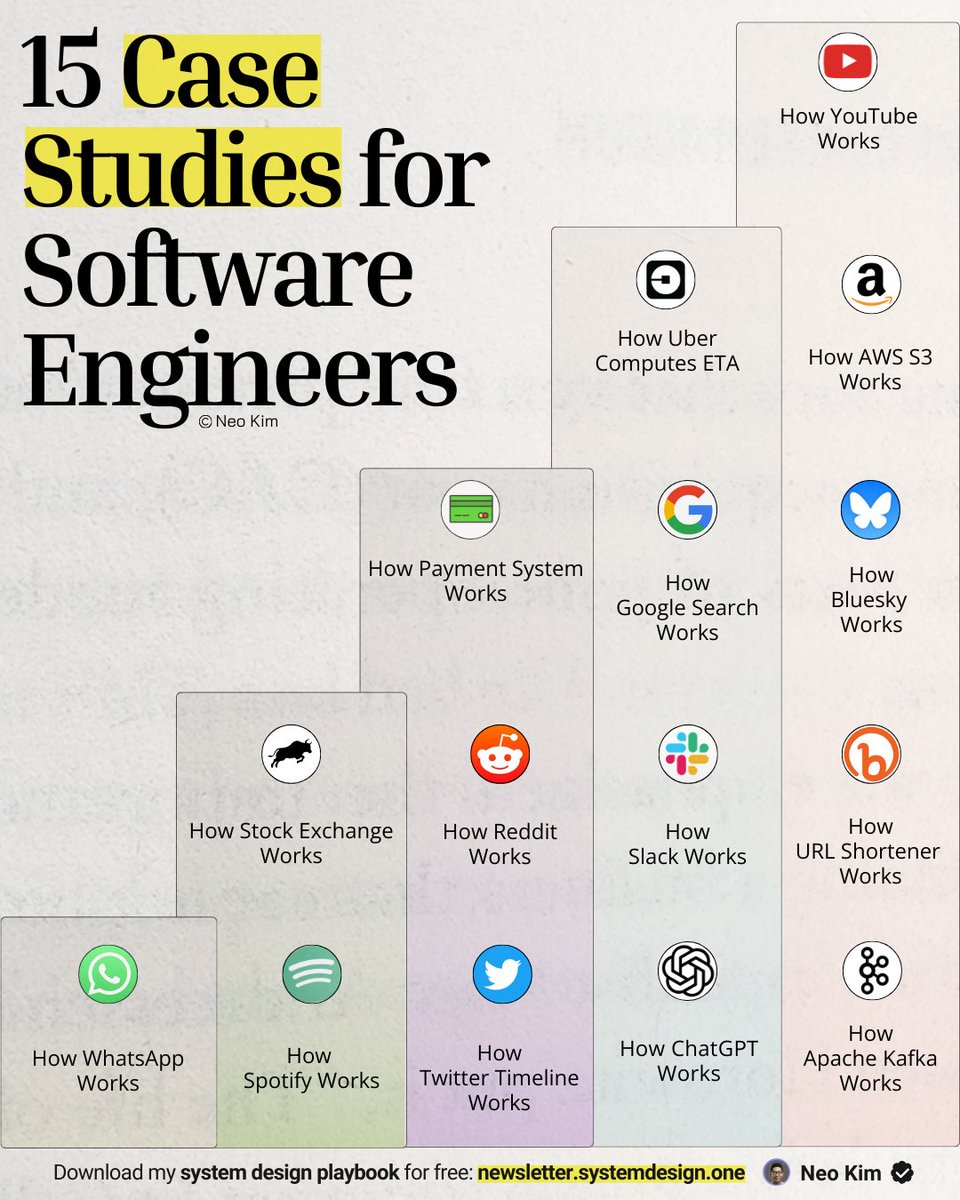
If you want to become good at system design, learn these 15 case studies (save this now):
1 How ChatGPT Works:
↳ https://t.co/TZYZ3iddYH
2 How Google Search Works:
↳ https://t.co/jwOaC4bhnv
3 How Uber Computes ETA:
↳ https://t.co/hw1hYJqQmj
4 How Amazon S3 Works:
↳ https://t.co/iReWAEHwmj
5 How YouTube Works:
↳ https://t.co/kHk3g6jz6t
6 How Kafka Works:
↳ https://t.co/8rOy9KgCMo
7 How WhatsApp Works:
↳ https://t.co/VScq8QwHMr
8 How Spotify Works:
↳ https://t.co/BxrH3oHIFS
9 How Slack Works:
↳ https://t.co/eIo29uOQOJ
10 How Reddit Works:
↳ https://t.co/o6Pw2hhj3T
11 How Bluesky Works:
↳ https://t.co/2rLYlRlky0
12 How Twitter Timeline Works:
↳ https://t.co/pF2RYmPaIG
13 How URL Shortener Works:
↳ https://t.co/tGndgdhH0V
14 How Payment System Works:
↳ https://t.co/ARiLxGR43G
15 How Stock Exchange Works:
↳ https://t.co/iFNSX9TM9O
What else should make this list?
——
👋 PS - Want my System Design Playbook for FREE?
Click the link below to join my newsletter right now:
→ https://t.co/ByOFTtOihX
(200K+ software engineers have already signed up.)
———
💾 Save this for later & RT to help other software engineers ace system design.
👤 Follow @systemdesignone + turn on notifications.
😱Anthropic isn’t just building chatbots
They’re building a system that can think, code & execute
And most people are using it wrong.
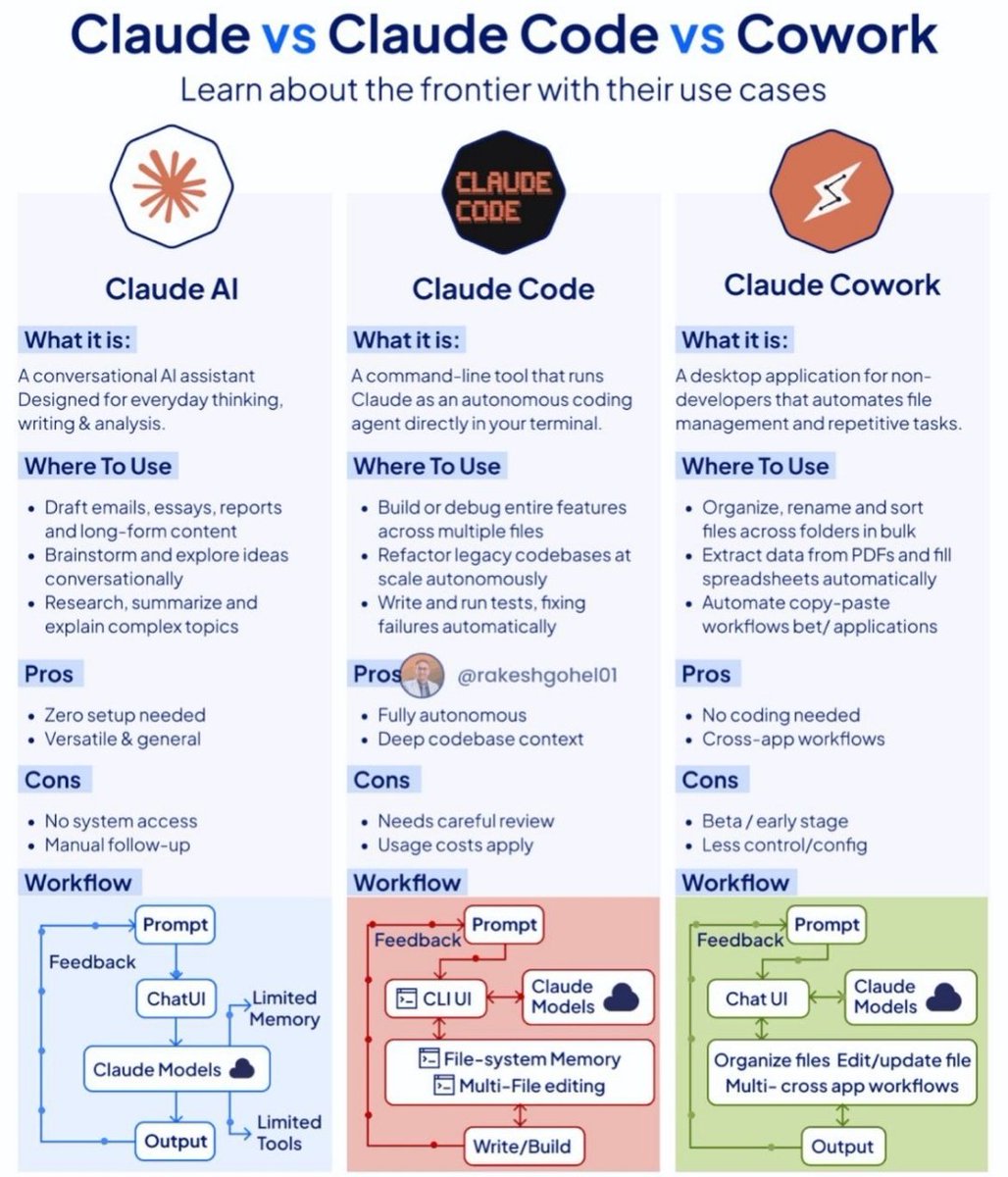
There are actually 3 different Claudes — and each one replaces a different type of work:
1. Claude AI → replaces Google + docs + junior research
• Writing, thinking, summarizing, ideation
• Zero setup, pure conversation
2. Claude Code → replaces hours of engineering work
• Reads your entire codebase
• Edits multiple files
• Writes, debugs, and runs tests autonomously
3. Claude Cowork → replaces repetitive computer tasks
• Renames, organizes, and edits files in bulk
• Extracts data from PDFs → spreadsheets
• Automates cross-app workflows
Simple rule:
• Thinking → Claude AI
• Building → Claude Code
• Doing → Claude Cowork
Most people only use the first.
The leverage is in the other two