A meta-analysis of elite Olympic athletes (top 16 in the world) found they:
• Started their sport at 10 years old
• Focused on their sport at 15
• Skiing, soccer, basketball, and hockey players sampled other sports for 7 years
The authors concluded: “Only after the age of 12 should the volumes of deliberate practice increase so that an athlete can specialise in one sport.”
Recently read a new meta-analysis on the use of imagery in athletes. The data across 86 studies and 3,593 athletes tells a story that challenges how most athletes approach mental rehearsal. [1/5]
For drivers and performance coaches: this suggests imagery protocols should be short, structured, and consistent. Not crammed in before race weekend. And they should be part of a broader mental skills program, not a standalone tool. Quality reps over quantity. [5/5]
1/ For 250 years, America has been forged by partnerships of American business and labor. 🇺🇸
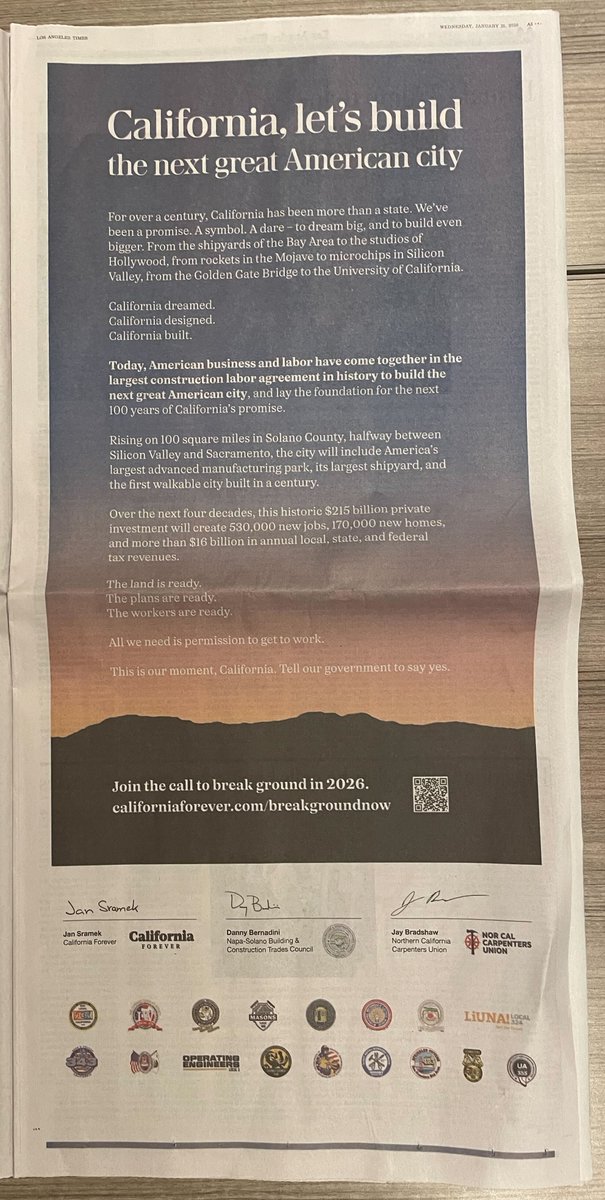
Today, business and labor have come together in the largest construction labor agreement in history to build the next great American city, and call on California to break ground in 2026.
This piece by @KelseyTuoc makes me simultaneously happy for my home state (way to go MS) and furious about the state I currently live in (what are we doing CA).
Bad educational outcomes are policy choices.
https://t.co/DNX0GsKH7o
"AI isn't replacing radiologists" good article
Expectation: rapid progress in image recognition AI will delete radiology jobs (e.g. as famously predicted by Geoff Hinton now almost a decade ago). Reality: radiology is doing great and is growing.
There are a lot of imo naive predictions out there on the imminent impact of AI on the job market. E.g. a ~year ago, I was asked by someone who should know better if I think there will be any software engineers still today. (Spoiler: I think we're going to make it). This is happening too broadly.
The post goes into detail on why it's not that simple, using the example of radiology:
- the benchmarks are nowhere near broad enough to reflect actual, real scenarios.
- the job is a lot more multifaceted than just image recognition.
- deployment realities: regulatory, insurance and liability, diffusion and institutional inertia.
- Jevons paradox: if radiologists are sped up via AI as a tool, a lot more demand shows up.
I will say that radiology was imo not among the best examples to pick on in 2016 - it's too multi-faceted, too high risk, too regulated. When looking for jobs that will change a lot due to AI on shorter time scales, I'd look in other places - jobs that look like repetition of one rote task, each task being relatively independent, closed (not requiring too much context), short (in time), forgiving (the cost of mistake is low), and of course automatable giving current (and digital) capability. Even then, I'd expect to see AI adopted as a tool at first, where jobs change and refactor (e.g. more monitoring or supervising than manual doing, etc). Maybe coming up, we'll find better and broader set of examples of how this is all playing out across the industry.
About 6 months ago, I was also asked to vote if we will have less or more software engineers in 5 years. Exercise left for the reader.
Full post (the whole The Works in Progress Newsletter is quite good):
https://t.co/ON3GwlI3mi
Many are uncertain about the future... Uncertainty breeds fear... Fear breeds irrational actions.
Let me be clear, the Future is Better Than You Think. We are creating increasing abundance on Earth, extending the human healthspan, demonetizing and democratizing education, energy, healthcare.
This is the most extraordinary time ever to be alive!
Just launched a GitHub repo focused on using computer vision to understand human movement. Starting with joint angle detection for squats.
Built for biomechanics classrooms & anyone learning CV.
Inspired by @DrivelineBB & @drivelinekyle.
https://t.co/aoOhHdPnfR
gpt-oss is out!
we made an open model that performs at the level of o4-mini and runs on a high-end laptop (WTF!!)
(and a smaller one that runs on a phone).
super proud of the team; big triumph of technology.
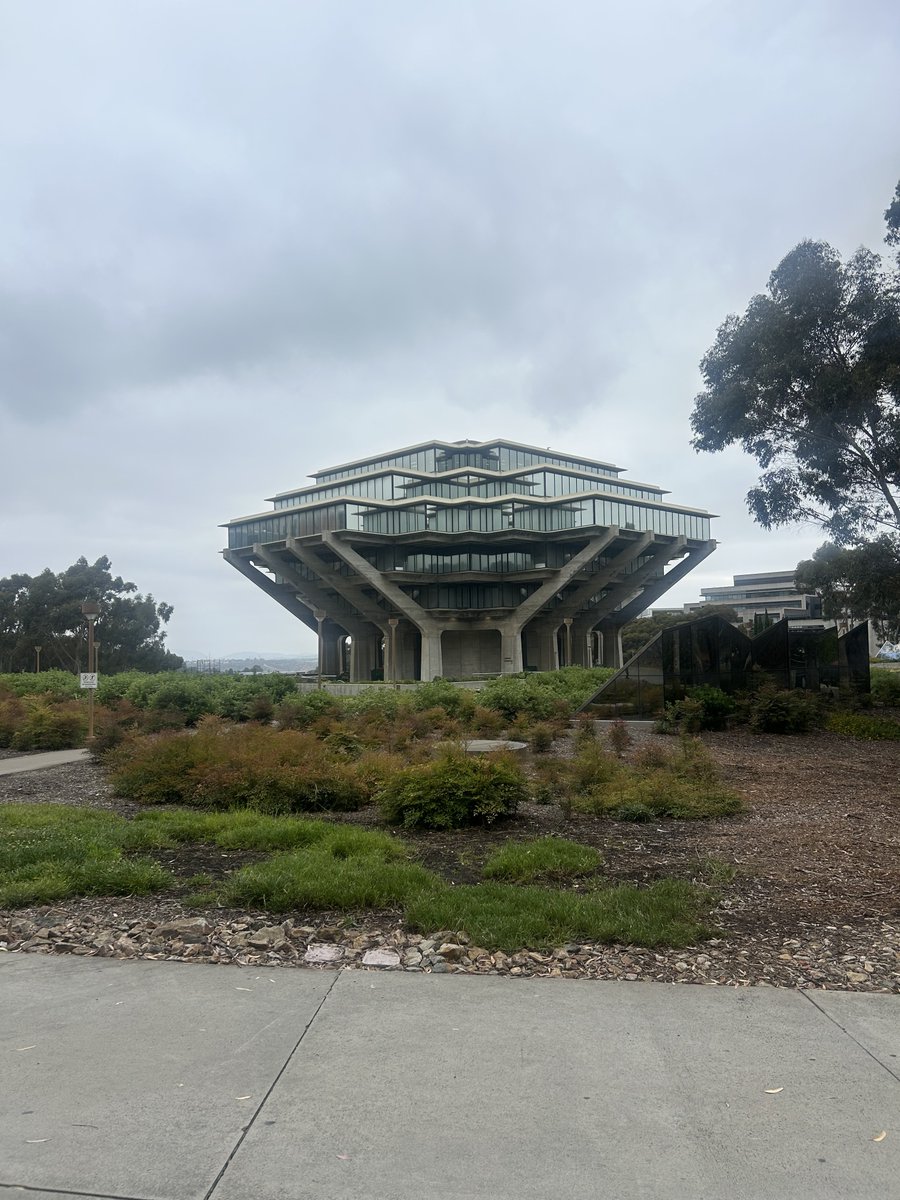
I have really enjoyed the Cyberinfrastrcture-Enabled Machine Learning program at @SDSC_UCSD this week! If you are interested in ML applications for large compute clusters, you should check out their programming.
The journal system isn’t just inefficient — it’s distorting science itself.
At Astera, we’ve opted out. No more journals. No shaping work around “publishable units.” Just good science, published faster and more openly.
Here’s why we believe publishing needs a complete rethink:
https://t.co/SLO9vrmtr9