I am immensely grateful for this opportunity and very much looking forward to start working on this project. Thank you to everybody who helped me making this possible.
Huge congratulations to Keele��s Dr Christine Reitmayer, who has received a prestigious fellowship from @UKRI_News to advance her work studying new ways of halting the spread of deadly mosquito-borne disease 👏
Read more ➡️ https://t.co/PVxTD4qQdE
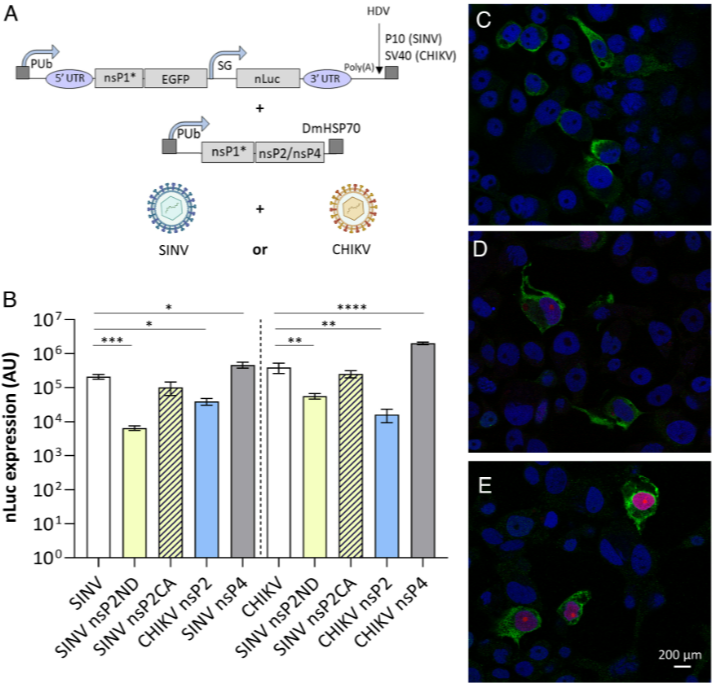
Very happy to share this work with everyone - mimicking superinfection exclusion as a refractory mechanism against alphaviruses in mosquitoes.
@AlpheyLab@ChrisReitmayer@ArbovirusAlba@Pirbright_Inst
https://t.co/iBlFOeLpuP
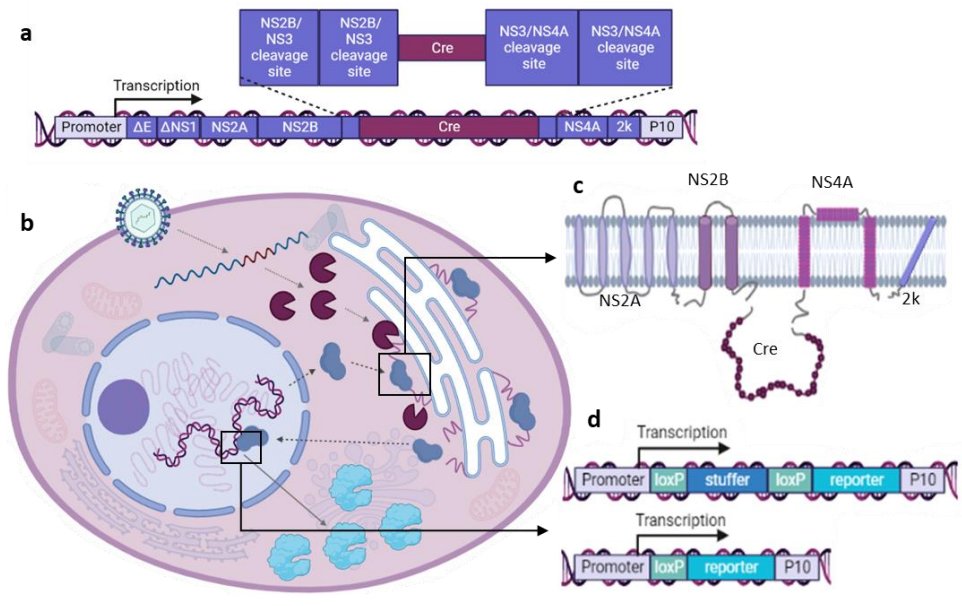
Engineered death upon infection! Check out this pre-print describing a ZIKV responsive sensor coupled to a lethal effector in Aedes aegypti. @ArthropodGen's @ChrisReitmayer, Emily Levitt, @AlpheyLab, @ArbovirusAlba https://t.co/B7qrxm0PBC
Out in PNAS today! Our paper showing how the female sex-determination system in diamondback moth (PxyFem) evolved through retrotransposition of an existing male-determining gene (PxyMasc).
https://t.co/W8PgZb49Pp
🚨Hi everyone, there is an #arbovirus meeting on next week featuring some fantastic science and good presenters, organised by Andres Merits. It's a hybrid meeting that is on location 🇪🇪, or accessed by zoom. Highly recommended!🚨
Today marks exactly two months to go before I’ll start my alp crossing. So from now on, I’m not only packing an apple but also some diving weights in my ‘up and down the hills hike after work’ backpack.
Interested in mosquito research? We’re looking for a motivated person to join us at this exciting, final stage of the project when years of work all come together.
We have a highly active Cas9 expressing diamondback moth (Plutella xylostella) line which shows 100% mosaicism and some germline activity. We would be happy to share this with the research community. Please message us ASAP if you are interested. Happy Friday!
@ChrisReitmayer @CourtneyMurdoc3 @MossieCator @Harrington_lab explore mating strategy and immune response in the yellow fever mosquito, finding that harmonic convergence predicts offspring immune responses, and to a stronger degree in males than females. https://t.co/ooJcNu9UYe
Diamondback moths are highly invasive pests of brassicas, costing upwards of US $5 billion a year in damage and control measures. Resistant to most classes of insecticides, this genetic control method could hold the key to reducing their impact https://t.co/Z0CSO7hsn5 @AlpheyLab
Out today, our paper reviewing the role of Culex quinquefasciatus as an invasive threat to island bird communities and options for its genetic control:
https://t.co/EtKJ1ghbtd
Our new publication "Considerations for Human Blood-Feeding and Arthropod Exposure in Vector Biology Research: An Essential Tool for Investigations and Disease Control" is out. I hope this will be a useful resource for our VBD research community! https://t.co/sx1tiU1tng
Out now: New tools for gene drive. We identified two eye pigmentation genes in the diamondback moth and used CRISPR to characterise their knockout phenotypes. @xux41423947
https://t.co/MpiynhHBCB