With a focus on education, healthcare, and global prosperity (@GlobalCCI), the Institute works to create positive social change through the power of innovation.
"Not switching schools" is too often read as a measure of parental and child satisfaction.
But a new national survey of 2,000+ parents finds 26% are actively considering a school switch but haven't yet—not from indifference, but because aspiration alone rarely clears the bar that crisis does.
That's the insight most school-choice policies are missing. @edchoice@ArnettTom https://t.co/P2fL5ixiEU
#K12Ed #SchoolChoice #EducationPolicy
Lower-income parents are nearly twice as likely to cite tuition costs as a barrier to switching schools.
Higher-income parents' biggest barrier? Social ties: friends and family preferring the current school.
Same behavior. Completely different obstacles. And the lower rate of social barrier reporting among lower-income families doesn't mean community matters less to them—it means financial costs are crowding everything else out.
New survey from @edchoice + @ArnettTom: https://t.co/P2fL5ixiEU
#SchoolChoice #K12Ed #EducationEquity
The school choice narrative imagines families leaving district schools and not looking back.
The data has a different story: 61% of families who left private, charter, or homeschool settings chose a district school when they switched again.
Why they returned isn't the same as why they left…and that gap matters.
New survey by @ArnettTom and @edchoice: https://t.co/P2fL5ixiEU
#SchoolChoice #K12Ed #PublicEducation
3/ This is the finding that should reframe how we think about school choice policy.
The biggest group of would-be switchers isn't blocked by logistics or tuition—they're stuck at the gap between wanting something better and being willing to risk what they already have.
That gap is where policy needs to look.
https://t.co/P2fL5ixQus
@edchoice@ArnettTom
#SchoolChoice #K12Ed
We've known parents switch their kids’ schools. What we haven't known is why some do and why so many don't, despite wanting to.
A new nationally representative survey of >2K parents finally starts answering that.
Research by @ArnettTom and @edchoice. Full findings: https://t.co/P2fL5ixQus
#SchoolChoice #K12Ed #EducationResearch
2/ Among parents who did switch: ~26% were in crisis: bullying, a child dreading school, or safety concerns. That urgency overcame the barriers.
Among parents who want to switch but haven't: only 17% are in crisis. 53% are motivated by whole-child development aspirations.
Wanting something better rarely crosses the action threshold on its own.
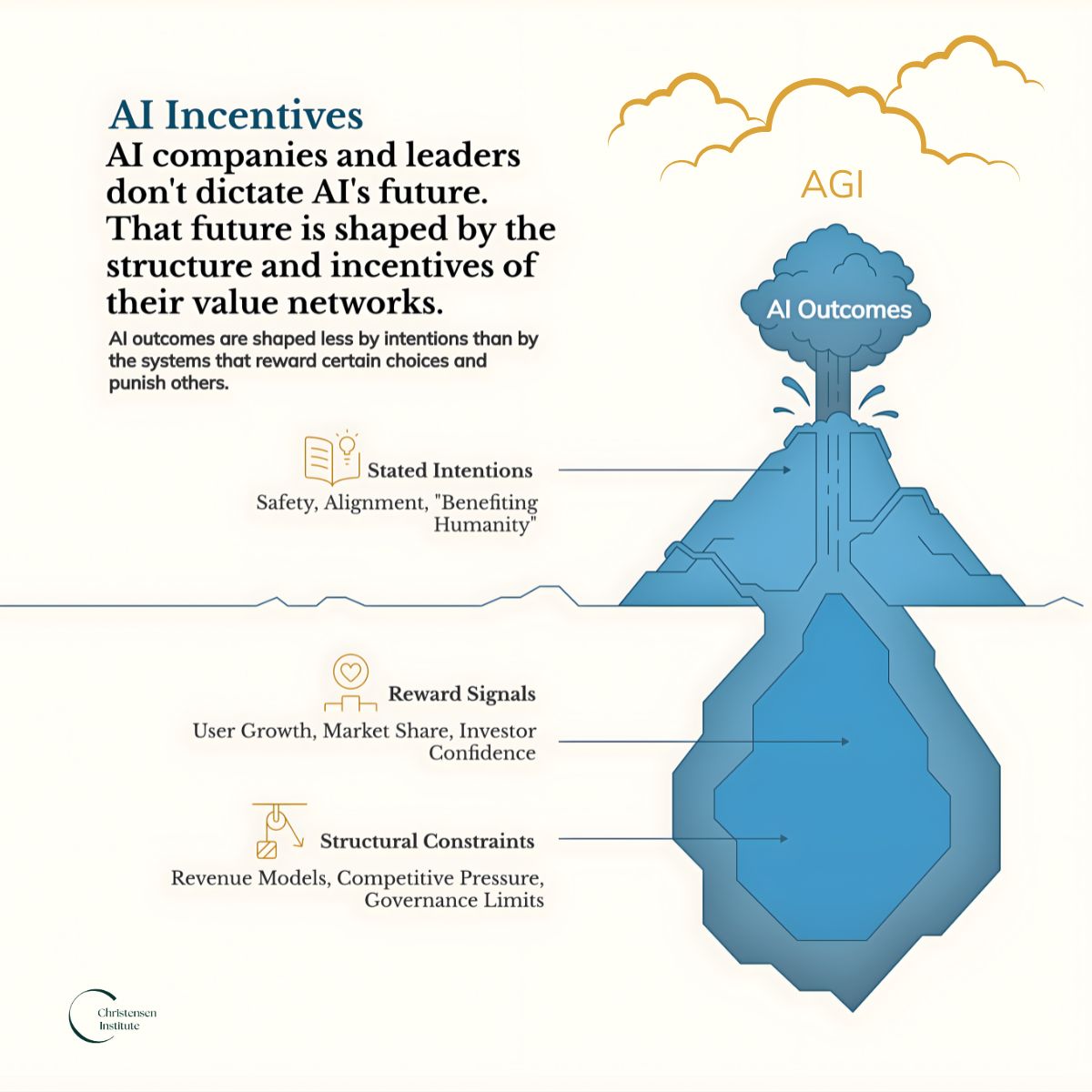
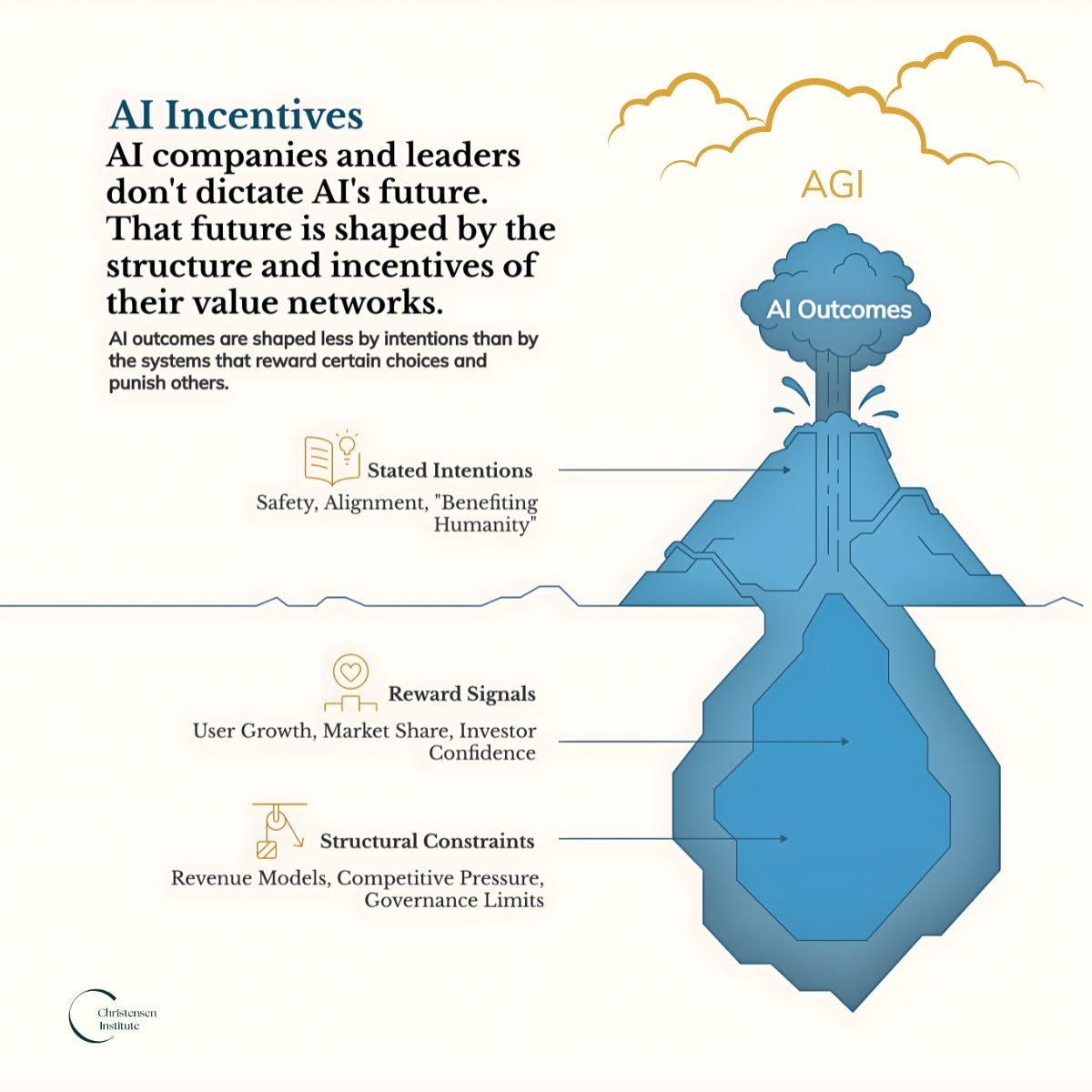
Why did two AI companies make opposite decisions on the same Pentagon request?
Not just values. Not just leadership.
As @ArnettTom explains, the answer is value networks.
The customers, investors, and business models are shaping what each company can actually do.
https://t.co/9WOBfZatio
#AI #Strategy
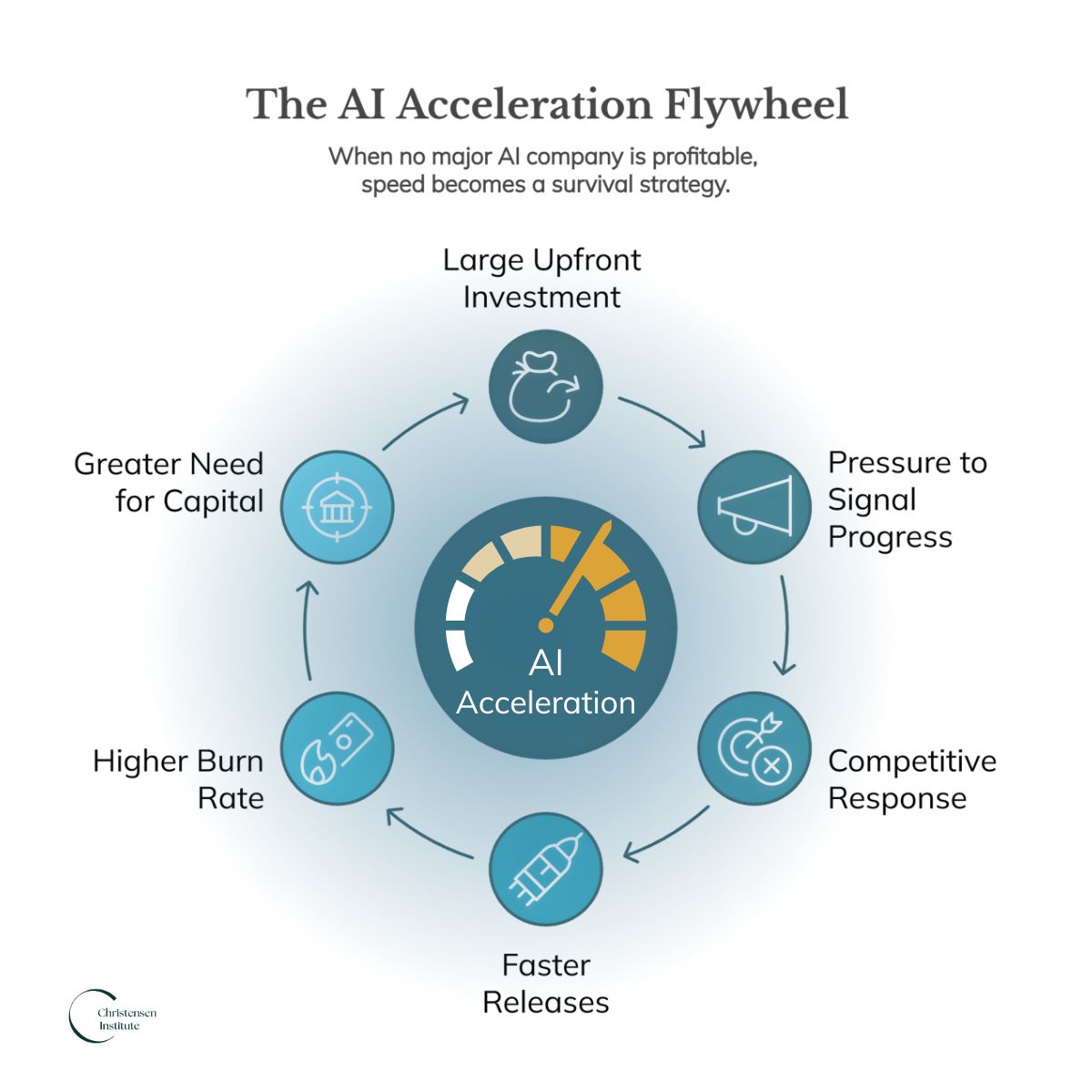
When no major AI company is profitable, speed becomes a survival strategy.
For @OpenAI, massive capital investment and intense competition make acceleration a rational choice, even when risks are well understood.
New report from the Christensen Institute: https://t.co/JsI3eByFNo
@ArnettTom #AI
Although the smaller scale of microschools offer a lot of advantages to learning, it poses challenges to offering the extracurricular experiences that have become rites of passage in American culture.
As @ArnettTom of the @ChristensenInst describes here, the prospect of losing access to these experiences prevents many students from considering other schooling options.
I sat down with Tom and @TylerThigpen of The Institute for Self-Directed Learning and @forestschoolPF to talk about how microschools are finding creative ways to offer these experiences to their students.
Business models matter for AI outcomes.
At @Meta, AI development is embedded in an advertising system that rewards engagement. At AI scale, that incentive structure carries familiar but amplified risks.
New research from the Christensen Institute: https://t.co/JsI3eBzdCW
@ArnettTom #AI
@Google helped invent much of modern AI, but its trajectory is shaped by a powerful tension.
AI development must move fast enough to stay competitive, while protecting a search and advertising business built on trust.
That tension matters.
New report: https://t.co/JsI3eBzdCW
@GoogleDeepMind@ArnettTom #AI
Not all AI labs are governed the same way.
@AnthropicAI's structure reflects an attempt to embed long-term human interests into AI development. The open question is whether those safeguards can withstand competitive and market pressures.
New research from the Christensen Institute: https://t.co/JsI3eBzdCW
@ArnettTom #AI
When governance is thin, incentives and individual judgment matter more.
@xai shows how concentrated control can enable rapid, coherent bets, while also allowing blind spots to scale quickly.
New research from the Christensen Institute: https://t.co/a8cIFisAfQ
@ArnettTom#AI