Want to know more about classes, STAAR tests, how to stay on track AND eat ice cream?? Come on 5/30 at 10:30! @LHerring_MCHS@CardiffColts@MCJHGators Open to incoming 9th graders and upperclassmen!
One of the big discussion points from our How Do We Learn? book study was active learning—learning by thinking. Students need to actively think about the learning object, seek meaning, and connect it to their prior knowledge to make learning meaningful.
This has major implications for how we design learning activities:
✅Clearly define learning objectives
✅Ensure students spend more time thinking about the learning object than not
✅Avoid unnecessary details or context
✅Prioritize tasks that require thinking and meaning-making—explaining, summarizing, analyzing, comparing
I also shared how Project Zero’s Visible Thinking Routines have long been one of my favorite ways to promote learning by thinking in this way.
Here’s a reference document I created a few years ago that categorizes the routines based on the type of thinking you want to emphasize 👇
https://t.co/LHs3xRoE8h
Why it's important to have a consistent set of shared books across a school. When students talk about how book A compares to book B, it really helps if everybody has read both books!
Double-dose Algebra I is one of the few interventions at the high school level to show real promise. Positive effects last into college. But students must be grouped by math skills. When double-dose students near the national median were placed in classes with much lower achieving peers, the positive outcomes disappeared. https://t.co/VaIwa8ZV9x
Early in my coaching career I had a talented player who was chronically five minutes late to everything. Not egregiously late. Just five minutes, every single time. I let it slide because he was good and I didn’t want the conflict.
Within a month, half the team was showing up five minutes late. Nobody said a word. The standard just drifted.
That’s when it hit me. You’re either actively maintaining your standards or you’re passively lowering them. There’s no neutral position.
I’ve also learned that expectations and standards aren’t the same thing, and that distinction matters more than most people realize.
Expectations are the vision. The why. In my programs they’ve always been simple. Have fun. Create great experiences and relationships. Learn and grow. That’s the emotional foundation everything else gets built on.
Standards are the daily behaviors that actually get you there. Be on time. Be trustworthy. Have a growth mindset and work hard. Take responsibility for your actions. Encourage the people around you. Don’t make excuses.
When those are clear and consistent something interesting happens. The standard becomes the authority, not the coach. I don’t have to lecture anyone. I just point to what we all agreed on. The conversation stays about the behavior, not the person. That’s where real accountability lives without anyone feeling attacked.
What I’ve seen over 25 years is that the teams, families, and programs that define these things clearly and hold them consistently almost always outperform the ones with similar talent that don’t.
It’s not magic. It’s just clarity. People do better when they know exactly where the lines are. Kids especially. They don’t struggle in high standard environments. They struggle in ambiguous ones.
Whatever you walk past becomes your new standard. The good news is it works in both directions. Raise the bar and hold it, and the people around you will rise to meet it. Every time.
“We taught “main idea” identification, inferencing, synthesis etc. We built an entire instructional architecture from the symptoms of the problem rather than from its cause. The description of what students could not do was mistaken for an explanation of why they could not do it.”
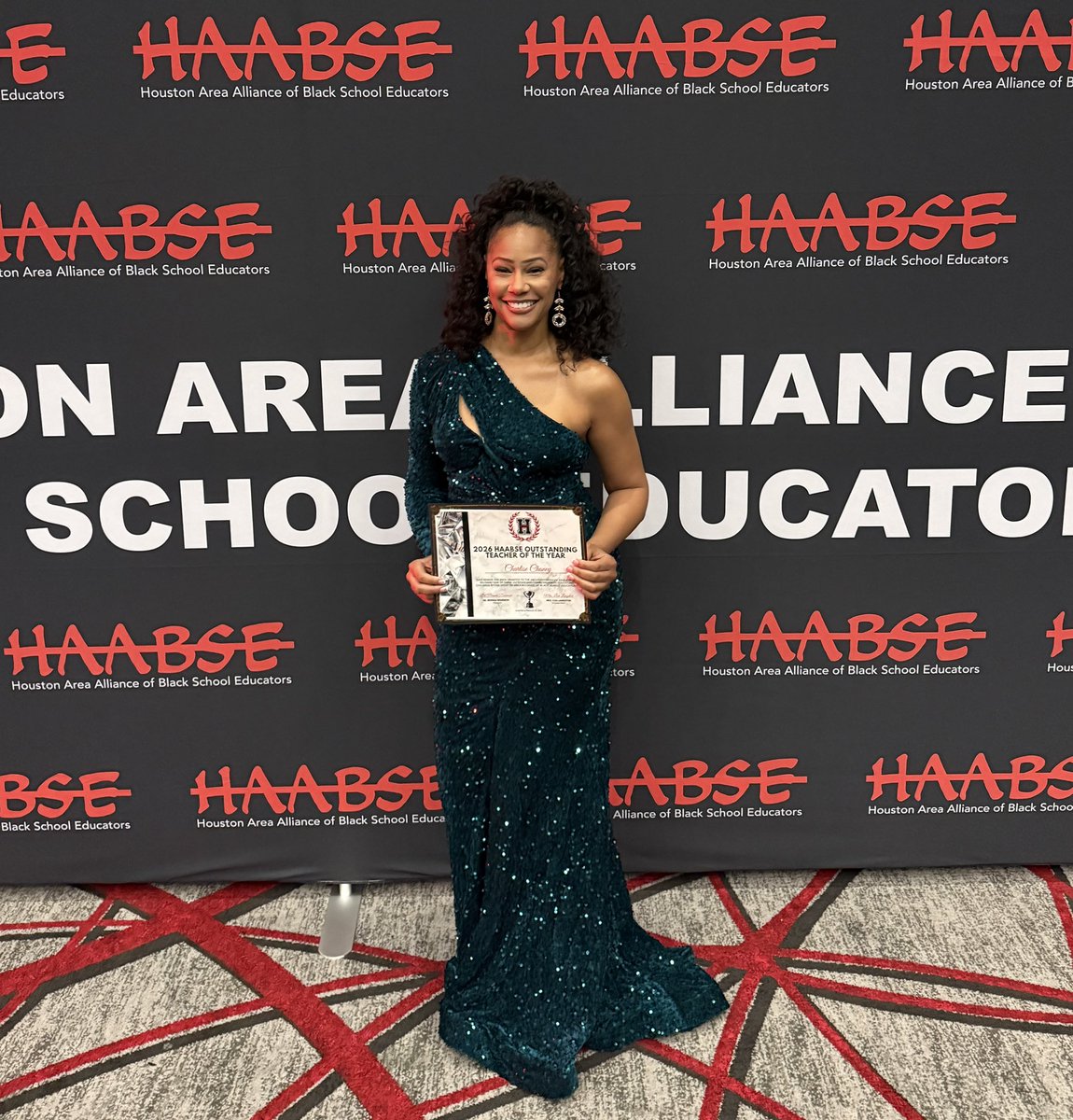
Congratulations to Ms. Charlise Chaney who was honored tonight at the HAABSE Teacher Awards & Recognition Ceremony as the Mayde Creek High School Outstanding Educator of the Year! 🎉
This #BlackHistoryMonth, bring history to life with educational resources from the Gilder Lehrman Institute! This collection includes primary sources, classroom-ready lesson plans, scholarly essays, and videos from our digital programs.
Learn more: https://t.co/5gV654rrwJ
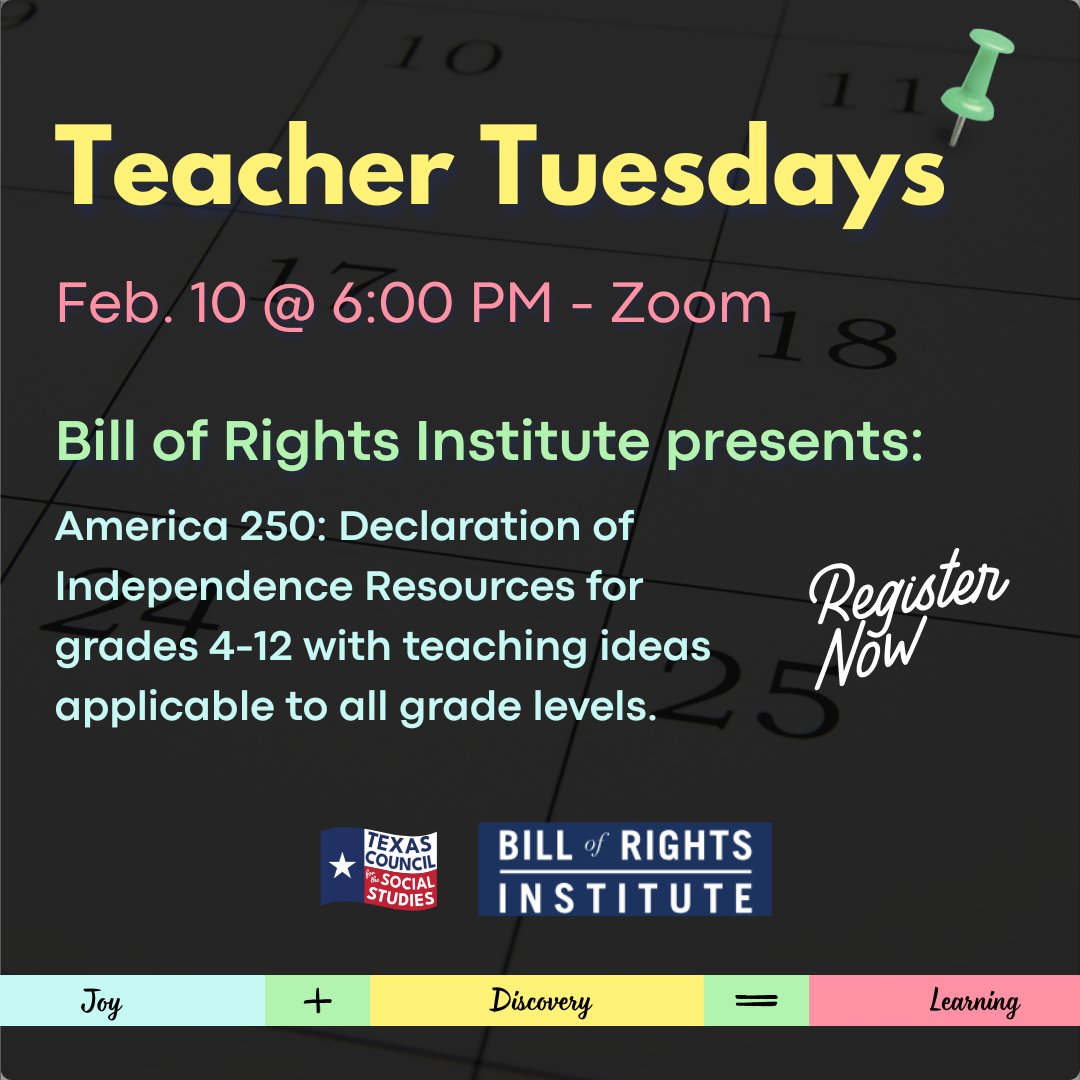
����HAPPY 250th B-Day to the USA! Join #TXCSS for #TEACHERTUESDAY Feb 10 @ 6pm w/ @brinstitute ! Get resources & ideas for teaching the 250th birthday of the country and the Declaration of Independence and its impact! Register today at https://t.co/jPSDkoHHs0
On February 1, not only do we celebrate Black History Month, but we also celebrate the Greensboro 4 where four North Carolina A&T freshmen challenged segregation at the local Greensboro Woolworth's Department Store by sitting at the segregated lunch counter until the store closed. Each successive day, more students joined them while sit ins spread throughout the South and eventually became a sit in movement led by students.
There are many good reasons for writing lessons to be connected to the content students have just learned.
First and foremost, it optimizes for cognitive load, because it removes the need for a student to conjure up content to write about.
This makes the design of The Writing Revolution quite smart:
It coaches teachers on how to craft writing lessons around the content in their curricula.
@natwexler@TheWritingRevol
Calling Texas educators & content experts! Share your expertise in K–12 math, CTE, fine arts and K–5 ELAR & SLAR, and help ensure students statewide have access to high-quality instructional materials.
Apply to be a content reviewer by January 9, 2026.
https://t.co/kiSJREOXJU
#TXCSS#TEACHERTUESDAY: Join us Jan 13, 6-7:30pm, with the @dhhrm_org Learn to teach Upstander stories & Holocaust history using primary sources. Gain TEKS-aligned, cross-curricular strategies & ready-to-use activities. Sign up at https://t.co/jPSDkoHHs0
10 Things Educators Need During a School Break and Why
1. Sleep without an alarm
Your nervous system has been living on adrenaline and cortisol. Deep rest helps reset the brain restore emotional regulation and improve memory mood and immune function.
2. Silence and nothingness
The brain needs quiet to downshift from constant decision making. Mental stillness reduces cognitive overload and allows the prefrontal cortex to come back online.
3. A non rushed bathroom visit
Having to suppress basic bodily needs keeps the brain in a low level stress state. Unrushed bathroom access restores a sense of safety dignity and control which directly calms the nervous system.
4. Laughter that makes your stomach hurt
Laughter releases endorphins and dopamine which naturally reduce stress and anxiety. It also reminds your brain and body that joy still exists outside of survival mode.
5. Connection with people who do not need anything from you
Educators give all day long. Low demand relationships restore emotional energy and protect against compassion fatigue.
6. A slow bath or shower in the morning
Warm water activates the parasympathetic nervous system lowering cortisol and muscle tension. A slow start to the day tells the brain you are safe and not in crisis mode.
7. Food that is eaten slowly and actually enjoyed
Mindful eating supports digestion stabilizes blood sugar and calms the nervous system. Your body deserves nourishment not rushed fuel.
8. Time without solving problems
Constant problem solving keeps the brain in threat detection mode. Breaks from decision making allow the nervous system to recalibrate and reduce mental exhaustion.
9. Reminders that you are more than your job
Identity overload increases burnout risk. Engaging in hobbies or creativity activates different neural pathways and restores a sense of wholeness.
10. A true break with compassion for yourself
Compassion fatigue is real. Prolonged caring without recovery depletes emotional reserves. Rest and self kindness rebuild resilience empathy and long term sustainability.
Final Thought
School breaks are not a luxury. They are neurological and emotional repair time. Rest is not quitting. Rest is what allows educators to return regulated connected and able to keep doing the work that matters so deeply.
Is it true that grace and high expectations are mutually exclusive? Not really. Still, that is what some people claim.
Let me illustrate what I think their thinking is wrong.
1. Grace is about how you respond to mistakes, while High expectations are about what you believe a student can achieve.
You can respond to a student’s struggle with patience, empathy, and support while still expecting them to meet academic and behavioral standards.
2. Grace removes barriers; expectations set direction.
--Grace says, “I see why this was hard. Let’s adjust, support, or reteach.”
--High expectations say: “And I still believe you can get there.”
3. Grace strengthens the relationship needed for high expectations to work. Kids don’t rise to expectations for adults who dismiss, shame, or punish them into compliance. But kids rise for people who show:
“I’m on your side, and I won’t lower the bar for you, but I also won’t let you fall alone.”
4. Grace is not lowering standards. Grace is lowering barriers, fear, and shame.
5. Real-world learning uses both.
Every adult who becomes skilled at anything has benefited from second chances, patient feedback, space to practice, and someone who believed they could succeed, so do students.
So as a teacher, you can and should be able to have high expectations while knowing how to extend grace. To thrive in schools, kids need both.
As a survivor of the Tulsa Race Massacre, Viola Ford Fletcher bravely shared her story so that we’d never forget this painful part of our history. Michelle and I are grateful for her lifelong work to advance civil rights, and send our love to her family. https://t.co/km7RXnDKcW
Children will rise to the expectations we set.
Just as explicit instruction should not be negotiable when teaching novice learners, there should be a non-negotiable expectation that all students display behaviors that support learning. When we don't, it is a clear sign that we don't believe that all kids can learn.
We need to abandon the bigotry of low expectations.