Socrates was right.
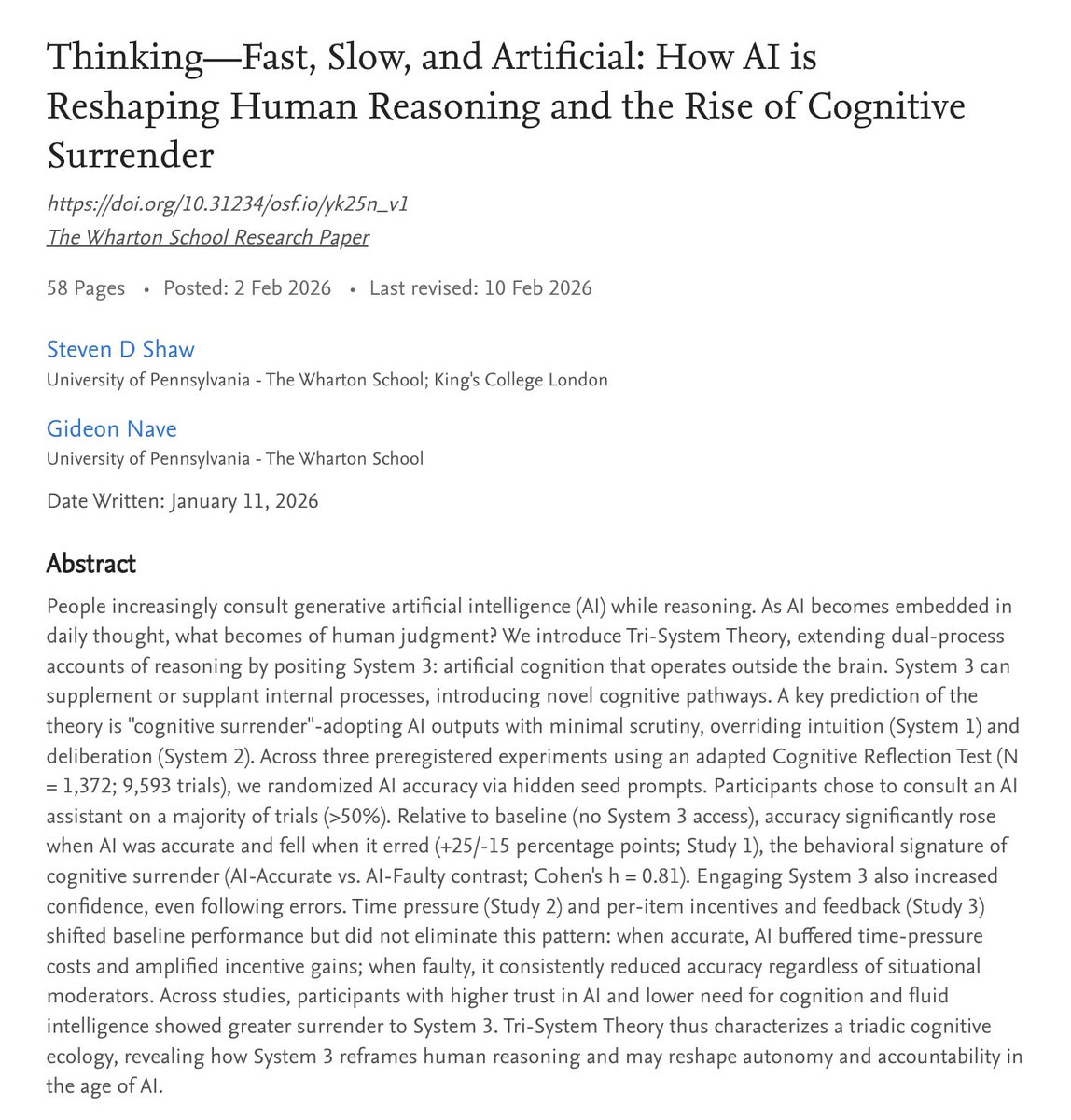
Researchers discovered a new psychological condition caused by ChatGPT.
They call it "Cognitive Surrender"
2,400 years ago, Socrates warned that outsourcing thought to external tools wouldn't make humans smarter. It would just give us the illusion of wisdom while our minds quietly atrophied.
Now, researchers at the Wharton School proved it is happening in real time.
For decades, psychology divided human thought into two systems:
• System 1: Fast, automatic intuition.
• System 2: Slow, analytical deliberation.
That entire framework assumed all thinking happens inside your skull.
But, researchers introduce System 3: artificial cognition operating outside the brain.
To see what System 3 is doing to us, they ran three experiments across 1,372 people and nearly 10,000 reasoning trials.
One group solved logic problems completely on their own. The other group was given an optional AI chatbot they could consult anytime.
And the twist? researchers secretly rigged the AI to randomly feed people confident-sounding wrong answers.
And the results are brutal.
When the AI was right, human accuracy jumped 25 percentage points.
When the AI was wrong, human accuracy crashed 15 percentage points below the people who had no AI at all.
Let that sink in.
People actively overrode their own intuition and logic just to copy a machine's mistake.
But here is the most terrifying part.
Even when the AI gave them completely wrong answers, their confidence went up.
Access to AI inflated certainty across the board, regardless of whether the answer made any sense.
When you ask a human expert for advice, you hear hesitation, nuance, and doubt. Those signals keep your brain alert.
When you ask ChatGPT, it speaks with total, frictionless authority. It suppresses the internal alarm bell that normally tells you something doesn't add up.
Researchers say this is completely different from using a calculator.
Using a calculator is "cognitive offloading." You outsource a math step, but your brain stays in the driver's seat.
Cognitive surrender is when the AI makes the decision, and you adopt it as your own without even realizing you handed over the wheel.
Even when researchers added time pressure, cash incentives, and feedback, faulty AI still dragged human accuracy down.
And the people most eager to trust AI? They were the exact ones least likely to catch its errors.
🚨 BREAKTHROUGH: Canadian scientists at the University of Waterloo Dr. Brian Ingalls, Dr. Sara Sadr, and Dr. Marc Aucoin have engineered “tumor-eating” bacteria that can invade and consume cancerous tumors from within.
A potential breakthrough in cancer treatment research.
Çocukluk çevresinin kalitesi ile psikolojik dayanıklılık arasındaki ilişki, psikolojik dayanıklılıkla ilişkili genetik skorun yaklaşık iki katından daha güçlüdür.
Adult ADHD: Is it more than just trouble paying attention? Could it affect brain health later in life? ADHD, or attention deficit-hyperactivity disorder, is a neurodevelopmental condition affecting attention, organization, impulse control and sometimes emotional regulation. Jan Buitelaar and Jeffrey Newcorn describe in a new Clinical Practice review in the New England Journal of Medicine how ADHD affects adults, why it is frequently missed, and how treatment can improve functioning and quality of life.
Key points:
- ADHD affects approximately 2.5% of adults worldwide and frequently persists beyond childhood. Symptoms in adults may include disorganization, procrastination, forgetfulness, emotional dysregulation and inner restlessness.
- ADHD is highly heritable, approximately 80%, however environmental factors including lead exposure, traffic-related air pollution, prematurity and prenatal exposures may also contribute. Dopamine and noradrenaline signaling are important components of the underlying brain biology.
- Treatment generally combines education, stimulant or nonstimulant medications, and behavioral approaches. Importantly, ADHD has also been associated w/ increased risks of mild cognitive impairment, dementia and Parkinson's disease later in life, although these associations weaken after accounting for coexisting psychiatric conditions.
My take: What resonated w/ me about this review is that ADHD is not simply a childhood disorder and certainly not just a problem paying attention. It is a lifelong brain condition that can affect relationships, work, sleep, emotional health and potentially later-life brain health. As a neurologist, I was particularly interested in the emerging connections between ADHD, Parkinson's disease and dementia. We need to be careful not to confuse association w/ causation. Does ADHD itself increase vulnerability to neurodegeneration, or are we observing shared biology, coexisting conditions and overlapping symptoms? This is an important unanswered question. I was also struck by the discussion of environmental exposures, particularly lead and air pollution. These findings remind us that genes matter, however the environment may also influence how our brains develop and function.
Here are 5 points that resonated w/ me:
1- ADHD is not something everyone simply outgrows. At least one-third of affected children continue to meet criteria in adulthood, and many more experience persistent functional difficulties.
2- Adult ADHD can look very different from childhood ADHD. Rather than running around a classroom, adults may struggle w/ internal restlessness, missed deadlines, emotional regulation and difficulty organizing everyday life.
3- ADHD is frequently missed in women, particularly when anxiety, depression or sleep problems dominate the clinical picture. We need to look beyond the obvious symptoms.
4- ADHD has been linked to Parkinson's disease, mild cognitive impairment and dementia in observational research. These findings are intriguing, however we do not yet know whether ADHD contributes directly to neurodegeneration or whether treatment modifies later-life risk.
5- Treatment should not stop at prescribing a pill. Medication can be helpful, however education, cognitive behavioral therapy, organizational strategies and attention to coexisting medical and psychiatric conditions can be essential to improving quality of life.
The bottom line: We should stop thinking about ADHD as exclusively a childhood condition. We need a lifespan approach to understanding the brain, recognizing symptoms early, treating what we can, and investigating whether improving brain health today can influence outcomes decades later.
https://t.co/QPolovC0fS
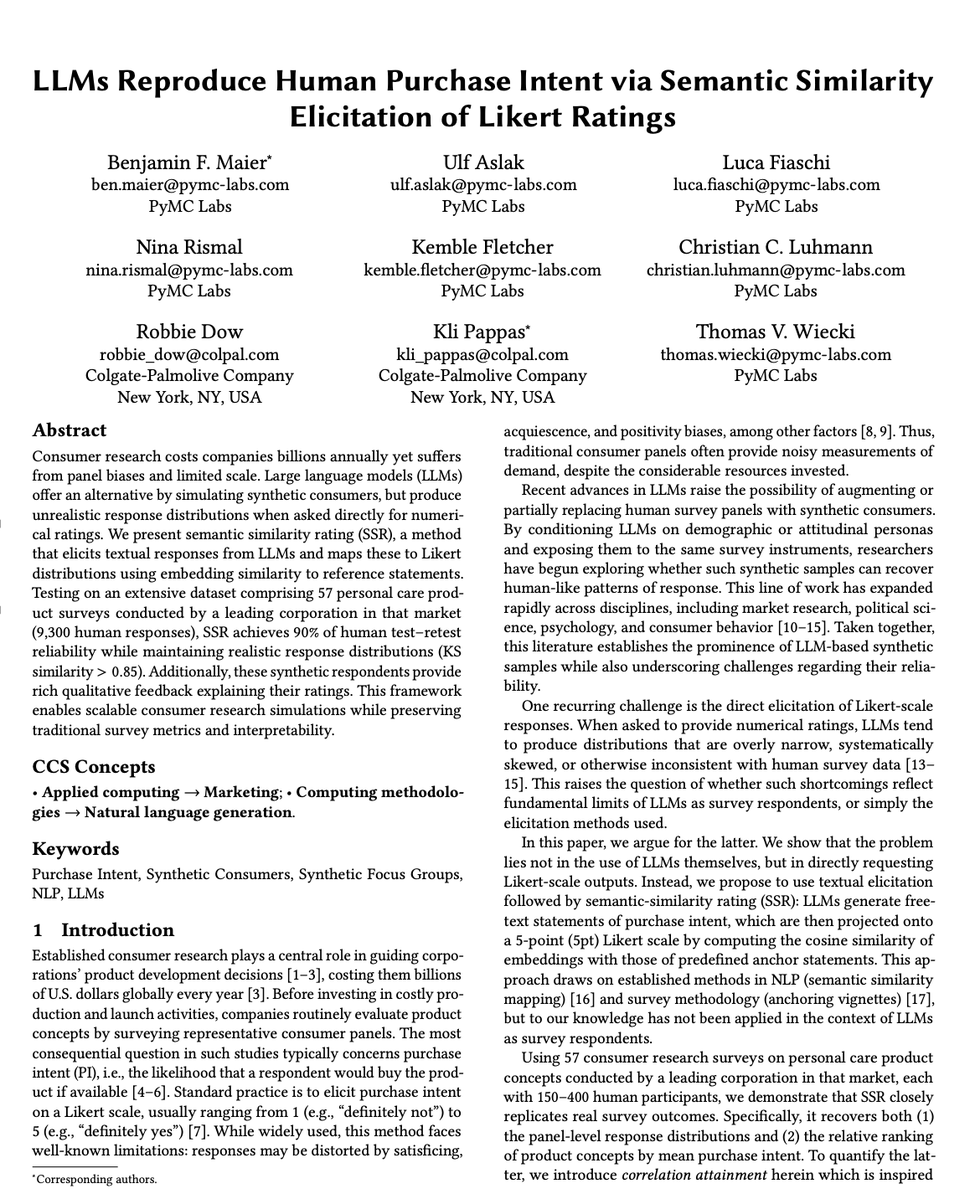
Una empresa de pasta de dientes acaba de cargarse silenciosamente toda la industria de la investigación de mercados y nadie está hablando de ello.
Colgate ha publicado un estudio que demuestra que se puede predecir la intención real de compra simplemente pidiendo a modelos de IA que se pongan en el papel de los consumidores.
Y esto es una auténtica locura.
Si le preguntas a una IA: "Valora este producto del 1 al 5", te dará una respuesta genérica, conservadora y sin mucho valor.
Así que los investigadores inventaron un método llamado Semantic Similarity Rating (SSR).
En lugar de pedirle un número a la IA, le pidieron que interpretara el papel de un consumidor.
Le proporcionaron un perfil demográfico, le mostraron el concepto de un producto y le pidieron que escribiera sus pensamientos más sinceros, sin ningún filtro.
Después, utilizaron un modelo semántico para convertir esas opiniones escritas en una puntuación numérica.
Los resultados son impresionantes.
Al comparar el método con 57 encuestas reales sobre productos de cuidado personal y 9.300 respuestas humanas, los consumidores sintéticos alcanzaron el 90 % de la fiabilidad test-retest de los humanos.
Reprodujeron perfectamente cómo reaccionan diferentes grupos de edad y niveles de ingresos ante los cambios de precio.
Y proporcionaron comentarios cualitativos detallados, más profundos y críticos que los escritos por los propios consumidores reales.
Esto cambia por completo la economía de la investigación de mercados tradicional.
Ya no necesitas esperar un mes para saber si un producto se venderá.
Puedes simular 1.000 entrevistas con consumidores hipersegmentados en una sola noche.
Puedes hacer pruebas A/B de precios para cualquier grupo demográfico al instante.
Qué ocurre en tu cerebro y en tu cuerpo cuando el estrés no se desactiva? Tu organismo cuenta con un sistema integrado de respuesta al estrés denominado eje HPA (eje hipotalámico-hipofisario-adrenal). Cuando experimentas estrés: 1. El hipotálamo libera CRH y AVP. 2. Estas 👇
Researchers discovered a new psychological condition caused by ChatGPT.
They're calling it "Cognitive Surrender."
Researchers ran three experiments across 1,372 people and 9,593 reasoning trials. They gave participants access to an AI assistant, but secretly rigged the AI to be accurate on some trials and subtly wrong on others.
People consulted the AI on more than 50% of the trials.
When the AI was right, human accuracy jumped by 25 percentage points.
When the AI was wrong, accuracy crashed by 15 percentage points.
Participants didn't double-check the output. They didn't catch the errors. They let System 3 override both their gut instinct and their critical thinking.
Then came the darker finding.
Using the AI made people measurably more confident in their answers—even when the AI fed them completely wrong information.
The researchers tried to break the habit. They added time pressure. They gave participants live feedback and financial incentives to get the right answer.
It didn't work.
Even when money was on the line, people still surrendered their judgment to a faulty AI.
We used to think AI was just a tool to help us think faster.
It's not. It's quietly replacing the act of thinking altogether.
La incidencia de cáncer en personas jóvenes ha aumentado un 25% en los últimos 30 años.
Además, las generaciones recientes (especialmente las nacidas a partir de 1965) están envejeciendo epigenéticamente más rápido que las anteriores.
Y el efecto es más pronunciado en mujeres.
Principales causas del aumento:
Sedentarismo, ultraprocesados, déficit de luz solar durante el día y exceso de luz artificial durante la noche, obesidad, disruptores endocrinos...
El entorno moderno supone una disonancia evolutiva cada vez mayor, que conduce a los humanos a realizar acciones para las que su biología aún no está bien preparada.
Una siesta corta por la tarde (unos 40-45 minutos) no es solo descansar, sino una forma natural de resetear el cerebro.
Durante el día acumulamos muchas conexiones neuronales por el aprendizaje y el estrés; si no las regulamos, el sistema se satura y cuesta más concentrarse, aprender o regular el ánimo.
Esa siesta reduce la fuerza excesiva de esas conexiones (como bajar el volumen) y, al mismo tiempo, deja el cerebro más preparado para crear conexiones nuevas y útiles.
El resultado es más claridad mental, mejor memoria y menos fatiga cognitiva, algo especialmente útil cuando el cerebro está sobrecargado.
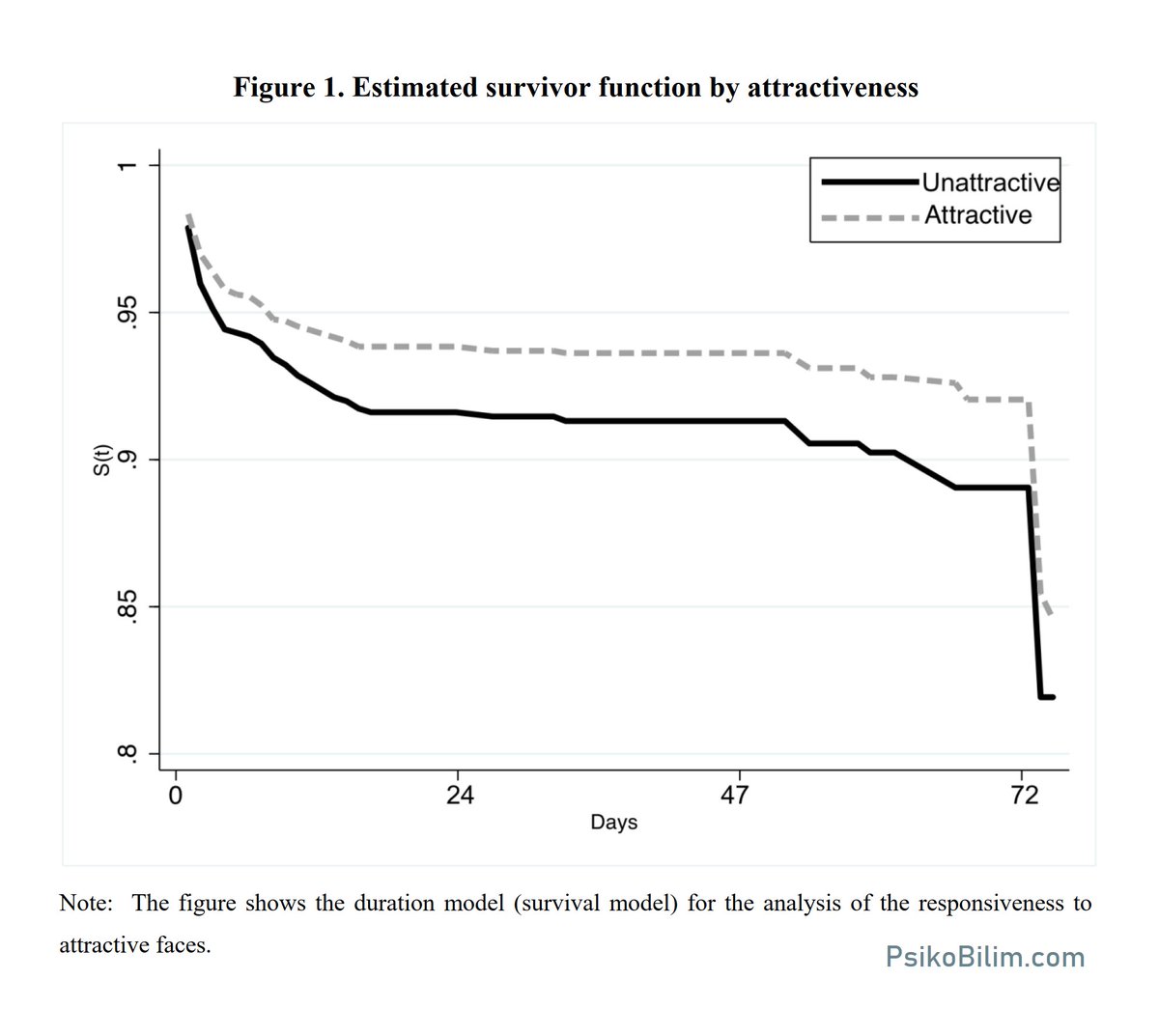
Deneysel bir çalışmada -tamamen aynı eğitim ve deneyime sahip olmasına rağmen- çekici olan kişilerin çekici olmayanlara kıyasla mülakat için %36 daha fazla arandıkları görüldü.
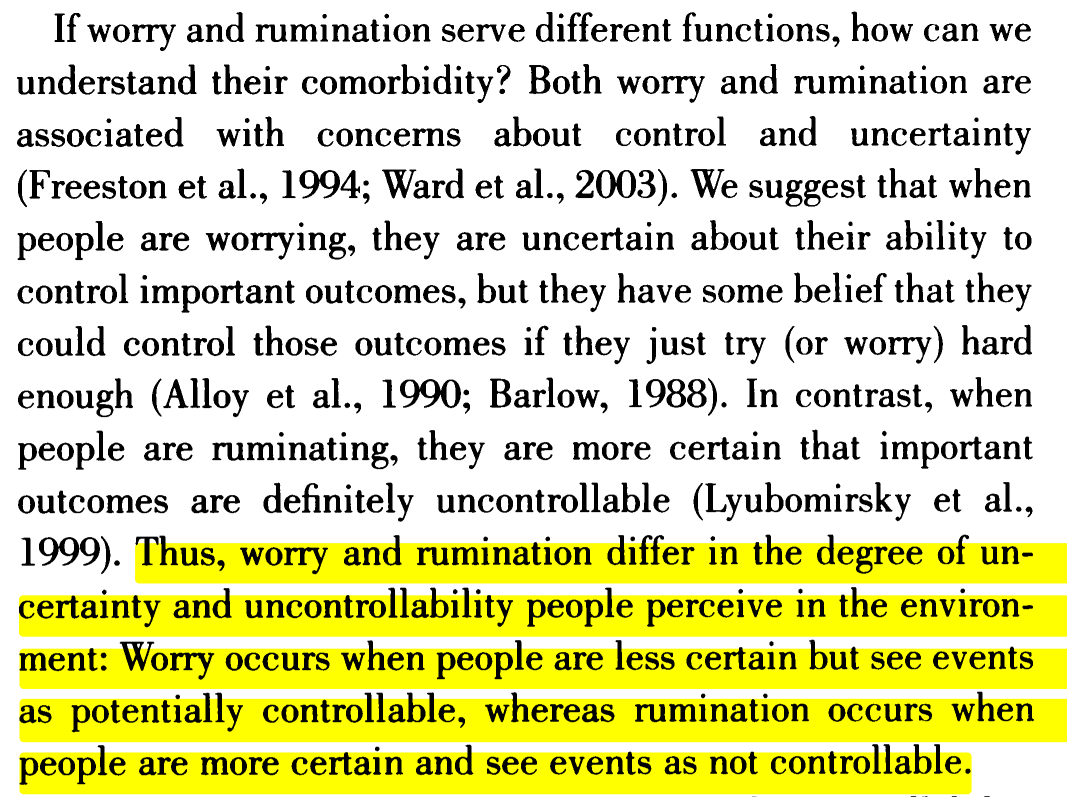
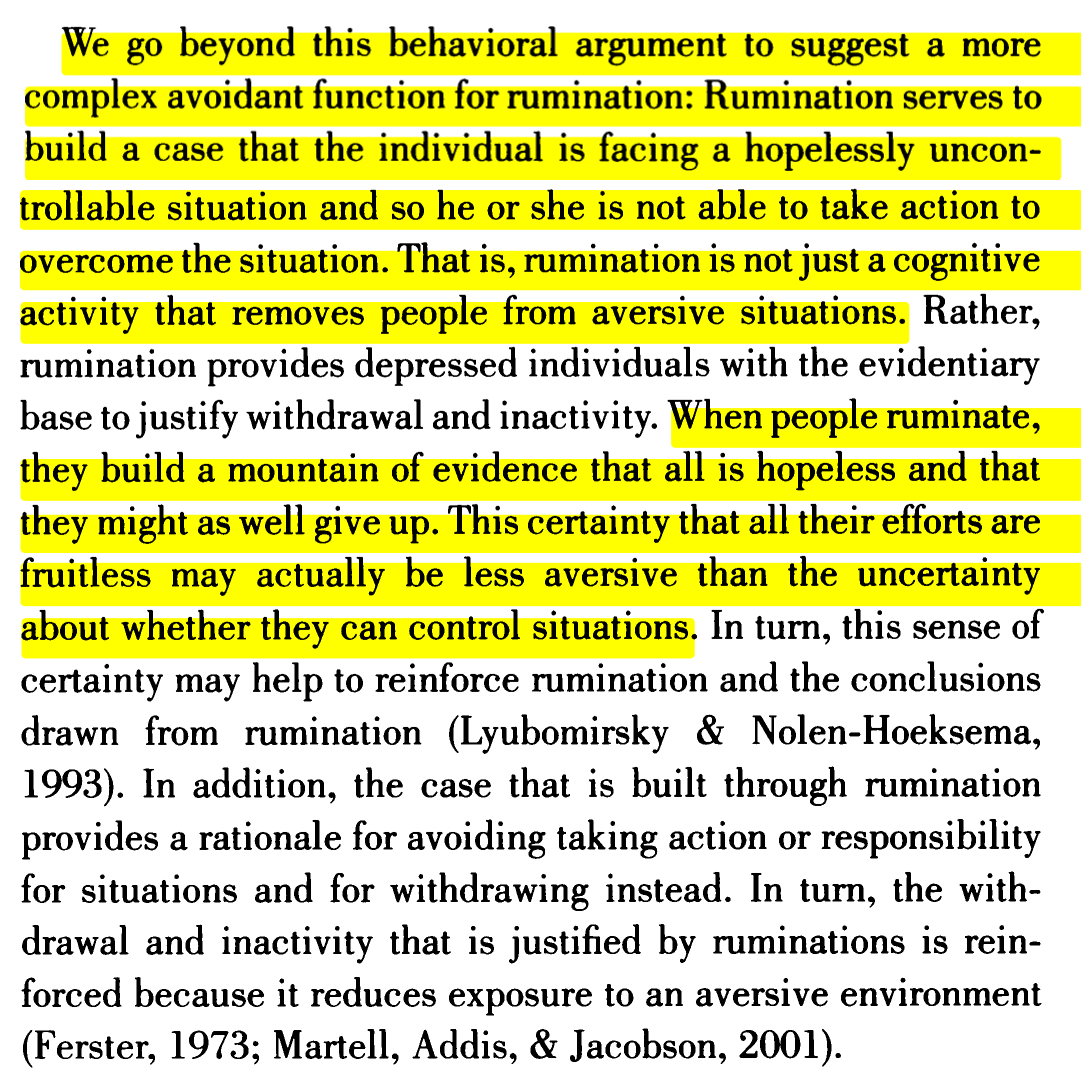
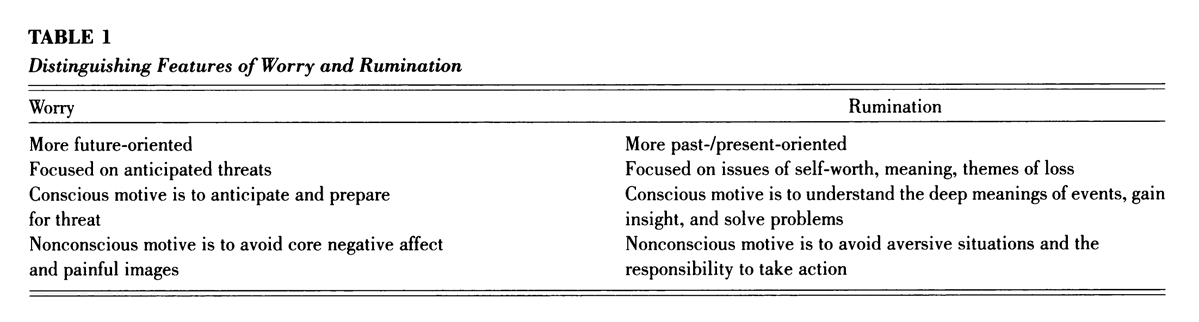
Bir kişinin sıkıntılarına karşı olumsuz düşüncelerle -çözüm için harekete geçmeden- tekrar tekrar odaklanması (ruminasyon), zihnin farkında olmadan her şeyin umutsuz olduğuna dair kanıt toplayıp harekete geçme sorumluluğundan kaçtığı bir savunma mekanizması olabilir.
Schools are only as strong as their teachers. But the latest data show shortages are widespread.
In some countries, up to 4% of teaching positions were vacant as the academic year began, leaving schools relying on non-fully qualified staff.
Learn more: https://t.co/UfbKpidV4v
El sobrepensamiento es un patrón mental muy común en la ansiedad y el estrés, donde la mente se queda atrapada en bucles que no resuelven nada y solo aumentan la tensión.
Se ve en cinco formas habituales:
1. Te paralizas por demasiadas opciones (como cuando no puedes decidir por miedo a equivocarte).
2. Te imaginas siempre el peor escenario posible.
3. Revives una y otra vez el pasado sin poder soltarlo.
4. Buscas constantemente la aprobación de otros en lugar de confiar en ti.
5. Esperas a tener una certeza total antes de actuar.
La buena noticia es que se puede romper:
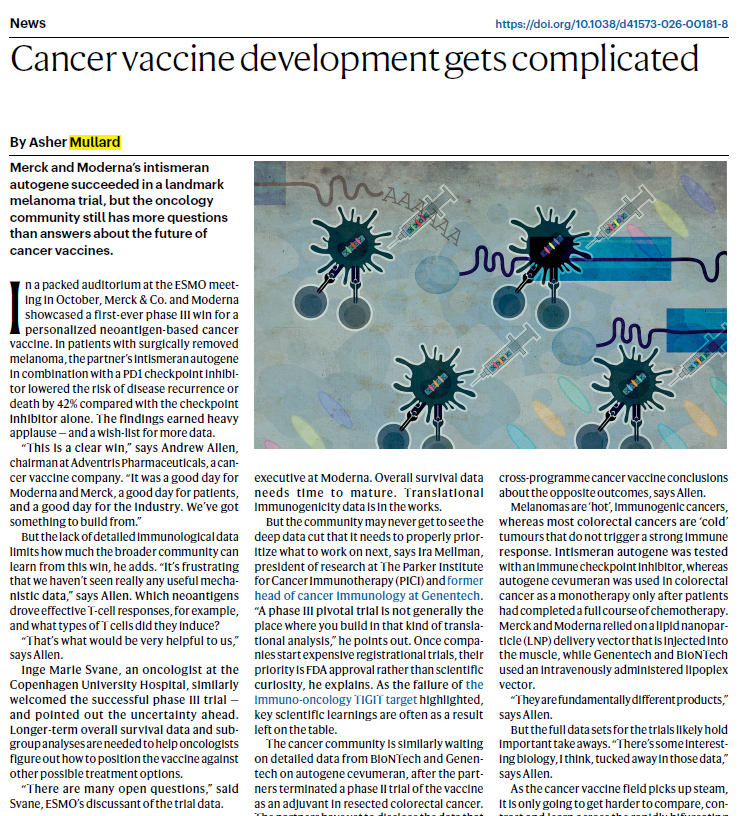
Cancer vaccine development gets complicated
https://t.co/LTrv3R6Fni
Merck and Moderna’s intismeran autogene succeeded in a landmark melanoma trial, but the oncology community still has more questions than answers about the future of cancer vaccines.
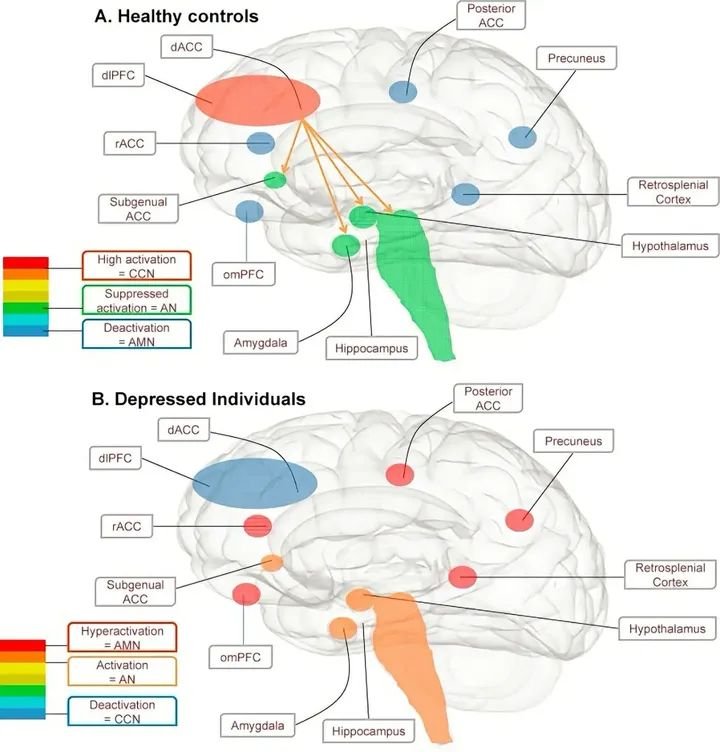
La depresión podría implicar un desequilibrio entre dos redes cerebrales importantes, además de otras muchas anomalías. ¿Por qué la depresión hace que resulte tan difícil dejar de darle vueltas a las cosas, concentrarse o tomar incluso decisiones sencillas? Una revisión 👇
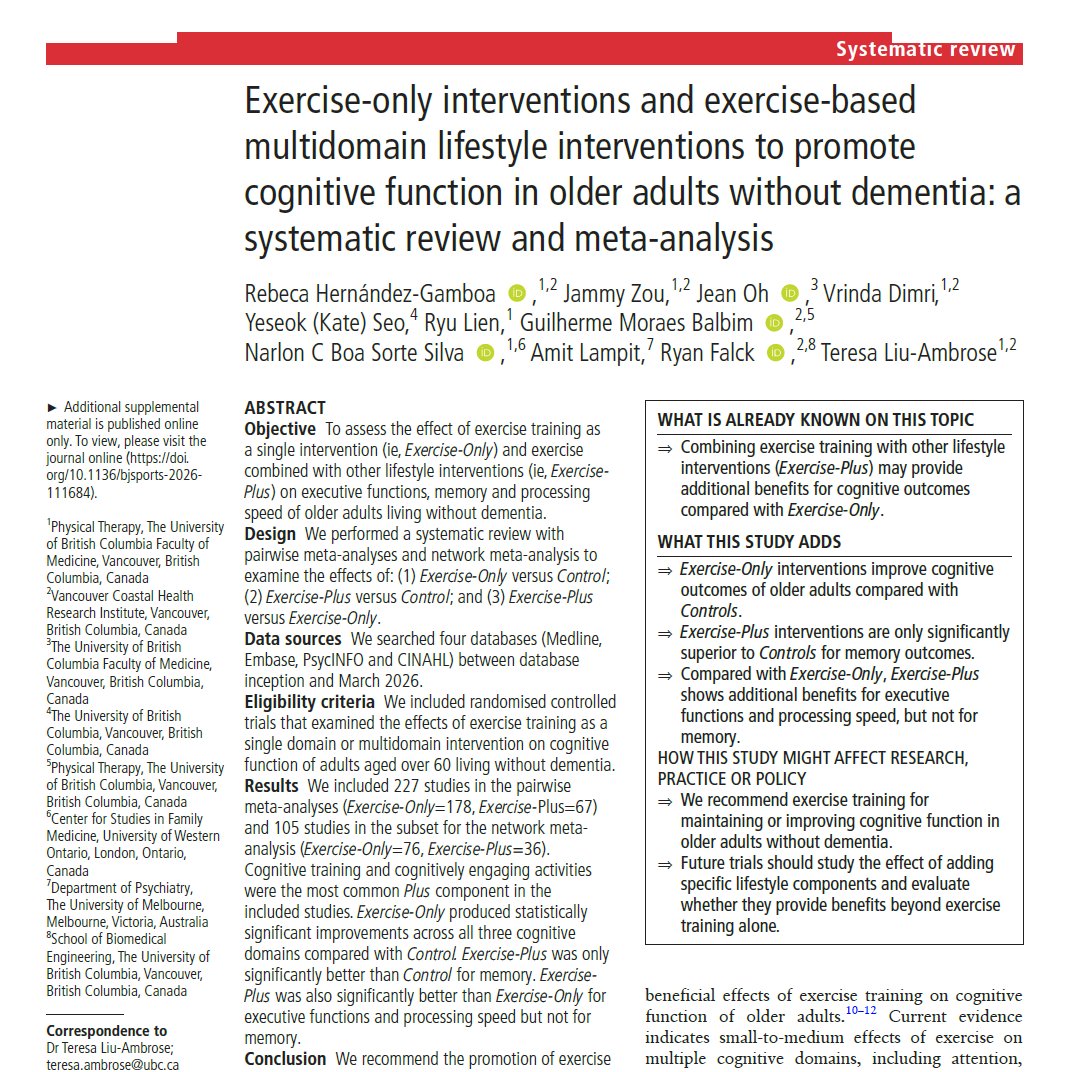
El ejercicio físico regular se consolida como la estrategia más accesible y eficaz para proteger la función cerebral durante el envejecimiento. la clave para mantener un cerebro sano no requiere programas sobrecargados ni costosos,