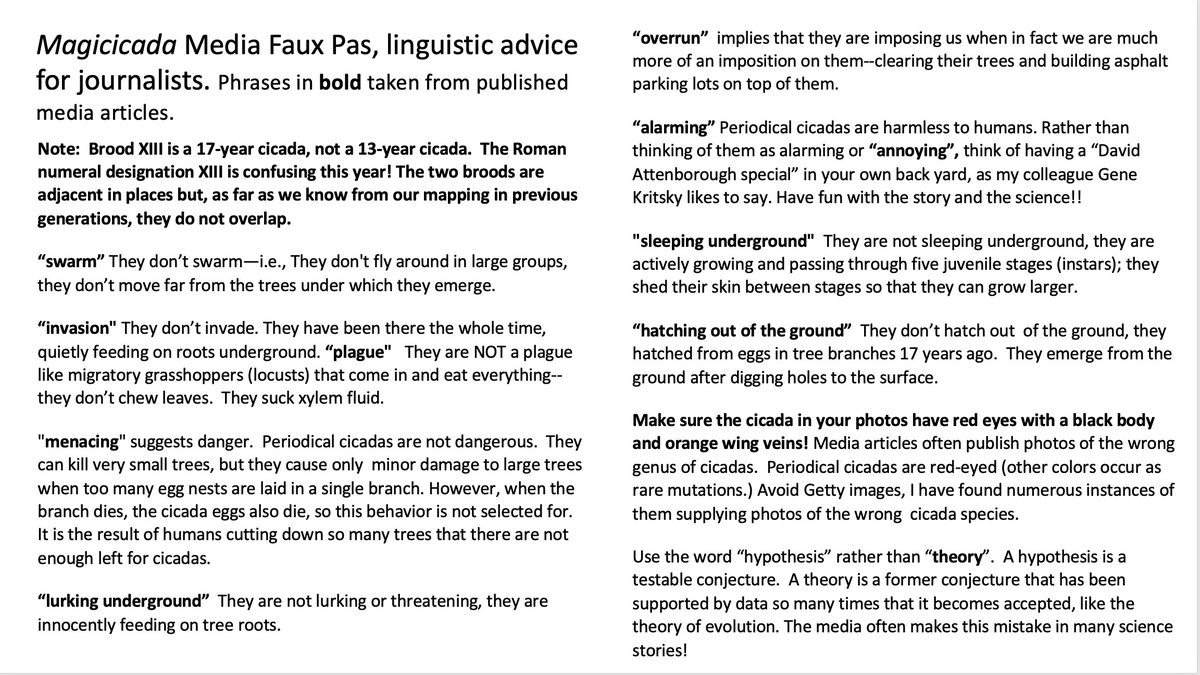
Media Faux Pas. The attached sheet has been very useful to the journalists who write about periodical cicadas. I first posted it during Brood X. Attached is a revised version. Feel free to share. #cicadas #magicicada#periodical cicadas
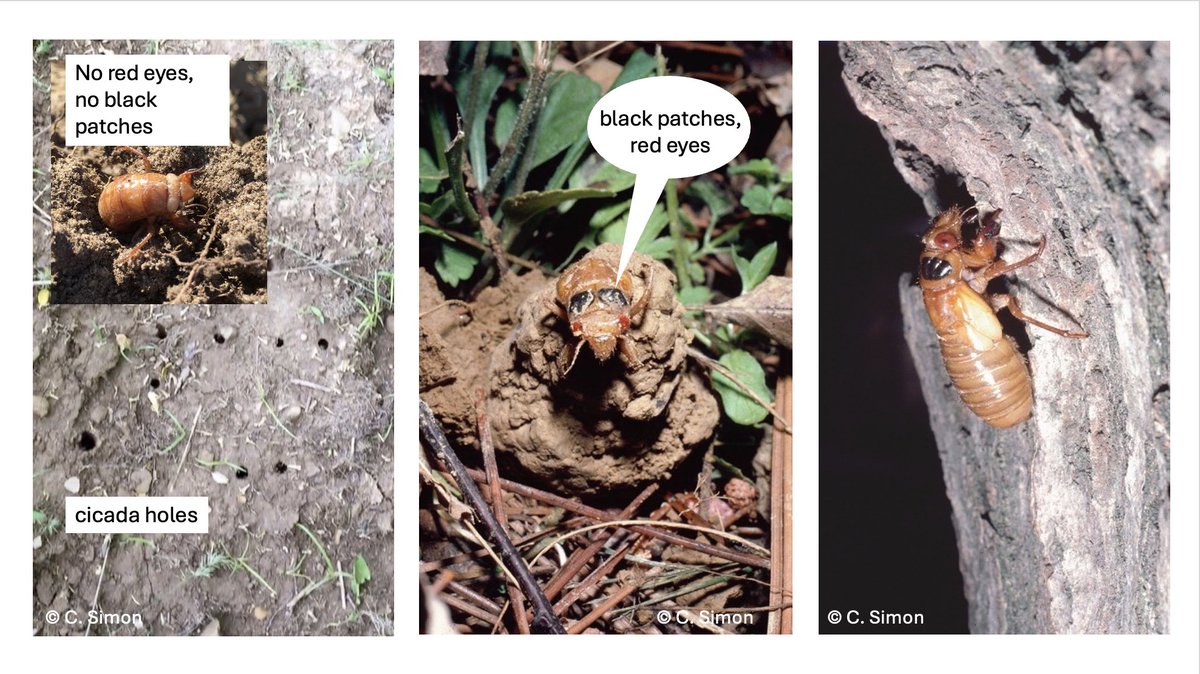
If you dig cicada nymphs up in your garden, take note of whether they have black patches or not, record the date, and then record the date of the big emergence nights.
Question: We know that periodical cicadas eyes turn red up to a year before emergence, their holes can appear up to a month before emergence. But when do the black patches on the thorax form? #magicicada#cicadas#citizenscience@cicadamania
If you dig cicada nymphs up in your garden, take note of whether they have black patches or not, record the date, and then record the date of the big emergence nights.
Has anyone else seen large amounts of fungus? This suggests that this population came out 3 to 4 weeks ago! This is very early based on emergence reports on iNaturalist and CicadaSafari.
Question: We know that periodical cicadas eyes turn red up to a year before emergence, their holes can appear up to a month before emergence. But when do the black patches on the thorax form? #magicicada#cicadas#citizenscience@cicadamania
Just released today from https://t.co/LllECUrajH answers to some questions about this year’s joint emergence of periodical cicada Broods XIX and XIII. Listen on Tumble's website: https://t.co/AESJuZE1RO
https://t.co/3WZiPOKdR1 and https://t.co/UYXYYvTyXk
Asperitas are ominous-looking clouds occurring mostly with Stratocumulus and Altocumulus. These ones have been photographed over Gorham, New Hampshire on April 23, 2023
[📷 Crystal Lee]
I re-read the original BUCKy paper by Ané et al, probably for the first time in 10 years. I forgot how creative and original it was, and how many of the ideas in it have simply been rediscovered by others (including me).
https://t.co/tcg0eiZlTY







![Rainmaker1973's tweet photo. Asperitas are ominous-looking clouds occurring mostly with Stratocumulus and Altocumulus. These ones have been photographed over Gorham, New Hampshire on April 23, 2023
[📷 Crystal Lee]
https://t.co/9ZpwiFcKF1](https://pbs.twimg.com/media/FugBJbzXgAAgKNe.jpg)





