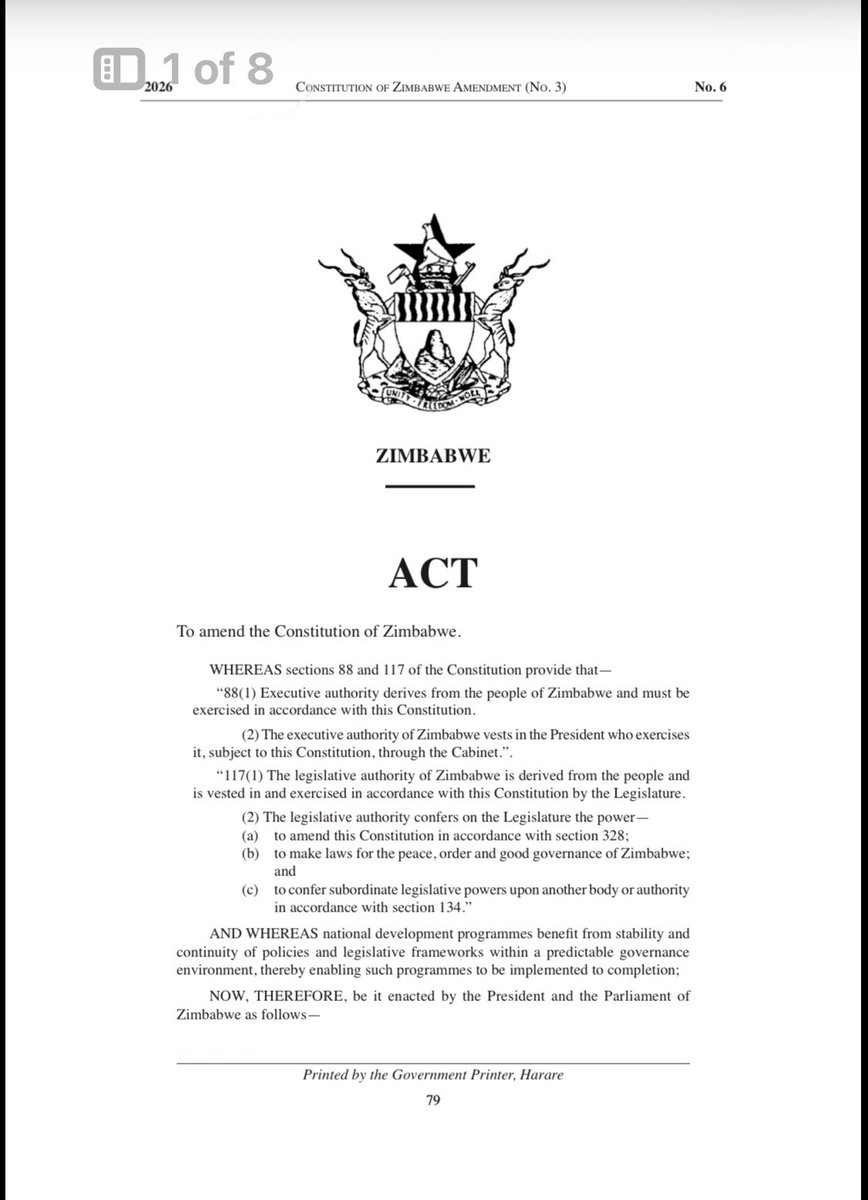
Citizens collaboration for change is a Zimbabwean political movement from God, to the People, for the People. We will fight for Prosperity for ALL ZIMBABWEANS.
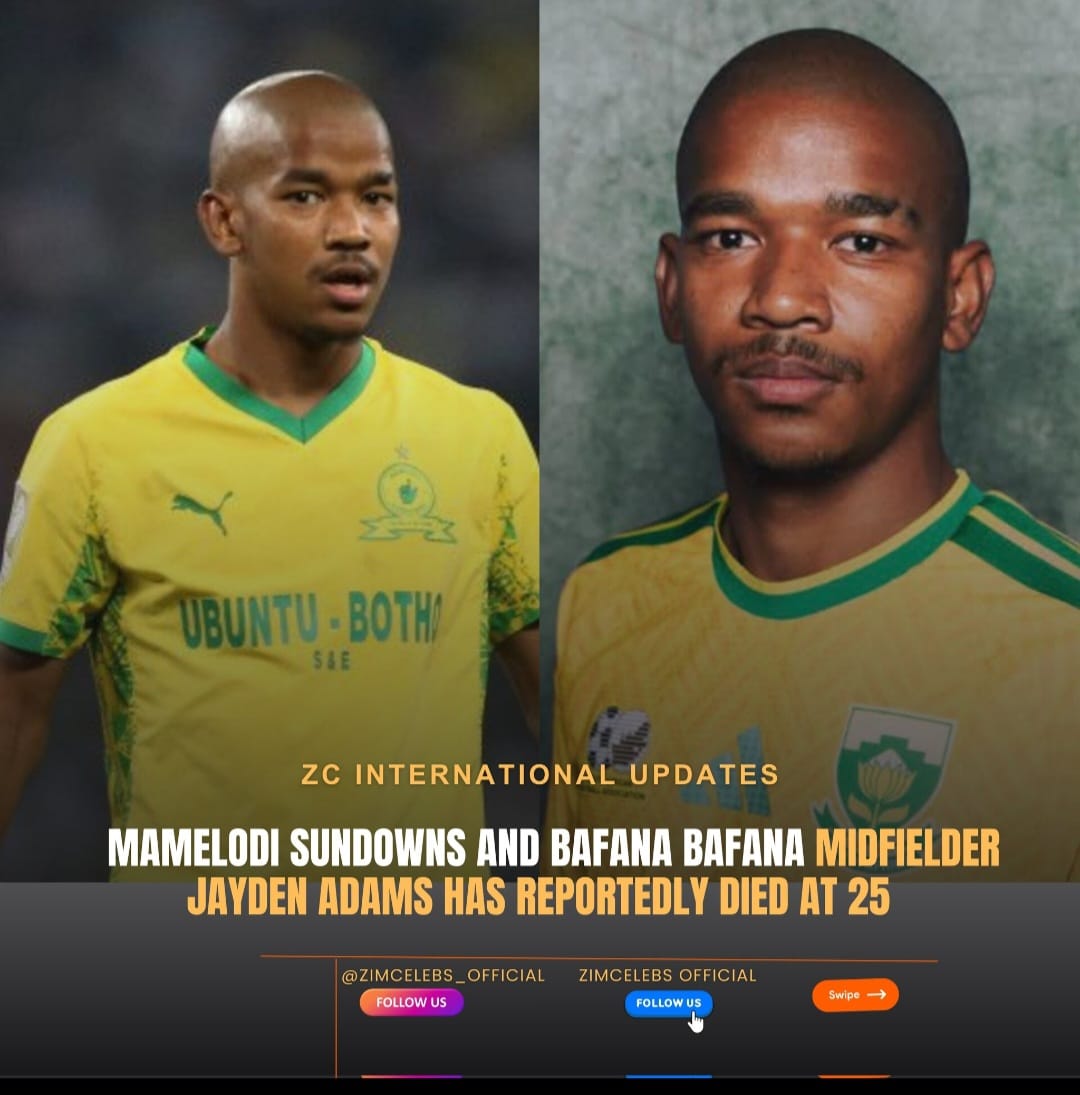
So sad Africa has lost a talented player Mamelodi Sundowns and Bafana Bafana midfielder Jayden Adams 25. Our hearts go out to the family and friends and the entire nation of South Africa. May God rest Jayden's soul in eternal peace. This world is not our home.
Hebrews 13: 14-15.
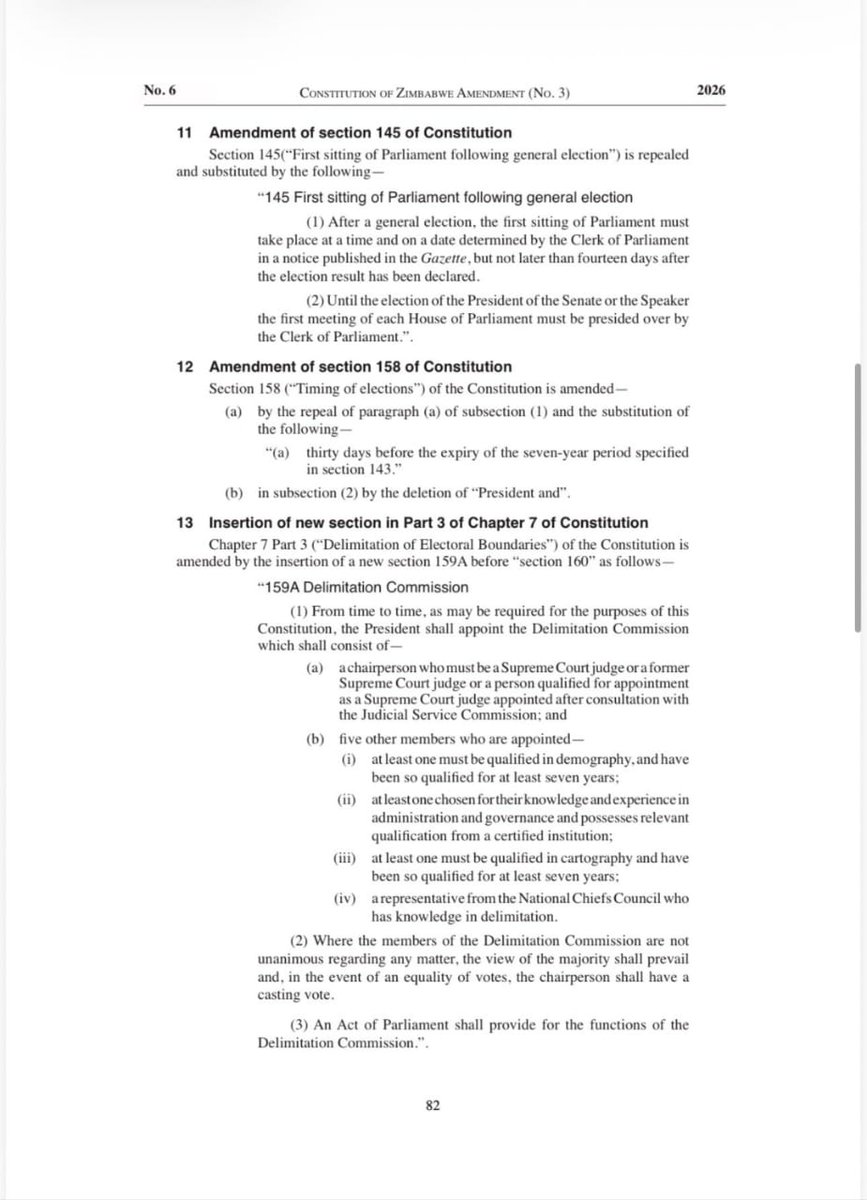
Chiedza Mlingwa says they will approach the courts as part of efforts to reverse the mutilation of the constitution by President Emmerson Mnangagwa following his signing of CAB3 into law
Full video: https://t.co/RrAmdiuRuF
Opposition in SA releases a Full Statement, clarity, succinctly stated, no ambiguity!
So called Opposition in Zimbabwe releases another meaningless “Parable”
Let me drink water !
LET THE PEOPLE DECIDE: Why the President and Parliament can't just take away our rights! The fact that the President has signed #CAB3 does NOT mean the struggle is over. In fact its only just beginning....
WATCH my latest episode on how and why we must resist Constitutional Amendment No. 3 here:
https://t.co/f5vDp0KMMx
#NoToCAB3 #NoTo2030 #LetThePeopleDecide
President @edmnangagwa has set into motion a new deal to give himself a new 7 year term of office without even going to elections. He signed himself a new contract with himself. Cry beloved Zimbabwe.
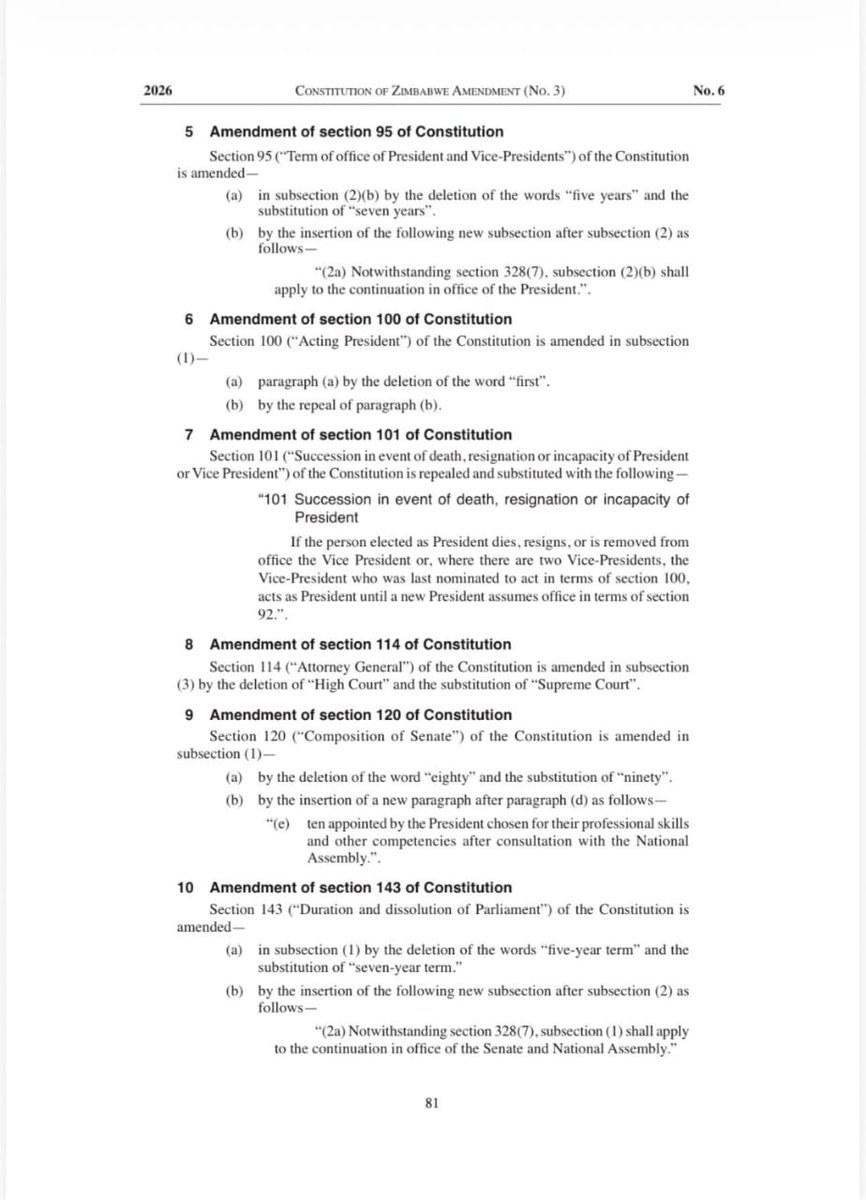
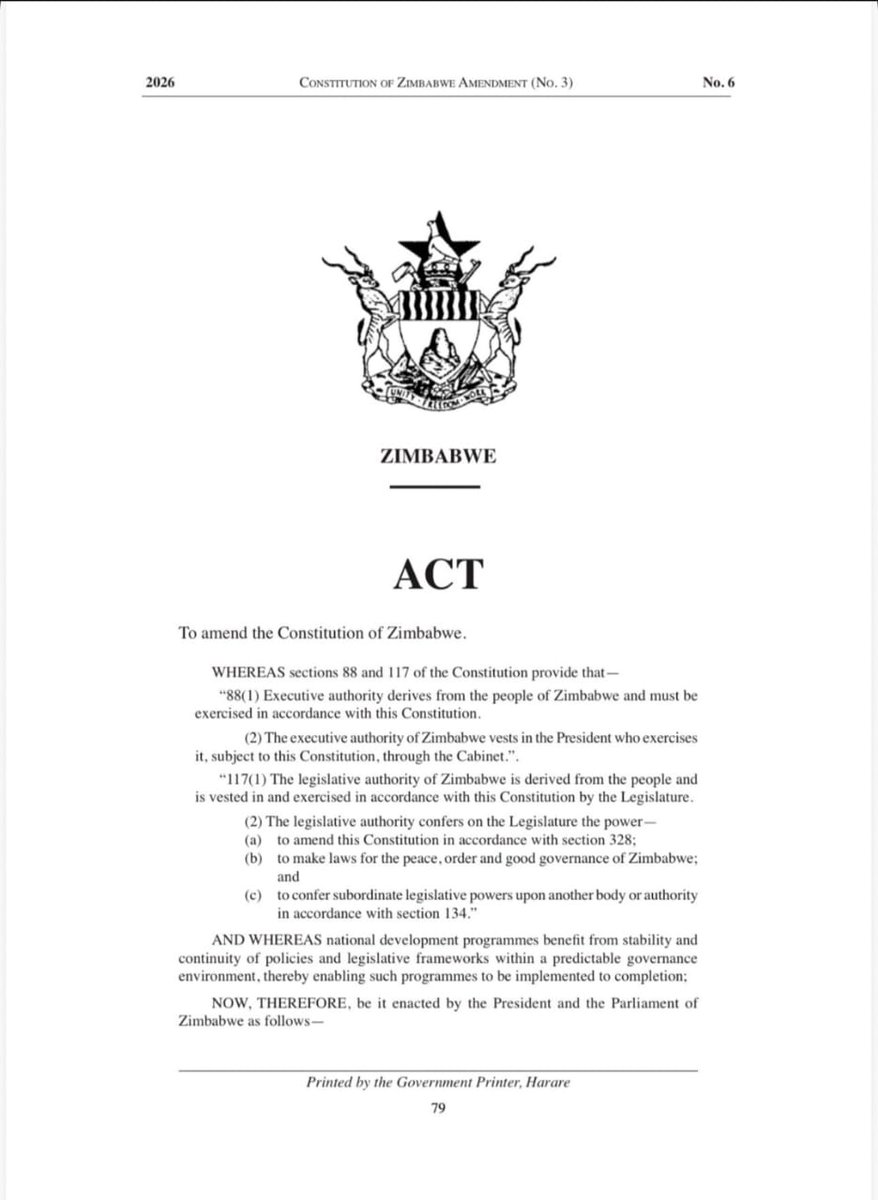
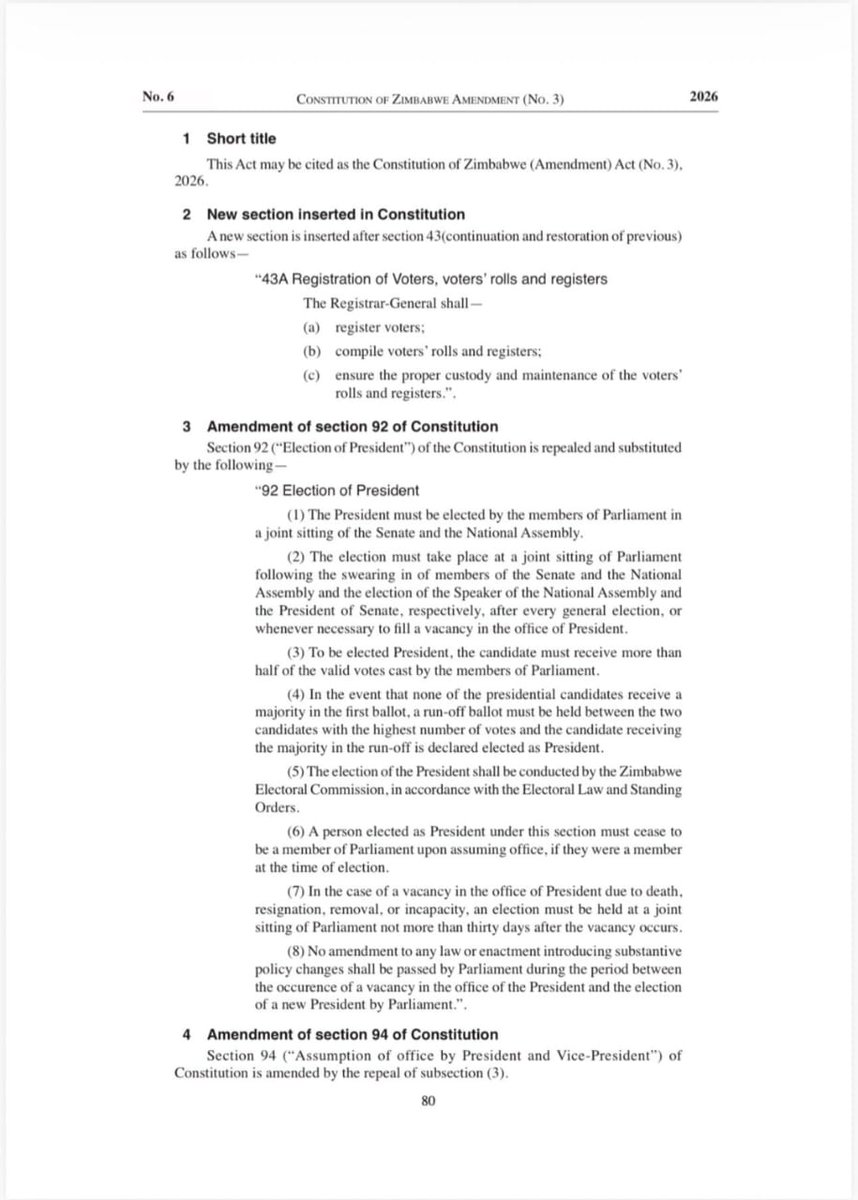
Zimbabwean President Emmerson Mnangagwa who has been in power since November 2017, following the military coup that removed President Robert Mugabe. He has now signed into law Constitutional Amendment No. 3, which, among many other things, extends his term of office to 2030, cancels the 2028 elections, extends the presidential term from five years to seven years, and removes the direct election of the President by citizens, transferring that responsibility to Parliament.
This is a massive controversial constitutional change, one that would ordinarily require a referendum. However, the President and his advisers have refused to subject these changes to a referendum. That fact alone renders the entire process contestable and places a dark cloud of illegitimacy over his presidency beyond 2028, when his term of office was originally supposed to end.
But this crisis will not wait until 2028. It began the moment he signed Constitutional Amendment No. 3 into law, as opponents of the Bill which is now law have already declared the process illegal because there was no referendum.
The real challenge facing President Mnangagwa is not so much the opposition, which he has effectively dismantled with the assistance of opposition leaders who have allegedly been bought or co-opted. The real challenge is the economy.
As Bill Clinton famously said, “It’s the economy, stupid.” The economy is what will create a wave of political discontent between now and whenever he eventually leaves office, assuming he does not die in office.
I have seen some of my South African friends mocking Zimbabweans over this development and saying it is a Zimbabwean issue that Zimbabweans must resolve themselves. One can only say that if one is ignorant of the interconnectedness of our region and the ripple effects that this constitutional change is likely to create.
South Africa’s illegal immigration crisis has been authored, in part, by the misgovernance in Zimbabwe, which successive South African governments and the African National Congress have tolerated and, at times, enabled. When the economy deteriorates in Zimbabwe, desperate people cross into South Africa by any means necessary in search of jobs and opportunities.
This should not be viewed as a Zimbabwean crisis alone. It is a regional crisis, one that has the potential to create political and social turbulence throughout Southern Africa. History has taught us that whenever there is a crisis in Zimbabwe, South Africa bears much of the burden.
But this post is not about South Africa. It is about Zimbabwe and Zimbabweans.
The culture of bootlicking leaders and hero-worshipping politicians cuts across Zimbabwean society, both in the ruling party and in the opposition. Part of the reason why the opposition has been emasculated by Emmerson Mnangagwa is because citizens continue to place blind faith in leaders who have delivered very little.
Those leaders continue to sell hope to the people, even when many Zimbabweans know that some of them have been captured or compromised.
We saw this decadence in the Parliament of Zimbabwe. Opposition Members of Parliament voted with ZANUPF. Only 42 voted against the Constitutional Amendment Bill. The rest supported it. That is a reflection of the deep crisis within the opposition itself.
Unfortunately, many Zimbabweans mistakenly think that Zimbabwe’s problems are exclusively a ZANUPF problem. They are not. They are a Zimbabwean problem that Zimbabweans themselves must resolve, and not sit and watch.
As long as Zimbabweans continue to hero-worship personalities instead of supporting ideas, institutions and principles, the crisis will never go away. There are people with ideas and solutions for Zimbabwe, but they are not popular enough. Populism has derailed the opposition and made it ineffective in pushing back against ZANUPF’s misgovernance.
The signing of Constitutional Amendment No. 3 into law is, in my view, the beginning of a new phase of resistance, assuming events themselves do not overtake any organic resistance to Mnangagwa’s rule.
Zimbabwe today is a hopelessly divided society. People are fighting one another, and there is little national unity. President Mnangagwa could have secured his legacy by uniting the country and fixing the economy. Instead, it is evident that his administration remains adrift when it comes to economic management.
This is, therefore, a moment for Zimbabweans to reflect on what they want for their country and how they intend to achieve it.
For neighbouring countries, particularly South Africa, this is not Zimbabwe’s problem alone. According to the South African government, around 70% of women who give birth at Musina Hospital are Zimbabwean. You cannot simply turn them away. They will continue coming because the Zimbabwean government has failed to build a healthcare system capable of serving its people.
An estimated 2,500 Zimbabwean women die every year while giving birth because of inadequate maternal healthcare facilities. The largest hospital in Zimbabwe still relies on a single maternity theatre built in 1977 by the Ian Smith government. That alone is a devastating indictment of the state of public healthcare in Zimbabwe, and a metaphor for the state of affairs.
With unemployment estimated at over 95% in the formal and informal sectors combined, it is not surprising that Zimbabweans are prepared to risk their lives crossing crocodile-infested rivers in the Limpopo to reach South Africa. They will continue doing so.
No amount of anti-immigration marches in South Africa will stop this reality. One either understands how crises create migration flows, or one lives under the illusion and delusion that Zimbabweans can somehow be prevented from seeking survival elsewhere.
As we speak, many large-scale farms in Limpopo employ significant numbers of undocumented Zimbabwean workers. If those workers were suddenly to disappear overnight, the consequences for agricultural production and food prices would be enormous.
This is not simply my opinion as an analyst or journalist. I have spoken to numerous farmers in Limpopo. I am a farmer myself and have access to many people within the agricultural sector, including some who are political actors in South Africa.
The reality is that complex regional problems cannot be solved by slogans, social media noise or emotional outbursts. They require honest conversations, competent governance and courageous leadership on both sides of the Limpopo.
As this law comes into effect, many people must reflect on the roles they played, directly or indirectly, in bringing Zimbabwe to this point.
Vice President General Constantino Chiwenga was one of the leading proponents of the idea that President Mnangagwa could and should rule for as long as he wished, as he stated in the video I have attached below. Today, he finds himself effectively locked out of any constitutional path to the presidency.
The opposition leader, Nelson Chamisa, also bears a significant share of responsibility. He effectively dismembered the opposition by getting rid of key allies who brought talents and skills that he himself did not possess. He dismantled leadership structures and ran the opposition without a constitution, creating an environment that enabled ZANUPF to infiltrate the opposition through the political charlatan Sengezo Tshabangu, whose actions were aided by Professor Jonathan Moyo’s ideas.
Ultimately, the supporters of these two men must not live in denial by blaming everyone else while refusing to examine their own role in what has happened.
There is nothing contained in this constitutional amendment, which is now law, that was not predicted. Analysts who warned that these developments would occur were ridiculed. They were demonised on social media, insulted and called names by opposition supporters. That abuse continues to this very day. It cuts across the political divide, both in ZANUPF and in the opposition, where leaders deploy and sponsor people to attack anyone who raises uncomfortable truths about the realities of life in Zimbabwe.
One cannot help but wonder whether some of those who have spent years attacking people who brought genuine issues to the table have themselves been manipulated or even indirectly serving the interests of ZANUPF, because it beggars belief that people can be so self-contradictory and self-destructive in the manner in which Zimbabwean politics has unravelled since 2022.
In 2021, through Constitutional Amendment No. 2, the running mate clause was removed. That amendment effectively dismantled the constitutional mechanism that many believed would guarantee General Chiwenga’s succession within ZANUPF. The running mate provision had been an important part of the constitutional architecture established by the 2013 Constitution, which was negotiated during the Government of National Unity and endorsed by almost 95% of Zimbabweans in a referendum.
The Vice President remained silent. He was warned. I was among those who argued that the removal of the running mate clause was the beginning of what I called a “royal presidency”, one in which President Mnangagwa would accumulate so much power that he could potentially remain in office until his death.
All the mistakes that have been made, whether through deliberate action, political expediency or sheer ignorance, have brought Zimbabwe to where it is today.
Have opposition supporters finally understood that ideas matter more than bootlicking and hero-worshipping political leaders? I do not know. Their reaction to what is happening in Zimbabwe today will answer that question.
Have members of ZANUPF who feel aggrieved by President Mnangagwa’s actions now come to understand that when people speak about constitutionalism, accountability and good governance, they are not necessarily being anti-ZANUPF? I do not know. Time will tell.
My thoughts, as I end this article, are with the millions of Zimbabweans who remain trapped inside Zimbabwe with little or no prospect of meaningful economic opportunities and who are unable to live normal lives in the way that citizens in functional countries do.
My thoughts are also with those citizens who spent years bootlicking and hero-worshipping politicians, unknowingly aiding this process and helping to create the very circumstances in which they now find themselves: unemployed, economically excluded and without hope for a better future.
And my thoughts are especially with those who cannot leave.
As the Jamaican reggae artist Buju Banton poignantly said in his song Untold Stories: “Those who can run, run away, but what about those who can’t? They will have to stay.”
That, perhaps, is the greatest tragedy of Zimbabwe: those with the means often leave, while the poorest and most vulnerable are left behind to endure the consequences of political failure, economic collapse and broken leadership. Their suffering should never be forgotten.
When the people's constitution is violated by a few individuals who assume they have power. It always comes as a surprise when people power takes center stage. Zimbabweans are awoke & will not be taken for a ride at the expense of future generations. Our country is not for sale.
RAMAPHOSA Q&A | President Cyril Ramaphosa says there is no place for racism, sexism, xenophobia or Afrophobia in South Africa. He adds that government will not tolerate attempts to destabilise the country, whether through marches or any other means.
Whether it is 216 v 42 or 75 v 4, Parliament has confirmed what we knew and expected all along- useless, anti-people and always ready to abuse its power. CAB 3 has been REJECTED by the people, it will remain REJECTED. We have 2 strategies: courts and PEOPLE POWER. We will win!
Sub-Saharan African migrants are being captured and sold like commodities in open-air markets across Libya in 2026.
Human beings are auctioned off in garages, parking lots, and public squares for prices as low as $400.
This is not ancient history it is happening right now in the 21st century.
Most of the victims fled their home countries desperate to escape poverty, violence, and hardship, hoping for a better future across the Mediterranean.
Instead, they were intercepted by traffickers, armed militias, and smugglers in a country with no effective government or rule of law a direct result of the chaos that followed the 2011 NATO-backed overthrow of Muammar Gaddafi.