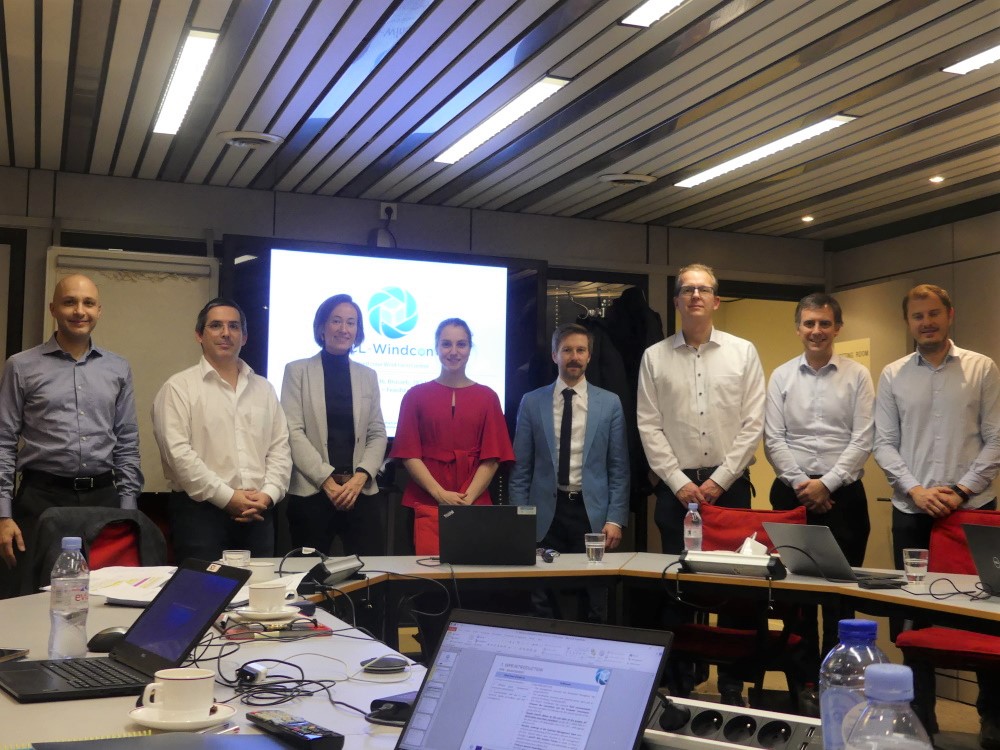
During the last two days we accommodated in our premises of Montoyer 24 the Final Review Meeting of the #CLWindcon project (wind farming🍃).
👉We kindly remind you that our premises are always available for our members.
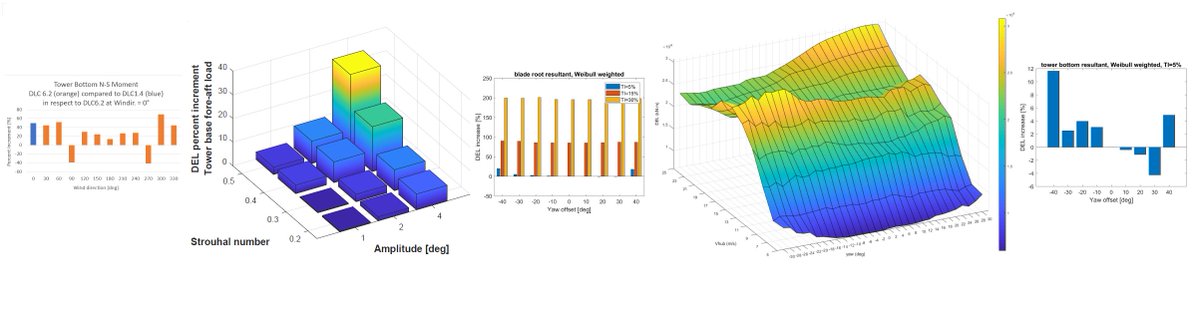
During the development of D4.1 the effects of different wind farm control strategies on a single wind turbine were analyzed. Do you want to know which ones? Read more and download it at: https://t.co/iyubAsyyhT
The focus of D2.4 is on the methodology of the new load-balancing power curtailment strategy. Some initial simulation results are presented in this deliverable. Learn more and download it at: https://t.co/zTLIgYSbgl
The evolution of the #wind industry has been remarkable, & in the last 4 decades several milestones have been achieved in installations, tech advancements & cost reductions along w/ the establishment of key #windenergy associations.
IRENA's new report: https://t.co/Q6m8TNOGF5
Deliverable 2.3 plays an essential role in the CL-Windcon project, entailing the synthesis of several open-loop and closed-loop wind farm control algorithms for axial induction control and wake steering. Learn more and download it at:
https://t.co/CCxTx7TzOK
¿Cómo contaminar menos en las ciudades y conseguir así la neutralidad en carbono? Con estas medidas pueden lograrlo ➡️ https://t.co/uX73VhIuYw #DíaMundialdelUrbanismo
Different public deliverables and publications will be uploaded in the coming weeks and months, and further detail about data sets will also be provided. Stay tuned!
CL-Windcon project execution is officially over. It has been three years of collaboration across Europe to advance wind farm control state-of-the-art. But our transfer to the community isn’t over yet!
"The energy transition is getting faster and wind energy has a huge part to play in this transformation" says Roland Roesch, Deputy Director Innovation and Technology Center @IRENA during the Wind Energy Conference at #ACES19
This high-fidelity simulation shows a wind farm control algorithm that tracks the changing inflow conditions in real time. This is the first time such algorithm is validated under time-varying conditions in a high-fidelity simulation.
More on our website👉 https://t.co/dQHPB5vhws
#CifraDelDía La #eólica en septiembre ha proporcionado cifras insólitas de generación eléctrica. En #España se ha cubierto con #eólica un 18,4% de la demanda eléctrica en #septiembre. Lee este interesante artículo del blog de AEE #SomosEólicos https://t.co/Bmh5i0vXz7
If you want to learn more about the final conference of the project and #WESE2019, you can read about it here 👉 https://t.co/Kc7hoL4Obz. We hope you did enjoy it!
@DtuWind And last but not least, to put an end to this three day event, Luca Sartori from @GVPMpolimi comes to the stage to present and explain Cp-Max. Cp-Max is a suite for the system design of wind turbines.
@CENER_Energia The following talk comes by the hand of Garret Barter, Pietro Bortolotti and Christopher Bay from ENREL. They presented two NREL software models: WISDEM, the wind systems engineering software, and FLORIS the wind plant wake and control modeling software.
Let's begin with the final day of #WESE2019. Ainara Irisarri and Iñaki Nuin from @CENER_Energia will explain how their BLADE OASIS/ BASFF tool helps in the design of rotor blades.
The presentations are over and it is time to visit the Barasoain experimental areas. This last session was the platform for: Pietro Bortolotti from ENREL, Niels Jacob Tarp-Johansen @Orsted, Pawel Gancarski @CENER_Energia , Elyoenai Egozcue @S21sec and Nikolai Hille @DNVGL_Energy
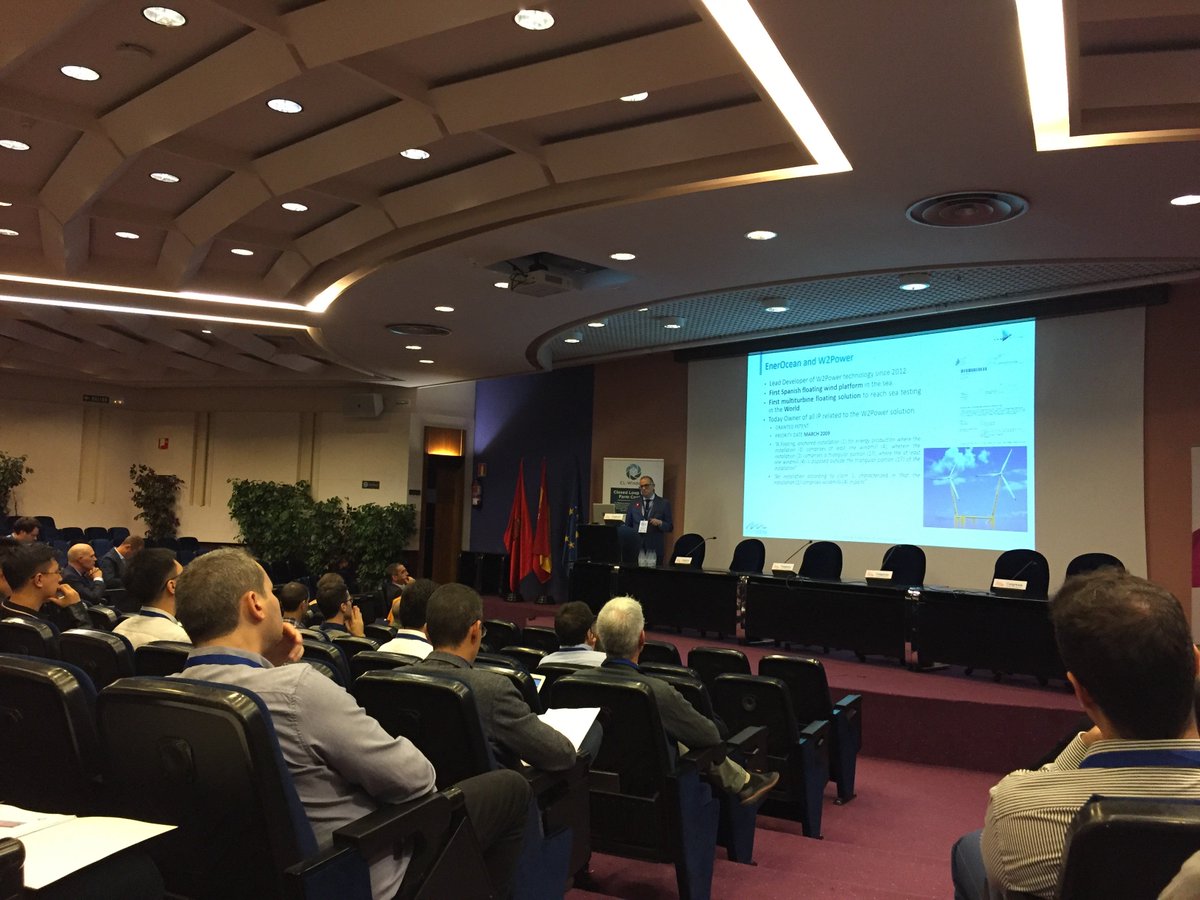
@EnerOcean @DtuWind Before going to lunch we were enlightened by Mario Garcia-Sanz US DOE ARPA-E, Jose Azcona @CENER_Energia, Joaquin Urbano @esteyco and Brandon Ennis from @SandiaLabs.
@EnerOcean Everything proceeded according to plan and Katherine Dykes from @DtuWind, Frederick Zahle from @DtuWind and Andrew Ning from BYU, presented the session: Advanced Methods in Wind Energy Systems Engineering - Design and Optimization. Let's see what next round offers to us.