Henry VIII ballooned to a fifty-two inch waist and roughly twenty-eight stone, a feat he pulled off four hundred years before a seed oil or a microwave lasagne existed. Awkward, that, for the people who insist obesity was invented by Big Food in 1975.
As a young king he was the opposite of the wheezing barrel in the late portraits. Six foot two, a thirty-five inch waist, all muscle, jousting and hunting and playing tennis for hours, and modest enough to let everyone call him the handsomest prince in Europe.
Then came the twenty-fourth of January, 1536. Jousting at Greenwich, he was thrown, and his fully armoured horse used him as a landing mat. He lay out cold for two hours and got up with leg ulcers that never once closed for the rest of his life. The sportsman became a near-invalid almost overnight. The exercise stopped dead. The appetite, sportingly, carried on.
Now, the popular verdict is that all that meat must have done him in. Except the meat was the one thing that never changed. It groaned on his plate in the lean athletic years and the bedbound whale years alike. What piled on around it was everything else: sweet wine, sweetened ale, tarts, pastries, marchpane, fine white manchet bread, and a tray of sugary snacks wheeled out to the court at nine each night, in case anyone fainted from a four-hour gap since dinner. Call it five thousand calories a day, most of it sugar, starch and booze, tipped into a body that had clocked off from all movement.
After that it more or less drove itself. The heavier he got the less he moved, the less he moved the heavier and sicker he got, until most historians reckon he turned diabetic, was winched onto his horse by crane, and trailed two legs that wept like burst pipes.
He achieved all of this on meat, butter, bread, ale and sugar, without a drop of rapeseed oil or a single ultra-processed mouthful in sight. Take away the sugar, the drink and the decade of sitting still, and the meat is left holding precisely none of the bill. Turns out you could ruin a man beautifully long before anyone thought to bottle sunflower oil and call it heart-healthy.
She wore blonde braids and a simple kerchief.
The Nazi officers at their desks barely glanced up. To them, she was just another Polish peasant girl—harmless, invisible, beneath notice.
That moment of disregard would cost them their lives.
Her name was Niuta Teitelbaum. She was 22 years old, a history student at Warsaw University—small, soft-spoken, the kind of young woman who looked like she belonged in a library, not a war.
But when Nazi tanks rolled into Poland in September 1939, Niuta made a choice that would echo through history. She walked into the Polish underground resistance headquarters and spoke words that would define her short, brilliant life:
"I am a Jew. My place is in the struggle against the Nazis—for the honor of my people and for a free Poland."
The seasoned fighters looked at this tiny blonde girl and wondered what she could possibly do.
She was about to show them something extraordinary.
Niuta realized what others had missed: her innocence was her greatest weapon. The Nazis expected resistance fighters to look dangerous—battle-hardened, military, male. Niuta looked like she was on her way to market.
So she used it. Ruthlessly. Brilliantly.
With her braids and her shy demeanor, Niuta walked through doors that armed fighters could never approach. She entered Nazi offices and apartments. She crossed checkpoints that would have arrested anyone else. And when she emerged, Nazi officers didn't.
For nearly three years, Niuta became the Gestapo's phantom. They gave her a name they whispered in fear:
"Little Wanda with the Braids."
They hunted her relentlessly. They put her on every wanted list in Warsaw. They offered bounties for her capture. And they couldn't find her—because they were searching for someone who looked dangerous.
She was transporting weapons. Smuggling families to safety. Moving intelligence between underground cells. Teaching other resistance fighters how to survive. And when the moment came, she acted as an assassin for freedom.
When the Warsaw Ghetto Uprising erupted in April 1943—a desperate last stand by people fighting not to win, but to die with dignity—Niuta was there. She moved through the chaos, helping others escape, refusing to abandon those who needed her.
Most who entered the ghetto in those weeks never came out.
Niuta survived.
But in July 1943, betrayed to the Gestapo, her hiding place was discovered. The Nazis arrested her before she could reach the cyanide pill—every resistance fighter's final choice.
They took her to headquarters. They interrogated her for weeks. They tortured her, demanding names, addresses, information that would destroy her network.
Niuta Teitelbaum told them nothing.
Not a single name. Not one address. Not a shred of information that could endanger anyone she had ever fought alongside.
She protected her people even as her body broke.
She was executed in September 1943. She was 25 years old.
The Polish underground called her "Heroine of Warsaw."
For decades, her story faded from history books. Perhaps because she was a woman in a man's war. Perhaps because she was a Communist in a nationalist narrative. Perhaps because the truth was too complicated: that the most effective resistance fighter in occupied Warsaw wore blonde braids and looked like someone's sister.
But Niuta's story is real.
And it carries a truth that history keeps trying to teach us across generations:
Courage doesn't always look the way you expect it to. Sometimes it walks in quietly—with braids, a gentle smile, and a fierce heart—and changes everything.
That was Niuta Teitelbaum.
Remember her name.
Croatian freediver Vitomir Maričić achieved one of the most extraordinary feats in human history by holding his breath underwater for 29 minutes and 3 seconds, a new Guinness World Record.
Experts had long considered such a duration impossible. While a trained dolphin can typically hold its breath for 8–10 minutes and most humans can barely manage one or two, Maričić remained completely still underwater for nearly half an hour on a single breath.
The attempt pushed his body to extreme limits. As the minutes passed, powerful contractions wracked his diaphragm and his organs endured intense physiological stress. Yet through years of rigorous training, mental discipline, and specialized breathing techniques, he stayed calm and focused until the end.
What makes this record even more impressive is Maričić’s purpose. He didn’t do it for fame or personal glory, he used the achievement as a powerful platform to raise global awareness about ocean conservation, marine protection, and the urgent threats facing our oceans.
A stunning demonstration of human potential and a heartfelt call to protect the planet’s most vital ecosystem.
@JackieAkampwera This where digital assistant services (free mostly) like Siri, Google Assistant or Alexa show their true importance. Take 10 minutes off to set up your voice recognition, and have your emergency numbers on speed dial, it costs you nothing and this will save a life.
“If you are a man over 40 and you have not done a PSA test in the last 12 months, book one this week. Not next month. It is a blood draw. It takes 30 mins and costs less than a restaurant lunch. Pls do it to be sure you're free of prostate or detect it early and start treatment”
Discovered in Kenya 🇰🇪, in a close to derelict state in 1996.
This specific Horch 901 Typ 40 (Kfz. 21) Kommandeurkabriolett is a rare command/staff car (one of only about 36–50 built in this VIP cabriolet configuration for high-ranking officers). It served as a headquarters vehicle for Field Marshal Erwin Rommel during the North African campaign.
WWII Service (1941–1943)
- Built in 1941 by Horch (part of Auto Union).
- Powered by a 3.8-liter V8 engine (around 80–90 hp), with all-wheel drive and robust off-road capabilities suited for desert use.
- Rommel’s driver, Hellmut von Leipzig, piloted it extensively in Libya and the Western Desert from 1941–1943. It featured modifications like large air filters for sandy conditions and served as a mobile command post.
- Captured by British forces on 13 May 1943 during the final stages of the Tunisian campaign (as Axis forces surrendered in North Africa).
Post-War Journey to Kenya (1945 onward)
After capture in North Africa (likely Tunisia/Libya area), a British officer took possession of the vehicle. In 1945, he drove or shipped it from Libya to Kenya, where it was repurposed as a hunting/safari vehicle on a farm.
- The open cabriolet design made it ideal for big-game viewing or hunting, with the roof removable for better visibility.
- It remained in Kenya for decades, gradually falling into a "completely desolate state" due to harsh conditions, lack of maintenance, and heavy use. By the 1990s, it was a rusting wreck, the engine, transmission, and interior largely missing or ruined.
A collector from Frankfurt, Germany, discovered it in Kenya in the mid-1990s (around 1996). He acquired the car and brought it back to Germany.
Later Ownership and Restoration (1997–2006)
- In 1997, the Frankfurt collector sold it (as part of a deal) to Michael Gibb, a British collector (born in South Africa) specializing in WWII vehicles. Gibb initially hesitated but verified its authenticity through chassis/body numbers, historical photos, and collaboration with experts, including the Audi Museum.
- Restoration began around 2002–2003 at the Rosenow workshop in Glienick near Zossen, Germany, led by Peter Spillner. The car arrived in terrible condition (not roadworthy, stripped interior). Work included:
- Complete disassembly.
- Renewal of the wooden body frame.
- Sourcing original-style parts (e.g., a replacement engine from collector circles).
- Over 1,500 workshop hours.
- Consultation with Hellmut von Leipzig (then in his 80s, living on a farm in Namibia) for details like seating and robustness.
- The 4+ year restoration finished by early 2006. It was repainted in original Wehrmacht gray and made roadworthy again.
Post-Restoration
- First shown publicly at Techno-Classica in Essen (April 2006), where von Leipzig drove it again after 63 years.
- Displayed at events like "KM War & Peace" in the UK (2006) and Tankfest 2010.
- Owned by Michael Gibb; it has been a centerpiece in private collections and exhibitions.
The Kenya chapter represents a classic "lost and found" story for wartime vehicles—many German staff cars ended up in Allied hands and were repurposed in African colonies before collectors rescued them. Details on the exact farm or British officer remain sparse in public sources, likely due to the era's informal transfers.
When you sleep, your muscles and connective tissues stay in shortened positions for hours. Synovial fluid in your joints also moves less overnight.
A few minutes of stretching increases blood flow, warms tissues and moves joints through their normal range of motion.
A 32-year-old junior doctor in Australia walked into his hospital laboratory on a Tuesday morning in July 1984, picked up a small glass beaker containing one billion live bacteria suspended in beef broth, and drank it. He had told no one in advance. He had not asked his wife. He had not asked his ethics committee. He had not asked his hospital. He had a theory that the entire global medical establishment had been treating millions of patients incorrectly for almost a century, and he had run out of other ways to prove he was right.
Three days later his mother told him his breath smelled like a corpse. Five days later he started vomiting at six in the morning. Ten days later he was endoscoped and found to have severe inflammation across the entire lining of his stomach.
He had given himself the disease he was trying to cure, in order to prove that the cure was a single course of antibiotics.
It took the medical establishment another twenty-one years to admit he was right.
His name is Barry Marshall. He won the Nobel Prize for Medicine in 2005.
I read his actual 1985 paper last night and could not stop thinking about it.
The textbook story of medicine treats stomach ulcers as a story that has always been understood. You have an ulcer, you take a course of antibiotics, you are cured. That story is true. It is also missing the part where, until almost the end of the twentieth century, this disease was considered chronic, incurable, and almost entirely caused by stress, spicy food, and personality flaws. Hundreds of millions of patients suffered with ulcers for years and decades. Tens of thousands died from complications. The entire global pharmaceutical industry built a multi-billion-dollar business selling acid-suppressing drugs that managed the symptoms while never touching the cause.
The cause was a bacterium. The cure was cheap. And one man drank the bacteria himself to prove it.
Here is the story almost nobody tells you.
In 1979, a quiet pathologist named J. Robin Warren was working at the Royal Perth Hospital in Western Australia. He was looking at biopsy slides under a microscope when he noticed something that should not have been there. Spiral-shaped bacteria, alive and active, sitting on the lining of a human stomach.
The medical world at the time was unanimous on this point. Nothing lives in the stomach. The stomach is filled with hydrochloric acid strong enough to dissolve metal. Bacteria could not survive in that environment. Every textbook said so. Every professor said so. Every pathologist who had ever looked at a stomach slide and seen something strange had assumed it was contamination.
Warren kept looking. He kept seeing it. He started photographing it. He began to suspect that what he was looking at was not contamination at all. It was a living organism that had figured out how to survive somewhere life was not supposed to exist.
For three years he could find almost no one in the hospital who would listen to him.
In 1981, a 30-year-old internal medicine trainee named Barry Marshall rotated through Warren's department. He was assigned the routine task of helping investigate twenty difficult gastrointestinal cases. Warren showed him the bacteria. Marshall, unlike everyone else in the department, did not dismiss it. He found it interesting. The two of them began a collaboration that would consume the next four years of their lives.
They biopsied one hundred patients. They cultured the tissue. Every patient with a duodenal ulcer had the bacteria. Every single one.
Marshall was 32 years old when he stood up at the 1983 Royal Australian College of Physicians meeting in Perth and presented the findings. He proposed that the spiral bacteria, now provisionally classified as Campylobacter pyloridis and later renamed Helicobacter pylori, were the actual cause of most peptic ulcers. The disease the medical world had been treating as a stress disorder for decades was an infection. It could be cured with two weeks of antibiotics.
The room laughed at him.
The senior gastroenterologists who had built their careers on the stress theory of ulcers were not interested in being told they had been wrong for thirty years. The pharmaceutical industry had just rolled out a new generation of acid-suppressing drugs called H2 blockers, beginning with Tagamet, which was on its way to becoming the best-selling drug in the world. The combined revenue of acid-suppressant drugs would peak at roughly 6 billion US dollars per year. Telling that industry their products treated the symptoms of an infection that could be cured with thirty dollars of antibiotics was not a popular position.
Marshall spent the next year trying to prove the theory with an animal model. He could not get the bacteria to infect rats. He could not get them to infect pigs. The bacteria was so well adapted to the human stomach that it apparently refused to live anywhere else. Without an animal model, the medical establishment had a perfect reason to keep dismissing him. He had no way to prove cause and effect.
In July 1984, he made a decision he later described in his Nobel lecture in language so understated it almost vanished off the page.
He decided to use himself.
The detail that should disturb every reader is what he did before he drank the bacteria.
He had himself endoscoped first. A camera went down his throat and into his stomach. The biopsy confirmed his stomach was healthy. No bacteria. No inflammation. No ulcers. He was a perfectly normal stomach in a perfectly normal 32-year-old body.
He pretreated with a single 600 milligram dose of cimetidine. This was an acid-suppressing drug intended to give the bacteria a fighting chance against his stomach's natural defenses. He did not want the experiment to fail because his acid killed the bug before it could colonize.
He took a culture from a patient with chronic dyspepsia. The patient's bacteria had been confirmed sensitive to standard antibiotics, so Marshall would be able to cure himself afterward if needed. He mixed the bacteria into about half a cup of warm beef broth. The concentration was roughly one billion live organisms per dose.
On Tuesday morning, July 12, 1984, at 10 AM, in the hospital laboratory at Fremantle Hospital in Western Australia, he drank it.
He told nobody.
He went home that evening and ate dinner with his wife and four young children. He did not tell his wife either.
For three days nothing happened. Then on the fourth day, he started to feel bloated. His appetite collapsed. He noticed that food felt strange in his stomach. His mother visited and recoiled. She told him his breath was so bad it smelled like something had died inside him. He brushed his teeth. The smell did not go away.
On day five he started vomiting. Clear watery liquid, every morning, around six AM, with no acid in it at all. The acid was missing because his stomach acid production had collapsed. The bacteria had colonized so successfully that they had shut down the very acid environment they had supposedly been incapable of surviving in.
He went back to the endoscopy lab on day ten and had another camera sent down his throat.
The footage was unmistakable. His stomach lining was inflamed across its entire surface. The biopsies showed Helicobacter pylori everywhere. Severe active gastritis. The exact pattern he had seen in hundreds of patient samples over the previous three years.
He had given himself, in ten days, the early stage of the disease the entire medical establishment had been telling him for years could not possibly be caused by a bacterium.
He still did not tell his wife.
She found out when he came home and told her over dinner. According to multiple later interviews, her response was something close to "you idiot." She made him take antibiotics immediately.
The paper appeared in the Medical Journal of Australia in 1985. It was three short paragraphs. It is now one of the most cited articles in the journal's history. It described, in dry clinical prose, a single subject who had ingested a known bacterial culture and developed the predicted clinical syndrome within the predicted timeline. The case study was one person. There was no control group. The methodology was strictly speaking against every modern principle of clinical research. The data was undeniable.
The medical world remained skeptical for another decade.
The most uncomfortable line in the entire historical record is what happened during those ten years. Senior gastroenterologists publicly mocked Marshall at conferences. He was passed over for academic positions. His career stalled. Patients across the world continued to be told their ulcers were caused by stress, spicy food, or character flaws. They continued to be prescribed acid-suppressing drugs for indefinite periods. Many of them progressed from ulcers to stomach cancer because no one was treating the underlying infection.
H. pylori is now understood to be one of the most common bacterial infections in human history. It currently colonizes roughly half of the entire global population. In countries with weaker sanitation it colonizes well over 80 percent. It is the leading cause of stomach cancer in the world, which is itself the fifth most common cancer in humans. Every case of stomach cancer that has occurred in the twenty years between Marshall's discovery and the medical establishment's acceptance of it could potentially have been prevented by a two-week course of antibiotics that already existed.
The estimate of how many lives have been saved since the treatment finally became standard is in the hundreds of millions.
By the late 1990s, large clinical trials in the United States, Europe, and Asia had replicated his findings beyond any reasonable dispute. The National Institutes of Health convened a consensus panel in 1994 and officially endorsed H. pylori as the cause of most peptic ulcers. Treatment guidelines began to change. By the early 2000s, eradication therapy with antibiotics had become the global standard of care.
On October 3, 2005, the Nobel Assembly at the Karolinska Institute in Stockholm announced that the Nobel Prize in Physiology or Medicine had been awarded jointly to J. Robin Warren and Barry Marshall.
Marshall was 54 years old. Twenty-one years had passed since the morning he drank the bacteria.
In his Nobel lecture he showed a slide that has since become famous in medical history circles. It was a comic he had drawn of himself standing in the laboratory holding the beaker, with his colleague Neil Noakes saying "Dr. Marshall you're crazy."
He included it because by the time he won the Nobel Prize, he had been called crazy professionally for so long that he had decided to make peace with it.
The most uncomfortable line in the entire historical record is the one Marshall himself has repeated in interviews many times since.
He said the medical establishment did not reject his theory because the evidence was weak. They rejected it because accepting it required admitting that they had been treating a generation of patients incorrectly, and that an entire pharmaceutical industry had been profiting from the management of a curable infection. The financial and reputational cost of being wrong was high enough that they preferred to assume the data was somehow wrong instead.
The Semmelweis reflex applies to the highest levels of modern medicine in exactly the same way it applied to nineteenth-century obstetrics.
Walk into any gastroenterology clinic today. Ask the doctors what causes most peptic ulcers.
All of them will say H. pylori.
Then ask them who proved it.
A surprising number will say his name.
Some of them will tell you the story. The 32-year-old junior doctor in Australia who could not get a senior committee to take him seriously. The Tuesday morning in July 1984. The beaker of beef broth in his hand. The mother who recoiled at his breath. The wife who called him an idiot. The decade of ridicule. The Nobel Prize.
The detail almost nobody hears in those retellings is the part of the story that should be carved into every medical school wall.
Marshall has been asked many times whether he was scared the morning he drank the bacteria. He has always said the same thing. He was not scared of dying. He was scared of being right. He knew, walking into the lab that Tuesday morning, that if his theory was correct, then the medical establishment had spent the previous half century misdiagnosing one of the most common diseases on earth. The implication was so embarrassing that the easier outcome, professionally, was for his experiment to fail.
He was hoping it would fail.
He thought he might survive being wrong.
He was not sure how the world would survive him being right.
He was 32 years old, with a wife and four children at home. He drank a billion bacteria anyway.
The thing he proved is now in every textbook.
The medicine he made obsolete is still on every pharmacy shelf, sold mostly to people who do not need it.
The infection he identified is still inside roughly half the human beings alive.
Most of them have never been tested.
Walk into the kitchen tomorrow morning. Make yourself a cup of coffee. Notice the shelf above your sink. Notice the bottle of antacids your parents kept on it. Notice that nobody ever told them that the symptom they were medicating was almost certainly an infection, and that the infection had a treatment that took two weeks and was almost always permanent.
He drank the bacteria so they would not have to.
Most of them never thanked him.
Most of them still do not know his name.
🏋🏾♀️ Workout of the Day (WOD) 🏋🏾♀️
Push day, focusing on your;
Chest, Shoulders & Triceps.
Make sure to warm up pre and stretch post!
You can choose between the GYM and home editions.
No excuses💪🏾
Save it and Get it done ✅
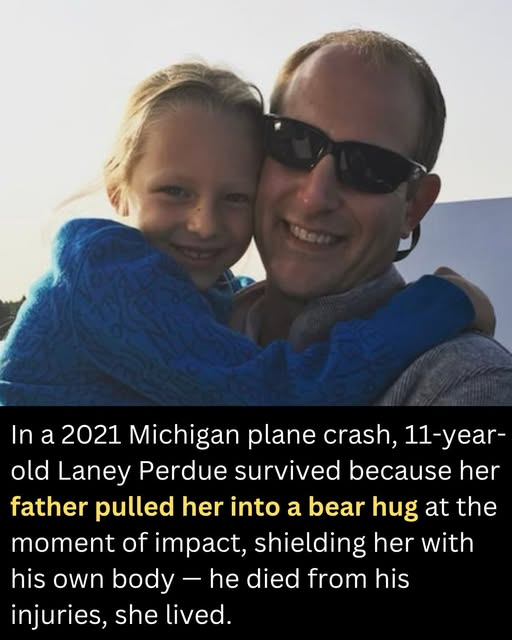
11-year-old Laney Perdue became the sole survivor of a plane crash thanks to her father, who wrapped her in a bear hug as the plane was going down.
When she was recovered alive from the crash, all her injuries were on the opposite side of her body from where her father was sitting.
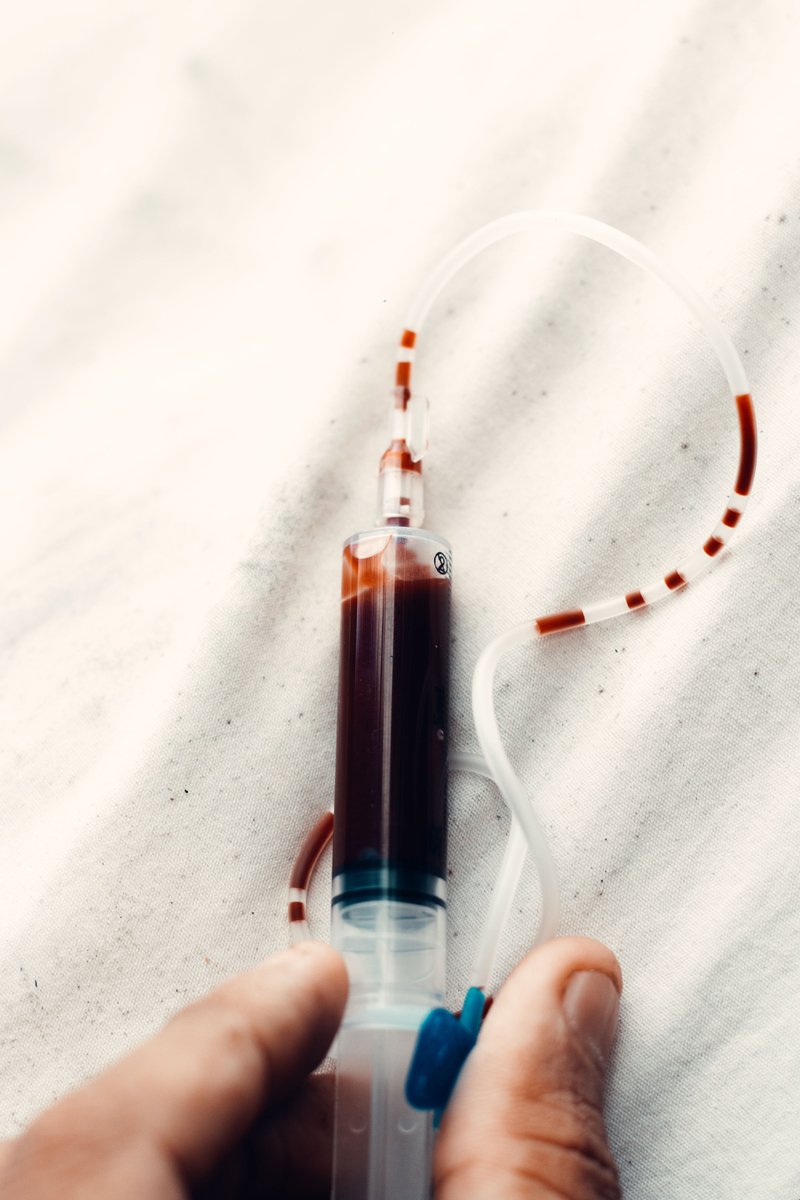
DONAS MEDIO LITRO DE SANGRE. Esto es lo que tu cuerpo hace después.
Es una pregunta estupenda, me la he hecho durante los años de carrera en los que donaba y luego como traumatóloga.
Te sientas en la silla. Te ponen el torniquete. La aguja entra. Diez minutos después sales con una galleta María en la mano y 450 mililitros menos. En los años buenos, te regalaban hasta una plantita.
Tu cuerpo acaba de perder el 10% de su volumen sanguíneo. Y aunque tú vayas tan tranquilo a por el café, dentro ha empezado una operación a contrarreloj.
Lo primero que el organismo nota es la caída de presión. El plasma (que es básicamente agua con sal y proteínas) ha bajado, y eso se arregla rapidísimo. Bebes, comes algo, y en 24 o 48 horas el depósito está lleno otra vez. Por eso te insisten tanto en beber al salir.
Si tuviste un mareo al terminar de donar, te recuperas en horas.
Pero pasan más cosas, esto va por fases.
También has perdido glóbulos rojos. Y eso no se arregla con un vaso de agua.
Tus riñones detectan que llega menos oxígeno y sueltan una hormona, la eritropoyetina. Viaja como un mensajero hasta la médula ósea con un recado muy claro: “fabrica, pero ya.”
Tu médula, que en condiciones normales produce dos millones de glóbulos rojos por segundo (sí, por segundo), acelera el ritmo.
Pero tiene un problema. Necesita hierro. Y con cada donación se te van entre 200 y 250 miligramos del que tenías. Sin hierro no hay hemoglobina. Y la hemoglobina es el núcleo del glóbulo rojo nuevo.
Por eso tu cuerpo tarda entre 4 y 8 semanas en reponer todo lo que ha perdido. En España no te dejan volver a donar hasta dos meses después.
Por eso los hombres pueden donar cuatro veces al año, y las mujeres, tres. Nosotras siempre vamos más justas de hierro por la menstruación.
Tu cuerpo es generoso. Sólo te pide a cambio: hierro y tiempo.
Y mientras tu médula trabaja en silencio, alguien, en algún sitio, sigue vivo el lunes. ¡Gracias por donar!
#LaTraumatologaGeek