I will be speaking on Wednesday, June 24 at the Centre for Asia Pacific Refugee Studies at the University of Auckland. I will discuss how Paul Kagame's forces have displaced civilians in Rwanda and Congo, as a tactic of war in a bid to seize land and resources. I'll be drawing on research from my latest book, Rwanda's 30-Year Assault on Congo published by Baraka Books, and my previous book In Praise of Blood, the Crimes of the Rwandan Patriotic Front, published by Random House Canada in 2018. Joseph Kimenyi, a Rwandan genocide survivor now living in New Zealand, will share his experiences and thoughts on a conflict that is poorly understood by the international community. @BarakaBooks
The University of Ottawa is proud to award an honorary doctorate to Dr. @DenisMukwege, a world-renowned Congolese gynecologist and advocate for the rights of survivors of sexual violence as a weapon of war: https://t.co/AXmXGCXWiX
@uOttawaHealthSc#uOGrad26#uOttawa
@JudiRever@RwandaDemocrati@BarakaBooks Judi, we really love you: you are a tremendously courageous defender of the truth. We always will have your back.
The architecture of Paul Kagame's impunity. An adapted excerpt from my new book, Rwanda's 30-Year Assault on Congo: the Crimes, the Criminals and the Cover-Up, published by @BarakaBooks .
https://t.co/Z1HU2Y6E85
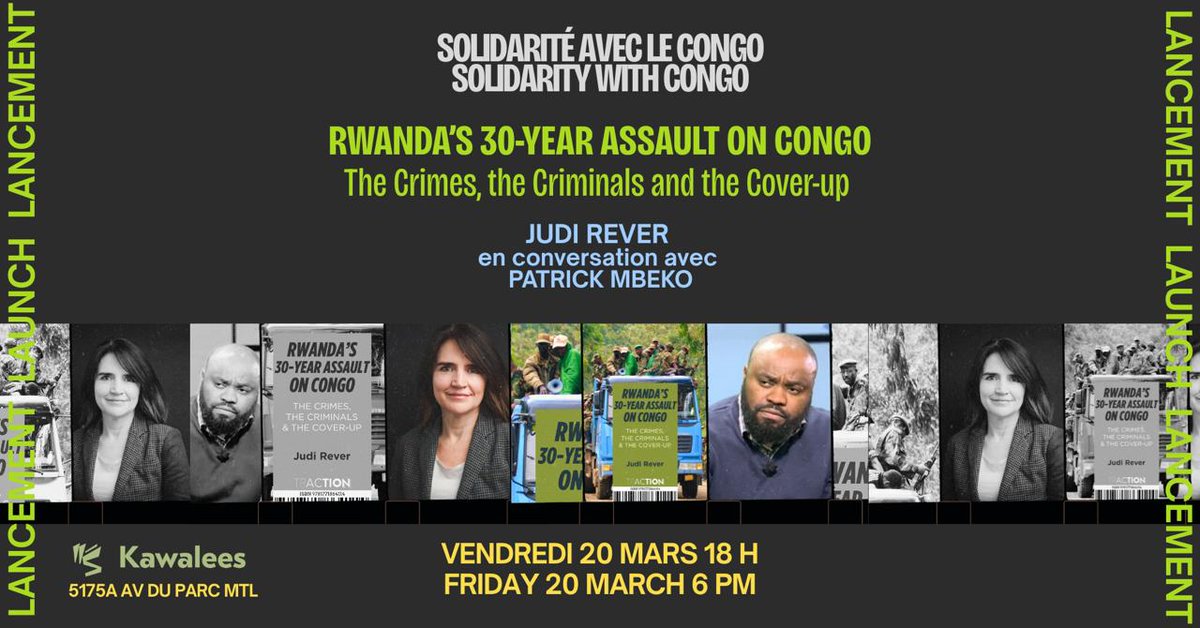
Rencontre‑échange autour du dernier ouvrage de la journaliste @JudiRever, « Rwanda’s 30‑Year Assault on Congo ». Un livre qui revient sur les origines de la campagne militaire menée par Paul Kagame contre le #Congo et sur l’impunité accordée par les États‑Unis et leurs alliés.
Un éclairage essentiel sur 30 ans de guerre et d’impunité dans la région des Grands Lacs.
Rejoignez‑nous pour une discussion incontournable.
📅 20 mars — 18h
📍 Espace culturel Kawalees, 5175A av. du Parc, Montréal
#JudiRever #Congo #Rwanda #GreatLakesRegion #Histoire #Justice #Montréal #Événement #Kawalees
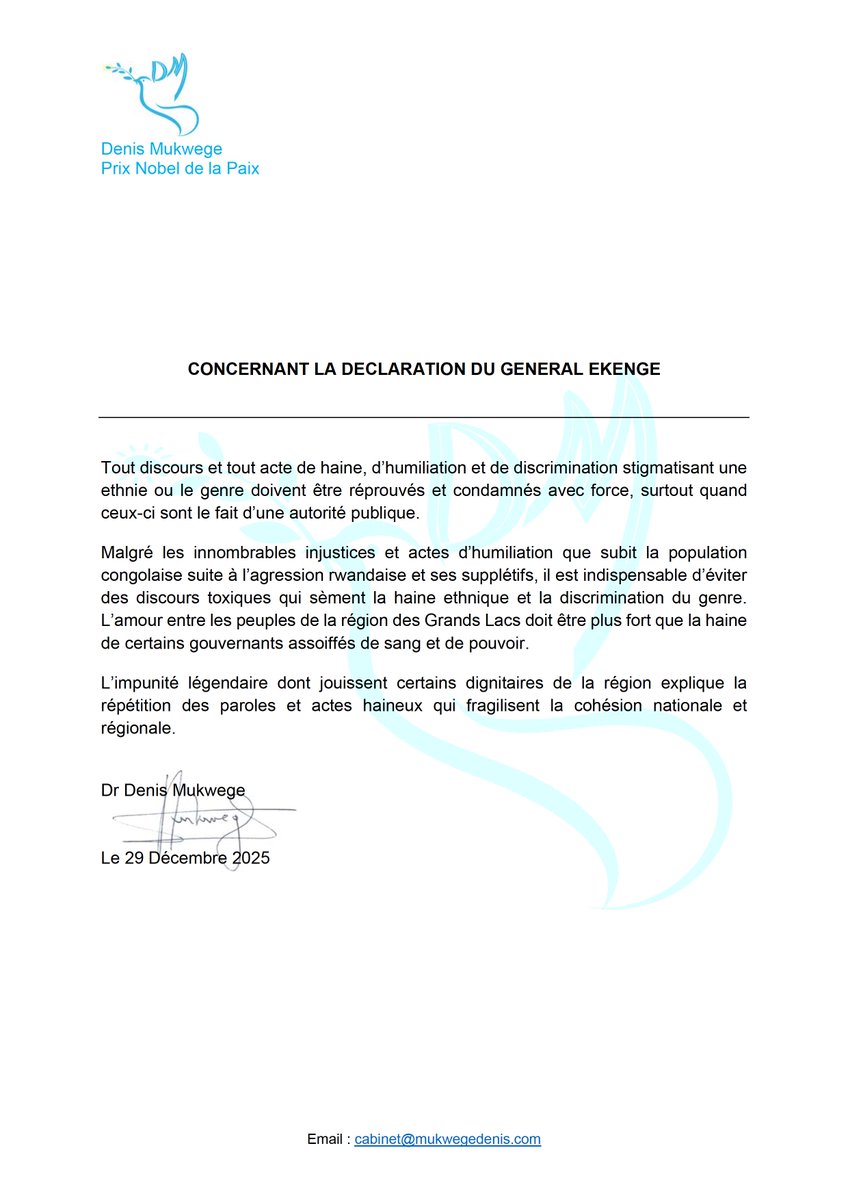
Tout discours et tout acte de haine , d’humiliation et de discrimination stigmatisant une ethnie ou le genre doivent être réprouvés et condamnés avec force, surtout quand ceux-ci sont le fait d’une autorité publique.
Malgré les innombrables injustices et actes d’humiliation que subit la population congolaise suite à l’agression rwandaise et ses supplétifs, il est indispensable d’éviter des discours toxiques qui sèment la haine ethnique et la discrimination du genre. L’amour entre les peuples de la région des Grands Lacs doit être plus fort que la haine de certains gouvernants assoiffés de sang et de pouvoir.
L’impunité légendaire dont jouissent certains dignitaires de la région explique la répétition des paroles et actes haineux qui fragilisent la cohésion nationale et régionale.
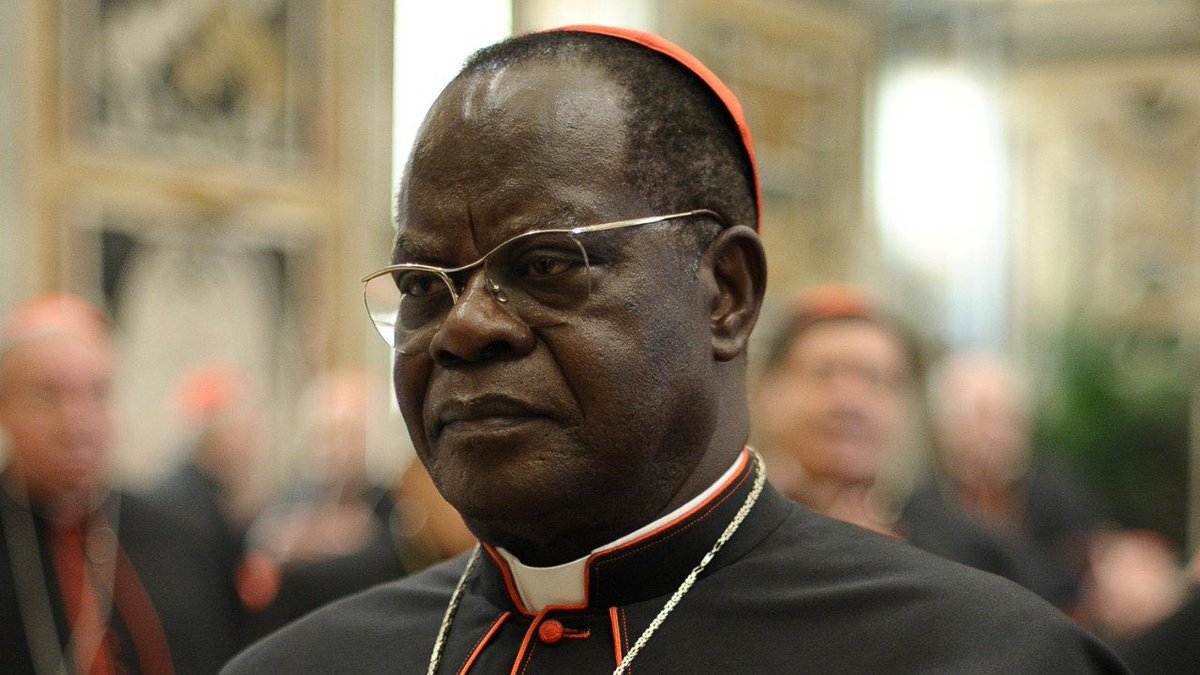
« Le Congo est trahi par ses propres fils, abandonné par ses frères africains, et pillé par ceux qui nous donnent des leçons de démocratie. » , - Cardinal Laurent Monsengwo
@DenisMukwege@JCMaswana Most Congolese concur with Dr Dennis Mukwege on these two topics: Trump’s “Peace Accord” and the Doha process. Trump wants to solve the Congolese vs Rwanda problem the same way he’s musing on a solution for the Russia bs Ukrain problem. Unacceptable.
Statement on the Washington and Doha Processes
Jeopardizing the Future of the DRC
For more than 150 years, the history of Congo has been shaped by external powers, often at the expense of the aspirations of its people. Today, as Congolese women and men continue to bear an unbearable human cost, peace initiatives are once again being designed far from them, in foreign capitals, without transparency, without inclusion, and without any genuine desire to address the root causes of the conflict. How long will these cycles continue? How long will we see agreements negotiated without the people, illegitimate and incapable of bringing about a just and lasting peace?
The Washington and Doha processes, driven primarily by foreign economic and financial interests, unfortunately follow the same pattern. The Doha Framework Agreement is presented as progress, yet it offers neither binding mechanisms, nor a clear timeline, nor implementation guarantees, nor provisions to dismantle the culture of impunity. Although only two of the eight protocols have been initialed, the Detainee Release Mechanism (September 14) and the Ceasefire Monitoring and Verification Mechanism (October 14), the M23 and the Congo River Alliance (AFC) have nevertheless continued offensive operations and violated the ceasefire, undermining the implementation of the Doha framework.
These processes suffer from a deep lack of participation, transparency, and inclusion. They are:
· bilateral, even though the crisis is fundamentally regional, with the direct involvement of Uganda and Burundi;
· opaque, while the Congolese people are exhausted by backdoor maneuvering whose consequences they alone endure;
· contrary to international law, as they tend to normalize an armed aggression instead of putting an end to it.
Furthermore, they ignore victims, local communities, and genuine peace actors.
It must be emphasized that the signing of the Doha Framework Agreement comes at a time when Rwanda has not withdrawn its troops from Congolese territory and continues to direct M23 operations in occupied areas, in blatant violation of UN Security Council Resolution 2773. These diplomatic initiatives, devoid of coherent sequencing and minimum guarantees, amount to a succession of “non-events”: triumphant communications, yet no improvement on the ground.
The M23/AFC coalition and their Rwandan sponsor have already violated the ceasefire and continue offensive activities, illustrating a persistent “talk and fight” strategy and a politics of fait accompli. In fact, the M23 and AFC continue their expansion across the Kivus and impose an arbitrary regime rooted in fear and violence, such as the recent massacre of 22 people in Irhambi/Katana, Kabare territory, committed during the night of November 23–24 by elements of the illegitimate occupying forces. This massacre is part of a long series of atrocities committed in recent months in the occupied areas.
In this volatile context, the Congolese people find themselves caught between the hammer and the anvil: trapped between a Congolese government whose irresponsibility compromises national sovereignty, and a strategic, criminal Rwanda that instrumentalizes the residual presence of the FDLR, who are, in fact, Rwandan nationals, to reinforce its control over natural resources on Congolese soil.
Moreover, the interference of foreign economic actors, drawn by access to mineral resources, further deepens the country’s vulnerability and fuels predatory dynamics.
It is essential to recall that the situation prevailing in North and South Kivu amounts to a de facto annexation. Rwanda exercises illegal authority over Congolese zones, in violation of the UN Charter, the principle of territorial sovereignty, and the right of peoples to control their natural wealth (Resolution 1803 (XVII)). The implicit support of certain governments and industrial initiatives in occupied zones contribute to normalizing this situation, which is contrary to both law and ethics.
In reality, the Washington and Doha agreements, far from restoring international legality in the Great Lakes region, are the result of foreign interests driven by geostrategic ambitions. These agreements provide the illusion of diplomatic progress but do nothing to change the daily reality of millions of Congolese people displaced, starving, and deprived of their most fundamental rights. No political agenda, national or geostrategic, can outweigh the right of the Congolese people to security, justice, and sovereignty.
Restoring peace in eastern DRC requires strong sanctions from the international community to ensure the withdrawal of foreign forces and the dismantling of illegitimate parallel administrations, in accordance with UN Security Council Resolution 2773. To end decades of violence, forced displacement, and exploitation, it is imperative to fully include local populations in all peace initiatives, recognize the regional dimension of the conflict, and prioritize an approach grounded in truth, justice, and accountability.
The conditions for a just and lasting resolution of the crisis are therefore still not in place. As long as economic interests and mining deals prevail over human rights, security, and the dignity of the Congolese people, true peace will remain out of reach. It is time for Congolese women and men to refuse to be the adjustment variable of geopolitical rivalries and to fully claim their rights, restore their dignity, and reclaim control over their destiny.
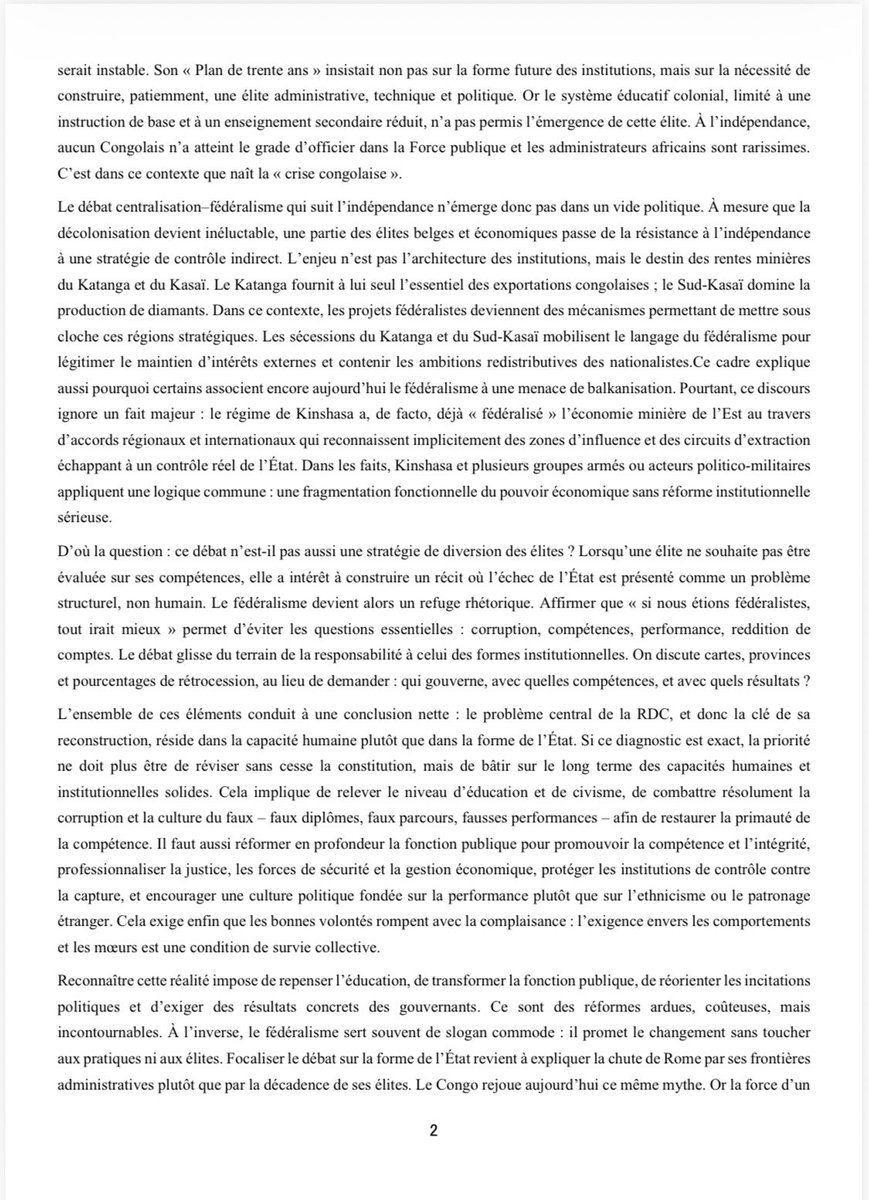
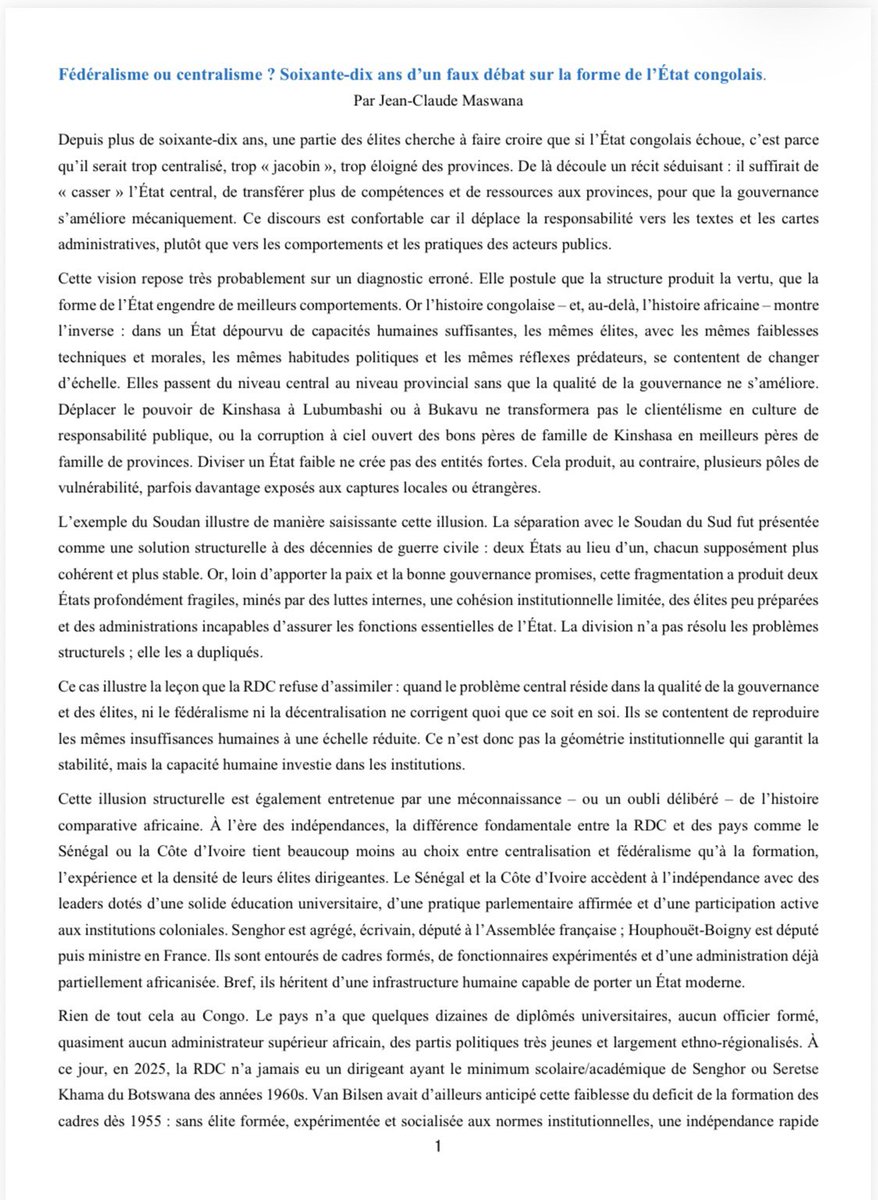
Fédéralisme ou centralisme ? Soixante-dix ans d’un faux débat sur la forme de l’État congolais. Je repartage ce texte, dans une version approfondie, pour clarifier une idée simple mais systématiquement brouillée par le débat public : le véritable défi congolais est celui des capacités humaines, non celui de l’architecture institutionnelle. Depuis plus de soixante-dix ans, une partie des élites cherche à faire croire que si l’État congolais échoue, c’est parce qu’il serait trop centralisé, trop « jacobin », trop éloigné des provinces. De là découle un récit séduisant : il suffirait de « casser » l’État central, de transférer plus de compétences et de ressources aux provinces, pour que la gouvernance s’améliore mécaniquement. Ce discours est confortable car il déplace la responsabilité vers les textes et les cartes administratives, plutôt que vers les comportements et les pratiques.
Cette vision repose pourtant sur un diagnostic erroné. Elle postule que la structure produit la vertu, que la forme de l’État engendre spontanément de meilleurs comportements. Or l’histoire congolaise – et, au-delà, l’histoire africaine – montre l’inverse : dans un État dépourvu de capacités humaines suffisantes, les mêmes élites, avec les mêmes faiblesses techniques et morales, les mêmes habitudes politiques et les mêmes réflexes prédateurs, se contentent de changer d’échelle. Elles passent du niveau central au niveau provincial sans que la qualité de la gouvernance ne s’améliore. Déplacer le pouvoir de Kinshasa à Lubumbashi ou à Bukavu ne transformera pas le clientélisme en culture de responsabilité publique, ou la corruption à ciel ouvert des bons pères de famille de Kinshasa en meilleurs pères de famille de provinces. Diviser un État faible ne crée pas des entités fortes. Cela produit, au contraire, plusieurs pôles de vulnérabilité, parfois davantage exposés aux captures locales ou étrangères.
L’exemple du Soudan illustre de manière saisissante cette illusion. La séparation avec le Soudan du Sud fut présentée comme une solution structurelle à des décennies de guerre civile : deux États au lieu d’un, chacun supposément plus cohérent et plus stable. Or, loin d’apporter la paix et la bonne gouvernance promises, cette fragmentation a produit deux États profondément fragiles, minés par des luttes internes, une cohésion institutionnelle limitée, des élites peu préparées et des administrations incapables d’assurer les fonctions essentielles de l’État. La division n’a pas résolu les problèmes structurels ; elle les a dupliqués.
Ce cas illustre la leçon que la RDC refuse d’assimiler : quand le problème central réside dans la qualité de la gouvernance et des élites, ni le fédéralisme ni la décentralisation ne corrigent quoi que ce soit en soi. Ils se contentent de reproduire les mêmes insuffisances humaines à une échelle réduite. Ce n’est donc pas la géométrie institutionnelle qui garantit la stabilité, mais la capacité humaine investie dans les institutions.
Cette illusion structurelle est également entretenue par une méconnaissance – ou un oubli délibéré – de l’histoire comparative africaine. À l’ère des indépendances, la différence fondamentale entre la RDC et des pays comme le Sénégal ou la Côte d’Ivoire tient beaucoup moins au choix entre centralisation et fédéralisme qu’à la formation, l’expérience et la densité de leurs élites dirigeantes. Le Sénégal et la Côte d’Ivoire accèdent à l’indépendance avec des leaders dotés d’une solide éducation universitaire, d’une pratique parlementaire affirmée et d’une participation active aux institutions coloniales. Senghor est agrégé, écrivain, député à l’Assemblée française ; Houphouët-Boigny est député puis ministre en France. Ils sont entourés de cadres formés, de fonctionnaires expérimentés et d’une administration déjà partiellement africanisée. Bref, ils héritent d’une infrastructure humaine capable de porter un État moderne. Suite…👇🏾
@JudiRever@JeanmarcKabunda Dear Judi, I am already counting down the remaining days until March 1, 2026. Again, we all love you for your courage, dignity, and integrity in telling the real story of what happened in the great lakes region in the last 3 decades of the very murderous Kagame regime.
I'm pleased to announce that my new book entitled, Rwanda's 30-Year Assault on Congo: the Crimes, the Criminals and the Cover-Up, will be published on March 1st, 2026. Readers can now pre-order a copy. The book is an evidentiary essay that examines how the United States conducted regime change in 1996-97 to oust Congo's dictator Mobutu Sese Seko, thereby enabling three decades of crimes against the Congolese people. It also explores Rwanda's military tactics of infiltration and subjugation in Congo, and how international courts have guaranteed Paul Kagame's impunity. Published by Traction Books, an imprint of @BarakaBooks
https://t.co/k9Jepe0scx
Spain re-issued int'l arrest warrants for ex-RPF Gen. Kayumba Nyamwasa - once Kagame’s top intelligence chief - over war crimes & genocide in Rwanda & DRC. The same crimes were committed under Kagame’s command, yet he enjoys immunity & Western protection. https://t.co/GMjPJWtMgN
Prix Nobel d’économie 2025 : Vous êtes-vous déjà demandé pourquoi certains pays deviennent de plus en plus riches avec le temps, tandis que d’autres restent coincés ? C’est l’une des plus grandes questions en économie, et le prix Nobel d’économie de cette année récompense trois esprits brillants qui ont percé une partie du mystère. L’Académie royale des sciences de Suède a décerné le prix 2025 à Joel Mokyr, Philippe Aghion et Peter Howitt pour avoir expliqué comment l’innovation stimule la croissance économique; la clé pour comprendre pourquoi certaines nations prospèrent tandis que d’autres restent à la traîne.
Le professeur Joel Mokyr, Northwestern University, États-Unis, a découvert ce qui prépare le terrain pour une croissance à long terme. Il a montré que les pays prospèrent lorsqu’ils encouragent les nouvelles idées, partagent les connaissances et créent un environnement où les gens sont libres d’expérimenter. C’est comme planter des graines dans un sol fertile : les pays dotés d’institutions ouvertes et d’une culture propice à la curiosité développent les technologies et les idées qui les font avancer. Les ressources naturelles ne représentent pas un moteur de croissance, encore moins un "démarreur" dudit moteur.
Les professeurs Philippe Aghion, Collège de France/INSEAD/London School of Economics, et Peter Howitt, Brown University, États-Unis, ont développé une idée puissante appelée destruction créatrice. Ils ont expliqué comment les économies croissent en remplaçant constamment les anciennes méthodes par des innovations audacieuses. C’est comme remplacer votre vieux téléphone par un modèle plus performant : c’est difficile pour les entreprises qui restent en arrière, mais cela maintient l’économie dynamique et en croissance.
Ces économistes nous montrent que la croissance ne repose pas seulement sur les ressources ou la chance. Il s’agit de créer un système où les nouvelles idées peuvent prospérer et les anciennes être remplacées. Leur travail aide à comprendre pourquoi certains pays avancent rapidement tandis que d’autres peinent, et donne des pistes aux dirigeants pour bâtir des sociétés plus fortes et plus prospères. Félicitations à Mokyr, Aghion et Howitt pour avoir résolu une partie de ce grand puzzle mondial !