🚨From Aug 20-23, temperatures made at least three times more likely by human-caused climate change are projected to affect ~1.4 million square miles — an area larger than all of India.
Read the alert from #ClimateCentral⤵️
https://t.co/7PIgTdkCT0
🚨From Aug. 20-23, more than 156 million people across the western and southern U.S. are forecast to experience heat strongly influenced by human-caused climate change.
🌡️Multi-day heat streaks are dangerous, worsening air quality and raising the risk of heat-related illness.
On average, 198 major U.S. cities now experience two more extreme heat streaks each year compared to the early 1970s.
https://t.co/yGmwqgqa4k
Globally, July 2026 was tied with July 2024 for the warmest July ever recorded. Records have been kept since 1850.
🎥Watch our latest Monthly Climate Briefing for a recap of recent climate extremes, from soaring ocean temperatures to record-breaking heat: https://t.co/0jJYZ7QD1f
Over the past 2 weeks, repeated storms have flooded parts of the Midwest while warm ocean waters helped fuel extreme rainfall in Hawaii.
Learn more with #ClimateCentral⤵️ https://t.co/4GJO9CiCG1
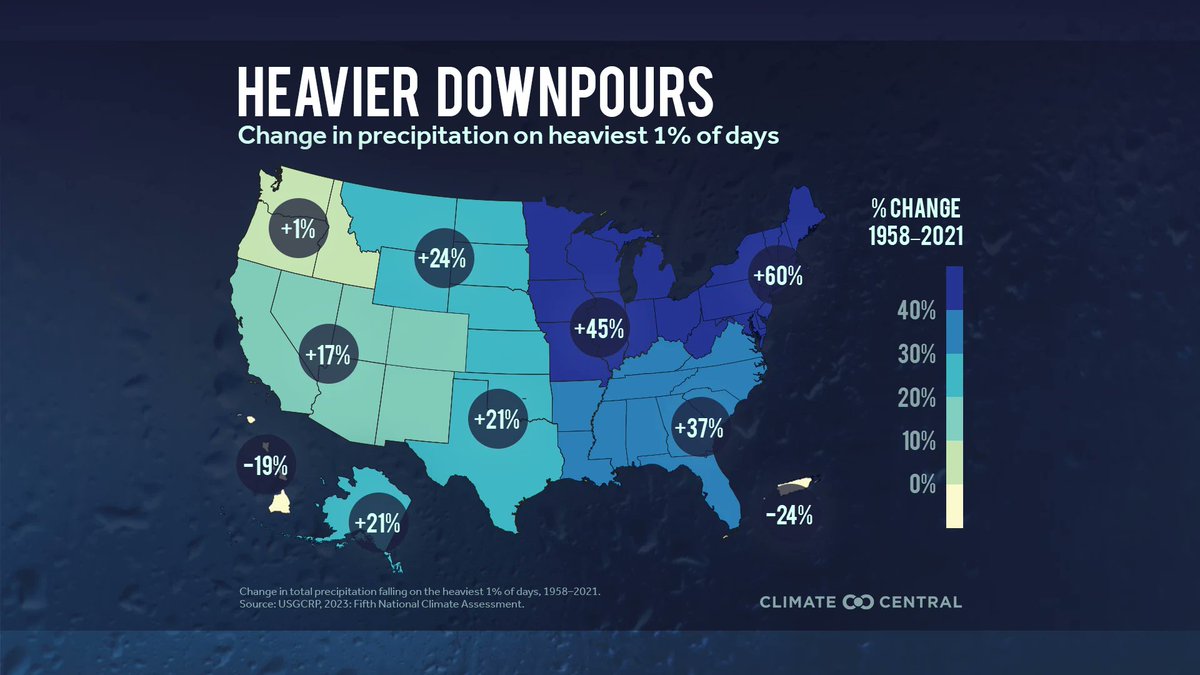
🚨Climate change is supercharging the water cycle, fueling extreme rainfall and flooding across the U.S.🚨
A warmer atmosphere can hold more moisture, increasing the potential for heavier downpours and flash flooding. Explore four of the impacted areas:
🌀Kauai, Hawaii
#HurricaneLala tracked over ocean waters 2°F–4°F above normal. #ClimateCentral's Climate Shift Index shows this unusual warmth was more than 100x more likely due to human-caused climate change, and up to 400x in some areas.
https://t.co/8vYIfZhvtB
🌡️July 2026 was the warmest month ever recorded in the contiguous U.S., with an average temperature of 76.9°F.
Join us tomorrow at the next Monthly Climate Brief to dive into the latest climate data.
📅August 19, 2026
⏰12 PM ET/9 AM PT
Register➡️https://t.co/8DtgwUUv7X
��The Pacific isn't the only ocean experiencing intense heat.
In fact, nearly every major ocean basin around the world is currently experiencing some form of marine heat wave.
More via #ClimateCentral⤵️ https://t.co/hsNpdM1NtI
🌊How do warmer oceans affect the types of weather we experience?
Take #TropicalStormLala, headed toward Hawaii this weekend.
#Lala is expected to bring heavy rain to the Big Island, with NOAA forecasting up to 25" of rain in some areas on the windward side.
There’s a climate connection here:
🌡️#Lala passed over Pacific waters up to 3°F warmer than average — a level of ocean warmth made 30–70x more likely due to climate change.
🌧️Warmer water adds more moisture into the air, which can fuel heavier rainfall.
138 million people across the United States will experience at least one night with a low temperature reaching a CSI Level of 3 or higher on August 13 and 14.
Read the alert via #ClimateCentral⤵️ https://t.co/go2HtPhjbp
🚨Record-hot nights are gripping much of the U.S. this week, offering little relief from extreme daytime heat!
Human-caused climate change has made these extreme overnight temperatures at least 3x more likely across more than 60% of the contiguous United States.
According to #ClimateCentral's Climate Shift Index, CSI levels of 5 — the highest possible — are forecast for minimum temperatures across much of the contiguous U.S. through August 14.
🌡️That means human-caused climate change made this extreme heat at least 5x more likely.