❗The world must break its $7 trillion fossil fuel subsidy habit if we are to achieve net zero❗
Our latest report lays out 10 recommendations to help policymakers ensure their sustainability targets contribute to national interests and support inclusive economic growth while moving away from fossil fuel reliance.
Find out more: https://t.co/muB5CREdVL
Policymakers and financial institutions are underestimating climate risks that could destabilise the global financial system, the Parasol Lost report from the Institute and Faculty of Actuaries (IFoA) and @UniofExeter warns.
The report argues that global temperatures are accelerating faster than predicted, as the temporary ‘aerosol cooling’ effect from air pollution - which has masked around 0.5°C of warming at a significant health and environmental cost - diminishes as pollution is reduced.
As CCAG Chair @Sir_David_King notes, avoiding “planetary insolvency” will require urgent, policy-led action grounded in up-to-date risk assessments and willingness to tackle root causes.
Download the full report here: https://t.co/FDrIngCliF
The Paris Agreement is our most powerful global tool for tackling rising temperatures.
As @Sir_David_King writes on its tenth anniversary: “Science gives us a clear strategy to return to safety.”
https://t.co/CXyHWJCPDD
The results are in: the world’s oceans absorbed more heat in 2025 than in any year since modern records began.
Our oceans are the Earth’s greatest heat shield - absorbing more than 90% of the excess heat trapped by greenhouse gases.
Watch our climate conversation on the causes and consequences of record-breaking ocean temperatures - and what must happen next: https://t.co/XU0EPyuOEt
2025 brought quiet but meaningful wins: renewables overtook coal, the High Seas Treaty came into force, Amazon deforestation fell, and courts worldwide held polluters to account.
Each is proof that progress is possible – yet the scale of the challenge still demands much more.
CCAG founder @Sir_David_King recently shared with El Pais what must happen next to turn these wins into real momentum for change: https://t.co/nsmi0wzHS9
“Perhaps the greatest failure of the last 10 years has been finance.”
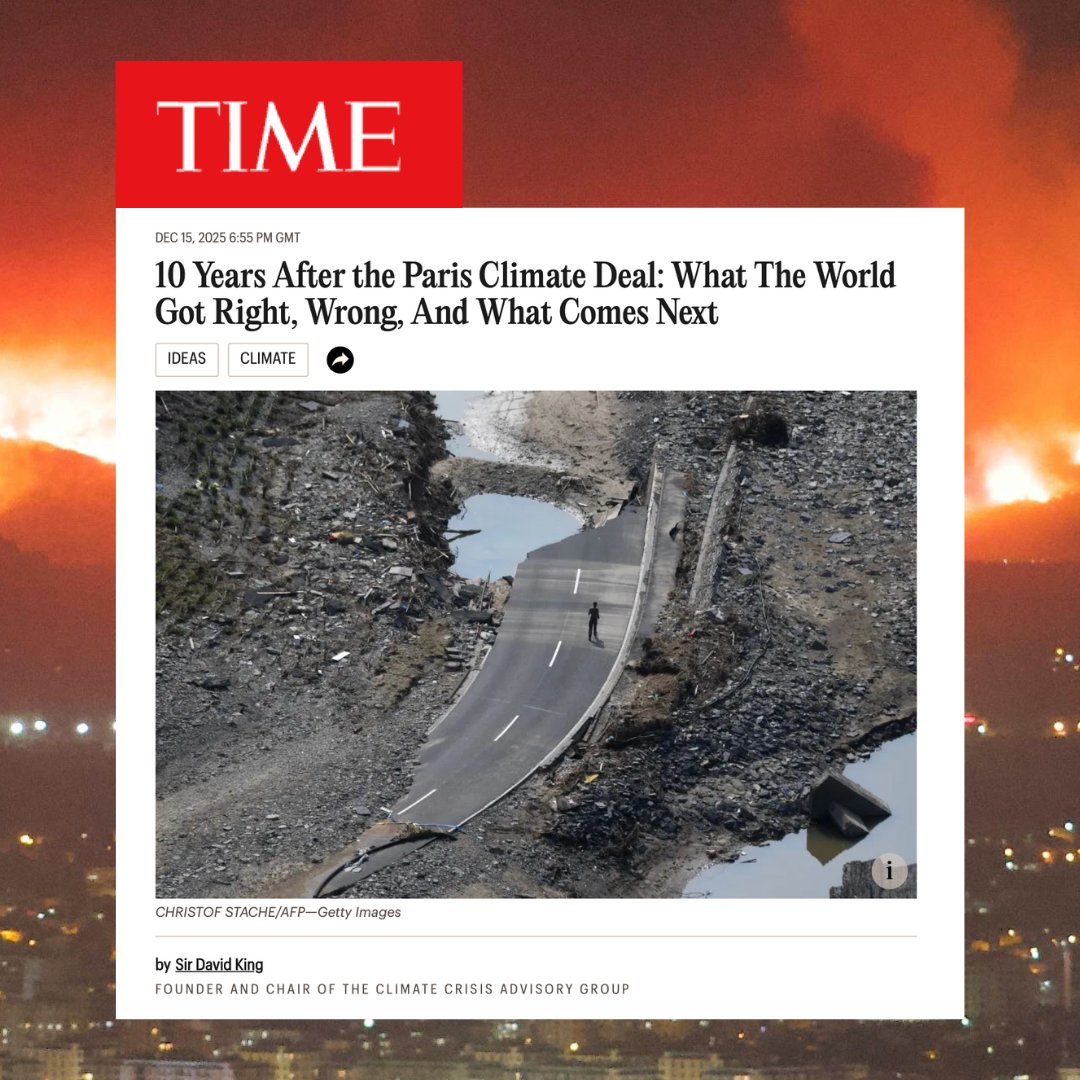
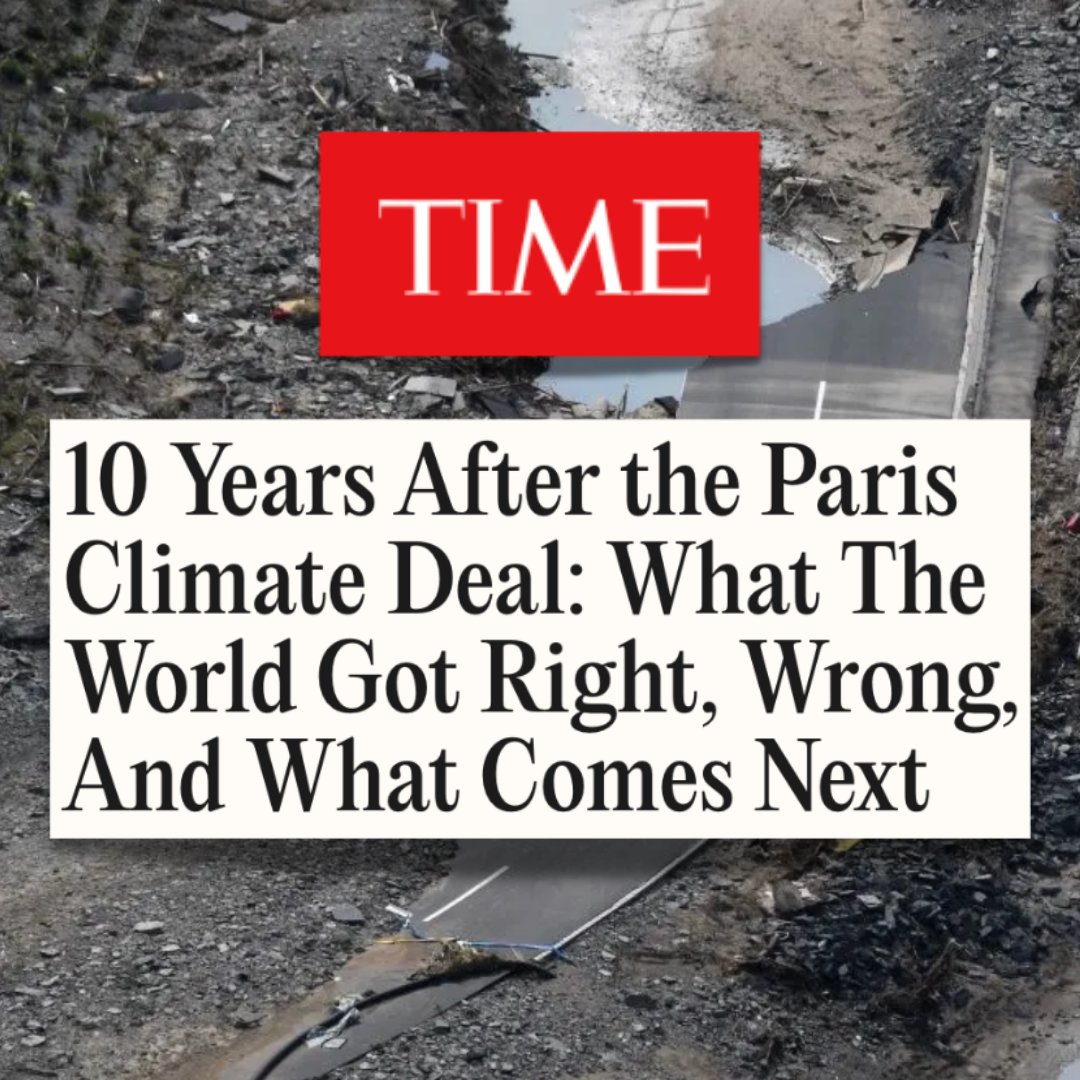
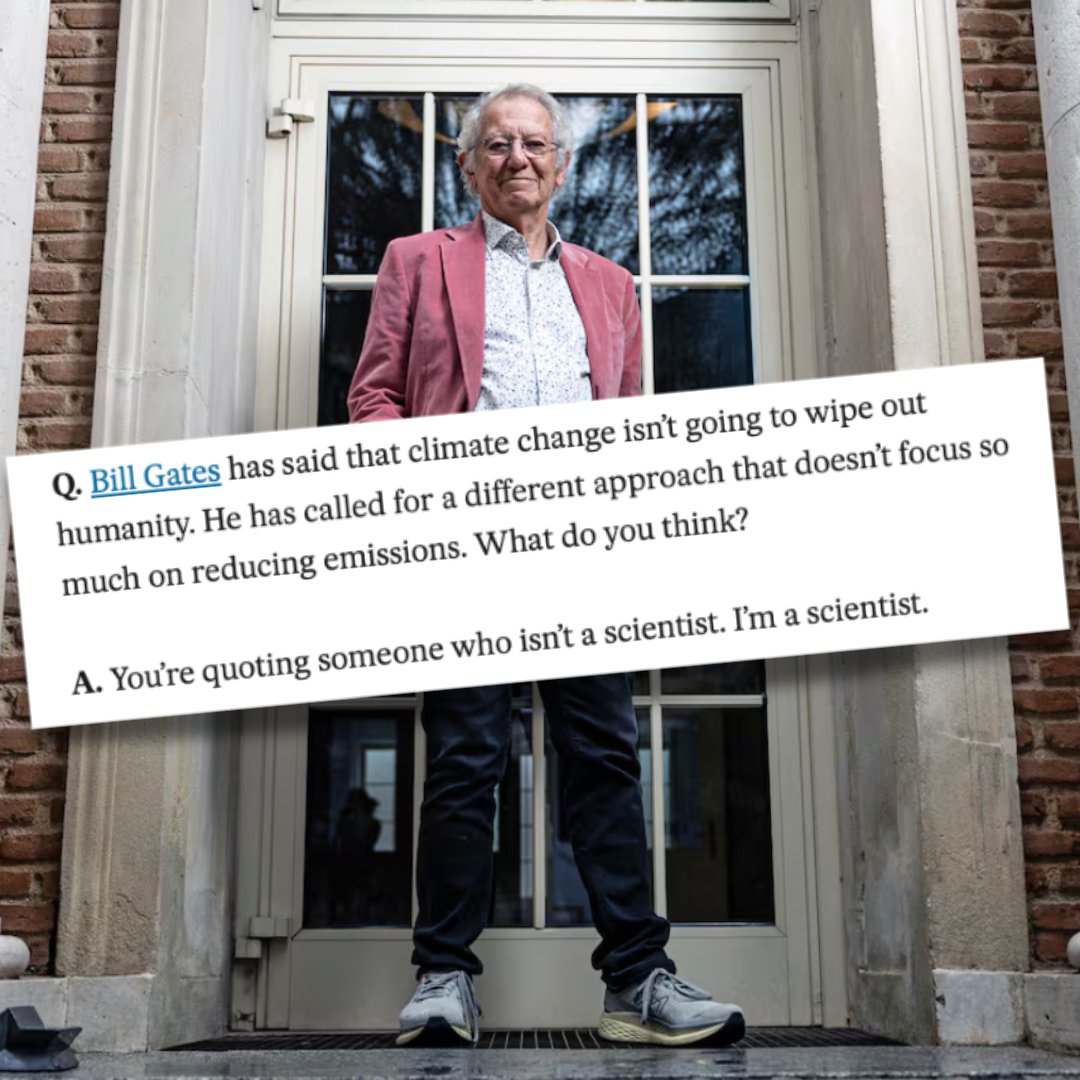
In an interview with @TIME, @Sir_David_King explores the successes and shortcomings of the Paris Agreement, and what we must do now to accelerate climate action.
Read the full interview: https://t.co/ibZcV3II2P
“All his [Mark Carney] clear statements while running the Bank of England, telling global banks to stop investing in new fossil fuel recovery to avoid creating stranded assets, seem now to have evaporated. It is, so far, extremely disappointing.”
CCAG Founder, @Sir_David_King, shared commentary with The Washington Post on the shifts in Canada’s current approach on climate change - including a directive scrapping the consumer carbon tax and a pause on the electric vehicles mandate.
Read the full article here: https://t.co/77sUqneebR
“In a year where climate multilateralism has been challenged, getting a good deal was better than failing to get a perfect deal.”
As 2025 draws to a close, CCAG’s Mariana Mazzucato, Dr Arunabha Ghosh and Sir David King reflect on the major learnings and takeaways from the COP30 summit.
Read the full blog: https://t.co/siAFlCGRwT
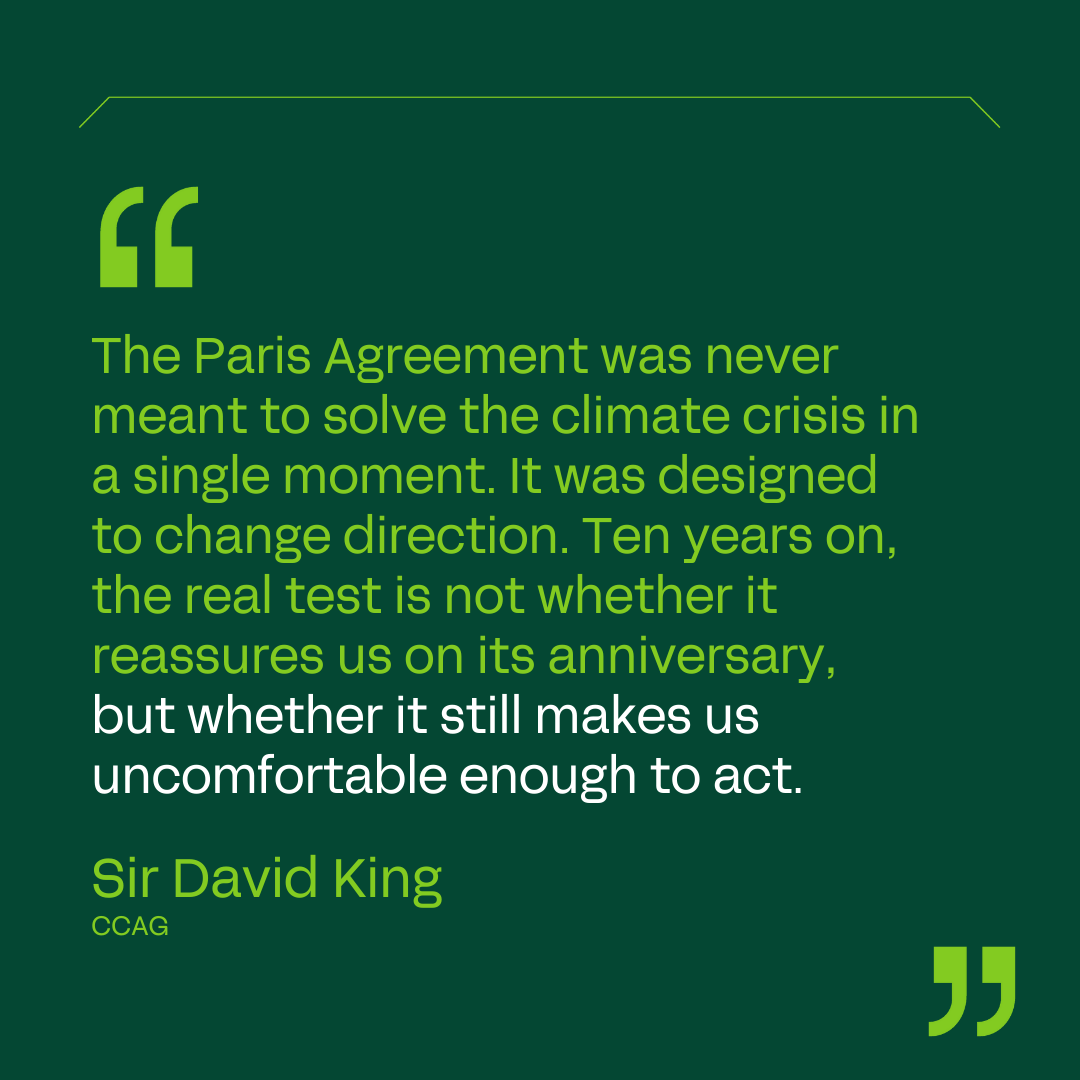
“The Paris Agreement was never meant to solve the climate crisis in a single moment. It was designed to change direction.”
Ten years on from the Paris Agreement, @Sir_David_King , Chair of the CCAG, explores its key successes and shortcomings with @TIME - as well as what we need to do in order to accelerate climate action.
Read the full article: https://t.co/ibZcV3Iadh
Reports suggesting pressure to weaken or delay the application of EU methane requirements are deeply concerning.
The science is unequivocal: cutting methane is the fastest way to slow warming this decade. To give in to pressure and weaken or delay methane regulation would be a grave error.
Read our chair @Sir_David_King’s open letter to the EU commissioner here: https://t.co/Xr3nIxjvYk
Ten years after the Paris Agreement, CCAG Chair @Sir_David_King reflects in @TIME on what has been achieved, and what must change.
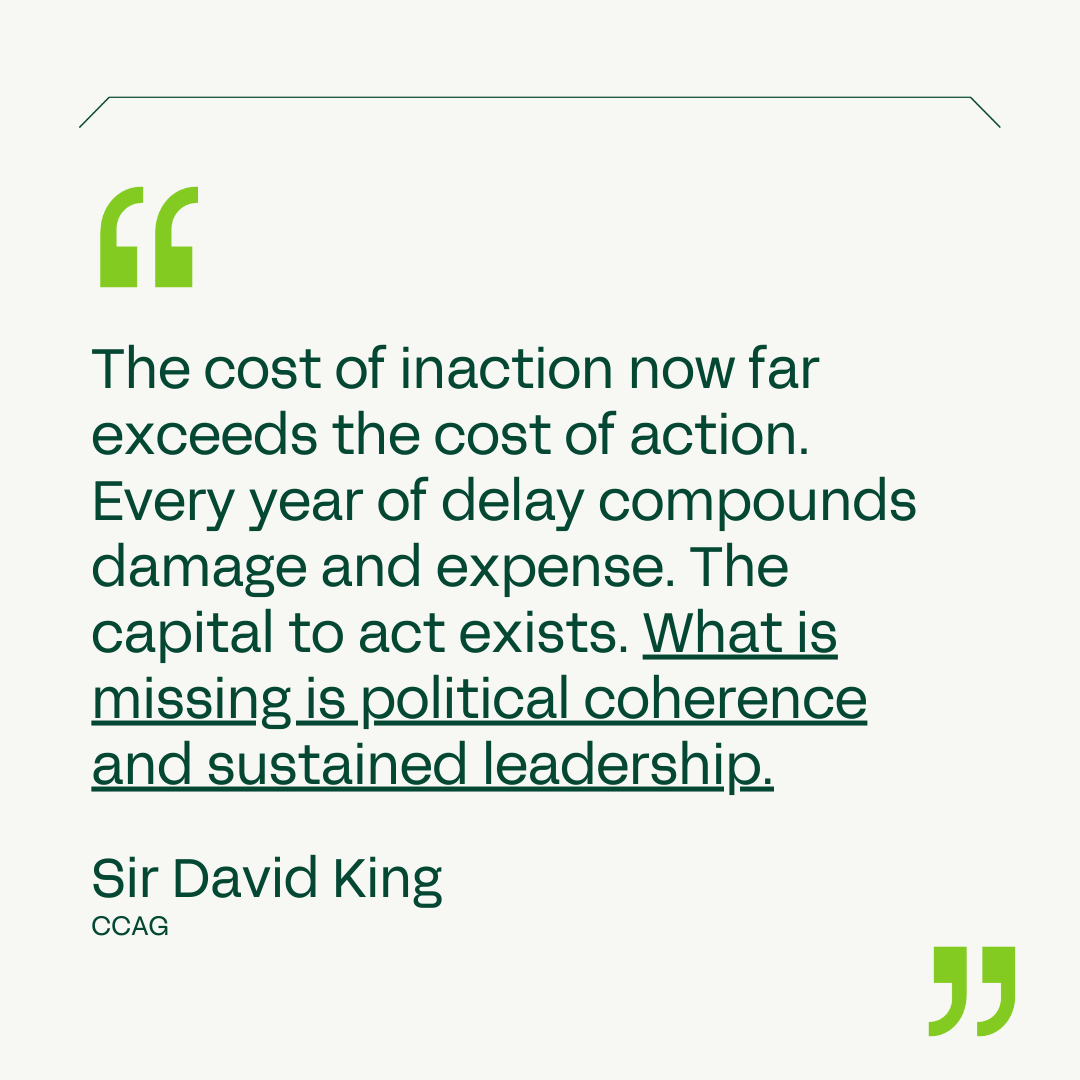
He warns that the greatest failure of the past decade has been finance: wealthy nations have underdelivered on their promises, eroding trust and slowing ambition. Yet, as Sir David argues, the capital to act exists – what’s missing is political coherence and sustained leadership.
Read the full article here: https://t.co/ibZcV3Iadh
Ten years after Paris: cooperation worked, but not fast enough. We’re now in climate overshoot. The next decade must deliver deeper cuts, real finance, and action at scale, or the window closes. What we do next matters most.
@TIME https://t.co/HXUEBfMPni
While reducing carbon dioxide remains essential, action on CO₂ alone will not be enough to avert dangerous near-term climate heating. Methane, a greenhouse gas over 80 times more potent than CO₂ , is responsible for nearly a third of the warming the world has already experienced.
In our latest Climate Conversation, host Clover Hogan is joined by leading oceanographer Tessa Hill, Professor of Earth and Planetary Sciences at the University of California, to explore what can be done to pull this emergency brake for climate heating.
Watch the full video here: https://t.co/kqRFCD8BPH
And read more in our methane report: https://t.co/zye7rZE2uj
Ten years ago today, the Paris Agreement gave the world a clear, science-based goal: limit warming to 1.5°C.
A decade later, that benchmark still stands but progress does not. We have entered overshoot, and are losing precious time debating costs instead of delivering the solutions to pull humanity back.
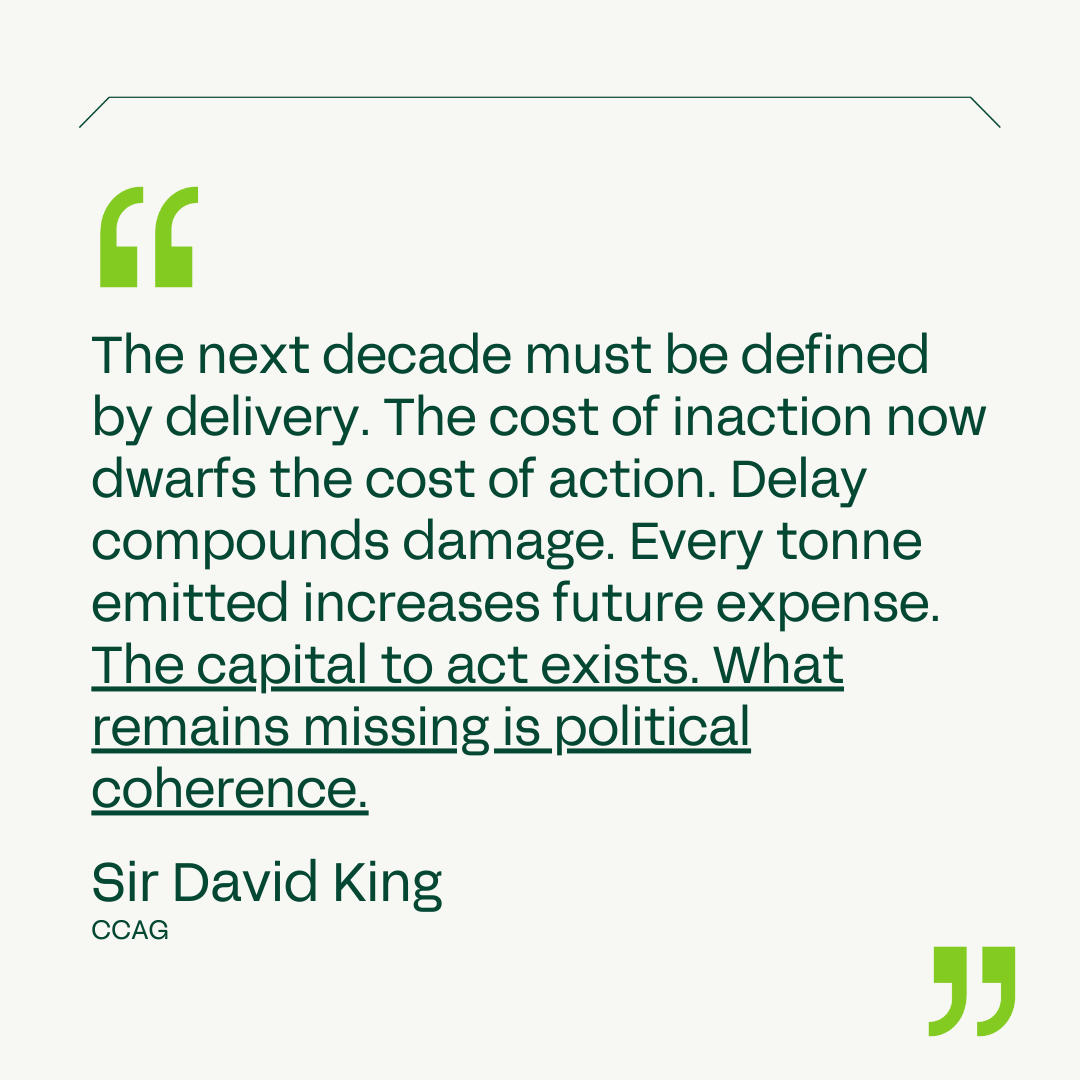
The next ten years must be defined by delivery. The tools, capital, and knowledge exist: what’s needed now is international cohesion and the courage to act.
On Tuesday evening, we hosted an event with The Conduit: After COP30 - What Are The Levers For Climate Action?
Our thanks go to the panel Lorraine Whitmarsh, Wolfgang Blau, Joyce Mendez, Nick Stern, as well as to Graihagh Jackson for chairing the panel and The Conduit for hosting us.
The discussion was an insightful dive into the many routes we must explore and problems we must solve to accelerate climate action - whether it is taking practical measures to reduce methane emissions, or evolving political action and investment strategy to do things differently and make real progress.
The Atlantic current that stabilises our climate is weakening, with consequences that could last for centuries.
A collapse of the AMOC could mean worse winters, harsher droughts, and major global disruption.
The science is clear: risks are real, but action now can still change the outcome.
Watch our conversation on the topic with Prof. Rahmstorf and Tori Tsui here: https://t.co/PNu3cpglU5











![ClimateCrisisAG's tweet photo. “All his [Mark Carney] clear statements while running the Bank of England, telling global banks to stop investing in new fossil fuel recovery to avoid creating stranded assets, seem now to have evaporated. It is, so far, extremely disappointing.”
CCAG Founder, @Sir_David_King, shared commentary with The Washington Post on the shifts in Canada’s current approach on climate change - including a directive scrapping the consumer carbon tax and a pause on the electric vehicles mandate.
Read the full article here: https://t.co/77sUqneebR](https://pbs.twimg.com/media/G8ymZ2dXgAAL7E4.jpg)