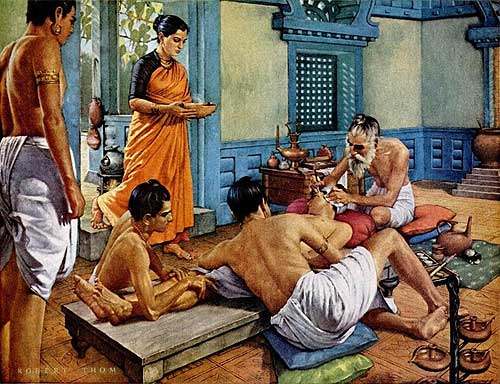
A Thread On The Founding Father of Surgery
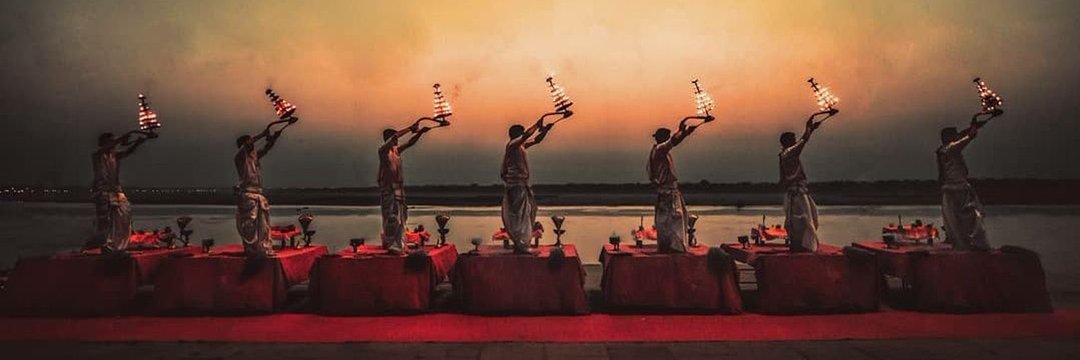
Sushruta lived in India sometime between 600 to 1000 BC. His Sushruta Samhita is one of the most outstanding treatises in Indian medical literature, describes the ancient tradition of surgery in India.
#NationalDoctorsDay
Terracotta fragment of Devi Durga, 200 BCE, Chandraketugarh, Bengal
She wears a headdress with 10 weapons (only 5 shown here because the other half of sculpture is broken off) arrayed in a fanlike fashion. Notice the distinctive Chandrabindu on her forehead,
It’s been over 2000 years yet we still worship Ma in the same form with the same symbols. And yet some charlatans want to dismiss such millennia old civilizational continuity so casually.
Most people remember Samudragupta as a great conqueror. But he was also called Kaviraj.
He wrote poetry, had deep interest in music and even in some of his coins he is shown as seated and playing the veena.
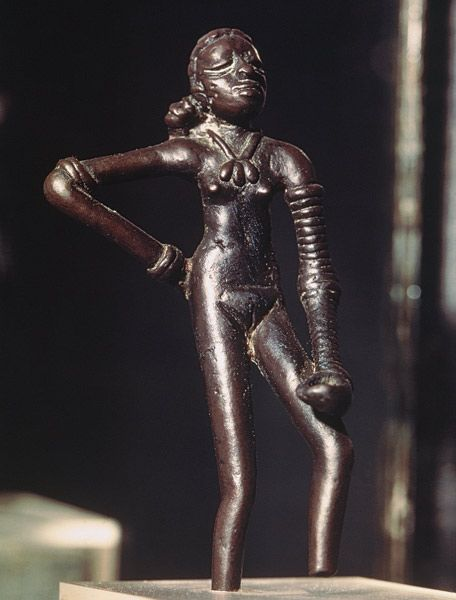
The 'Dancing Girl' of Mohenjo-Daro.
Cast in bronze. Just 11 cm tall. Posed in relaxed confidence, head tilted back, left arm stacked with bangles, hair tied in a bun.
4500 years old and still the most vivacious figure in all of ancient Indian art.
Unlike many ancient civilizations, the Indus world left behind no grand royal tombs or statues of kings.
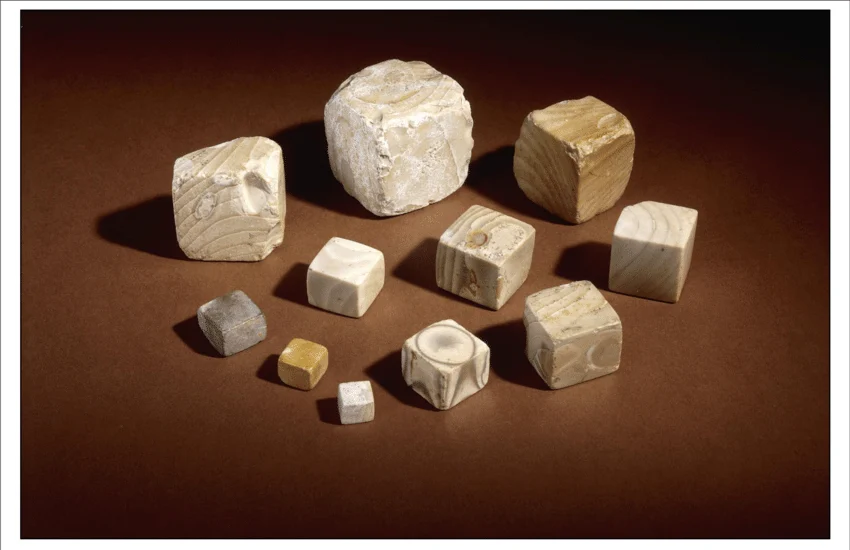
Instead, its story survives through everyday objects like this dice, an evidence of a society that valued order, trade, craftsmanship & urban life.
This 4,500-year-old terracotta dice from the Indus-Saraswati Civilization is a powerful reminder of India���s living heritage. Dicing is also mentioned as a popular game in Rig and Atharva Vedas (two of the four sacred Vedic scriptures).
From symbols and craftsmanship to rituals, yogic practices, and collective memory, numerous elements of ancient Indian civilization continue to thrive in the daily social and religious life of Indian society across regions and communities.
Civilizational inheritance is not just about geography or ruins, it is defined by living customs, symbols, rituals, and unbroken cultural consciousness. India is the enduring living continuity of the Indus-Saraswati Civilization.
#IndusSaraswatiCivilization #AncientIndianHeritage
One can stay together with an enemy or even with a furious snake, but one cannot stay together with an adversary yet avowing himself as a friend.
- Ramayana
Krishna and Balarama Touching the Feet of Vasudeva and Devaki In front of a massive white architectural facade.
1700-1725, Himachal Pradesh, Pahari Kingdom of Chamba
@CliosChronicles Ancient Bharat gave the Vedas, the oldest living scriptures (Rigveda ~1500 BCE), containing philosophy, mathematics, astronomy & ethics that still inspire millions.
The people of the Saraswati Sindhu Civilization used a standard system of weights & measures.
Excavated from Mohenjo daro, these chert & agate weights were part of a standardised system used from Gujarat to Afghanistan.
A single economic system spanning 1.25 million sq km.