We investigate the interplay of evolution, ecology and biological clocks @MPI_EvolBio with a focus on the circalunar clock in the marine insect Clunio.
Last week I defended my PhD and I got an amazing inverted hat :D
On the same day, the first chapter of my thesis got published! 🌕 https://t.co/bwZt9Xp7IH
Thank you for your guidance - Dusica and Tobias - and to all members of @ClocksEvolution for the support! @MPI_EvolBio
Our latest paper saw the light of day ... or rather night?
Big thanks to everyone involved!
How Light at Night Sets the Circalunar Clock in the Marine Midge Clunio marinus - CM Peralta, E Feunteun, J Guillaudeau, D Briševac, TS Kaiser, 2024 https://t.co/UPHHRZrkqi
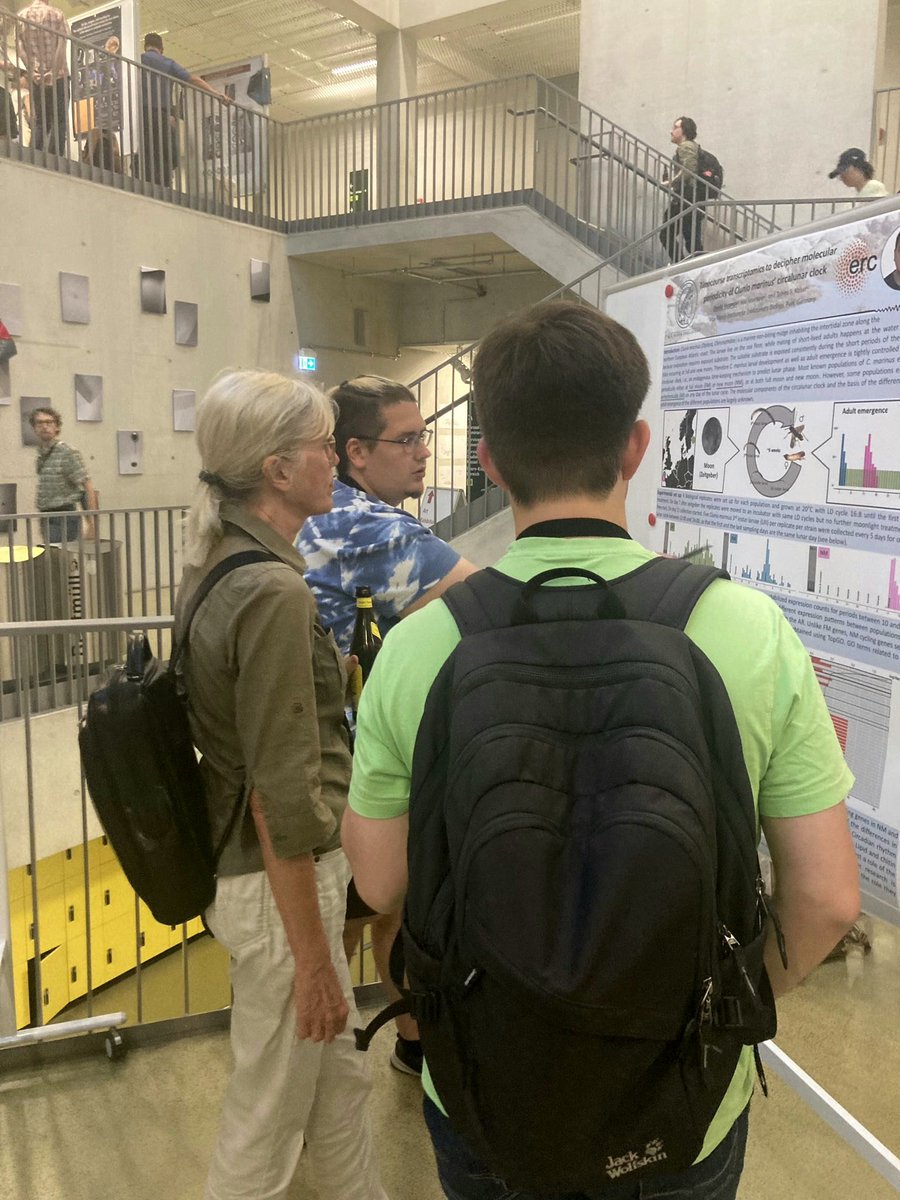
I had great time presenting our poster (@jule_neu, @ClocksEvolution) at #dzg23 on transcriptomics of circalunar clocks. Thank you all for great discussions. @BiologyDzg
The marine insect #Clunio can sense the rhythm of the tides based on the agitation of the water. But some Clunio populations are numb. We just published a study on the genetic basis of being numb in #PLOSGenetics:
https://t.co/AZ8D86nuWp
@Dusica_bio @MPI_EvolBio @_K_E_C
Biological clocks are critical for organisms. Patrick Emery, PhD, vice chair and professor of neurobiology at @UMassChan, uses the crustacean Parhyale hawaiensis to interrogate genomics of circatidal rhythms: https://t.co/izmG9Xsigy @LabEmery@NeurobioUMass@MBLScience@Parflyale
Like the day night cycle, tides are a regular occurance that creatures have evolved to anticipate. But how, and what might the genetic basis of this be? Here, using CRISPR, @LabEmery find a circatidal clock role for the traditionally circadian Bmal1:
https://t.co/aIauCIW4mX
An oligogenic architecture underlying ecological and reproductive divergence in sympatric populations https://t.co/9cRFOJjCSH
Congratulations to Dusica and Carolina!
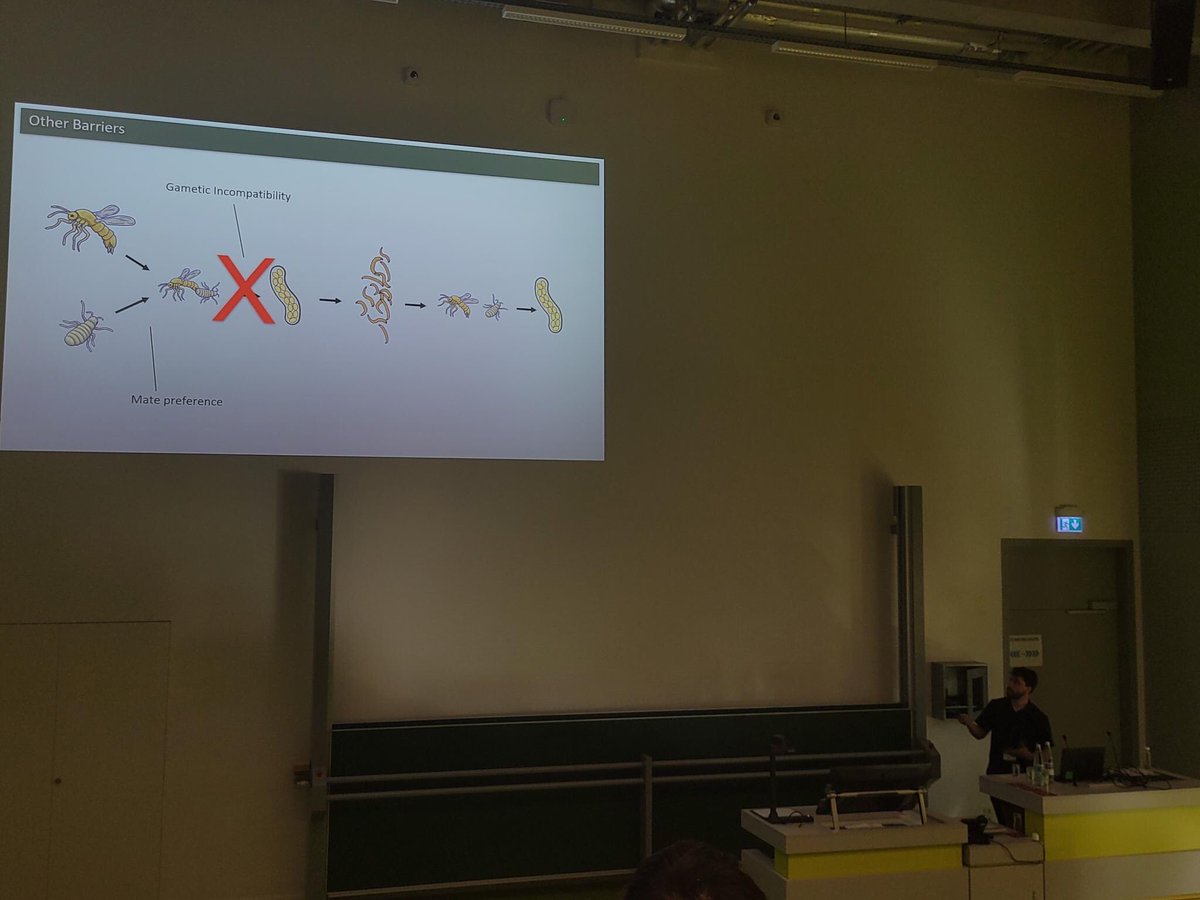
Interested in sympatric speciation and biological clocks? Come check out my poster about how a midge turns time into space to escape competition at #BES2022 on Tuesday!
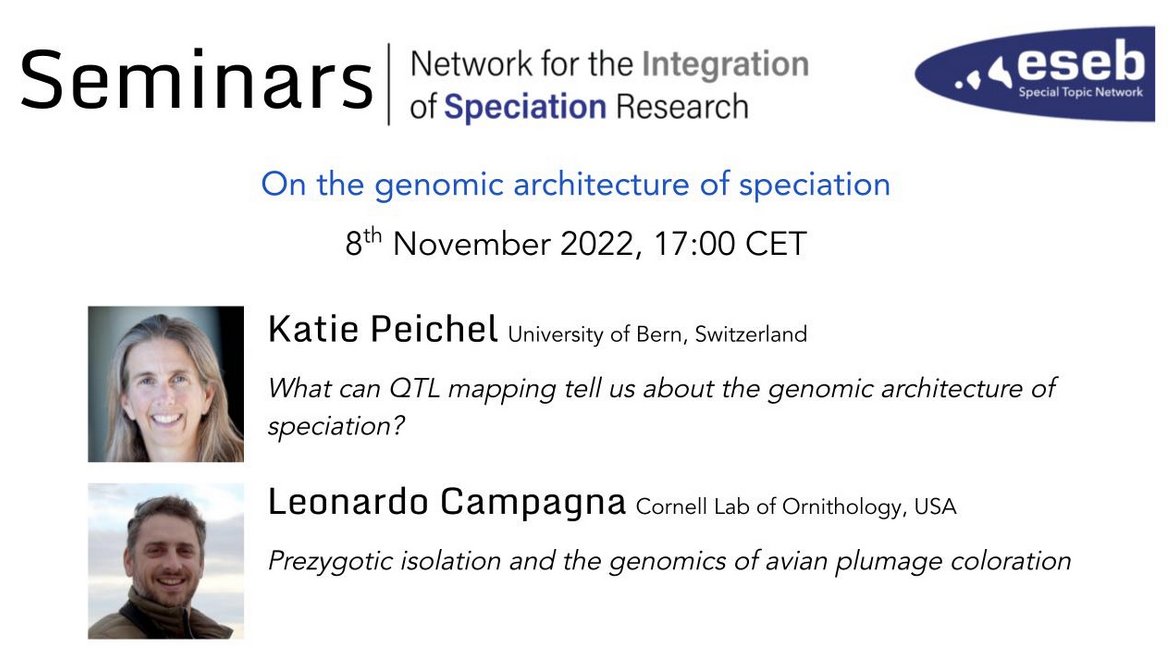
The next IOS seminar will take place on 8th November 2022 at 5 pm CET. We welcome as speakers Katie Peichel and Leonardo Campagna who will address the topic of “The genomic architecture of speciation“. More details: https://t.co/Aa5kgQkb9L