The most interesting part isn’t that OpenAI built a chip.
It’s that Jalapeño was tested across GPT-OSS 120B, DeepSeek R1, and Kimi K2.5.
Multi-model is moving deeper into the stack—from the API layer to infrastructure.
Since announcing Jalapeño, our first custom inference chip, we’ve been testing it and the system around it.
The results show a major advance: more intelligence from every watt and faster responses, delivering both higher throughput and lower latency in one architecture without sacrificing efficiency.
OpenAI’s Assistants API shuts down on August 26.
The immediate task: migrate to the Responses API.
The bigger lesson: provider APIs change. Keep model-specific logic out of your product’s core.
Models should be replaceable.
Your product shouldn’t be.
🔹https://t.co/wtlWxKaXc4
OpenAI cut GPT��5.6 Sol API pricing by 20%+ for the next three months.
Good news for builders—and another reminder that model economics keep moving.
Winning architecture doesn’t predict the cheapest model forever.
It adapts when the answer changes.
The best compliment for AI infrastructure is silence.
No outage thread. No surprise bill. No emergency model swap.
The product team keeps shipping, users keep getting answers, and the model layer fades into the background.
Boring infrastructure is a feature.
Every week, a new model tops a leaderboard.
Then teams try it in production and discover the real questions:
Does it call tools reliably? Stay within budget? Remain available?
Benchmarks help you shortlist. Your workload makes the final call.
What do you test first?
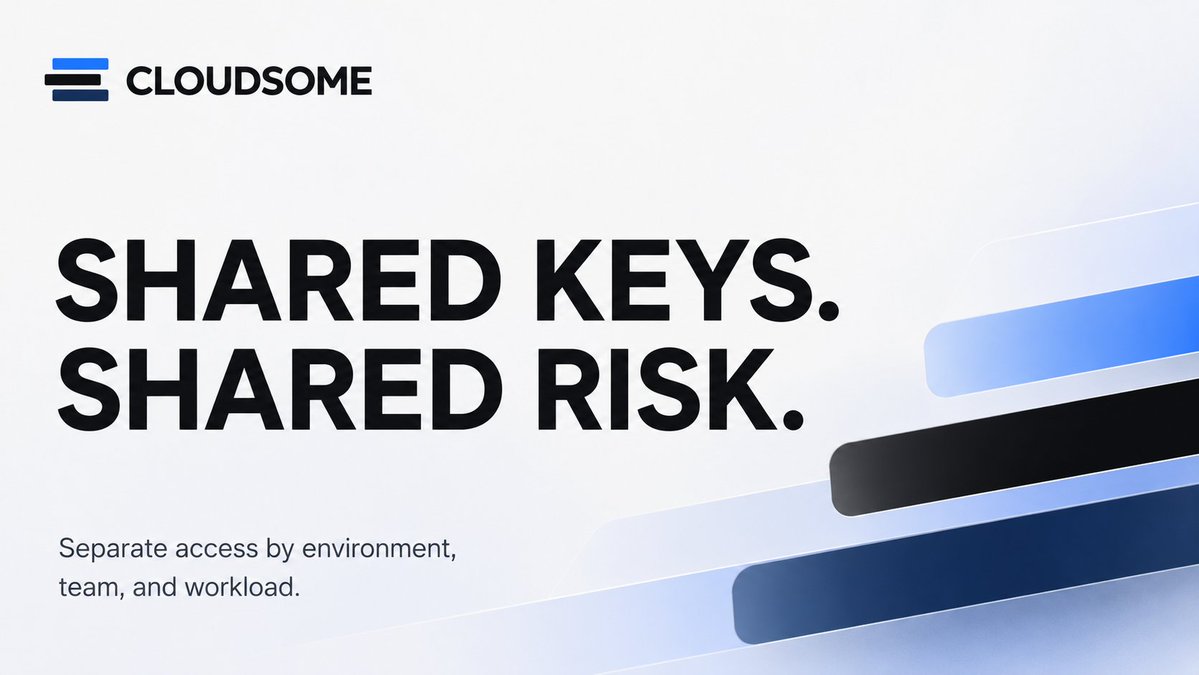
One API key for everything is convenient—until it isn’t.
Separate keys by:
🔹 Environment
🔹Team or service
🔹Budget and rate limit
Then one leak, runaway test, or revocation doesn’t disrupt every workload.
API keys aren’t just credentials.
They’re control boundaries.
A 200 response doesn’t always mean the AI request succeeded.
Your app still needs to check:
🔹Empty output
🔹Invalid JSON
🔹Truncated responses
🔹Broken tool calls
🔹Refusals or safety responses
Transport success is not task success.
Reliability starts after the status code.
🌐 https://t.co/wtlWxKaXc4
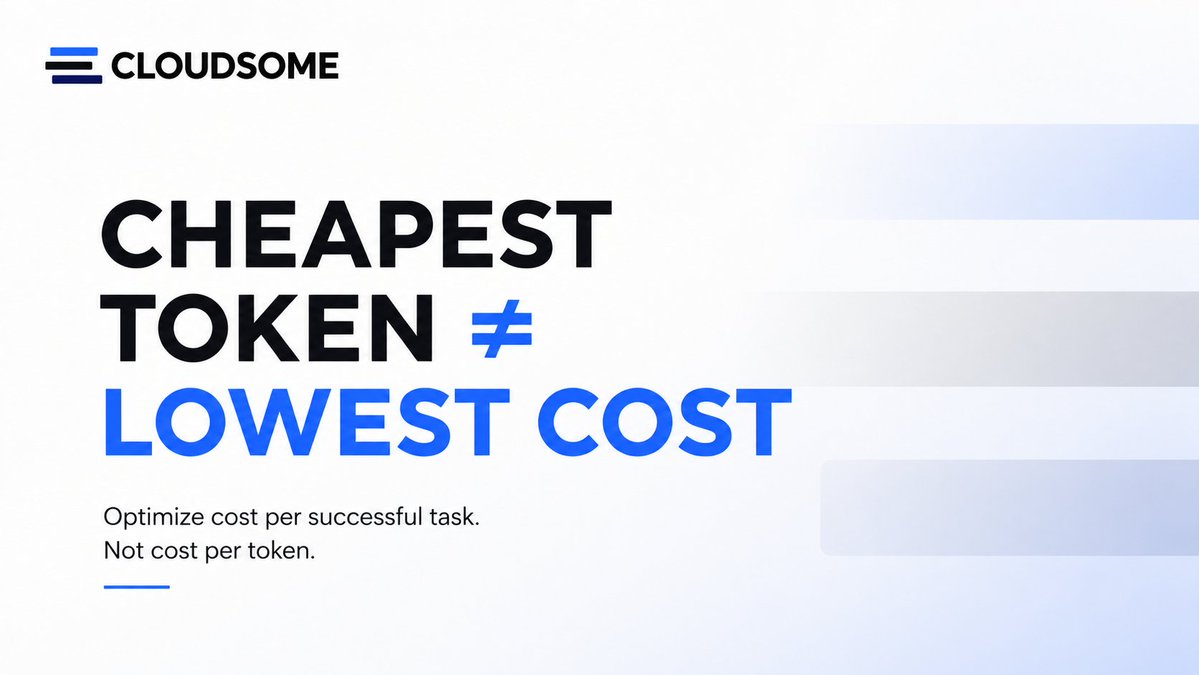
The cheapest model isn’t always the cheapest request.
Price per token ignores:
🔹Retries
🔹Longer outputs
🔹Failed calls
🔹Cache behavior
🔹Engineering overhead
The metric that matters is total cost per successful task—not the cheapest input token.
🌐 https://t.co/wtlWxKaXc4
Your app shouldn’t need a refactor every time the best model changes.
Models change. Prices change. Availability changes.
Keep model selection in config:
→ Route by workload
→ Define fallbacks
→ Switch without rewriting app logic
Build around capabilities—not one permanent model name.
🔹 https://t.co/wtlWxKaXc4
Production evaluation needs both:
1. Can the model do the job?
2. Can the infrastructure deliver it consistently?
CloudSome combines unified model access with built-in failover and rate limiting.
🔹One API for the world’s leading AI models.
🌐 https://t.co/MQi5AMKu0u
Choosing the right model is only half the production decision.
The same model can behave differently across provider endpoints:
🔹Time to first token
🔹Output speed
🔹Error rate under load
🔹Availability
Benchmarks measure capability.
Infrastructure determines delivery.
Models change weekly.
Production applications shouldn’t have to.
Trying a new model should mean changing the model ID—not rebuilding auth, billing, rate limits, and error handling.
Keep the model layer flexible.
Keep the application stable.
CloudSome gives developers one OpenAI-compatible API with unified billing, built-in failover, and usage controls.
🔹One API for the world’s leading AI models.
An API key shouldn’t only answer:
“Who can call the model?”
It should also define:
🔹how much can be spent
🔹which models can be used
🔹which providers are allowed
🔹when the budget resets
Credentials grant access.
Guardrails define limits.
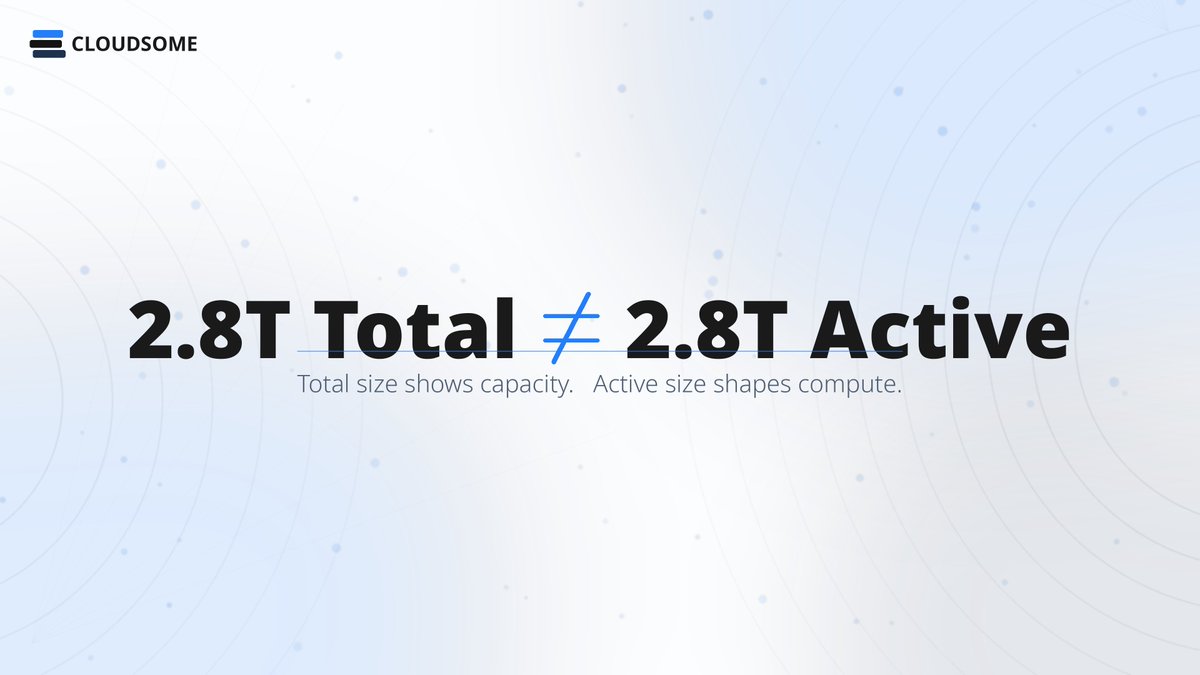
2.8T parameters makes a great headline.
But it doesn’t mean all 2.8T are active for every token.
Kimi K3 is a Mixture-of-Experts model:
🔹2.8T total parameters
🔹104B activated per token
🔹16 of 896 experts selected
Total parameters describe capacity.
Activated parameters help determine inference compute.
When evaluating an MoE model, look at both.
10+ days. Empty folder to production. No hand-holding.
Everyone's reading this as a capability milestone. It's also an infrastructure problem.
A 16-day run doesn't fail like a chat request. There's no user sitting there to hit retry. One 429 at hour 300 and you're not losing a response — you're losing the run.
Long-horizon agents make failover a correctness requirement, not an optimization.
🔹Auto-failover across providers, one endpoint: https://t.co/wtlWxKapmw
📢Meet Qwen3.8-Max — our most capable model to date.
Next week, the open weights of Qwen3.8-Max will be released, and Qwen3.8-27B is also going open-weights to meet you all!🎉
Qwen3.8-Max, a new bar for coding and cowork at 2.4T parameters:
- Autonomous coding: 10+ days of self-evolving development, from empty folder to production without hand-holding, complete project trace in the GitHub:https://t.co/iVHZWQoeSo
- Real work, real results: Production-quality deliverables across hundreds of professions.
- Long-horizon mastery: System-level autonomous planning with closed-loop adaptive learning, driving 500+ turns of chip design optimization and 365 days of e-commerce strategy.
- Native multimodal intelligence: Vision isn't just input — it's a continuous feedback loop for planning, execution, and self-correction.
💰Pricing:
Input: $2.0 / M tokens
Output: $6.0 / M tokens
Implicit Caching: $0.25 / M tokens
Start building with Qwen3.8-Max! 🚀
📖 Blog: https://t.co/iwjmQxLBof
✅ Qwen Studio: https://t.co/4V2pFvDovG
⚡ API: https://t.co/gAGqaLQGbN
Developer tip 💡
Already using the OpenAI SDK?
You don’t need to rewrite your application to access leading AI models through @CloudsomeAIHQ .
Change the base URL, use your CloudSome API key, and choose the model you need.
Same SDK. One API. More flexibility.
Get started: https://t.co/78RQrhmR2d
🔹One API for the world's leading AI models.
Hello, Frens👋 CloudSome here.
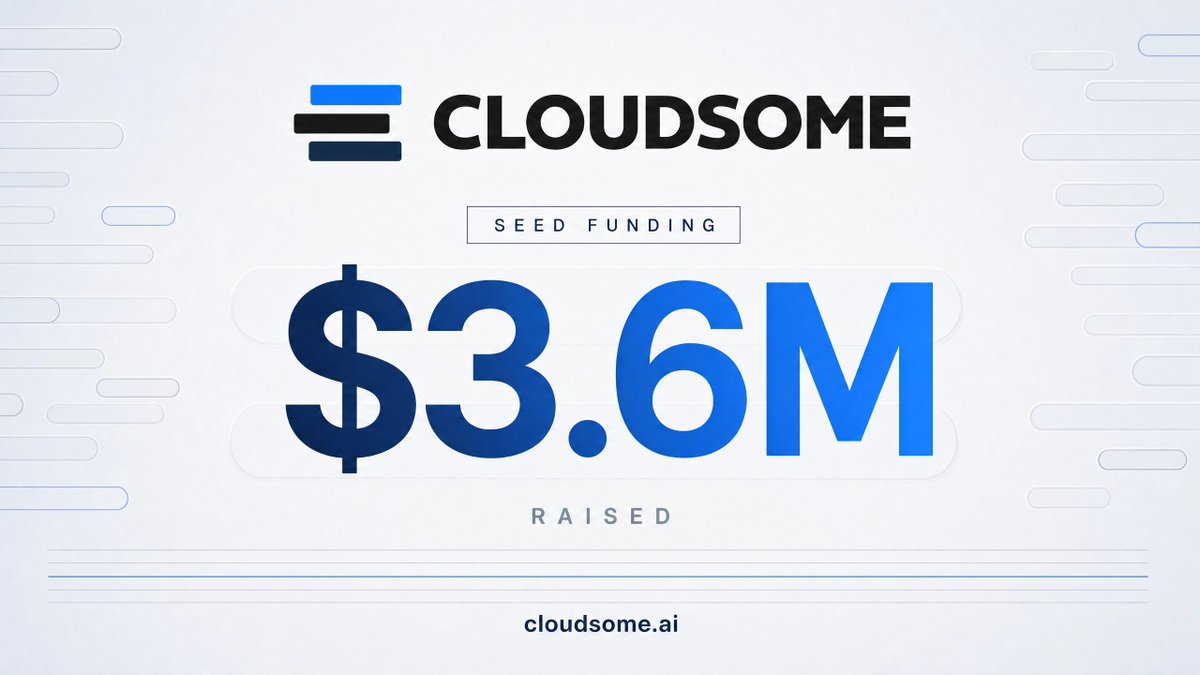
Excited to share we've raised $3.6M in seed funding to strengthen our platform, expand access to leading AI models, and deliver more reliable infrastructure for developers and businesses worldwide.
One API for the world's leading AI models.
Stay tuned 👀
https://t.co/PlfQe5dJzt